Rolls-Royce Defence Profile 2026: Engines, Products, Nuclear Submarines and Global Operations

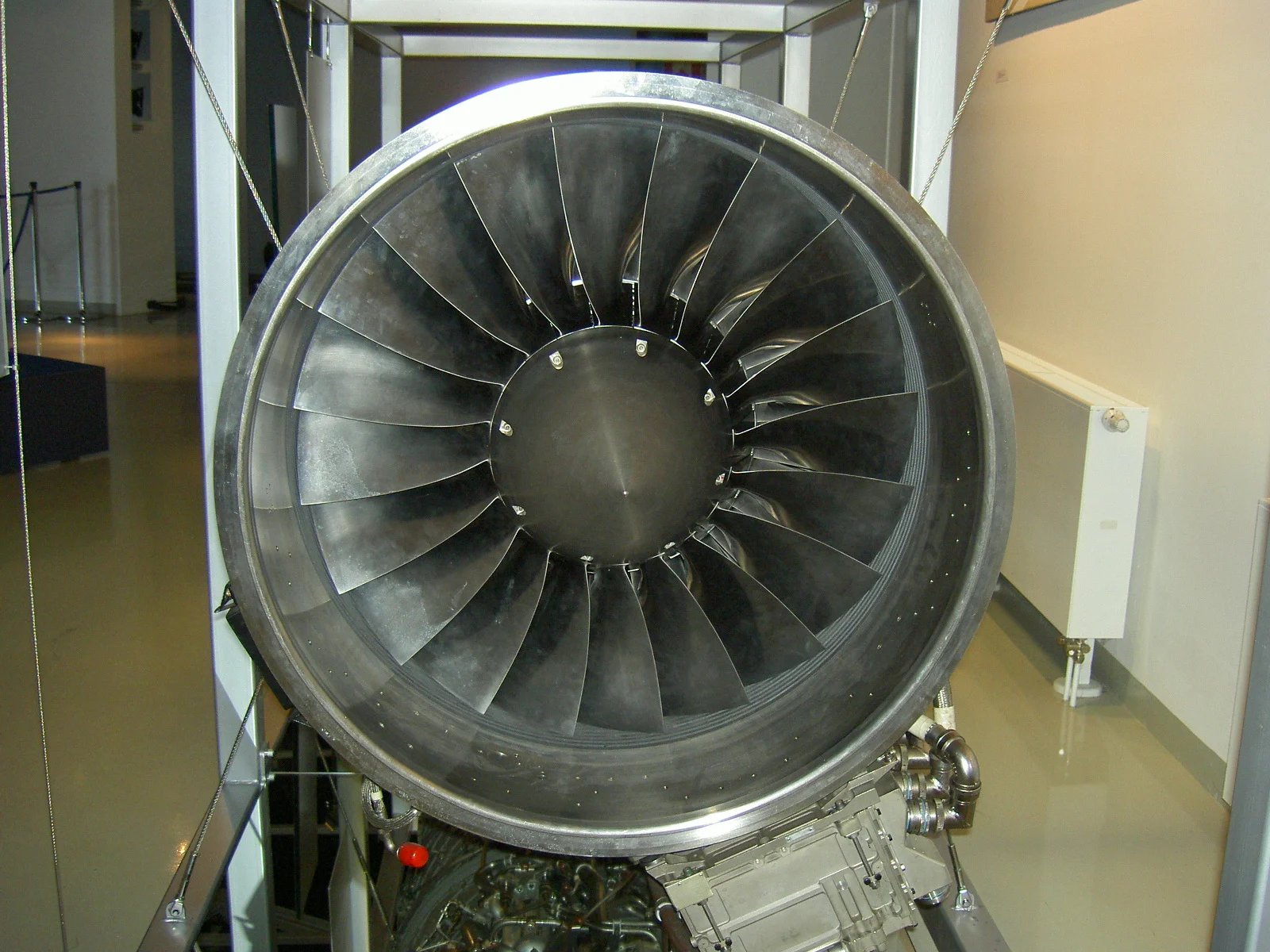
Rolls-Royce Defence is one of the most consequential yet least visible companies in global defence. While system integrators design platforms, Rolls-Royce provides the heartbeats inside them: the EJ200 that propels the Eurofighter Typhoon, the LiftSystem that enables the F-35B’s vertical landing, the AE 1107C turboshaft inside the V-22 Osprey’s tilting nacelles, the F130 that will power the B-52J into the 2050s, and the nuclear reactors aboard every Royal Navy submarine.
As of 2026, Rolls-Royce Defence operates across 103 countries with 160 customers and more than 16,000 military engines in active service, generating approximately $7.2 billion in annual defence revenue—roughly 32% of the group’s total.
Company Profile
| Full Name | Rolls-Royce Holdings plc (defence arm: Rolls-Royce Defence) |
| Founded | 1906 (defence since 1914) |
| Headquarters | Bristol, UK; Derby, UK (nuclear); Friedrichshafen, Germany (Power Systems) |
| Employees (2024) | ~42,400 group-wide |
| Total Revenue (2025) | £20.1bn (~$25.3bn) |
| Defence Revenue (2024) | ~$7.2bn |
| Defence Operating Margin (2025) | 14.4% |
| Countries Served | 103 |
Combat Jet Engines
EJ200 — Eurofighter Typhoon
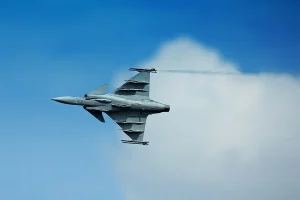
The EJ200 is produced by the EUROJET Turbo GmbH consortium (Rolls-Royce 33%, MTU, Avio Aero, ITP Aero). Delivering 90 kN thrust with afterburner, it powers Eurofighter Typhoons operated by Germany, UK, Italy, Spain, Austria, Saudi Arabia, Qatar, Kuwait, and Oman. Over 1,400 engines are contracted under the production programme. The motor has an unblemished in-service record with zero combat losses attributable to engine failure.
F-35B LiftSystem — 40,000 lbf of STOVL Capability
The Rolls-Royce LiftSystem enables the F-35B’s STOVL capability by delivering 29,000 hp via a driveshaft to a 50-inch counter-rotating LiftFan (20,000 lbf cold lift) and vectoring 18,000 lbf of dry thrust through a Three-Bearing Swivel Module. The combined hover thrust of 40,000 lbf makes the F-35B the most capable carrier-aviation STOVL aircraft ever operated.
F130 — Extending the B-52 to 2055
In 2021 Rolls-Royce won a $2.6 billion contract to re-engine the entire B-52H fleet with 608 F130 engines—a military derivative of the BR725 business-jet platform producing 17,000 lbf thrust with 25% better fuel efficiency than the replaced TF33. CDR was completed in December 2024; first modified aircraft delivery is expected by end-2028.
Helicopter Engines
The AE 1107C / T406 turboshaft (7,000+ shp) powers 469 V-22 Ospreys operated by US Marine Corps, Navy, Air Force Special Operations Command, and Japan’s GSDF. The CTS800 (1,400 shp, co-developed with Honeywell) powers the AW159 Wildcat for UK and South Korean navies. The MTR390 powers the Tiger attack helicopter for France, Germany, Spain, and Australia.
Transport & ISR Engines
The TP400-D6 (11,000 shp, the world’s most powerful single-propeller turboprop) powers the A400M Atlas for ten nations including Turkey, which operates 10 aircraft. Over 750 engines produced; 1 million flight hours surpassed in spring 2026. The AE 2100D3 powers the C-130J for 70+ countries; the AE 3007 family drives the RQ-4 Global Hawk, MQ-4C Triton, and MQ-25 Stingray unmanned aircraft.
Nuclear Submarine Propulsion
Rolls-Royce Submarines at Raynesway, Derby has been the sole reactor designer and manufacturer for all Royal Navy submarines for over 60 years. The £9 billion Unity contract (January 2025) covers eight years of in-service fleet support, Dreadnought-class SSBN production, and SSN-AUKUS programme starts. Under AUKUS, reactors for seven SSN-AUKUS boats are already at various manufacturing stages; the build tempo targets one submarine every 18 months.
Naval Gas Turbines
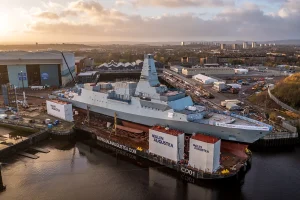
The MT30 (40 MW) powers HMS Queen Elizabeth and Prince of Wales carriers, DDG-1000 Zumwalt destroyers, Freedom-class LCS, Type 26 frigates, Mogami-class frigates (Japan), Daegu/Ulsan frigates (South Korea), and the Italian LHD Trieste. The mtu 20V 4000 M93L diesel engine powers UK Type 31 frigates (40 engines, 2024 contract), Polish Navy frigates, and US Coast Guard Fast Response Cutters.
Land Vehicle Engines — mtu Series 199
With 4,500+ deliveries, the mtu Series 199 (260–1,300 kW in 6-, 8-, 10- and 12-cylinder variants) is the world’s most successful military land vehicle engine programme in its class. It powers the Boxer 8×8 (2,000+ ordered/delivered), M10 Booker, Ajax, ASCOD, Borsuk IFV, and M10 Booker for US, UK, German, Polish, Australian and multiple NATO armies. A hybrid variant was unveiled in 2024, enabling silent electric-mode manoeuvre.
Future Technologies
Orpheus: A compact twin-spool turbofan family for future autonomous collaborative platforms (UK FCAS / Tempest). Achieved 100 test events across 20 configurations in 3 years; developed in under 18 months at 40% lower cost than conventional programmes. AE 1107 FLRAA: Updated turboshaft for Bell V-280 Valor, winner of the US Army Future Long-Range Assault Aircraft (FLRAA) competition to replace Black Hawk.
Competitor Comparison
| Manufacturer | Country | Strengths | RR Competition Zone |
|---|---|---|---|
| GE Aerospace | USA | F414, F110; 33% overall market share | Combat jet engines |
| Pratt & Whitney | USA | F135 (F-35A/C); 22% market | F-35 (complementary via LiftSystem) |
| Safran | France | M88 (Rafale), RTM322; 24% market | Helicopter and trainer engines |
Envanter Medya Assessment
Rolls-Royce Defence occupies a strategic but under-appreciated position in global defence supply chains: it rarely appears on the masthead of a weapons system, yet it determines whether that system can operate. For Turkey, the company represents a particularly layered dependency — the A400M fleet, Gökbey helicopter exports, and potential Istanbul-class frigate propulsion all trace back to Rolls-Royce. TEI’s accelerating programme (TF35000, Güçhan) signals genuine intent to reduce that dependency, but operational proof remains years away. Objectively: Rolls-Royce Defence is a company Turkey can neither fully adopt nor easily replace in the next decade.