Border Security and Radar Technologies for Moldova: A Technical Fit Analysis of Turkish Solutions

Moldova is a landlocked country in Eastern Europe, bordered by Romania to the west along the Prut River and by Ukraine to the north, east and south. Its roughly 1,900 km land border, the crossing points spread along the Dniester (Nistru) and Prut river valleys, and the de-facto Transnistria administration east of the Dniester place border surveillance and situational awareness at the center of its security equation. Constitutional neutrality means this task must be met with national sensor networks rather than alliance assets.
This analysis compiles Moldova’s border geography, surveillance needs and current gaps strictly from publicly available sources, then evaluates how well Turkish firms such as ASELSAN and HAVELSAN — with their radar, electro-optical/thermal surveillance and border-security command-and-control solutions — technically fit that profile. The aim is not to claim any purchase or agreement will occur, but to map requirement against solution using open-source data. Numerical figures should be treated as unconfirmed estimates.
Border and Air Surveillance Radars
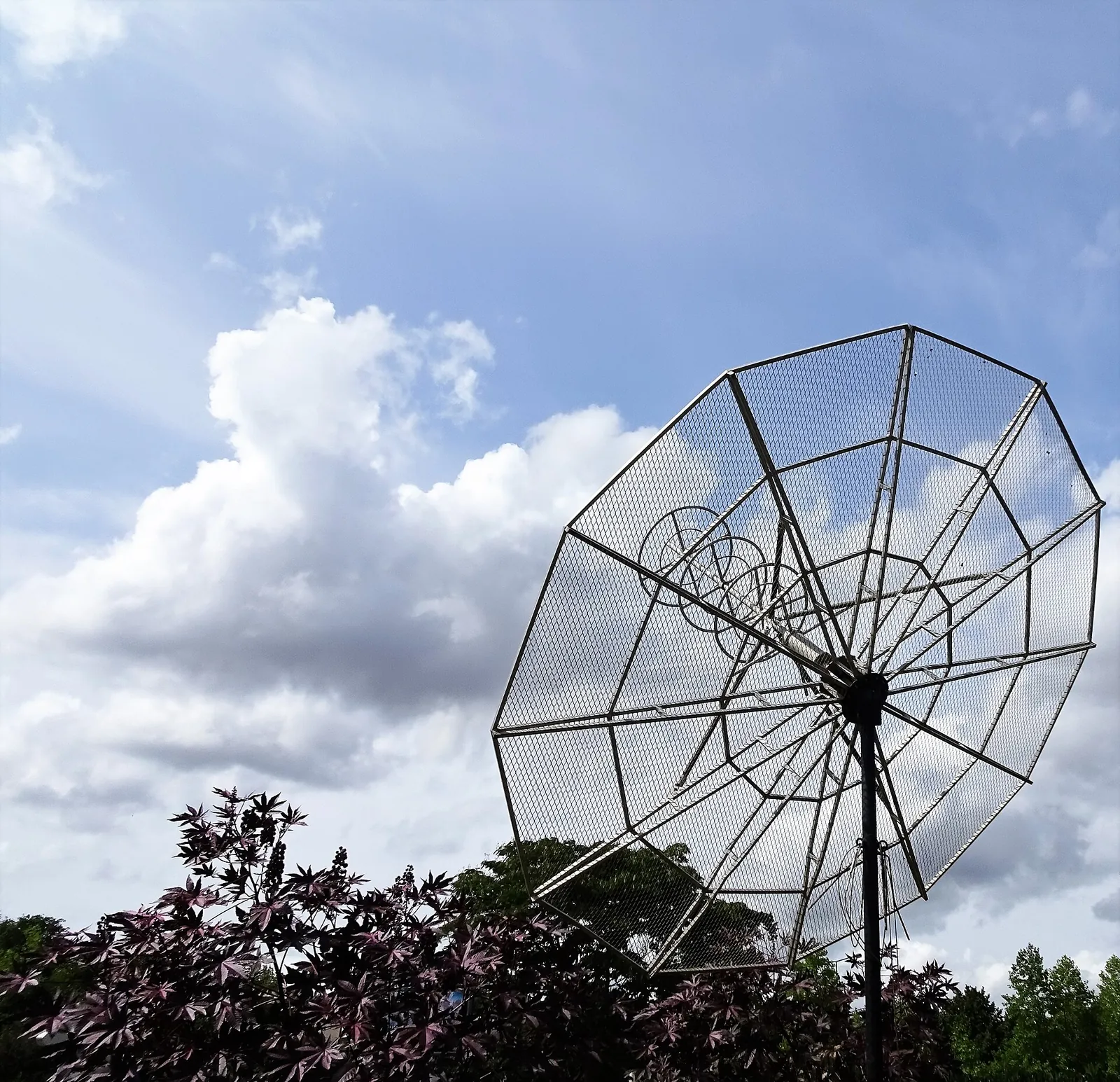
For the continuous surveillance of a long, river-divided border, radar is the core sensor capable of operating in all weather and terrain conditions. Electro-optical systems lose range in fog, precipitation and darkness, whereas radar scans a wide area around the clock and detects personnel and vehicle movement early. Moldova’s open plains and river valleys suit short/medium-range border-surveillance radars able to discriminate low-altitude targets.
ASELSAN’s RETINAR family is described in open sources as a pulse-Doppler border-surveillance radar able to distinguish personnel from vehicles; it can be integrated onto a fixed tower or a mobile platform. The SERHAT border-surveillance radar stands out as a solution designed to scan long border lines. On the airspace-awareness side, the KALKAN low/medium-altitude air-defense radar and 3D (three-dimensional) radars provide early warning by producing target range, azimuth and altitude together. ARMOL is listed as a radar used in fire-control/surveillance roles. Range and detection values of these systems vary by model and configuration; exact performance is manufacturer-specific.
| Radar | Class | Role | Detection type |
|---|---|---|---|
| RETINAR | Border-surveillance radar | Personnel/vehicle detection, tower integration | Pulse-Doppler, human-vehicle discrimination |
| SERHAT | Border-surveillance radar | Long-line scanning | Wide-area ground surveillance |
| KALKAN | Air-defense radar | Low/medium-altitude air watch | Phased-array air target detection |
| 3D radar | Early warning / air surveillance | Range-azimuth-altitude output | Three-dimensional track formation |
| ARMOL | Fire-control / surveillance radar | Point-defense support | Target tracking |
Note: the range/class descriptions above are open-source in nature; exact technical parameters are manufacturer-specific and unconfirmed.
Electro-Optical and Thermal Surveillance Systems
Once radar detects movement, electro-optical/infrared (EO/IR) sensors take over to identify the target — person, vehicle, armed or not. Thermal cameras detect by heat signature at night and in low visibility, while day cameras and laser range-finders enable target classification and geolocation. Radar–EO/IR pairing (cueing) reduces false alarms and lowers operator workload.
ASELSAN’s ASELFLIR-300T is described in open sources as an advanced EO/IR reconnaissance-surveillance system, incorporating thermal, day and laser subsystems. CATS (a stabilized multi-sensor EO/IR system) is used in tower, vehicle and platform surveillance. Electro-optical surveillance towers integrated onto fixed border towers form a surveillance layer working alongside radar. On the light-reconnaissance side, the AKREP surveillance system is listed as a solution for mobile and portable reconnaissance needs. The detection range of these systems varies with atmospheric conditions, target size and tower height.
| System | Type | Key feature |
|---|---|---|
| ASELFLIR-300T | EO/IR reconnaissance-surveillance | Thermal + day + laser, stabilized platform |
| CATS | Multi-sensor EO/IR | Tower/vehicle surveillance, target tracking |
| EO surveillance tower | Fixed border-tower sensor | Radar-cued persistent surveillance |
| AKREP | Mobile/portable reconnaissance | Point reconnaissance, rapid deployment |
Moldova’s river crossings and forest cover make the EO/IR layer valuable at close ranges where radar is blind. Thermal surveillance is technically well suited to detecting illegal crossings and smuggling, especially at night.
Fixed and Mobile Border-Surveillance Towers
In border surveillance, radar and EO/IR sensors do not operate alone but integrated onto tower systems. Fixed towers provide continuous surveillance at high-traffic or critical crossing points, while mobile towers (vehicle- or trailer-mounted) can be repositioned according to threat concentration. This hybrid architecture covers a long border line as a backbone of fixed points, then uses mobile assets to close gaps and shifting risk zones.
In ASELSAN and integrator solutions, a typical tower combines a border-surveillance radar (RETINAR/SERHAT class), an EO/IR sensor (ASELFLIR/CATS class), an illuminator, communications infrastructure and a local power source (generator/solar panel). Towers connect to a command-and-control center to contribute to a single operational picture. The strongest aspect of this architecture for Moldova is scalability: the system can be expanded incrementally by budget — first the high-risk Transnistria and river-crossing zones, then the remaining line.
| Tower type | Advantage | Limit / caveat |
|---|---|---|
| Fixed tower | Continuous surveillance, high range, robust infrastructure | Installation cost, fixed location |
| Mobile tower (vehicle/trailer) | Repositioning, flexibility, rapid fielding | Range and endurance limited vs fixed tower |
| Hybrid network (fixed + mobile) | Backbone + gap closing, incremental growth | Requires integration and maintenance coordination |
This incremental approach is technically well suited to a country like Moldova with a limited defense budget, because it enables incremental capacity building rather than a single large investment.
Command-and-Control and Integration
The value of dispersed radar and EO/IR sensors only emerges when they merge into a single command-and-control (C2) layer. Sensor-data fusion, track formation, alarm prioritization, a common operational picture on a map and the tasking of response units are the duties of this layer. HAVELSAN is the Turkish integrator prominent in open sources for border-security and command-and-control software, describing systems that gather sensors from different manufacturers onto a single management screen.
An effective border C2 architecture combines: (1) radar/EO-IR sensor fusion and automatic target cueing; (2) geographic-information-system (GIS) based mapping and track management; (3) alarm logging and incident management; (4) task assignment and communication to response teams; (5) role-based multi-user access. NATO/STANAG-compatible communication interfaces technically ease data sharing with EU-supported air-surveillance projects and possible allied exercises.
| C2 function | Contribution |
|---|---|
| Sensor fusion | Reduces radar + EO/IR data to a single track, cuts false alarms |
| Common operational picture | Displays the whole border line on one screen |
| Incident/alarm management | Prioritization and record-keeping |
| Response tasking | Directs the nearest team to the detection point |
| STANAG-compatible interface | Data sharing with allied/EU systems |
In Moldova’s context, the C2 layer is the multiplier that technically makes it possible to manage a long border with limited personnel: a small number of operators can monitor a wide sensor network from a single center.
Technical Fit Assessment for Moldova
The assessment below summarizes the open-source technical fit of Turkish border-security and radar systems against Moldova’s requirement profile (long land border, river crossings, Transnistria-line surveillance, critical-facility protection, limited personnel and budget). It is not a firm procurement recommendation; each system’s strengths and limits are presented in a balanced way.
Strengths and weaknesses
| System | Strength | Limit / caveat |
|---|---|---|
| RETINAR | Human/vehicle discrimination, tower integration, scalable | Range depends on tower height and terrain |
| SERHAT | Long-line scanning, border-focused design | Blind spots in dense relief/forest |
| KALKAN / 3D radar | Airspace awareness, early warning | Multiple radars needed for full network |
| ASELFLIR-300T / CATS | Night/thermal detection, target identification | Range drops in adverse weather |
| Fixed/mobile tower network | Incremental expansion, flexible deployment | Integration and maintenance coordination |
| HAVELSAN C2 | Sensor fusion, wide coverage with few staff | Requires training and local operator capacity |
Ten-criteria suitability scoring
Scores are an open-source technical assessment on a 1–10 scale, not a precise performance measurement.
| System | Coverage | Climate | Install | Maint. | Training | NATO fit | Integration | Versatility | Scalability | Overall |
|---|---|---|---|---|---|---|---|---|---|---|
| RETINAR | 9 | 8 | 8 | 8 | 7 | 8 | 9 | 8 | 9 | 8.3 |
| SERHAT | 9 | 8 | 8 | 7 | 7 | 7 | 8 | 7 | 9 | 7.8 |
| KALKAN / 3D radar | 8 | 8 | 7 | 7 | 6 | 8 | 8 | 7 | 7 | 7.4 |
| ASELFLIR-300T | 7 | 7 | 8 | 7 | 7 | 8 | 8 | 8 | 8 | 7.6 |
| CATS | 7 | 7 | 8 | 7 | 7 | 7 | 8 | 8 | 8 | 7.4 |
| AKREP | 6 | 7 | 9 | 8 | 8 | 7 | 7 | 7 | 7 | 7.3 |
| HAVELSAN C2 | 9 | 8 | 7 | 7 | 6 | 8 | 9 | 9 | 9 | 8.0 |
| Fixed/mobile tower network | 9 | 8 | 7 | 7 | 7 | 8 | 9 | 8 | 10 | 8.1 |
In short, the highest technical fit for Moldova’s requirement profile is shown by border-surveillance radars (RETINAR/SERHAT) and the scalable fixed/mobile tower network that links them to an EO/IR sensor and command-and-control layer. A HAVELSAN-class C2 layer is the decisive multiplier for wide coverage with limited personnel. All assessments are open-source estimates and unconfirmed.
Frequently Asked Questions
What is Moldova’s biggest border-security need?
Open sources indicate that continuous surveillance of the roughly 1,900 km land border, the Dniester and Prut river crossings and the Transnistria line is the priority need; this technically highlights a scalable tower network of radar and electro-optical sensors.
What does the RETINAR radar do?
ASELSAN RETINAR is described in open sources as a pulse-Doppler border-surveillance radar able to distinguish personnel from vehicles; integrated onto fixed or mobile towers, it scans the border line in all weather.
Why are radar and electro-optical systems used together?
Radar detects across a wide area in any condition but cannot identify the target; EO/IR systems such as ASELFLIR-300T or CATS distinguish whether the detected movement is a person or a vehicle, including at night. Pairing the two reduces false alarms.
Why is a fixed/mobile tower network suitable for Moldova?
The hybrid network covers the long border as a backbone of fixed towers and closes shifting risk zones with mobile towers; because the system can be expanded incrementally by budget, it is technically suitable for a resource-limited country.
What is the role of the HAVELSAN command-and-control layer?
A HAVELSAN-class C2 merges dispersed radar and EO/IR sensors into a single common operational picture, so a small number of operators can monitor a wide border network from one center.
Are these systems NATO-standard compatible?
Many Turkish border-security systems are designed with NATO/STANAG interfaces, which is a technical advantage for data sharing with EU-supported air-surveillance projects and possible allied exercises.
Is this analysis a sales forecast?
No. The content is purely an open-source technical assessment; it makes no claim about any sale, agreement or negotiation, and numerical figures should be treated as unconfirmed estimates.
What are the limits of these systems?
Radar range depends on tower height and terrain; blind spots can form in dense forest and relief. EO/IR range drops in fog and precipitation. Full coverage requires multiple sensors, integration and local operator training.
Bottom Line
Moldova’s open-source border-security requirement is shaped around continuous surveillance of a roughly 1,900 km land border, control of the Dniester and Prut river crossings, monitoring of the sensitive Transnistria line and protection of critical facilities. The Turkish solutions that best match this map technically are pulse-Doppler border-surveillance radars (RETINAR, SERHAT), air-surveillance/3D radars for airspace awareness (KALKAN), electro-optical/thermal systems for night and low-visibility detection (ASELFLIR-300T, CATS) and a HAVELSAN-class command-and-control layer that merges all these sensors into a single operational picture. A hybrid network of fixed and mobile towers carries high suitability because it enables incremental capacity building on a limited budget.
EU-supported air-surveillance radar steps and the neutrality principle require this modernization to advance along the axis of national capability building rather than alliance integration; NATO/STANAG-compatible interfaces ease data sharing with allied systems. This assessment contains no forecast about any sale, agreement or political decision; it maps requirement against solution using publicly available technical data only, and numerical figures should be treated as unconfirmed estimates.
Related Analysis
Sources
- ASELSAN — border-surveillance radar and electro-optical system product information (RETINAR, KALKAN, SERHAT, ARMOL, ASELFLIR-300T, CATS)
- HAVELSAN — border-security and command-and-control solutions corporate information
- Moldova Ministry of Defense — National Army official information (army.md)
- European Union — Moldova air-surveillance radar and European Peace Facility support statements
- IISS The Military Balance — Moldova section (force structure and inventory)
- NATO — Partnership for Peace and Moldova cooperation documents
- Manufacturer technical brochures (ASELSAN, HAVELSAN) — open-source product presentations