IRIS-T SLM Earns Certification After Live Firing in Crete: A New Threshold for Germany’s Air Defence

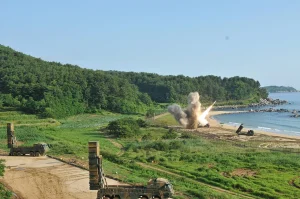
Germany’s air force has closed out the operational certification of the IRIS-T SLM medium-range air defence system. The decisive step was a live firing at NATO’s Missile Firing Installation (NAMFI) on Crete, which manufacturer Diehl Defence confirmed on 14 October.
Crews from Air Defence Missile Group 61, based in Todendorf, carried out the shot. Germany has no domestic range large enough for a live medium-range air defence engagement, so German units routinely travel to Crete for this category of test.
The certification was not a missile test alone. It validated the entire fire unit: the TRML-4D radar, the Common Tactical Operations Center, and the launcher all had to detect, track and engage a target as one integrated chain. Diehl says the exercise showed the three elements working together without a hitch.
Diehl Defence CEO Helmut Rauch said the shot confirmed the system’s reliable performance. He framed the result as a signal of confidence both for the Bundeswehr and for the roughly ten nations that already operate IRIS-T SLM.
Following the successful engagement, the battery was folded into a joint tactical exercise alongside German and Swedish Patriot units and short-range Stinger and LeFlaSys defences. In practice, that put IRIS-T SLM through its paces as one layer in a multi-tier air defence stack rather than as a standalone system.
Germany’s IRIS-T SLM order became official on 22 June 2023, after the Bundestag’s budget committee cleared roughly €950 million in funding. The contract with Diehl Defence covers six fire units in total. The first was handed over in September 2024, and the Crete certification marks the step that moves delivered hardware into a status the Luftwaffe can actually rely on operationally.
The system itself is built for short- and medium-range threats, using an imaging infrared seeker that resists jamming and a range of roughly 40 kilometres. Beyond Germany, IRIS-T SLM is in service in Ukraine, Latvia, Estonia and Slovenia, among others. Ukraine’s air force has used it in combat since 2023, primarily to shield cities and energy infrastructure from missile and drone attacks.
NAMFI is a shared range that the United Kingdom, France, Italy and Greece also use to test medium- and long-range systems, since most of continental Europe lacks the open airspace and population buffers for this kind of live shot. That constraint is why NATO members tend to bunch their certification firings into set windows during the year rather than running them continuously.
The Ukrainian combat record adds weight to what the certification confirms. Germany’s own qualification process suggests that Diehl’s production and logistics chain has reached a point where it can sustain domestic deliveries and continued support to Ukraine at the same time, rather than having to choose between the two.
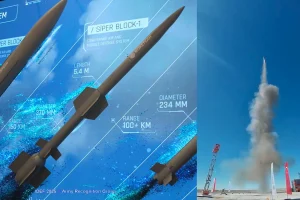
The timing also lands amid a broader NATO debate over strengthening air defence along the alliance’s eastern flank. For Turkey, which is building out its own layered air defence architecture through the HİSAR and SİPER families, certification milestones for a widely fielded NATO system like IRIS-T SLM offer a useful external benchmark on delivery timelines and performance standards.
Sources
- Defence Industry Europe, “German Air Force certifies IRIS-T SLM system after live firing at NATO range in Crete”, 14-15 October 2026 — used for the core account of Diehl’s announcement and the CEO quote. Read the report
- Militär Aktuell, “Diehl Defence: Bundeswehr takes delivery of IRIS-T SLM fire unit”, 2026 — used for contract and delivery background. Read the report