ÇAKIR vs AGM-158 JASSM: Stand-off Strike at Two Very Different Scales

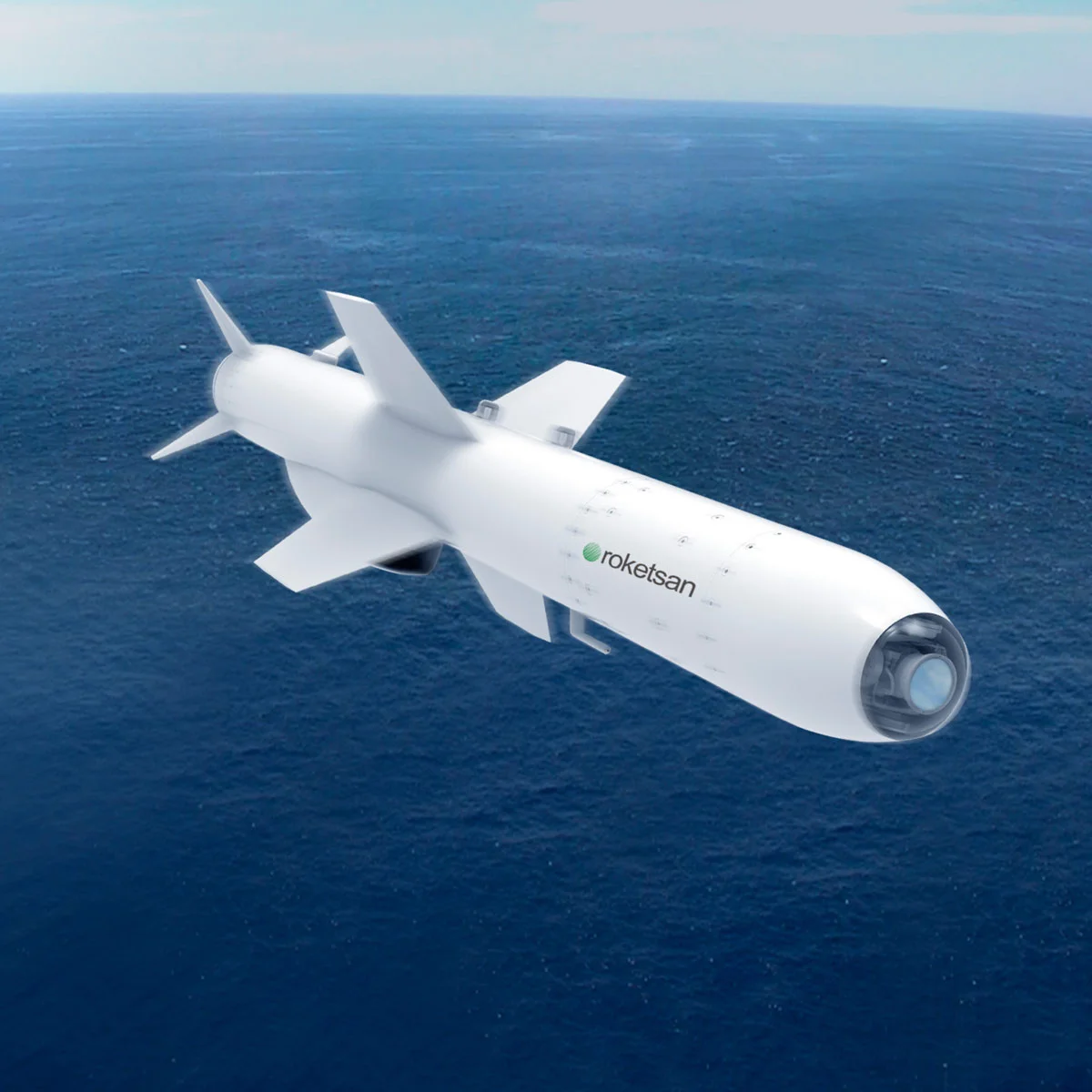
ÇAKIR and the AGM-158 JASSM answer the same question at two very different scales: how do you put a warhead on a target while keeping the launching platform outside the enemy’s air defence envelope? Past that shared premise, almost nothing lines up.
JASSM is a one-tonne weapon carrying a 450 kg penetrator, released only from aircraft, with its extended-range variant rated at around 1,000 km. It was built so that bombers and fighters could reach hardened fixed targets from well outside the threat ring.
ÇAKIR weighs under 275 kg without its booster, carries a 70 kg warhead and is published at 150+ km. Its distinguishing feature is not reach but the launch envelope: Roketsan lists it as fireable from aircraft, helicopters, armed UAVs, armed unmanned surface vessels, tactical trucks and warships. These are two systems built for different mission concepts.
Why one idea produces two very different missiles
Stand-off weapons exist to solve a single problem: hit the target without flying over it. There is no universal answer to that problem, because the shape of the solution depends entirely on what is being hit and who is doing the carrying. A reinforced command bunker 900 km away demands a heavy penetrating warhead, a large fuel volume and an aircraft big enough to haul the result. A coastal radar site or a fast attack craft 120 km away demands none of that; what it demands is a missile that fits on whatever happens to be nearby.
Roketsan’s ÇAKIR and Lockheed Martin’s AGM-158 JASSM sit at those two ends. What follows places them side by side using manufacturer and official-institution figures only. Where no such figure exists, the row stays empty rather than being filled with an estimate.
ÇAKIR: a small body with a wide launch envelope
Roketsan’s official product page gives a range in excess of 150 km. Weight stays under 275 kg without the launch motor and under 330 kg with it; length does not exceed 3.3 m and 4.1 m respectively, with body diameter under 275 mm. The 70 kg warhead is not fixed to a single type — the manufacturer lists high-explosive semi-piercing, blast fragmentation and thermobaric options together. A turbojet handles cruise; on surface and land launches a solid-fuel motor boosts the round clear of its canister first. Cruise speed sits in the high subsonic band, Mach 0.75 to 0.85.
The guidance architecture is what separates ÇAKIR from a simple short-range munition. Mid-course navigation combines an inertial system, jam-resistant satellite navigation, radar and barometric altimeters and terrain-referenced navigation. In the terminal phase the missile can use an imaging infrared seeker, an RF seeker, or a hybrid of the two. On top of that sits a two-way, network-based datalink — meaning the round can take target updates in flight and be steered by a human decision after launch.
A terminal RF or imaging infrared seeker is not a detail, it is the mission statement. A fixed building can be hit with a coordinate; a ship under way cannot. ÇAKIR’s target list includes littoral maritime targets precisely because of what the seeker allows.
The launch envelope is the sharpest point of divergence in this comparison. Roketsan’s official list names fixed- and rotary-wing aircraft, armed UAVs, armed unmanned surface vessels, tactical wheeled land vehicles and naval surface platforms in a single breath. Among the capability headings sits a swarm attack concept in which several rounds coordinate against the same objective.
Both ends of that envelope have now been fired. The first air launch came from a Bayraktar AKINCI UCAV in 2023. On 28 August 2026, according to Naval News, two rounds were launched in sequence from a mobile land launcher; one struck a land target, the other a maritime one. Roketsan did not disclose the location, the engagement distances or the target configuration — so the test is verifiable, the range at which it happened is not.
AGM-158 JASSM: heavy, long, and air-launched only

The plainest description of JASSM comes from the US government’s own paperwork. The technology sensitivity annex attached to a congressional arms sales notification calls JASSM-ER a low-observable, highly survivable subsonic cruise missile designed to penetrate next-generation air defence systems en route to target, built to kill hard, medium-hardened, soft and area-type targets. The same document states that the extended range over the baseline was obtained by moving from a turbojet to a turbofan engine and reconfiguring the fuel tanks for added capacity.
CSIS Missile Threat puts the missile at 4.27 m long with a launch weight around 1,021 kg, carrying a 450 kg penetrator warhead behind INS/GPS guidance and an infrared seeker. Range depends on the variant: roughly 370 km for the baseline AGM-158A, roughly 1,000 km for the AGM-158B, and roughly 1,800 km for the AGM-158D that is generally referred to as JASSM-XR.
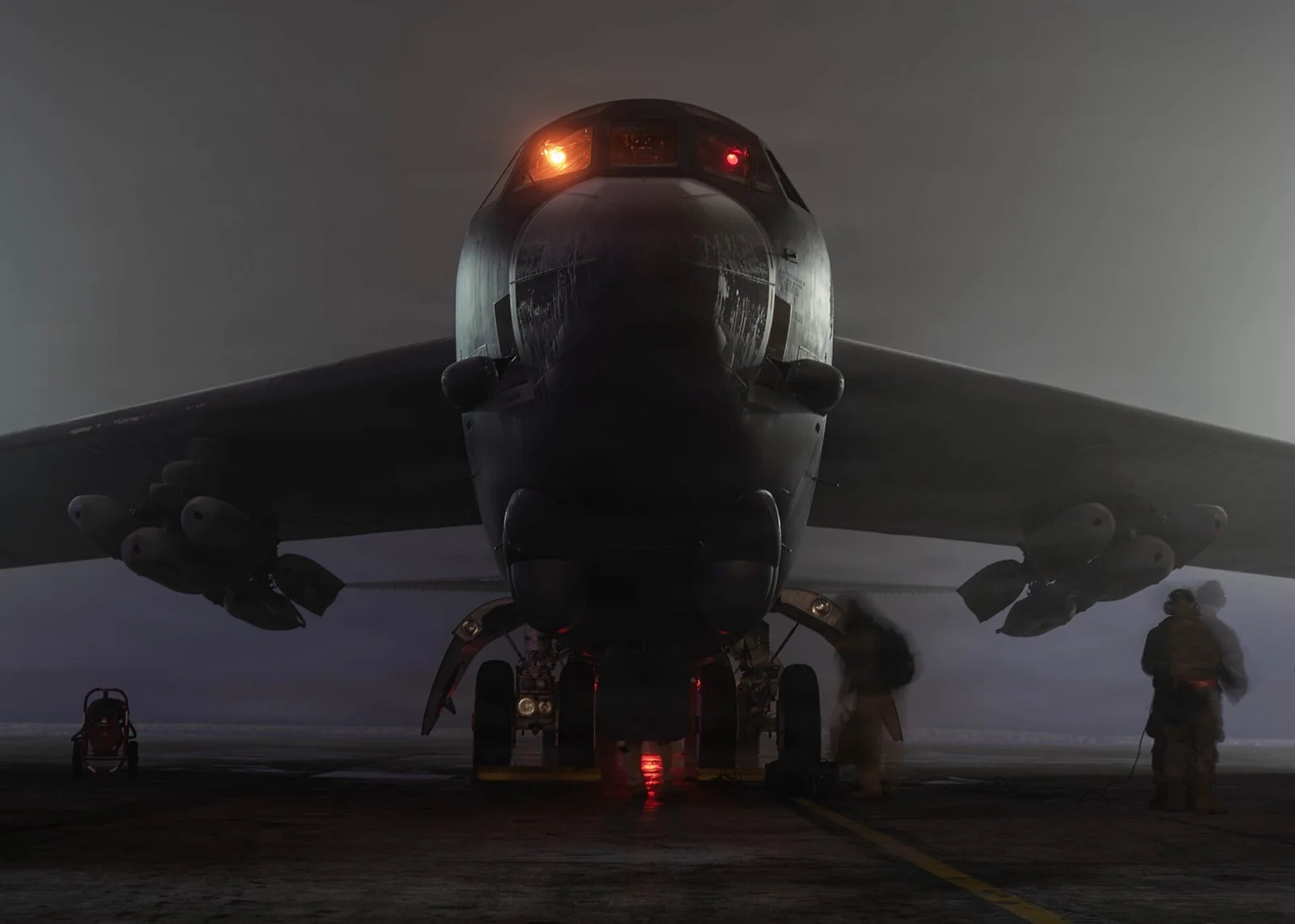
The carrier list covers the B-1B, B-2 and B-52H bombers alongside the F-15E, F-16 and F/A-18, with Lockheed Martin announcing F-35 integration on its own product page. Operators named in open sources include the United States, Australia, Finland and Poland. The export line is active: Transmittal 24-125, dated 8 January 2026, notified Congress of a sale of sixteen AGM-158B/B-2 rounds to Japan at an estimated $39 million, with dummy training missiles, JAGR anti-jam GPS receivers and logistics support bundled in. A larger notification covering 200 rounds for Denmark followed later in 2026.
JASSM also has something ÇAKIR does not: a verified combat record. Lockheed Martin’s own page logs 19 rounds employed during the 2018 Syria strike, and CSIS records a second use in October 2019. Nothing closes the gap between range-test accuracy and operational performance quite like that kind of entry.
Where the mission concepts part
The real divergence is doctrinal rather than dimensional. JASSM is an air power munition. Employing it presupposes an aircraft able to carry it, a base or tanker chain able to bring that aircraft within 700 to 900 km of the target, and an air operations centre able to plan the sortie. The number of states that can assemble that chain is small. For those that can, JASSM is the way to strike fixed targets without ever pushing an aircraft into the densest part of an air defence network.
ÇAKIR is a platform-diversity munition. A body under 275 kg does not need a bomber; it fits a UCAV’s wing station, an unmanned surface vessel’s deck, a tactical truck’s canister rack. That trades reach for carriers: 150 km is sufficient range as long as something can get within 150 km — and when that something is unmanned, the cost of getting there is a different calculation entirely.
Where each design places its weight (qualitative)
These bars are not measured performance. They summarise where each system’s stated design choices concentrate. No common performance yardstick for the two missiles exists in official sources.
The figures side by side
| Criterion | ÇAKIR (Roketsan) | AGM-158 JASSM (Lockheed Martin) |
|---|---|---|
| Class and purpose | Compact multi-platform stand-off cruise missile (land and maritime targets) | Air-launched low-observable long-range stand-off cruise missile (air-to-ground) |
| Manufacturer / origin | Roketsan / Türkiye | Lockheed Martin (Orlando, Florida) / United States |
| Published range | 150+ km | AGM-158A ~370 km; AGM-158B (ER) ~1,000 km; AGM-158D (XR) ~1,800 km |
| Launch weight | ≤275 kg without booster / ≤330 kg with booster | ~1,021 kg |
| Length | ≤3.3 m without booster / ≤4.1 m with booster | 4.27 m |
| Diameter | ≤275 mm | no verified figure is published in open sources (no current manufacturer data sheet is published) |
| Warhead | 70 kg — high-explosive semi-piercing / blast fragmentation / thermobaric | 450 kg WDU-42/B penetrator (hard, medium-hardened, soft and area targets) |
| Propulsion | Turbojet (Kale Arge KTJ-1750) plus solid-fuel launch motor | Turbojet on the AGM-158A; turbofan on the AGM-158B, with reconfigured fuel tanks for range |
| Speed | High subsonic (Mach 0.75–0.85) | Subsonic |
| Mid-course guidance | Inertial navigation, anti-jam GNSS, radar altimeter, barometric altimeter, terrain-referenced navigation | INS/GPS with the JAGR anti-jam GPS receiver; JAGR-v5 on the AGM-158B-2 |
| Terminal seeker | Imaging infrared (IIR), RF or hybrid IIR+RF | Infrared seeker |
| Datalink | Two-way network-based datalink with man-in-the-loop capability | no verified figure is published in open sources (official sources describe no two-way datalink) |
| Launch platforms | Fixed- and rotary-wing aircraft, armed UAVs, armed unmanned surface vessels, tactical wheeled land vehicles, naval surface platforms | B-1B, B-2, B-52H, F-15E, F-16, F/A-18; F-35 integration announced by the manufacturer |
| Target set | Surface targets, littoral land and sea targets, strategic land targets, field targets, caves | High-value, well-defended fixed and relocatable targets |
| Operators | Qatar and Indonesia as known customers; serial production and technology transfer agreement with Indonesia (IDEF 2025) | United States, Australia, Finland, Poland; sales notified for Japan (16 rounds, $39m) and Denmark (200 rounds) |
| Verified combat use | no verified figure is published in open sources | April 2018 (19 missiles) and October 2019 |
| Demonstrated launch milestones | 2023 air launch from a Bayraktar AKINCI; 28 August 2026 twin firing from a mobile land launcher against land and sea targets | In serial production for over two decades; operational firings from multiple platforms |
Sources: Roketsan’s official product page; Lockheed Martin’s official product page; the US Department of Defense Section 36(b)(1) notification (Transmittal 24-125); CSIS Missile Threat; Naval News. Rows without a manufacturer or official-institution figure were left unfilled rather than estimated.
The range row carries only Roketsan’s published “150+ km” for ÇAKIR. The manufacturer does not break range down by launch platform, and assessments in international publications suggesting longer reach on an air launch were not carried into the table. The JASSM diameter row is empty for the same reason: no current manufacturer data sheet is published.
Operators and programme status
On the JASSM side the picture is that of a mature production line. Alongside the US inventory sit Australia, Finland and Poland; fresh notifications for Japan and Denmark have reached Congress; and production is being modernised through the AGM-158B-2 configuration. The notification describes that variant as carrying different internal components to address multiple obsolescence issues and to position the missile for M-Code and other upgrades — life-cycle management of a system that has been fielded for over two decades.
ÇAKIR is far earlier in its life, and moving in an unusual order. The missile found export customers before entering Turkish service. Naval News names Qatar and Indonesia as known customers; Breaking Defense reported that the agreement signed with Indonesia at IDEF 2025 covers serial production and technology transfer, though neither side disclosed quantities, value or the shape of any local manufacture. Delivery schedules and inventory numbers for the Turkish Armed Forces are not documented in open sources either.
Which one suits which scenario
Where ÇAKIR’s use case diverges
- Littoral and narrow-water operations: an RF or imaging infrared terminal seeker brings moving maritime targets into scope — something a missile built purely for fixed coordinates cannot do.
- Strike from unmanned platforms: armed UAVs and armed unmanned surface vessels appear on the official launch list, tying the weapon to a kill chain that needs no manned aircraft.
- Working in numbers: a sub-275 kg body lets one platform carry several rounds, and the manufacturer names a swarm attack concept among its capability headings.
- Decisions after launch: the two-way network datalink and man-in-the-loop capability allow retargeting or abort in engagements where that matters.
Where JASSM’s use case diverges
- Depth: around 1,000 km on the extended-range variant keeps the carrying aircraft far outside the target area’s air defence umbrella.
- Hardened targets: a 450 kg penetrator is sized for reinforced shelters and protected facilities — a task 70 kg of filling cannot take on.
- Bomber-scale delivery: B-1B, B-2 and B-52H carriage allows a single sortie to put many rounds into the same target area.
- Proven employment: the 2018 and 2019 uses are documentary evidence that the system has been exercised in an operational environment.
Limits on both sides
The clearest constraint on ÇAKIR is maturity. The system is in testing and early export with no verified combat employment. Range and accuracy figures rest on the manufacturer’s own statements, and because engagement distances in the 28 August 2026 firing were not disclosed, the conditions under which the published range is met cannot be verified independently. The 70 kg warhead also draws a natural boundary against hardened targets — not a flaw, but a consequence of designing for a different target set.
JASSM’s constraints fall elsewhere. It is air-launched only, with no land or naval launch option, which ties employment to owning a suitable carrier fleet. Unit cost scales with size: the Japan notification covers sixteen rounds plus support at an estimated $39 million. And the INS/GPS-plus-infrared architecture requires a separate variant for moving maritime targets — in this family the anti-ship mission runs down a different branch, the AGM-158C LRASM.
What this means for Türkiye
Placing ÇAKIR correctly within Türkiye’s stand-off inventory matters. The Turkish counterpart in the heavy stand-off class is the SOM family, not ÇAKIR, which sits a rung below — filling the gap between guided munitions and heavy cruise missiles. Reading ÇAKIR as “Türkiye’s JASSM” is therefore technically wrong: the two are not on the same step.
The significance lies elsewhere, in the launch envelope opening onto unmanned platforms. The capability Türkiye has built most deliberately over the past decade is its unmanned aerial and unmanned surface vessel line. Hanging a 150 km-class cruise missile with a seeker and a datalink on those platforms deepens the reach of an existing inventory without buying a new aircraft or a new hull. That is a different kind of leverage from simply scaling up.
The export sequence is its own data point. A munition finding export contracts before entering its own armed forces is not the usual order, and the Qatari and Indonesian cases suggest the requirement ÇAKIR addresses is not specific to Türkiye. For navies operating small tonnage in confined waters, and for states investing in unmanned platforms, a 275 kg cruise missile can be the more usable answer than a one-tonne equivalent. Taking user-state preferences into account, the smaller scale is producing a market position here rather than costing one.
Assessment
Asking which of ÇAKIR and the AGM-158 JASSM is better pushes past what the available data supports. Between them sit roughly a fourfold weight difference, a sixfold warhead difference and — depending on variant — a two- to sixfold range difference. Those gaps are not a quality ranking; they are what two different target sets look like in metal.
JASSM is the heavy munition of a state that has already assembled the full air power chain, used to reach hardened fixed targets from well beyond the threat ring, with over two decades of production, verified combat use and a widening export line behind it. ÇAKIR is built around carriers rather than reach, brings moving maritime targets into scope through its seeker, and fits on platforms that need no pilot.
On the open record, the firmest comparison available is this: JASSM solves the range and payload half of the stand-off problem, while ÇAKIR solves the carrier half. Each answers its own question; neither substitutes for the other.
Are ÇAKIR and the AGM-158 JASSM in the same class?
No. Both are subsonic, powered stand-off cruise missiles that fly low to the target, and that is where the resemblance stops. Roketsan lists ÇAKIR at under 275 kg without its booster and under 3.3 m long. JASSM weighs roughly 1,021 kg at launch and is 4.27 m long. One is close to four times the other. The warheads scale the same way: 70 kg against 450 kg.
What range does Roketsan publish for ÇAKIR?
The official product page states “150 + km” and does not break the figure down by launch platform. International defence publications have suggested longer reach on an air launch, but only the manufacturer-signed 150+ km value appears in the table below.
Why does JASSM have three different range figures?
Because there are three missiles. CSIS Missile Threat puts the baseline AGM-158A at roughly 370 km, the extended-range AGM-158B at roughly 1,000 km and the AGM-158D — the JASSM-XR — at roughly 1,800 km. A US Defense Department congressional notification states that the extended range came from swapping the turbojet for a turbofan and reconfiguring the fuel tanks.
Which platforms can launch ÇAKIR?
Roketsan’s official list runs wide: fixed- and rotary-wing aircraft, armed UAVs, armed unmanned surface vessels, tactical wheeled land vehicles and naval surface platforms. That breadth is the single most decisive line in this comparison, because JASSM is an air-launched weapon only.
When was ÇAKIR fired from the ground?
Naval News reported that two ÇAKIR rounds were fired from a mobile land launcher on 28 August 2026, striking a land target and a maritime target respectively. Roketsan did not disclose the test location, the engagement ranges or the target configuration. It followed the 2023 air launch from a Bayraktar AKINCI UCAV.
Has JASSM been used in combat?
Yes. Lockheed Martin’s own product page records 19 JASSMs employed in the battlespace during the 2018 Syria strike, and CSIS logs a second use in October 2019. There is no verified combat employment of ÇAKIR in open sources; the system is still in testing and early export.
Is a 70 kg warhead too small to matter?
It depends entirely on the target. Seventy kilograms of high-explosive semi-piercing, fragmentation or thermobaric filling suits fast attack craft, radar sites, command posts, fuel installations and cave mouths. JASSM’s 450 kg WDU-42/B penetrator is for hardened concrete. Roketsan frames the smaller body as a design choice rather than a shortfall: a single platform can carry several rounds, and the manufacturer describes a swarm attack concept.
Would these two missiles ever meet?
Not in any realistic sense — both are munitions sent at targets, not at each other. The value of the comparison is in showing how one idea, striking from outside an air defence envelope, takes two very different physical forms depending on who has to carry it.
Related reading
Defence comparisons from Envanter Medya
System-by-system comparisons built on manufacturer and official-institution sources, with unverified figures left blank rather than estimated.
Sources and verification note
- Roketsan — ÇAKIR Cruise Missile official product page — Range 150+ km; weight ≤275 kg without booster and ≤330 kg with booster; diameter ≤275 mm; length ≤3.3 m / ≤4.1 m; 70 kg warhead in high-explosive semi-piercing, blast fragmentation and thermobaric types; turbojet engine plus solid-fuel launch motor; high subsonic speed (Mach 0.75–0.85); mid-course inertial navigation, anti-jam GNSS, radar and barometric altimeters and terrain-referenced navigation; terminal IIR, RF or hybrid seeker; two-way network-based datalink with man-in-the-loop capability; full launch platform list
- Lockheed Martin — JASSM official product page — JASSM, JASSM-ER and AGM-158B-2 variants; modernised missile control unit and JAGR-v5 anti-jam GPS receiver; F-35 and B-2 integration; the record of 19 JASSMs employed in the battlespace during the 2018 Syria strike
- US Department of Defense — Federal Register arms sales notification, Transmittal 24-125 — Section 36(b)(1) notification covering sixteen AGM-158B/B-2 JASSM-ER for Japan at an estimated $39 million; Lockheed Martin of Orlando, Florida as principal contractor; the technology sensitivity annex describing JASSM-ER as a low-observable, highly survivable subsonic cruise missile designed to penetrate next-generation air defences, and stating that the extended range came from the turbojet-to-turbofan change and reconfigured fuel tanks; dated 8 January 2026
- CSIS Missile Threat — JASSM / JASSM-ER profile — Roughly 370 km for the AGM-158A, roughly 1,000 km for the AGM-158B and roughly 1,800 km for the AGM-158D; 4.27 m length; ~1,021 kg launch weight; 450 kg penetrator warhead; INS/GPS with an infrared seeker; B-1B, B-2, B-52H, F-15E, F-16 and F/A-18 platforms; United States, Australia, Finland and Poland as operators; the April 2018 and October 2019 combat employments
- Naval News — Roketsan tests ground-launched ÇAKIR — Two ÇAKIR rounds fired from a mobile land launcher on 28 August 2026 against separate land and maritime targets; test location, engagement ranges and telemetry not disclosed; the Kale Arge KTJ-1750 turbojet; the 2023 Bayraktar AKINCI air launch as the previous milestone; Qatar and Indonesia as known customers
- Breaking Defense — Roketsan signs agreement with Indonesia — The IDEF 2025 agreement covering serial production and technology transfer of the ÇAKIR, with neither side disclosing quantities, contract value or the shape of any in-country production
This comparison relies on manufacturer sources (Roketsan, Lockheed Martin), an official government record (the US Department of Defense Section 36(b)(1) notification published in the Federal Register) and international institutional and trade sources (CSIS Missile Threat, Naval News, Breaking Defense). Turkish defence news sites were not used as sources. Range, weight and performance values without a manufacturer or official signature were left out of the table rather than estimated.
Editor’s note: this article compares the mission concepts of two stand-off cruise missiles; it is not a superiority ranking. One side (JASSM) has been in serial production for over two decades and has been used in combat; the other (ÇAKIR) is a newer programme in testing and early export. Technical data reflects official open sources as of publication; configurations, range figures and programme status may change.