GÖKDOĞAN vs AIM-120 AMRAAM: Turkey’s BVR Contender Against the Western Benchmark

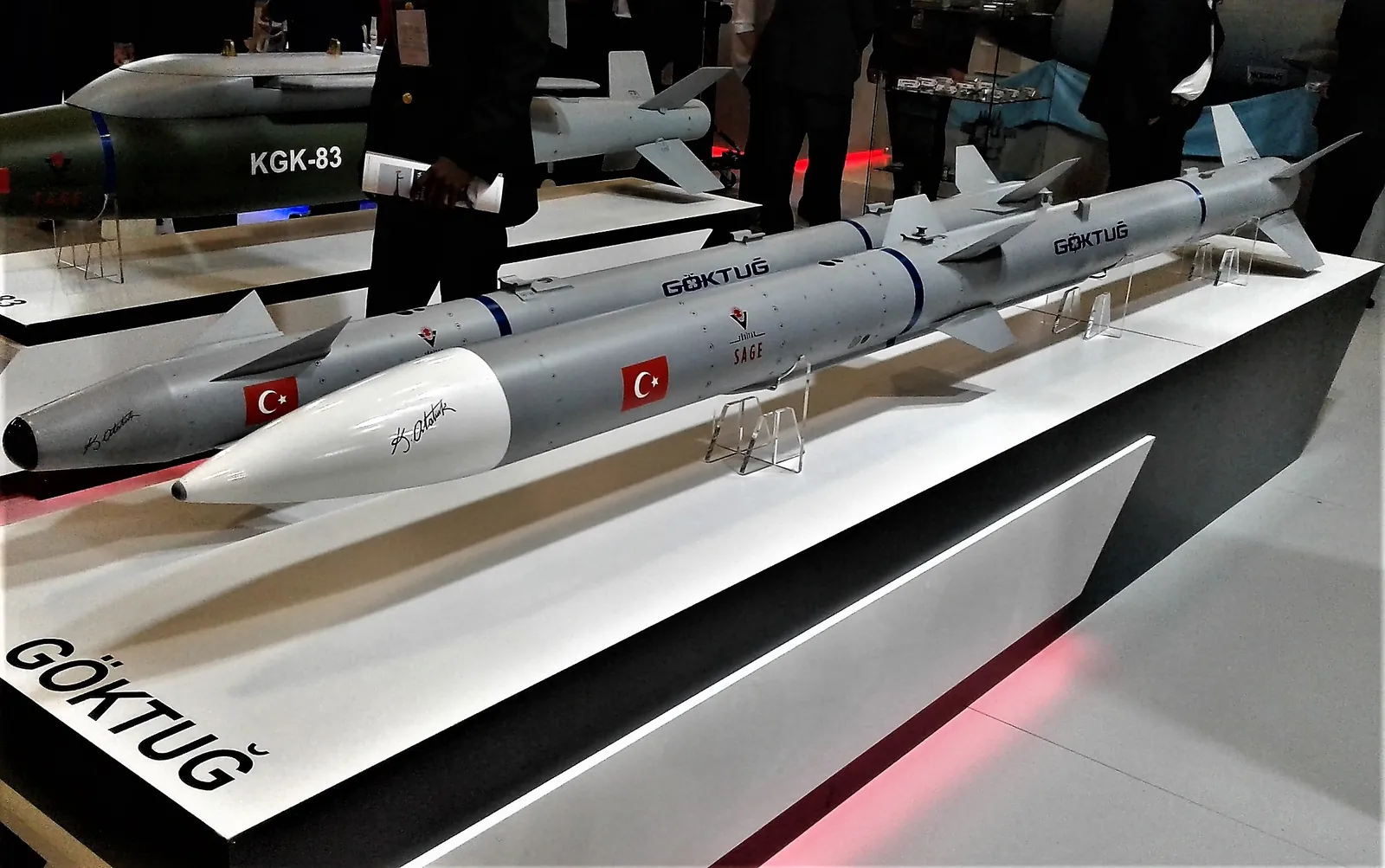
For decades, beyond-visual-range air-to-air lethality on Turkish F-16s equaled dependence on the AIM-120 AMRAAM. GÖKDOĞAN, developed by TÜBİTAK SAGE under the GÖKTUĞ program, is the domestic answer that program leadership has been working toward since the 2013 contract. Deliveries to the Turkish Air Force began on 28 July 2024. A successful target engagement with the active radar seeker followed in February 2025, and on 19 October 2025 a live F-16 shot destroyed an unmanned aerial target. In the same window, Bayraktar KIZILELMA fired GÖKDOĞAN in a historic first — the first BVR air-to-air missile launched from a UCAV. The reference on the other side is the AIM-120 AMRAAM in its latest production blocks, C-8 and D-3, the missile that has effectively written the modern BVR doctrine of NATO air forces. This comparison places both systems side by side across range, kinematics, seeker, ECCM, platform breadth, unit cost and supply autonomy, keeping verified data and interpretation strictly separated. Where an exact number is undisclosed, we say so.
Head-to-Head Data Table
| Metric | GÖKDOĞAN | AIM-120 AMRAAM |
|---|---|---|
| Class | Beyond-visual-range air-to-air missile (BVRAAM) | Beyond-visual-range air-to-air missile (BVRAAM) |
| Manufacturer | TÜBİTAK SAGE (Türkiye) | RTX Raytheon (USA) |
| Program | GÖKTUĞ – 2013 contract | AIM-120A first fielded 1991 |
| First successful flight test | 2018 | 1982 (test) |
| First deliveries | 28 July 2024 | Early 1990s |
| Active serial production | 2024–2025 (ramp-up) | ✓ C-8 and D-3 (as of 2024) |
| Length | Not disclosed (est. ~3.6 m class) | ✓ 3.66 m |
| Diameter | Not disclosed | ✓ 178 mm (7 in) |
| Weight | Not disclosed | ✓ ~152 kg (C-series) |
| Warhead | HE blast-fragmentation (weight undisclosed) | ✓ 20 kg HE blast-fragmentation |
| Fuze | Proximity + impact | FZU-49 proximity + impact |
| Range (stated) | 65+ km (official); 100 km+ claim in open sources | ✓ C-8: ~160 km · D-3: ~180 km |
| Maximum speed | Not disclosed | ✓ Mach 4 – 4.7 |
| Seeker | Active radar, fire-and-forget, lock-on after launch, home-on-jam | Inertial + datalink + terminal active radar |
| ECCM & EW | ECCM, all-aspect engagement | ✓ Mature ECCM, two-way datalink (D-3) |
| Standards | MIL-STD-1553 / 1760 | MIL-STD-1553 / 1760 |
| Launcher | LAU-129 compatible | LAU-127/128/129 |
| Platform footprint today | F-16, KIZILELMA (test); planned: KAAN, HÜRJET, JF-17 | ✓ F-15, F-16, F/A-18, F-22, F-35, Typhoon, Gripen, Rafale (partial), NASAMS (ground) |
| Operator nations | 1 (Türkiye); Azerbaijan planned | ✓ 40+ |
| Unit cost | ✓ Not disclosed (domestic supply chain, no FX) | D (FY2019): ~USD 1.09M · C-8: ~USD 1.9M |
| Supply autonomy | ✓ Fully domestic design and production, no ITAR | US Government approval required (FMS/DCS) |
| Unmanned platform integration | ✓ First BVR AAM fired from a UCAV (KIZILELMA, 2024–2025 window) | Air-to-air role on UCAVs (MQ-9) limited; primary use on manned fighters |
Capability Profile
In-Depth Analysis
Birth of the GÖKTUĞ family+
The GÖKTUĞ program was launched in 2013 under a contract between TÜBİTAK SAGE and the Presidency of Defence Industries. Two parallel products were pursued: BOZDOĞAN in the WVR class and GÖKDOĞAN in the BVR class. The strategic aim was to end the full dependence of the F-16 fleet on AMRAAM and Sidewinder, and to build an ITAR-free air-to-air chain hard-wired into Turkey’s next-generation platforms — KAAN, HÜRJET and KIZILELMA. GÖKDOĞAN is therefore not only a tactical product, but a strategic autonomy vehicle for Turkish defence industry.
What AMRAAM solved+
When AIM-120 AMRAAM entered service in 1991, it retired the constraint of Sparrow’s semi-active illumination and single-target lock through terminal engagement. Active-radar fire-and-forget freed F-15, F-16, F/A-18 and later F-22 and F-35 crews to engage multiple BVR targets. Today, only C-8 and D-3 blocks remain in production; D-3 introduces two-way datalink, enhanced HOJ and extended kinematic reach.
One class, two birth stories+
GÖKDOĞAN technically targets the same problem space AMRAAM solved: fire-and-forget with active radar, datalink-updated mid-course guidance and all-aspect engagement. Where they differ is on the maturity curve and the breadth of the integrated platform network. AMRAAM is a proven, mature product with a service record spanning four decades and 40+ operator nations. GÖKDOĞAN is entering serial production, has passed live-engagement tests, and is building both inventory mass and multi-platform certification.
Declared ranges+
TÜBİTAK SAGE officially states GÖKDOĞAN range at “over 65 km.” Former Defence Industries President İsmail Demir has publicly mentioned figures “above 100 km”; exact numbers are classified. AIM-120 C-8 is declared at ~160 km, D-3 at ~180 km, both at high altitude and Mach 1.2+ launch conditions. On declared numbers, AMRAAM enjoys a roughly 2× headline range advantage.
Kinematic reach+
A headline range is not a kinematic guarantee. What matters is end-game energy against a maneuvering target. AMRAAM C-8/D-3 declare Mach 4 to Mach 4.7 top speed with reduced-smoke HTPB propellant. GÖKDOĞAN’s max speed remains undisclosed, but a reduced-smoke, high-thrust solid-propellant motor is confirmed. Same class of kinematic intent — direct numerical comparison is not yet public.
Maneuvering and endgame+
AMRAAM is credited with 40G+ maneuver capability. GÖKDOĞAN’s maneuver load is not disclosed. All-aspect engagement via active radar seeker is officially confirmed. Bottom line: AMRAAM is numerically documented, GÖKDOĞAN is qualitatively described as equivalent in intent. Detailed public numbers on G-load and end-game energy are expected as inventory and testing mature.
Seeker architecture+
AMRAAM uses a three-stage architecture: inertial navigation, mid-course datalink updates from the launcher, and a terminal active radar seeker. D-3 introduces a two-way datalink, enabling live updates between shooter and missile. GÖKDOĞAN uses a solid-state active RF seeker with confirmed fire-and-forget, lock-on after launch (LOAL) and home-on-jam (HOJ) capability. Architectural intent is the same class.
ECCM record+
AMRAAM has accumulated four decades of ECCM updates against real electronic-warfare environments, producing a mature EW-resistant baseline in C-8/D-3. GÖKDOĞAN is designed with ECCM in mind but has not yet accumulated the same volume of real-world operational test cycles. Near term, AMRAAM offers a numerically safer EW profile. Longer term, the ability to update GÖKDOĞAN’s ECCM domestically is a distinct strategic value.
Datalink and mid-course+
AIM-120D-3 upgrades to a two-way datalink. GÖKDOĞAN publicly acknowledges “tactical datalink updates” but does not detail the standard or bidirectionality. MIL-STD-1553/1760 compatibility and LAU-129 launcher integration on the F-16 side are confirmed.
The AMRAAM network+
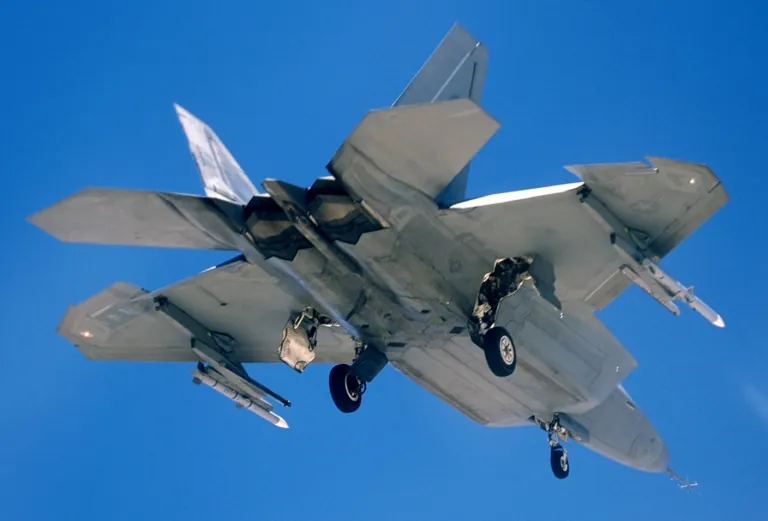
AIM-120 flies today from F-15, F-16, F/A-18, F-22, F-35, Eurofighter Typhoon, JAS 39 Gripen and other allied aircraft — and lives on the ground inside NASAMS air-defence batteries. With 40+ operator nations, AMRAAM is the most widely fielded BVR air-to-air missile in the world.
GÖKDOĞAN’s growing network+
Today, GÖKDOĞAN’s open-source-confirmed platforms are the F-16 and KIZILELMA UCAV. Before the October 2025 F-16 live shot, KIZILELMA fired GÖKDOĞAN successfully — the first BVR air-to-air missile ever launched from a UCAV. The roadmap includes KAAN, HÜRJET and JF-17 integrations. As KAAN production ramps, GÖKDOĞAN is expected to become the default BVR weapon of Turkey’s fifth-generation fighter.
The UCAV dimension+
This is a domain where AMRAAM has no direct counterpart. Air-to-air roles on unmanned platforms like MQ-9 have been limited and mostly proven against short-range targets. GÖKDOĞAN and KIZILELMA together represent a direct domestic build of a new UCAV BVR doctrine.
AMRAAM unit cost+
AIM-120D was reported at ~USD 1.09 million per round in FY2019. The AIM-120C-8 has been reported at ~USD 1.9 million in current-year data. On top of that: annual logistics support, spares, ECCM updates and seeker refresh cycles. Every purchase decision is subject to US Government FMS/DCS release approval.
GÖKDOĞAN cost economics+
GÖKDOĞAN unit cost is not officially disclosed. However, production and seeker sourcing are entirely domestic, which insulates the cost base from FX shocks. The supply chain sits inside Turkish industry, and critical subsystems do not require ITAR clearance. That gives long-term inventory planning both cost and strategic assurance.
The autonomy dimension+
For Türkiye — a NATO member removed from the F-35 program and periodically exposed to supply constraints — freedom from external release approval on an air-to-air missile is not a tactical, but a strategic outcome. That reframes the discussion from “is it technically equivalent?” to “who decides when it is used?”
Bulk inventory and NATO interoperability+
Turkey’s AMRAAM inventory will remain relevant as long as the F-16 modernization roadmap and NATO joint-operations requirements continue. C-8 and D-3 upgrades support joint mission planning and inventory alignment with allied air forces.
Domestic platforms and strategic autonomy+
When KIZILELMA, KAAN and HÜRJET carry GÖKDOĞAN as their primary BVR weapon, Turkey secures a fully autonomous BVR air-to-air kill chain. The question then is not who ranges longer, but who decides when to shoot — and that answer is domestic.
The near-term hybrid inventory+
The most realistic near- and mid-term outcome is a hybrid inventory: AMRAAM heavy in NATO operations and on F-16s, GÖKDOĞAN growing on domestic manned platforms and UCAVs. Turkey can preserve interoperability while dialing up supply autonomy at the same time.
Bottom Line
On declared range, kinematics and maturity, AIM-120C-8/D-3 leads numerically. But GÖKDOĞAN buys Türkiye something AMRAAM by design cannot: domestic supply autonomy, ITAR-free integration, first-in-class UCAV BVR capability, and strategic control over the air-to-air kill chain. The right question is not “which one shoots farther?” — it is “when the moment comes, who decides whether it shoots at all?”
Frequently Asked Questions
What is GÖKDOĞAN’s declared range?+
TÜBİTAK SAGE officially states “over 65 km.” Former SSB President İsmail Demir has publicly referenced figures “over 100 km.” Exact numbers are classified.
Which AIM-120 variants are still in production?+
As of 2024, only AIM-120C-8 (~160 km) and AIM-120D-3 (~180 km) remain in production. D-3 features a two-way datalink and enhanced ECCM.
Which platforms has GÖKDOĞAN fired from?+
F-16 and Bayraktar KIZILELMA have been confirmed. Roadmap platforms include KAAN, HÜRJET and JF-17.
Is GÖKDOĞAN technically equivalent to AMRAAM?+
Same design class: active-radar fire-and-forget with LOAL and HOJ. C-8/D-3 AMRAAM is numerically more mature. GÖKDOĞAN is closing the maturity gap as inventory grows.
What is the AMRAAM unit cost?+
AIM-120D was reported at ~USD 1.09 million (FY2019). AIM-120C-8 has been reported at ~USD 1.9 million.
Why does a KIZILELMA GÖKDOĞAN shot matter?+
It is the first BVR air-to-air missile fired from a UCAV — a doctrinal first and a strategic validation of KIZILELMA’s air-superiority role.
How many countries operate AMRAAM?+
40+ nations. AMRAAM is also the primary effector in NASAMS ground-based air defence batteries.
Will GÖKDOĞAN be exported?+
Azerbaijan is the first publicly named potential operator. JF-17 integration could open Pakistan. Contracts are not publicly disclosed.
Will Turkey retire AMRAAM?+
Not in the short and mid term. F-16 fleet operations and NATO interoperability keep AMRAAM inventory relevant. GÖKDOĞAN will become the default on domestic platforms.
Can both missiles engage the same threat?+
Yes. They share the same BVR air-to-air threat envelope. In a hybrid inventory, missile choice depends on platform and mission.