KORAL vs Krasukha-4: Full Technical Comparison of NATO and Russian Land-Based EW
Summary Not Found.
ASELSAN’s KORAL and Russia’s Krasukha-4 represent two competing philosophies of land-based stand-off radar jamming. One is a NATO-aligned, export-minded system fielded by a member state; the other a battle-marked Russian asset whose capture in Ukraine handed Western intelligence a rare look inside. We compare both across eight criteria.
AWACS, ground/airborne radars, LEO recon satellites
Operating environment
-30 C to +50 C, 95% humidity
All-weather, field-deployed
Service entry
2016 (Turkish Armed Forces)
2014 (Russian Armed Forces)
Combat record
Syria, Libya (cross-border radar suppression)
Syria, Ukraine (one unit captured 2022)
Jamming Power and Reach
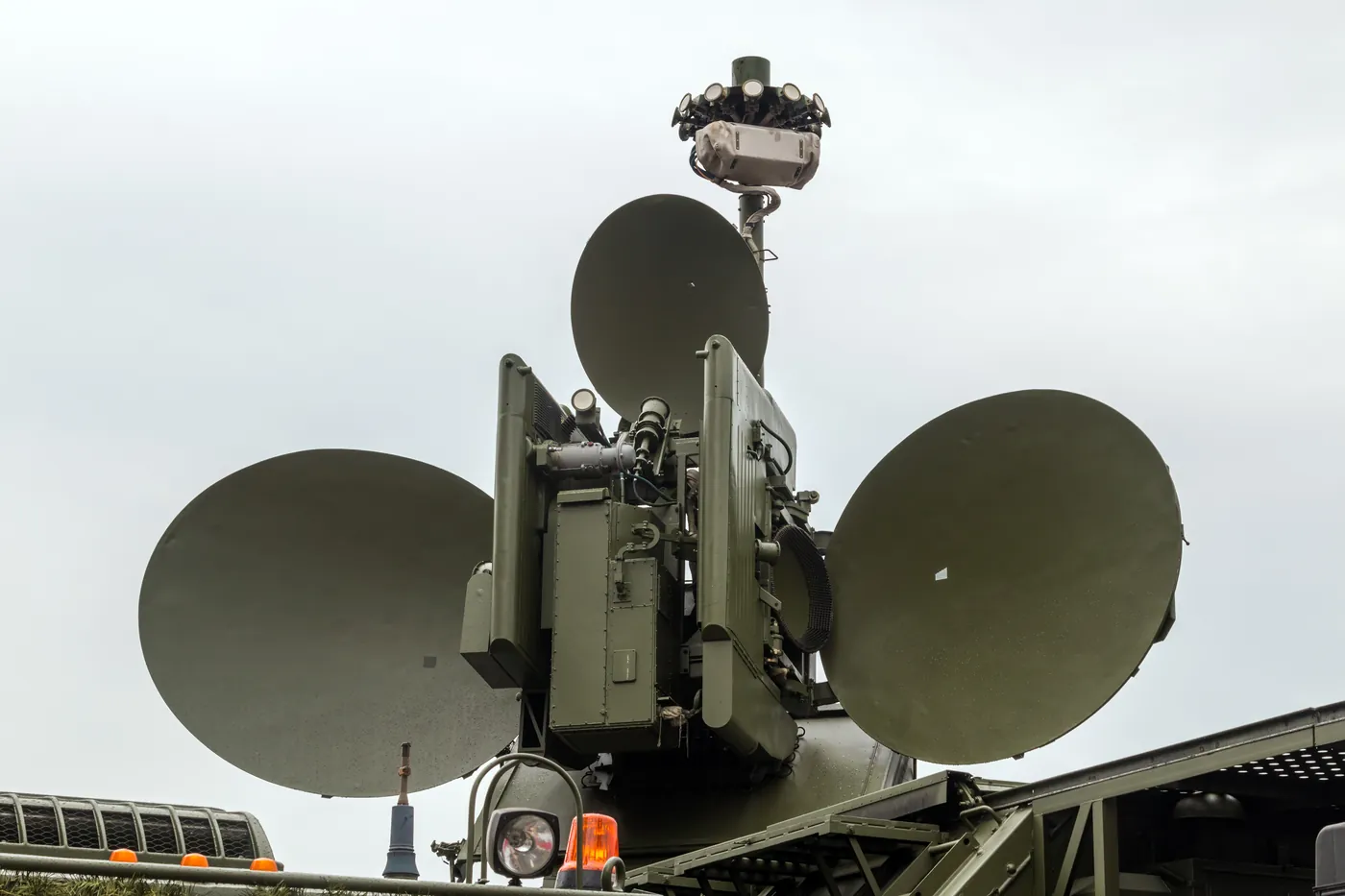
Krasukha-4 — CC BY-SA 4.0
KORAL fields a separated Electronic Support (ES) and Electronic Attack (EA) architecture, each on its own 8×8 truck, able to operate up to 500 m apart. Reported effective reach of around 200 km lets it blind hostile early-warning and fire-control radars from well behind the forward edge, a stand-off posture proven in Turkish operations along the Syrian and Libyan theatres.
Krasukha-4 advertises a wider 150-300 km envelope and is explicitly tasked against airborne early-warning platforms such as the E-3 AWACS and against low-earth-orbit reconnaissance satellites. Its raw power class is formidable, though Western analysts note that real-world effectiveness against modern frequency-agile and LPI radars is harder to verify than the brochure figures suggest.
Signal Processing and Sophistication
KORAL’s standout feature is its Digital RF Memory (DRFM), which captures incoming radar pulses, manipulates them and replays deceptive returns to confuse the emitter rather than merely swamping it with noise. This deception-grade approach against ‘conventional and complex’ radars reflects a modern, software-defined design philosophy that ASELSAN continues to upgrade.
Krasukha-4 leans on high-power broadband noise jamming across X- and Ku-band SATCOM and radar frequencies. It is a capable system, but the 2022 capture near Makariv in Ukraine — with the unit shipped to the United States for exploitation — exposed parts of its waveform library and architecture, eroding some of its operational mystique.
Mobility and Survivability
Both systems ride 8×8 tactical trucks for shoot-and-scoot survivability. KORAL’s modular ES/EA split allows the emitter and sensor nodes to be dispersed, complicating counter-battery and anti-radiation targeting against the high-value jammer.
Krasukha-4 similarly disperses its jammer and command-and-control vehicles, but as a powerful active emitter it remains a priority target for anti-radiation missiles and loitering munitions — a vulnerability repeatedly demonstrated in Ukraine, where several Russian EW assets have been struck or abandoned.
Cost, Production and Export
From a NATO and export standpoint KORAL is attractive: it is produced by an allied OEM with no sanctions exposure, integrates with Western command chains, and ASELSAN actively markets its EW portfolio to partner nations. Turkish industrial scale and a competitive unit cost make it a credible procurement option for states seeking sovereign land-based EW.
Krasukha-4 is exported through Rosoboronexport, with a first export contract reported in 2021 and supply to operators such as Iran, but Western sanctions, spare-parts risk and the reputational damage of the Ukraine capture sharply narrow its addressable market outside Russia’s traditional customers.
Alliance Fit and Procurement Outlook
For NATO and aligned buyers, KORAL offers interoperability, a clean supply chain and a vendor under allied jurisdiction — decisive factors in defence acquisition where logistics and political risk matter as much as raw output. Its combat exposure in Turkish cross-border operations gives procurement officers a real operational reference.
Krasukha-4 remains a benchmark within the Russian and allied-of-convenience ecosystem and has a longer combat-deployment history, but its appeal to Defense News and Janes-tracked Western procurement is effectively zero. The comparison ultimately hinges on which bloc a buyer sits in.
Operating Nations
System
Operators
KORAL
Turkey (Turkish Air Force / Armed Forces); marketed to allied and partner nations
Krasukha-4
Russia, Iran; offered via Rosoboronexport
Verdict
From a NATO and export perspective KORAL edges ahead at 62/100, rewarded for its DRFM-based deception, allied supply chain and competitive cost, even with a narrower combat history. Krasukha-4 scores 55/100: a powerful, long-fielded emitter with a wider stated range, but burdened by sanctions, the 2022 Ukraine capture and limited interoperability for Western buyers.
Frequently Asked Questions
Which is better, KORAL or Krasukha-4?
For NATO-aligned buyers KORAL is the stronger overall choice thanks to its DRFM deception jamming, allied supply chain and interoperability. Krasukha-4 offers a wider stated jamming range and longer combat use, but sanctions and the 2022 Ukraine capture limit its appeal outside Russia’s customer base.
What is the jamming range of each system?
KORAL has a reported effective range of about 200 km, while Krasukha-4 is credited with 150-300 km depending on terrain and target type, including against AWACS aircraft and low-earth-orbit reconnaissance satellites.
What makes KORAL technologically distinctive?
KORAL uses Digital RF Memory (DRFM) to capture, alter and replay enemy radar pulses as deceptive returns, jamming complex radars through deception rather than brute-force noise, and it splits the ES and EA functions across separate vehicles.
Has Krasukha-4 been captured or compromised?
Yes. In March 2022 Ukrainian forces captured a Krasukha-4 unit near Makariv, and it was reportedly sent to the United States for technical exploitation, giving Western intelligence insight into its architecture.
Can these systems be exported?
KORAL is marketed by ASELSAN to allied and partner nations with no sanctions exposure. Krasukha-4 is exported via Rosoboronexport — a first export contract was reported in 2021 — but its market is constrained by sanctions and political risk.