How does SDT’s AVCI counter-drone system work?


Quick answer: AVCI is the counter-drone system SDT developed to protect critical facilities against mini and micro drones; it was first shown at the IDEF fair in May 2019. According to a report by Turkey’s state-run Anadolu Agency (AA), the system consists of a radar, a direction-finding (DF) unit, an acoustic receiver, electro-optical and thermal cameras and a jammer, and can detect a drone with a radar cross-section of 0.01 square meters at a range on the order of 10 kilometers. The tactical end of the product family in the field is the rifle-type mobile counter-drone system produced in cooperation with TAMGÖR.
Which layers make up AVCI?
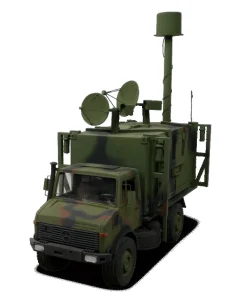
The counter-drone mission cannot be solved with a single sensor, so AVCI was designed as a layered architecture. In AA’s 2019 report, then-general manager Fatih Ünal listed the system’s components: a radar that detects multiple targets, a DF unit that finds the bearing of the drone’s control signal, an acoustic receiver, electro-optical and thermal cameras that identify the target, and a jammer with directional and omnidirectional antennas. A detected drone is rendered unable to carry out its mission by jamming its control and GNSS signals. The company’s current materials also offer integration with hard-kill options.
What does the rifle-type tactical version offer?
According to the official product page, the Tactical Mobile Counter-Drone System offers directional and omnidirectional solutions against threats flown by remote control or under autonomous GNSS guidance. The ergonomic, modular design of the manpack jammer already in inventory was adapted into this device specialized for the drone threat. The user aims at a visually detected drone through the scope on the weapon and neutralizes it with the directional antenna; area protection against multiple threats is possible with the omnidirectional antenna. The system jams drone control and data links along with GNSS frequencies, and options include continuous operation from mains power and remote control.
| Layer | Component | Task |
|---|---|---|
| Detection | Radar, acoustic receiver | Picking up multiple targets at long range |
| Identification | Electro-optical and thermal cameras | Visual confirmation and tracking of the target |
| Intelligence | DF receiver | Determining the bearing of the drone operator |
| Neutralization | Directional/omnidirectional jammer, hard-kill integration | Cutting the control and GNSS links |
| Tactical edge | Rifle-type mobile system | Point protection at patrol and team level |
Whose needs does it answer?
The system’s target users are operators of critical facilities and infrastructure, military units and security forces. The official page emphasizes a field-proven design; the manpack RF jammers that form the product’s base have long been in the inventory of security forces. According to A1 Capital’s May 2026 note, once the new HAB campus is complete the company’s counter-drone system production capacity is targeted to rise from 5 to 50 units a year, a figure that shows the product’s place in serial production planning. Sales quantities and customers have not been officially disclosed.

Where does it stand against rivals?
In Turkey, larger-scale counter-drone systems such as ASELSAN’s İHTAR already exist; SDT’s difference is packaging its radar and electronic warfare experience in a relatively compact, mobile and modular form. A1 Capital’s May 2026 note counts counter-drone systems among the company’s strategic product families for both domestic needs and export potential. Since its launch at IDEF 2019, the product has featured regularly on the company’s fair agenda at home and abroad. The company’s ELINT and DF-COMINT technologies form the basis of the detection and direction-finding layers. The system is exhibited regularly at events where the drone threat is prominent, including the EFES exercise area presentations, DSA and WDS. The full product range is listed in the SDT product guide.

Frequently asked questions
Which drones can AVCI stop?
The system was developed against mini and micro class fixed-wing and rotary-wing unmanned aircraft; threats flown by remote control or under autonomous GNSS guidance are within its scope.
What is the detection range?
According to the company statement in AA’s 2019 report, a target with a 0.01 square meter radar cross-section can be detected at a range on the order of 10 kilometers; ranges for current configurations have not been officially disclosed.
Does the system shoot drones down?
The primary method is jamming the control and GNSS signals so the drone cannot carry out its mission. The company’s materials also offer the option of integrating hard-kill solutions.
How much does the rifle-type system weigh?
The weight has not been disclosed on the official product page, which emphasizes an ergonomic, modular and lightweight design with different battery options.
Has AVCI been exported?
Country-level export data for the counter-drone system has not been officially disclosed; the company’s overall export record is examined in a separate file.
Sources and verification note
The system architecture was taken from Anadolu Agency’s sourced report and the tactical version’s details from the official product page; the capacity target rests on a brokerage note. Performance figures other than the detection range were omitted because they have not been disclosed.
- https://www.sdt.com.tr/tr/cozumlerimiz/uretim-programlari/taktik-mobil-drone-savar-sistemi (Accessed: August 12, 2026)
- https://www.aa.com.tr/tr/bilim-teknoloji/drone-tehdidini-avci-durduracak/1467022 (Accessed: August 12, 2026)
- https://www.savunmasanayi.org/sdt-avci-anti-dron-sistemi-gelistirdi/ (Accessed: August 12, 2026)
- https://a1capital.com.tr/sdttr-toplanti-notu-ve-mali-gorunum/ (Accessed: August 12, 2026)
- https://commons.wikimedia.org/wiki/File:Quadcopter_camera_drone_in_flight.jpg (Accessed: August 12, 2026)