What do SDT’s electronic warfare systems offer?

Quick answer: SDT develops products in the three main intelligence branches of electronic warfare: ELINT for radar signals, COMINT for communications signals and SIGINT for signals intelligence as a whole. According to the company’s official figures, its ESM/ELINT system can detect and direction-find radars in the 0.5-18 GHz and 18-40 GHz bands, while its portable DF-COMINT system estimates bearing with 5-degree RMS accuracy across 30 MHz-6 GHz. The company says its electronic warfare products are used in the field by the Turkish Armed Forces and security agencies.
What does the ELINT system do?
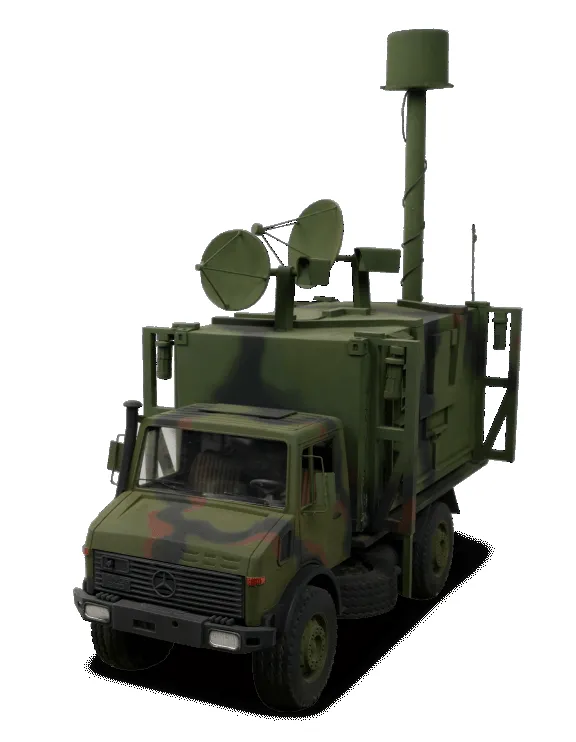
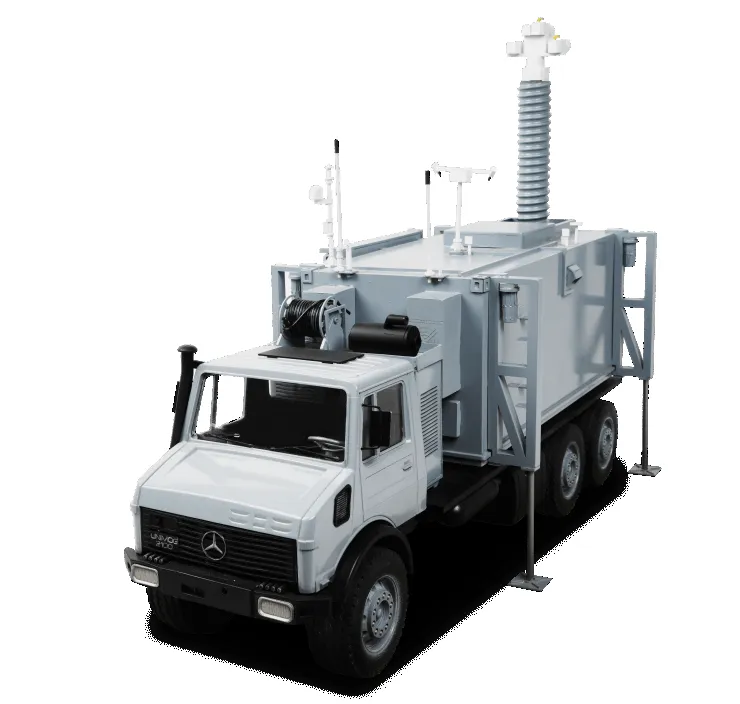
The RF Signal Analysis System (ELINT) was developed for the automatic detection, tracking, identification, direction finding and analysis of radar signals of every type. According to the official product page, the system can analyze signals with fixed or agile PRI, pulsed Doppler and CW emissions, as well as hard-to-capture LPI (low probability of intercept) signals. Interferometric antenna arrays and a multi-channel digital receiver architecture provide pulse-based direction finding; the company cites a probability of intercept (POI) approaching 100 percent with the antenna system. The system is also used on test ranges to record the emissions of target radars and jammer platforms.

What does the COMINT side offer?
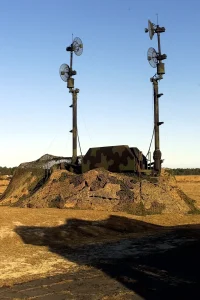
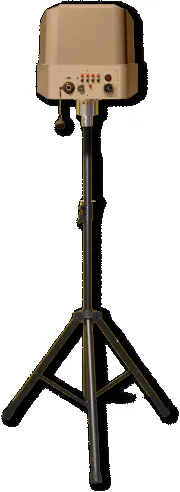
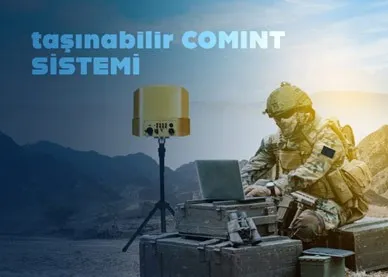
The portable DF-COMINT system is designed to detect, direction-find and analyze communications signals in an area of operations. Using several systems in a network allows the location of an emitter to be fixed. The company says it plans to adapt the compact, tripod-mounted design to vehicle and unmanned aerial platforms in the future, and to keep a deep learning-based emitter classification library continuously updated in the field.
| System | Frequency range | Key feature |
|---|---|---|
| ESM/ELINT | 0.5-18 GHz and 18-40 GHz | Analysis of complex radar signals including LPI; POI close to 100 percent |
| Portable DF-COMINT | 30 MHz-6 GHz | 5-degree RMS direction finding, 360-degree azimuth coverage |
| SIGINT threat simulator | Communications and radar bands | Test and evaluation of EW systems |
| IR Guided Missile Simulator | MWIR and LWIR bands | Training naval platforms to defend against guided missiles |
Where do simulators fit into electronic warfare?
Two simulators stand out in SDT’s electronic warfare portfolio. The Communications and Radar Threat Simulator (SIGINT) is used for the testing, measurement and evaluation of existing electronic warfare systems. The Infrared Guided Missile Simulator is aimed at naval platforms; it supports the development of defensive tactics against guided missiles, electronic warfare trials and work to reduce platforms’ infrared signatures. The system includes infrared cameras in the MWIR and LWIR bands, special optical filters and software. Unlike the training simulator family, these products serve directly as electronic warfare test infrastructure.
How does this expertise feed other products?
The company says it has built up signal processing expertise in radar and electronic warfare since its founding, running projects in SAR signal processing and in the RF and infrared bands. Synthetic aperture radar work that began in 2006 led to SARPER, the sensor developed through the business partnership between SDT and Turkish defense electronics company ASELSAN and used on the ANKA unmanned aerial vehicle. The same RF background underpins the RF jammer systems and the AVCI counter-drone system. Electronic warfare recording units, analog and digital receivers, offline signal processing, emitter location software and below-noise emission detection software are also in the portfolio; the company emphasizes that these products have gained field and combat experience. The company profile is covered in full in the what-is-SDT file.
Frequently asked questions
What is the difference between ELINT and COMINT?
ELINT covers intelligence on non-communications electronic emissions such as radars; COMINT covers radio and other communications signals. SIGINT is the umbrella term covering both.
Whose inventory holds SDT’s EW systems?
The company says its products are used in the field by the Turkish Armed Forces and security agencies. The customer breakdown and quantities have not been officially disclosed.
Why do LPI signals matter?
LPI radars avoid detection by operating at low power across a spread spectrum. SDT states that its ELINT system can capture and analyze these signals as well.
Have the systems been exported?
Country-level export data for the electronic warfare products has not been officially disclosed. The company’s overall export record is examined in a separate file.
What is SARPER?
A national synthetic aperture radar sensor developed through the ASELSAN-SDT business partnership; according to the company’s official website, it is actively used on the ANKA unmanned aerial vehicle.
Sources and verification note
Frequency ranges and technical characteristics were taken from official product pages; user information is the company’s own statement. Quantities, prices and customer breakdowns were omitted because they have not been disclosed.
- https://www.sdt.com.tr/tr/cozumlerimiz/radar-elektronik-harp-ve-haberlesme/rf-sinyal-analiz-sistemi-elint (Accessed: August 12, 2026)
- https://www.sdt.com.tr/tr/cozumlerimiz/radar-elektronik-harp-ve-haberlesme/tasinabilir-df-comint-sistemi (Accessed: August 12, 2026)
- https://www.sdt.com.tr/tr/cozumlerimiz/radar-elektronik-harp-ve-haberlesme/gudumlu-mermi-simulatoru (Accessed: August 12, 2026)
- https://www.sdt.com.tr/tr/cozumlerimiz/radar-elektronik-harp-ve-haberlesme (Accessed: August 12, 2026)
- https://www.sdt.com.tr/tr/cozumlerimiz/radar-elektronik-harp-ve-haberlesme/sentetik-aciklikli-radar-sar (Accessed: August 12, 2026)