Canada’s F-35 Shift: Trading Part of 88-Jet Order for 60 Gripen Es
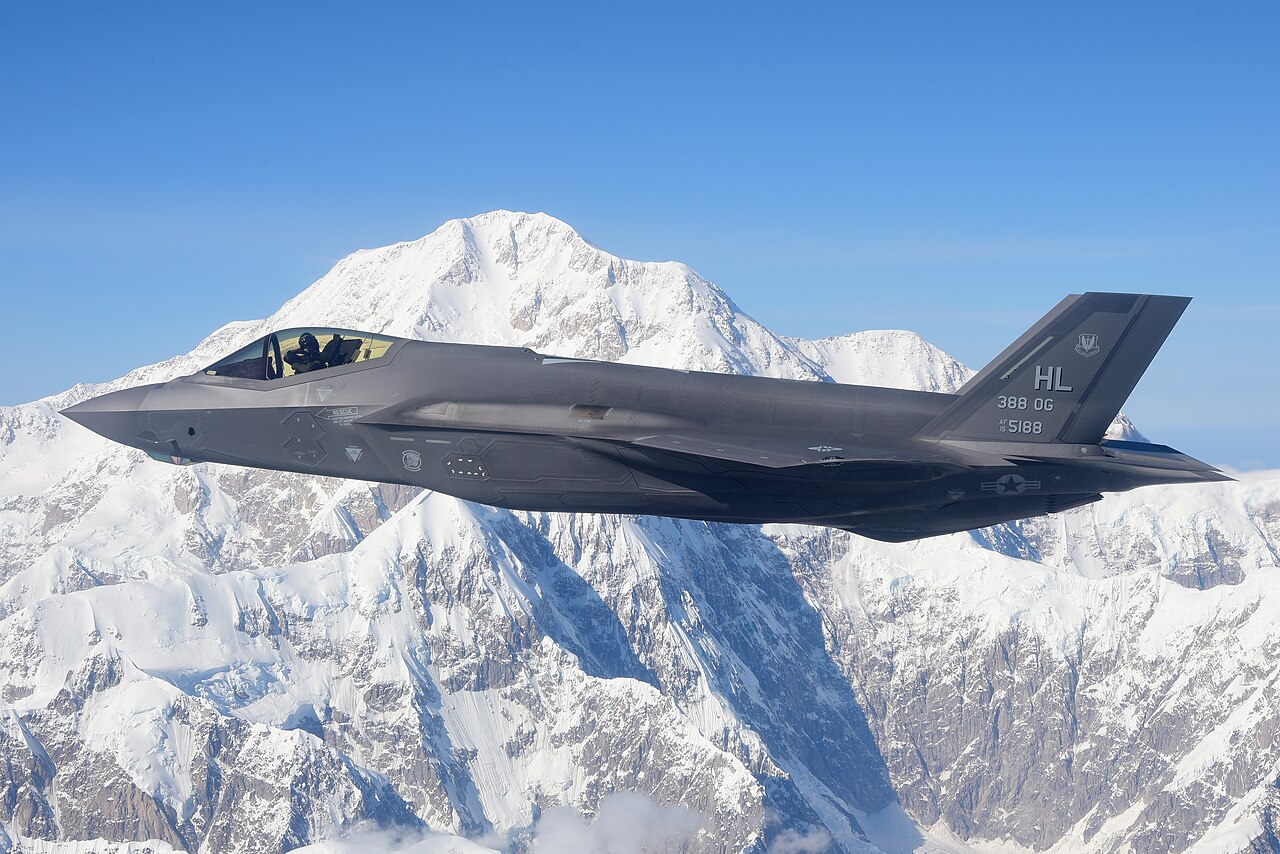
According to Army Recognition and La Presse (30 May–1 June 2026), Ottawa is considering dividing its future fighter fleet rather than cancelling the F-35A outright. The plan would retain 30 F-35As while covering the remaining requirement with 60 Saab Gripen Es. Prime Minister Mark Carney’s government has pushed any formal announcement to after the U.S. midterms, around November 2026.
F-35A Lightning II, Canada’s 2023 fighter of choice. Photo: U.S. Air Force / Wikimedia Commons.
At a Glance
- What happened? Canada is weighing replacing most of its 88 F-35As with Gripen Es
- Mixed fleet: 30 F-35As + 60 Saab Gripen Es
- Binding portion: Only the first 16 F-35s are locked in
- Cost gap: Gripen flight hour $7,000–10,000 vs F-35A $30,000–40,000
- Jobs: Local Gripen production promises 6,000–12,600 Canadian jobs
- Decision: November 2026 (post U.S. midterms)
Background: Sovereignty Worries Shook the F-35 Deal
Canada committed to 88 F-35As with Lockheed Martin in January 2023, with industrial participation projected at C$15.5 billion through 2058 and roughly 4,500 jobs. But Washington’s proposed 25% tariffs and concern over U.S. supply-chain dependence reopened the “single-supplier lock-in” debate in Ottawa.
Saab’s “Built for Canada by Canadians” campaign targets exactly that gap: final assembly, an R&D centre and up to 70% domestic content. The Gripen E’s ability to operate from 800-metre road bases and turn around for a new sortie in about 10 minutes is also an attractive argument for Canada’s Arctic basing network.
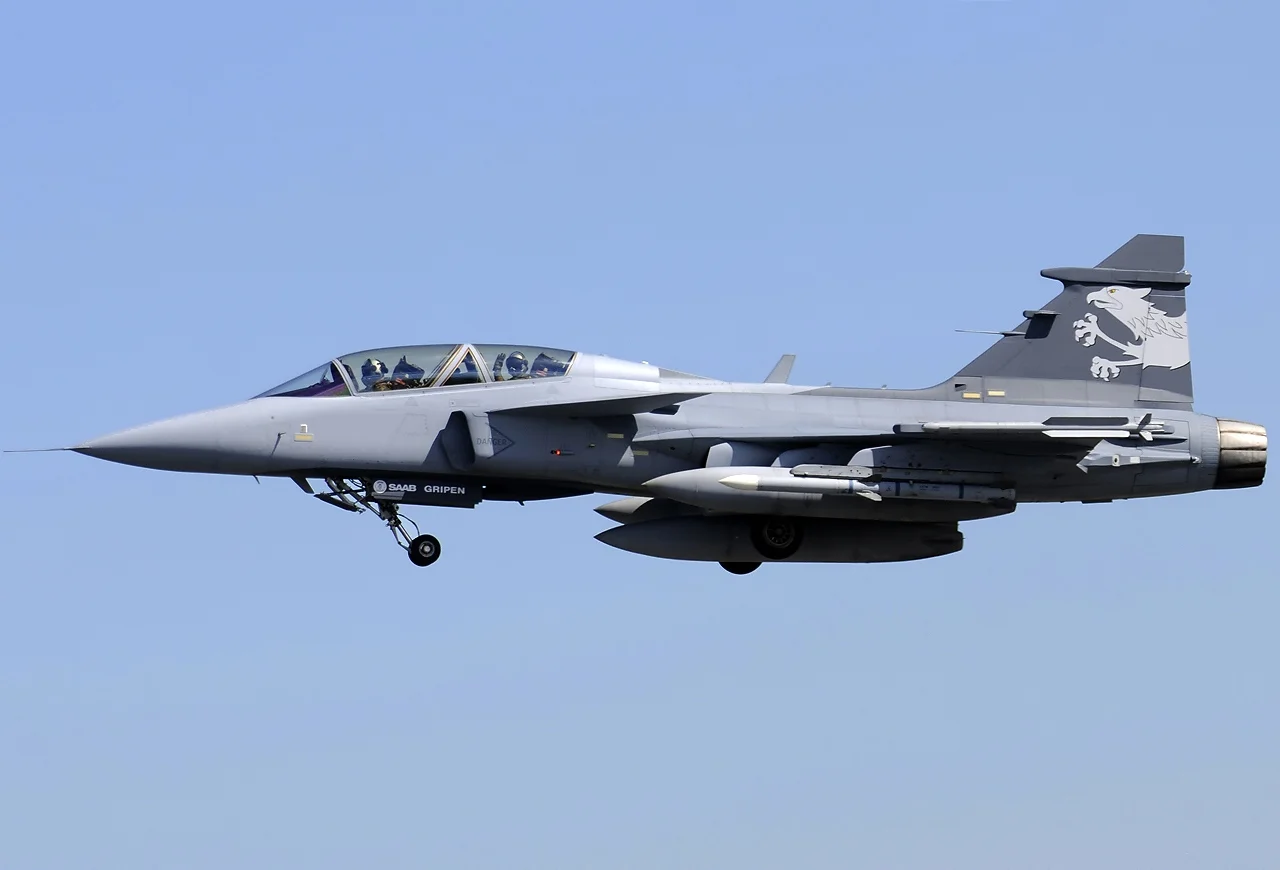
Saab JAS 39 Gripen E. Single-engine, multirole and marketed on low operating cost. Photo: Saab / Wikimedia Commons.
The Logic of a Mixed Fleet
The split-fleet model aims to combine fifth-generation stealth (F-35A) with high availability and low-cost patrol power (Gripen E). The F-35A costs $30,000–40,000 per flight hour versus $7,000–10,000 for the Gripen E — a gap worth billions in operating savings over decades for a country with Canada’s vast airspace.
| Spec | Value |
|---|---|
| Manufacturer | Saab AB (Sweden) |
| Type | Single-engine multirole fighter |
| Engine | GE F414G |
| Radar | Leonardo ES-05 Raven AESA |
| Sensor | Skyward-G IRST |
| Main weapons | Meteor, IRIS-T, AIM-120, Taurus KEPD 350 |
| Operators | Sweden, Brazil, Czechia, Hungary, Thailand, South Africa, Colombia |
NATO and Regional Context
Sweden’s NATO accession in March 2024 turned the Gripen into a fully “in-alliance” alternative. Poland, Czechia, Hungary and Slovakia already fly it, and Canada’s entry could create a new North American logistics and training pool. Saab is also discussing producing up to 100–150 jets for Ukraine via Canada — placing the Gripen at the centre of NATO’s “shared air power” equation.
What It Means for Türkiye
Canada’s dilemma — an expensive, supply-dependent fifth-generation platform versus sovereign production and lower cost — underscores how sound Türkiye’s earlier decision to build a national fighter was. After being removed from the F-35 programme, Türkiye invested in TUSAŞ KAAN, a twin-engine, fifth-generation platform with an indigenous-engine roadmap. A senior NATO ally like Canada now diversifying suppliers on “sovereignty” grounds validates that strategic logic.

TUSAŞ KAAN: Türkiye’s twin-engine, fifth-generation national fighter. Its sovereign-production model is the antidote to the supply dilemma Canada now faces. Photo: TUSAŞ.
The more direct opportunity lies in the market gap: the Canadian case shows NATO states are seeking the trio of fifth-generation performance + affordable cost + domestic production. KAAN targets exactly this equation and sits one tier above the Gripen E’s single-engine segment in export talks with the UAE, Indonesia and Pakistan. HÜRJET can offer a direct alternative in the light-combat/advanced-trainer segment where the Gripen is deemed costly, while BAYRAKTAR KIZILELMA represents the unmanned version of Canada’s “mixed fleet” logic.
Conclusion
Canada’s mixed-fleet review is not merely a procurement debate; it signals a growing Western trend that weighs sovereignty, cost and industrial return against fifth-generation monopoly. That trend vindicates the step Türkiye took years ago with KAAN and opens a concrete medium-term export window for its national platforms.