Romania Lands EU’s €16.68 Billion SAFE Package: Rheinmetall Emerges as Sole Winner on NATO’s Eastern Flank

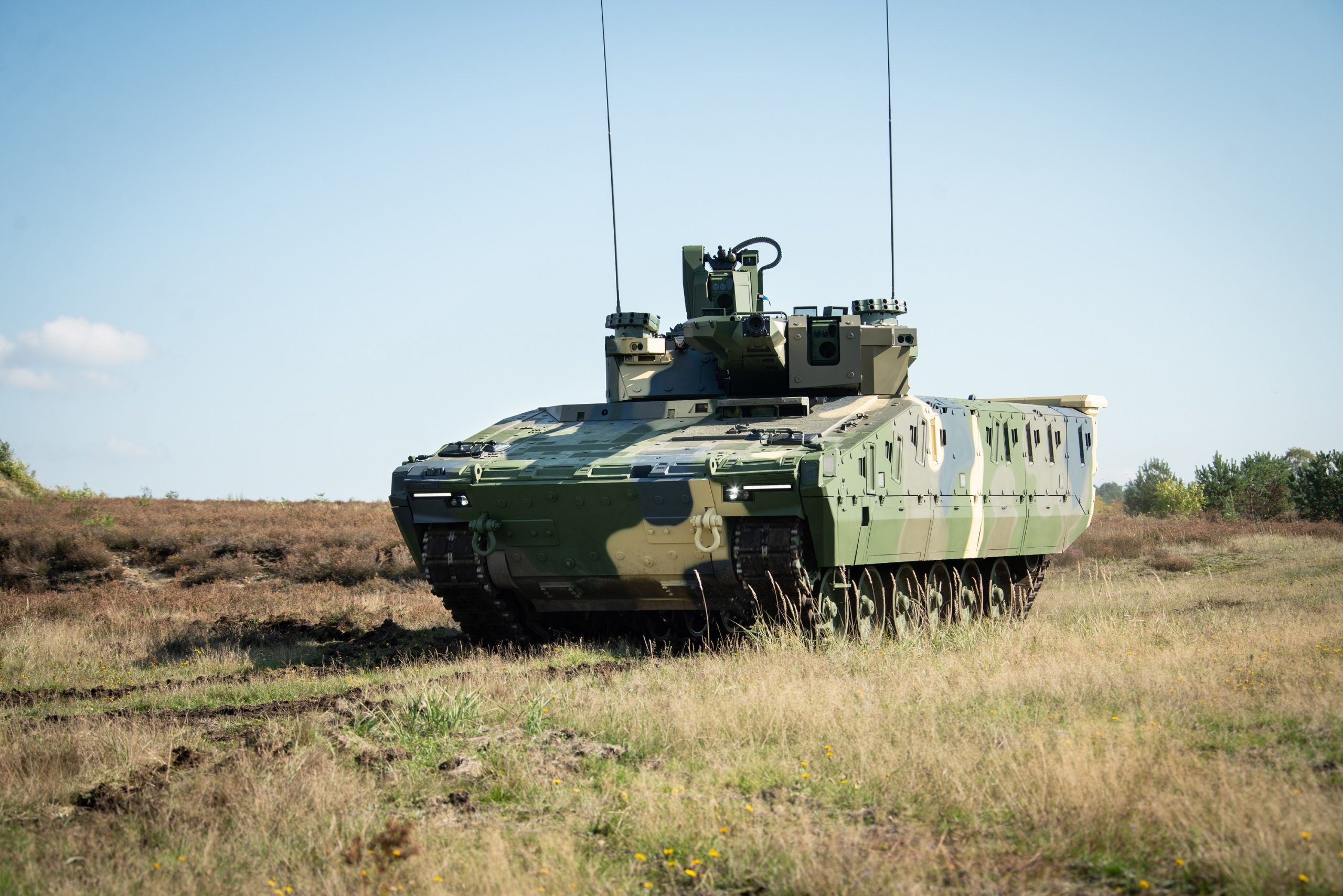
The European Commission approved Romania’s €16.68 billion SAFE (Security Action for Europe) financing package on 21 May 2026. The deal stands out as the second-largest single allocation under the EU’s new defence borrowing instrument, behind only Poland, and is designed to turn Romania into a frontline military logistics hub on NATO’s eastern flank.
The SAFE programme and the structure of the Romanian package
According to Army Recognition, the €150 billion SAFE mechanism offers EU member states defence financing on highly concessional terms: maturities up to 45 years, a 10-year grace period, and an interest cap of 3 percent. The decisive condition is the minimum 65 percent European-origin content rule applied to all funded systems — a clause that materially restricts third-country suppliers and remains the single most contested issue in Türkiye’s ongoing accession talks for SAFE.
The approved package totals €16.680 billion, of which €9.6 to €9.98 billion is reserved for direct procurement by the Romanian Ministry of National Defence (MApN). Brussels had already disbursed €2.502 billion in pre-financing to Bucharest. Implementation runs through 2026-2030, but SAFE rules require single-state acquisitions to be contracted before 31 May 2026. Open-source reporting indicates the Romanian parliament cleared €8.33 billion in acquisitions on 29 April 2026; several lines remained blocked on 22 May over technology-transfer and warranty terms.
Land systems: a €6.47 billion backbone
The single largest tranche addresses land warfare modernisation. Under a €3.337 billion framework with Rheinmetall, Romania will field 298 Lynx KF41 tracked infantry fighting vehicles. Phase I covers 232 platforms (€2.598 billion) for delivery before 2030; Phase II adds 66 vehicles (€738.6 million) after 2031. The land package further includes 359 General Dynamics Piranha 5 wheeled armoured vehicles (€2.172 billion), 1,115 Iveco tactical trucks in 16 configurations and 70 loitering munition systems. Mini-UAS reconnaissance, NATO-standard infantry weapons and C4ISR software round out the lot.
Air defence: a layered architecture
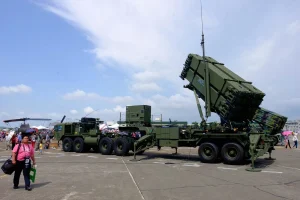
The air-defence component layers new capabilities on top of Romania’s existing Patriot, Hawk XXI, Gepard, Chiron and Mistral inventory:
| System | Quantity | Contract value | Supplier |
|---|---|---|---|
| Skynex C-RAM/C-UAS | 7 | €476 M | Rheinmetall |
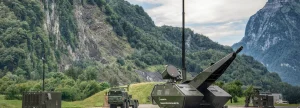
| Skyranger 35 mobile VSHORAD | 2 | €470 M | Rheinmetall |
| Gap-filler radars | 12 | €258 M | — |
| SBAMD(L)-M-MR medium-range SAM | 3 | €547.83 M | — |
| Mistral launchers + missiles | 231 launchers / 934 missiles | €625.6 M | MBDA |
The Skynex and Skyranger acquisitions are aimed squarely at the drone and cruise-missile threat profile Romania has faced along the Danube corridor and Black Sea littoral since 2022.
Naval and helicopter procurements
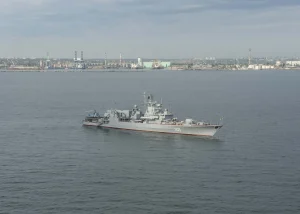
For the navy, Romania will acquire two offshore patrol vessels from Rheinmetall subsidiary NVL B.V. (€836 million), two diver-intervention vessels (€84 million), seven Naval Strike Missile launch systems with 48 missiles, two Rheinmetall Millennium CIWS turrets and 401,760 rounds of 35×228 mm AHEAD ammunition. Rheinmetall is also expected to operate the Mangalia shipyard for future naval production.
Twelve Airbus H225M multi-role helicopters (€852 million total) anchor the rotary-wing tranche. Powered by Safran Makila 2A1 engines, the aircraft will carry roughly 30 troops and be configured for combat search-and-rescue, tactical transport, maritime and special-operations missions, with attack-configured airframes included.
Rheinmetall’s structural lead
Taken together with the company’s earlier disclosures, Rheinmetall and its affiliates are positioned to capture about €5 billion of Romania’s SAFE-funded procurement — a horizontal dominance spanning IFVs, naval platforms, air defence, ammunition and industrial assets. The concentration confirms the German defence industry as one of SAFE’s principal beneficiaries and visibly compresses the share available to KNDS, MBDA and other European primes within this package.
Technical and strategic context — a Turkish perspective
Three strategic vectors define the package for Türkiye’s defence ecosystem:
- The 65 percent European-content rule remains the central technical obstacle in Türkiye’s SAFE accession negotiations. The framework agreement Ankara signs with Brussels will determine how this threshold is interpreted; sub-tier supplier participation by Turkish firms is the most realistic path to inclusion.
- A multi-layered air-defence race in the Black Sea basin is taking shape. Romania’s Skynex + Skyranger + SBAMD stack mirrors the threat map that Türkiye’s HİSAR, SİPER and KORKUT families address — particularly the low-cost drone and cruise-missile vector. For Turkish export ambitions, the Romanian door is effectively closed under this package and reassigned to German suppliers.
- Rheinmetall’s compounding weight inside European defence, accelerated by SAFE, will force a recalibration of partnership strategies for ASELSAN-Rheinmetall, FNSS and Otokar as they court the European market.
Sources
- Army Recognition, “Europe approves €16 Billion SAFE deal for Romania’s massive military procurement program”, 22 May 2026
- European Commission, official SAFE programme communications
- Romanian Ministry of National Defence (MApN) procurement notices
- Open-source technical references: Rheinmetall Lynx KF41, Skynex, Skyranger 35 and Airbus H225M product literature