US Says the Quiet Part Out Loud: “We Have On-Orbit Space Control Weapons”

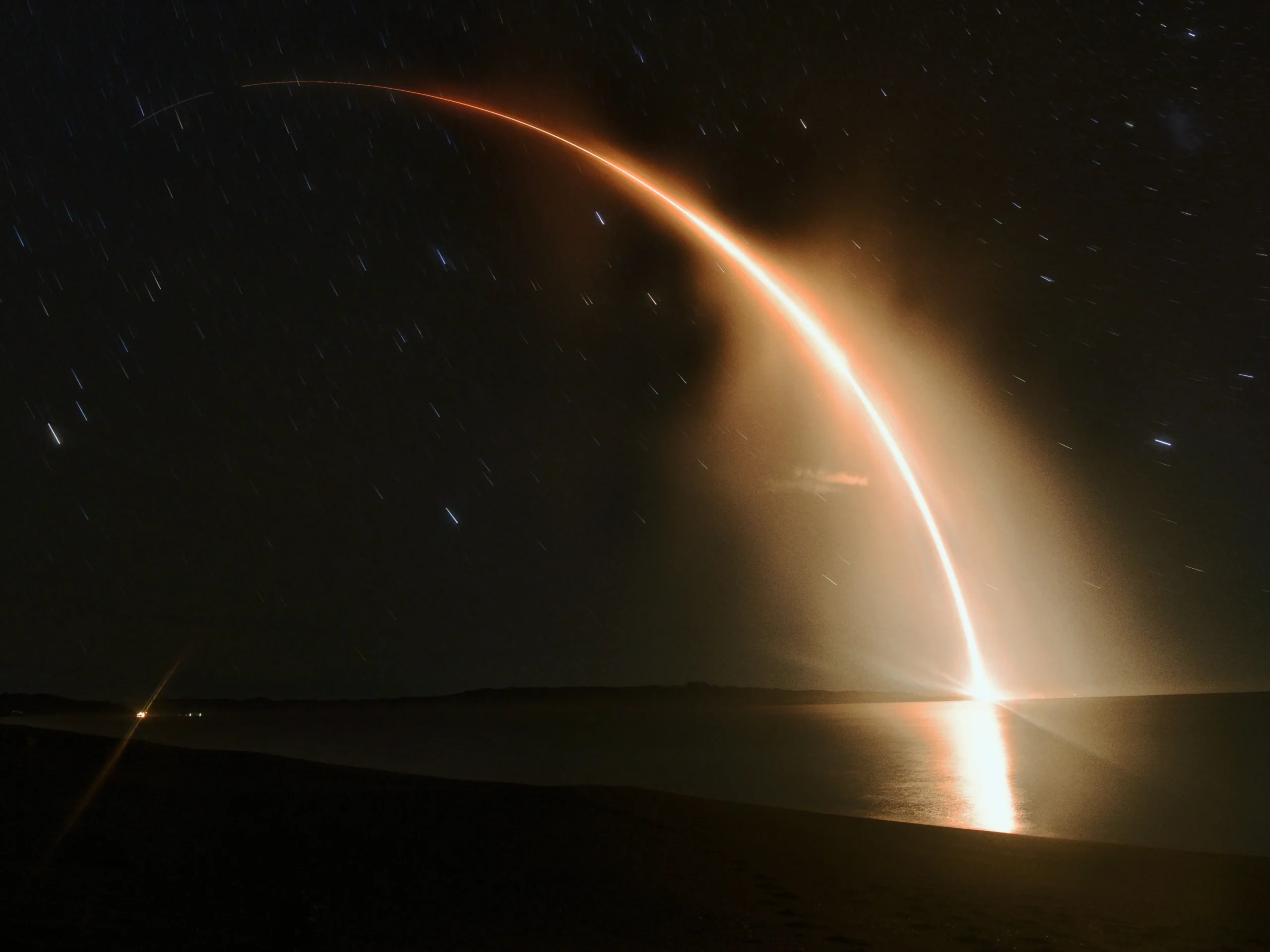
Speaking at the opening keynote of the Air and Space Forces Association’s Air, Space and Cyber Conference in National Harbor, Maryland on 14 September 2026, Secretary of the Air Force Troy Meink broke a decades-old silence in a single sentence: “This is why the United States now has on-orbit space control weapons capable of defending the joint force against hostile adversary actions.” It is the first time a Pentagon official has openly acknowledged that the United States has placed weapons in orbit. Meink did not say what kind, how many, or whether they are kinetic — and the Department of the Air Force declined to elaborate.
At a Glance
- What happened: The US Air Force secretary confirmed the Space Force operates “space control weapons” in orbit.
- Who said it: Troy Meink, Secretary of the Air Force.
- Where: Opening keynote, AFA Air, Space and Cyber Conference, National Harbor, Maryland, 14 September 2026.
- What was withheld: Type, quantity, orbit and whether the systems are kinetic. Meink later said his wording was “very well thought out.”
- The money: The Space Force’s FY2027 request carries $21 billion for space control — a 158 percent jump over FY2026, much of it classified.
- Known inventory: Every previously acknowledged US space control system was ground-based: L3Harris-built Meadowlands jammers (32 planned) and Remote Modular Terminals (160 funded, up to 200 needed).
- Why it matters: The threshold moved from jamming a satellite’s signal to acting on the satellite itself — and deterrence is now declared rather than implied.
What the secretary said — and what he carefully did not
The line arrived mid-speech, immediately after a threat assessment. In full: “Today, we continue to ensure we remain ready to meet the challenges of evolving threats wherever they exist. This is why the United States now has on-orbit space control weapons capable of defending the joint force against hostile adversary actions.” The defensive framing is not accidental. Defending the joint force means shielding American land, sea and air units from interference originating in space. The word offense never appears.
Pressed by reporters afterwards, Meink said his remarks had been “very well thought out” — confirmation that this was a planned disclosure rather than a slip. The Department of the Air Force subsequently declined to provide any detail on system type, quantity or orbital regime. A second line from the same keynote completes the frame: “It is critically important that we maintain our dominance, not only in the air but in space.”
The vagueness is the message, not a gap in it. In deterrence, announcing that a capability exists while withholding its specifications forces an adversary to plan against the worst case. Meink opened the door without turning on the lights.
There is a price attached. For decades Washington held the line that it was the other side militarising orbit. That position closed on Monday morning. Every future diplomatic exchange on space weapons now begins with a sentence spoken by an American cabinet-level official.
The real story is in the budget line, not the sentence
Read alone, the disclosure looks like a surprise. Read alongside the budget, it looks inevitable. The Space Force’s fiscal 2027 request contains $21 billion under space control — a 158 percent increase over the previous year, with much of it sitting in the classified portion of the budget, where the total is visible but the detail is not.
A programme growing at that rate cannot stay entirely unspoken. Sooner or later the official defending it on Capitol Hill has to answer, in public, what the money buys. Seen that way, Meink’s sentence is not only a deterrence signal but a budget argument: to justify the spending, the capability had to be admitted.
A second reading is available. Constraints on discussing space operations have loosened considerably over the past two years, and Space Force leaders have begun using the language of orbital warfare openly. The service’s space warfighting framework already names the missions: orbital strike, meaning the destruction of an adversary space platform, and space link interdiction, meaning severing a connection through electromagnetic or cyber means. The doctrine was written. What was missing was an admission that hardware existed to execute it.
So what changed on 14 September is not what the United States does in orbit. It is what the United States is willing to say about it.
From jamming the signal to reaching the satellite
Every US space control system acknowledged until now has been ground-based. The best known is the Counter Communications System, fielded under the name Meadowlands and built by L3Harris. It radiates radio-frequency energy to disrupt an adversary satellite’s ability to pass data, and its wheeled configuration is compact enough to load onto a single C-130 Hercules. The Space Force plans to grow the fleet to 32 units and requested $40 million for the programme in FY2027.
The second family is the Remote Modular Terminal. First approved for fielding by Space Operations Command in December 2024, the RMT is a small, remotely operated jammer designed to be scattered across geography rather than concentrated in a handful of large systems. The programme is funded for 160 units, with a stated requirement that may rise to 200.
What both families share is reversibility. Switch a jammer off and the target satellite resumes work; there is no debris, no permanent damage, no cloud of fragments left in orbit. In legal terms that distinction matters enormously — reversible interference and physical destruction are not treated as equivalents.
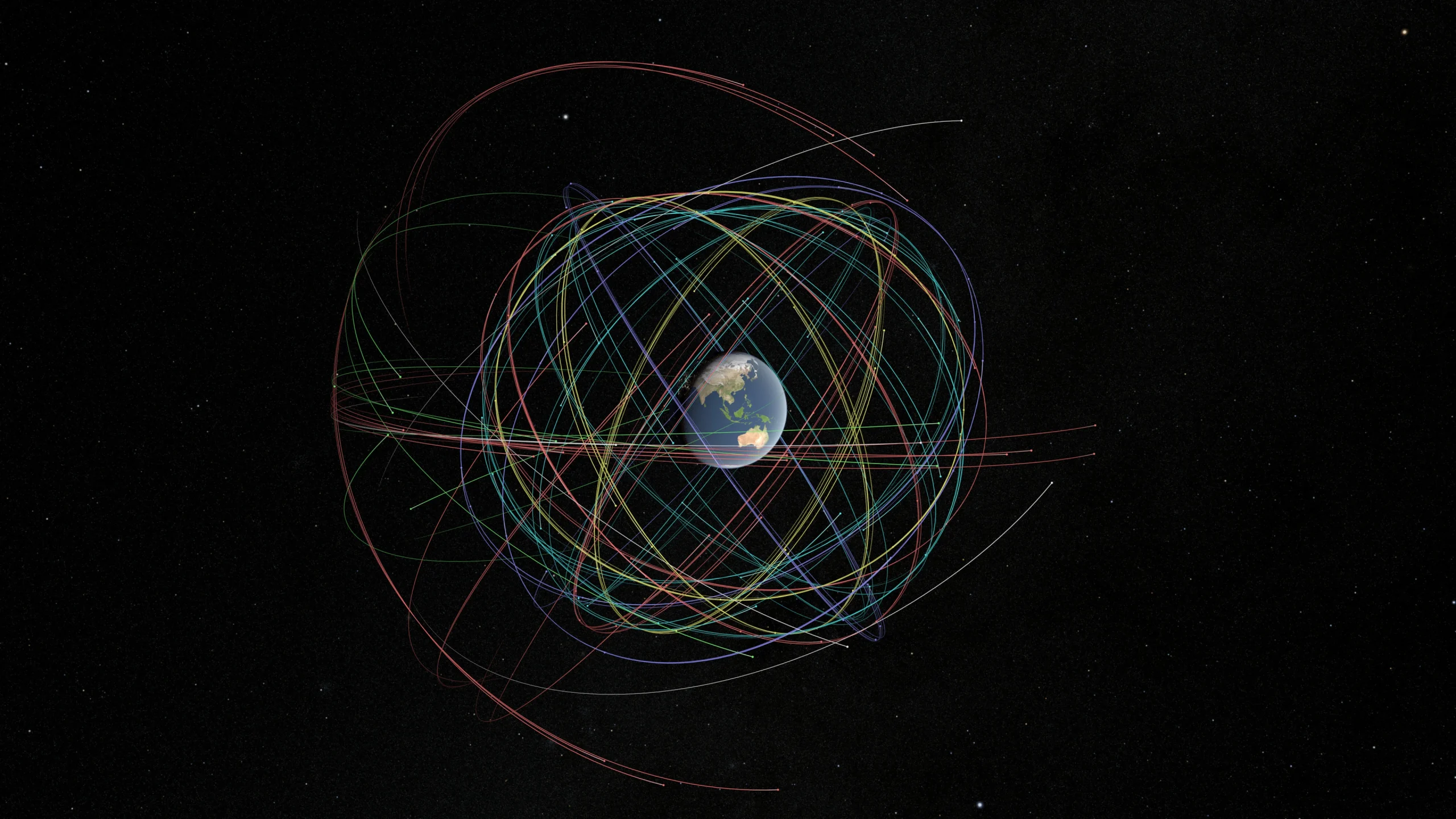
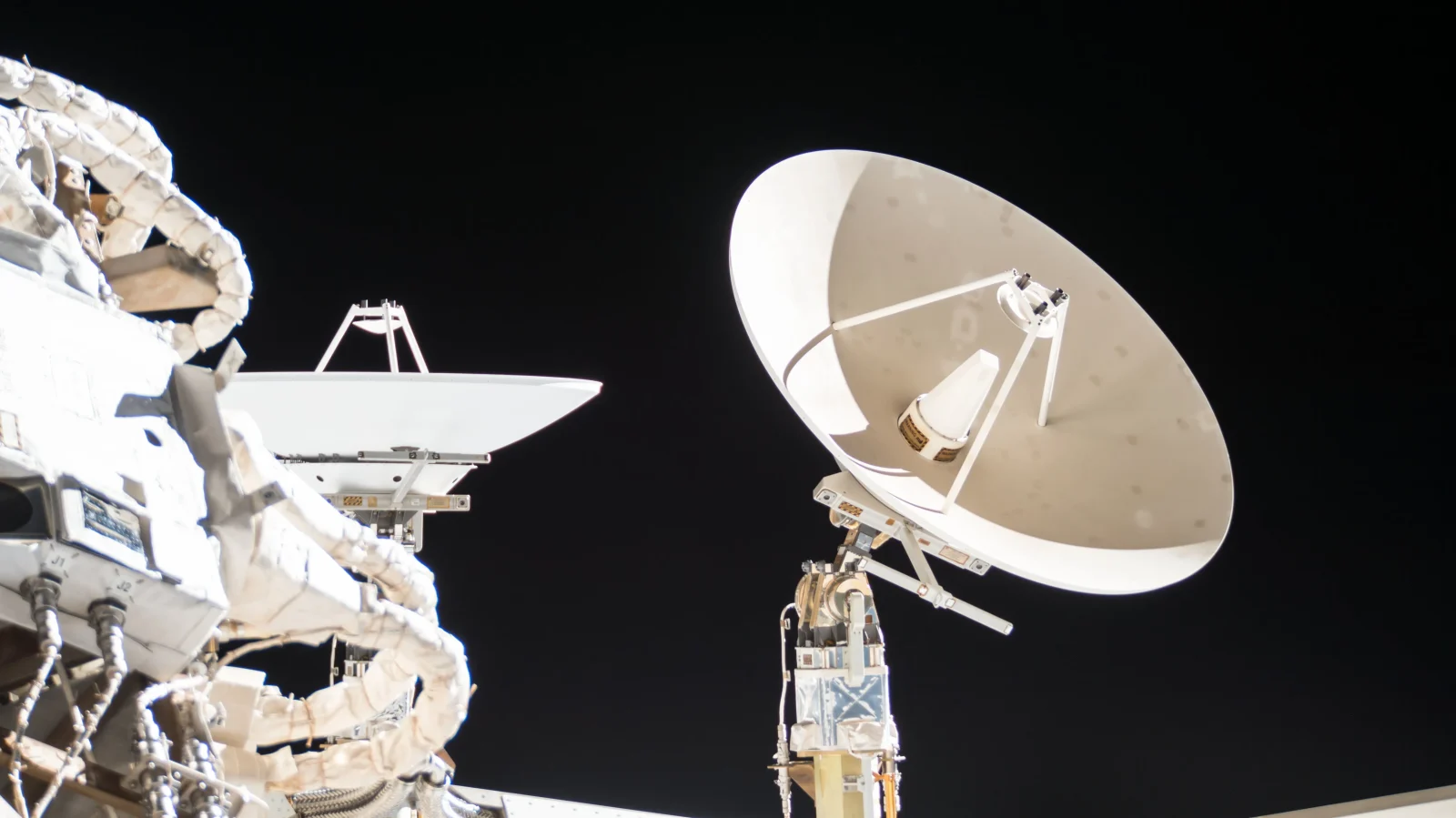
Meink’s phrase matters precisely because it blurs that line. A ground-based jammer attacks the target’s signal. A system placed in orbit can approach the target itself, shadow it, and if required act on it physically. Because the kinetic question was left open, the range of possibilities stays wide: an electronic warfare satellite operating in orbit qualifies, and so does a co-orbital platform capable of manoeuvring alongside an adversary spacecraft.
What “space control” actually covers
In military terminology, space control covers everything done to secure freedom of action in orbit for oneself and, when required, to deny it to an adversary. Defence and offence sit under the same heading. Meink’s phrasing is therefore technically broad: a space control weapon is not necessarily a missile that destroys satellites.
Four categories are usually distinguished. Electromagnetic warfare: jamming an adversary’s uplink or downlink, or feeding it false signals. Cyber: penetrating the software of the spacecraft or its ground station. Directed energy: lasers or high-power microwaves used to dazzle or damage sensors. And physical or kinetic interference: systems that close on a target to push, capture or destroy it.
The last category is the contentious one, because it generates debris. Every fragment scattered at orbital velocity becomes a decades-long collision hazard to other satellites — the core of what the literature calls the Kessler syndrome. The United States declared a unilateral moratorium on destructive direct-ascent anti-satellite testing in 2022. Whether Monday’s disclosure sits comfortably alongside that commitment is unanswerable for now, because the kinetic question was never addressed.
One consequence is immediate. Analysts will revisit US objects already catalogued in orbit whose purpose was never explained. Space situational awareness data is public enough to show when an object manoeuvres; it cannot show whether that object is a weapon.
Programmes and figures
| Item | Detail |
|---|---|
| Speaker | Troy Meink, Secretary of the Air Force |
| Date / venue | 14 September 2026 — AFA Air, Space and Cyber Conference, National Harbor, Maryland |
| Statement | The US has on-orbit space control weapons — first official acknowledgement |
| Withheld | Type, quantity, orbit, kinetic/non-kinetic, date of deployment |
| FY2027 space control | $21 billion (up 158 percent year on year; largely classified) |
| Meadowlands (CCS) | L3Harris; RF jammer; 32-unit fleet planned; C-130 transportable; $40 million requested in FY2027 |
| Remote Modular Terminal | First batch approved December 2024; 160 units funded, requirement up to 200 |
| Space-Based Interceptor | Under Golden Dome; contract to flight-ready hardware in under a year; initial capability targeted 2028 |
| Space-based AMTI | SpaceX awarded $4.2 billion in May 2026; first satellites launching this month; full capability 2028 |
| Doctrinal terms | Orbital strike; space link interdiction |
The rest of the keynote: Golden Dome, AMTI and combat drones
The space weapons line did not stand alone. The keynote laid out the components of a single architecture. The first was the Space-Based Interceptor, run under the Golden Dome missile defence initiative, which moved from initial contract to flight-ready hardware in under a year; the competition targets an initial capability in 2028.

The second was space-based air moving target indication — tracking airborne targets from orbit, a task performed until now by aircraft such as AWACS and the E-7. Moving it to space removes the range and endurance limits of an aircraft. SpaceX won a $4.2 billion contract for the work in May 2026, the first satellites launch this month, and full capability is targeted for 2028.
The third was airborne. The Collaborative Combat Aircraft programme expects 500 uncrewed aircraft to be operational by 2032, and Meink used the keynote to announce that Anduril’s Fury and General Atomics’ Vengeance had been formally christened.
Taken together the three lines say more than any one of them does alone. Tracking from space, intercepting from space and holding one’s own position in space are links in a single chain, and the space control weapon is being positioned as the insurance policy on that chain. The construction of Meink’s sentence points the same way: the weapon is defined not to attack, but to defend the joint force.
Beijing, Moscow and the justification
The rationale Washington leans on is not new. US defence officials have warned for years about Chinese experimental satellites capable of co-orbital manoeuvre and about Russian close-approach activity in orbit. Some of these platforms carry robotic arms and are presented as servicing or debris-removal spacecraft; the same capability can grapple an adversary satellite or shift it out of its orbit. That is why such systems are classed as dual-use.
The underlying problem is intent. A manoeuvre can be observed; the purpose behind it cannot. The American argument is that as adversary capability matures, leaving its own constellations undefended becomes untenable. Meink’s emphasis on defending against “hostile adversary actions” fits that frame precisely.
But the logic is symmetrical. Now that Washington has declared it holds weapons in orbit, an equivalent declaration from Beijing or Moscow costs less. The most durable effect of Monday’s statement may therefore be normative rather than material.
Efforts to constrain space weapons were already stalled. No binding treaty exists; the 1967 Outer Space Treaty prohibits only weapons of mass destruction in orbit, leaving conventional systems outside its scope. The capability Meink described therefore breaks no existing law — which is, in itself, the problem.
A different layer, a different order of priorities
For most states this debate matters through dependency rather than participation. Reconnaissance, communications, position-navigation-timing and early warning all run through orbit. The moment orbit becomes contested, every satellite operator inherits a resilience problem before it inherits a weapons problem.
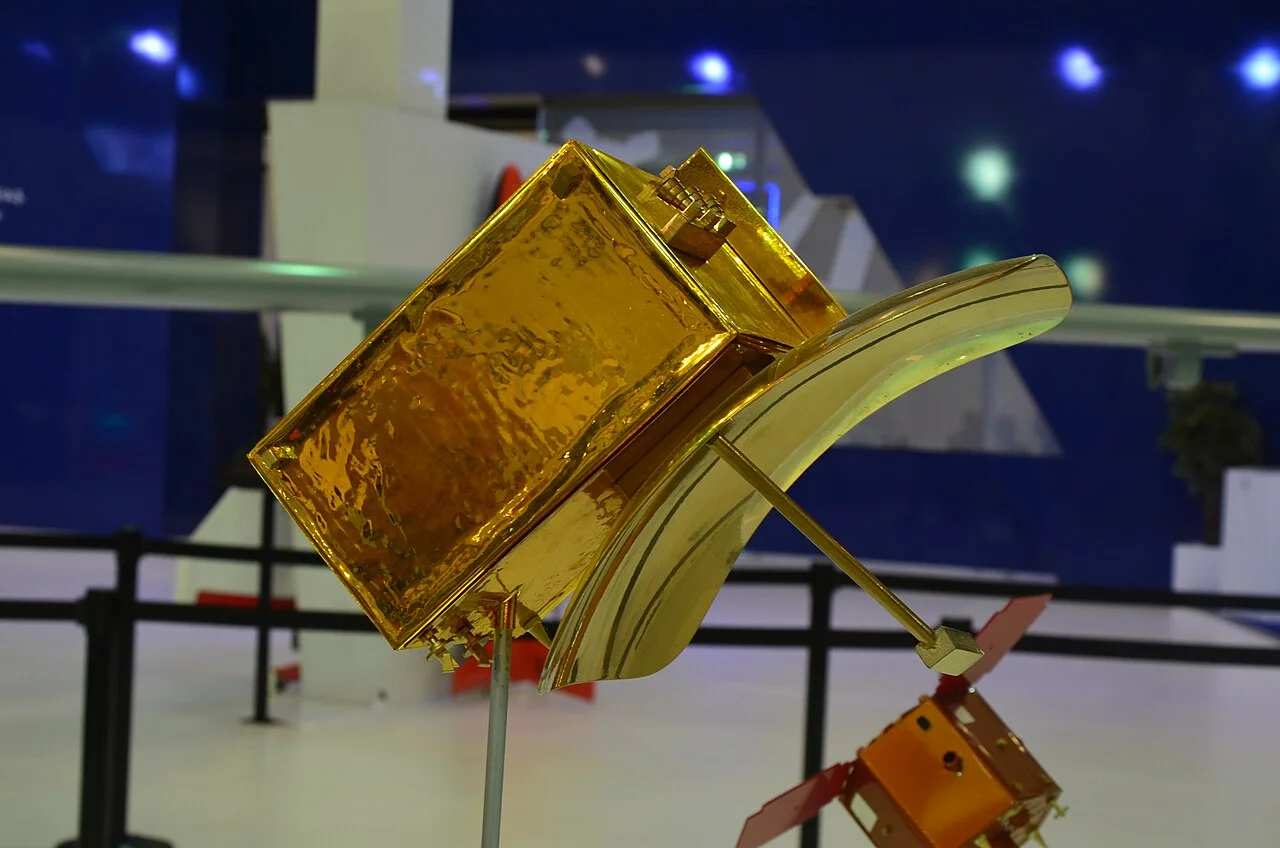
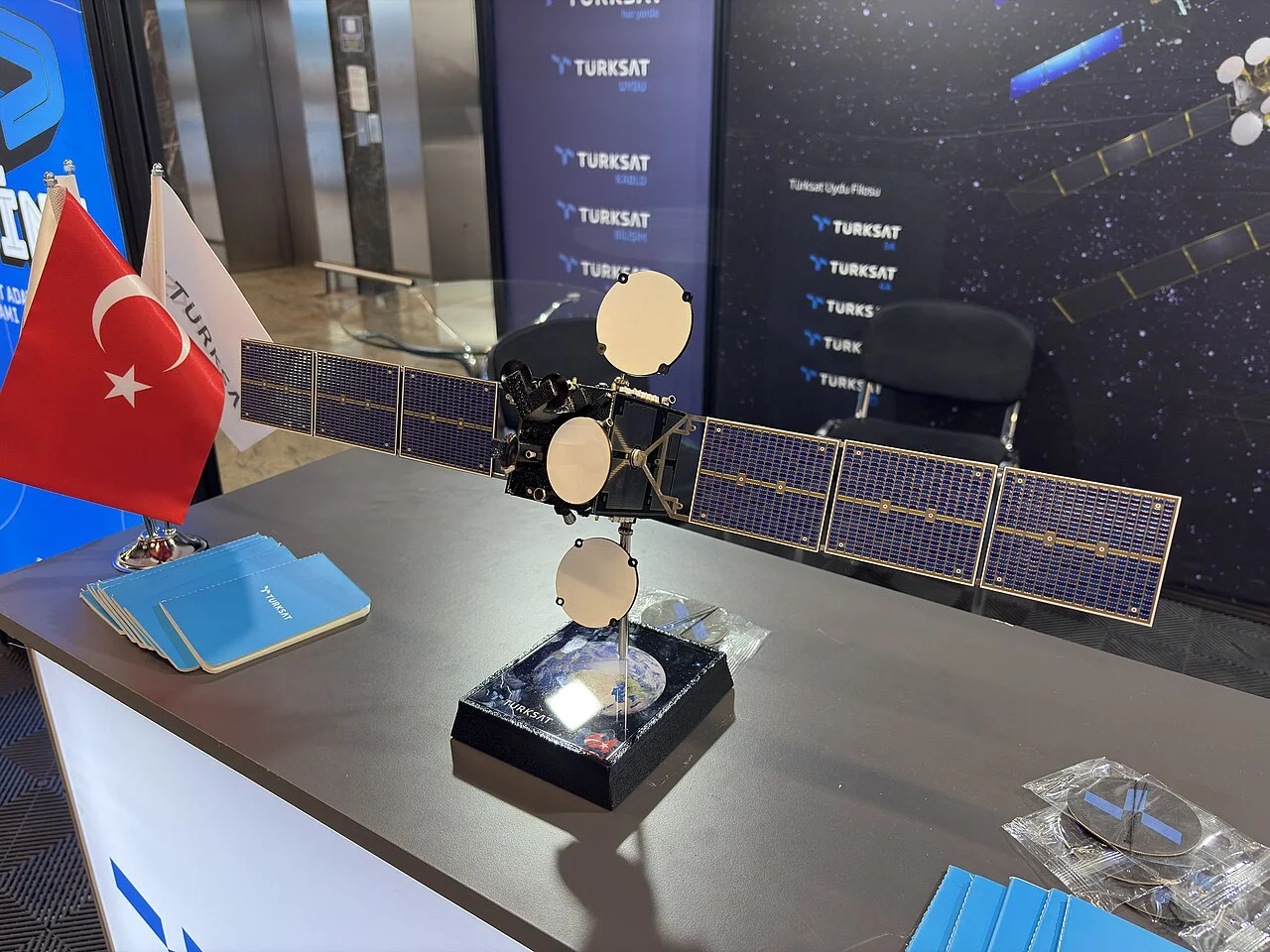
Türkiye is a useful illustration of a different ordering. Its centre of gravity in orbit sits in reconnaissance and communications: the GÖKTÜRK family provides optical and synthetic aperture radar imagery, with SAR delivering a weather-independent intelligence layer that works at night and through cloud. On the communications side, TÜRKSAT 6A crossed a supply-chain threshold as the first communications satellite built domestically.
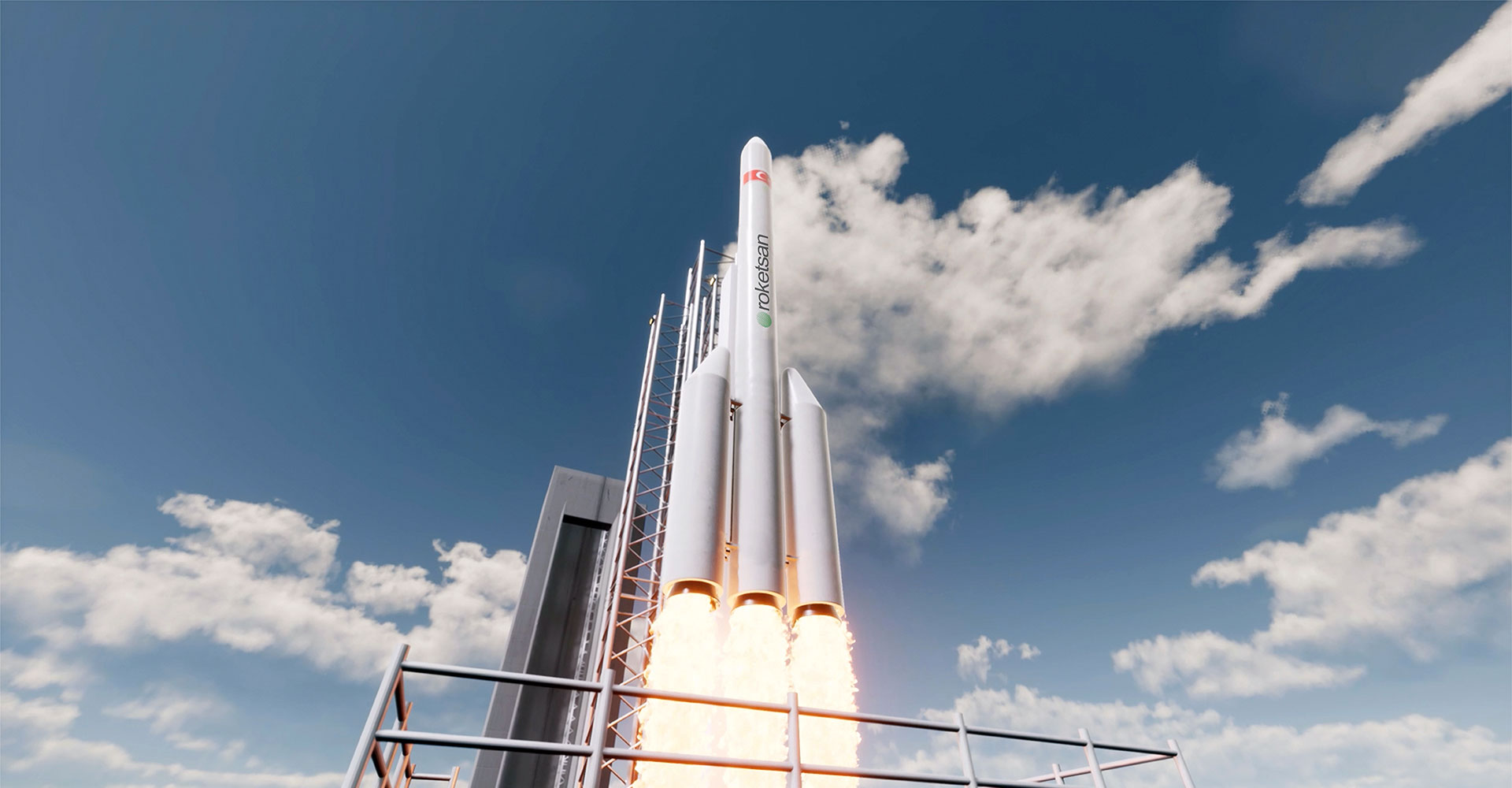
The second priority is access. Until a state can put its own satellite up on its own rocket, the timetable of its presence in orbit belongs to somebody else’s launch manifest. ROKETSAN’s Micro Satellite Launch System is the effort aimed at closing that gap, carrying an existing national strength in solid rocket motors upward.
The third priority intersects this story directly: ground-segment resilience. What Meadowlands and RMT attack is not the satellite but its signal, and Türkiye has fielded products at exactly that layer — GNSS anti-jam antenna and receiver families, and jamming-resistant positioning for military platforms. Orbital weapons make the headline, but in a real conflict the first thing lost is usually the link. Investment there tends to matter more than the part of the debate that is visible.
The wider point is not that one approach outranks another. It is that placing weapons in orbit and keeping one’s own presence in orbit visible, continuous and hard to interrupt are separate problems, and most states are correctly solving the second one first.
What comes next
Three things are worth watching in the near term. In Congress, the jump to $21 billion for space control will now be debated against a publicly acknowledged capability rather than an inference. Among allies, given that NATO has formally treated space as an operational domain since 2019, an American declaration of this kind is likely to accelerate alliance-level policy discussion.
And on the other side, the probable response from Beijing and Moscow is to reuse the same sentence for their own justification — weakening, once again, the already thin diplomatic effort to constrain weapons in orbit.
For the technical community the agenda is more concrete: re-examining US objects already in orbit whose function was never explained. Space situational awareness shows manoeuvre, not intent. The gap Meink’s single sentence opened is the space open-source analysts will spend the coming months trying to fill.
Sources
- Breaking Defense — “Space Force has ‘space control weapons’ on orbit, Air Force secretary says”, 14 September 2026
- Air & Space Forces Magazine — “Meink Reveals Space Force Has On-Orbit Space Control Weapons”, 14 September 2026
- DefenseScoop — “Meink: Space Force has deployed space control weapons to orbit”, 14 September 2026
- US Air Force — FY2027 Space Procurement budget documents (af.mil)
- SpaceNews / Air & Space Forces Magazine — reporting on the Meadowlands and Remote Modular Terminal programmes
- L3Harris — Counter Communications System product page