Sudan’s Military Strength: How Many Tanks, Fighter Jets and Missiles? (2026)

The Sudanese military inventory is one of the files that forces the question of what size on paper actually means. Global Firepower’s 2026 data places the country 66th among 145 militaries, with 300,000 active personnel, 1,055 tanks, 8,890 armoured vehicles, 183 military aircraft and 800 rocket launchers. The same list gives its defence budget as US$394.7 million — meaning Sudan is trying to sustain a force of this scale on fewer resources than neighbours with far smaller inventories. The second distinguishing feature is domestic content: most of the tanks are hulls rebuilt in the Military Industry Corporation’s own plants under the Digna, Al-Bashier and Al-Zubair 2 names. The third is imbalance: against more than 4,000 anti-aircraft guns there is not a single medium or long-range air-defence battery, and against 850 kilometres of Red Sea coastline there are only 10 patrol-class naval assets. This article sets out the land, air, missile and naval inventory of the Sudanese Armed Forces in tables drawn from open sources, then turns to the Turkey angle.
At a Glance
- Active personnel: ≈ 300,000 active troops, ≈ 200,000 reservists and ≈ 17,500 paramilitary personnel; ≈ 517,500 in total
- Global ranking: 66th of 145 countries in the 2026 Global Firepower list (power index 1.3563)
- Main battle tanks: ≈ 1,055 hulls, most of them from the Digna, Al-Bashier and Al-Zubair 2 lines rebuilt in the country’s own plants
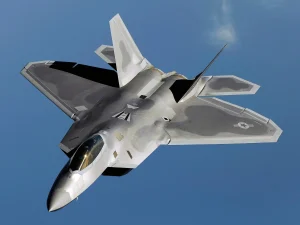
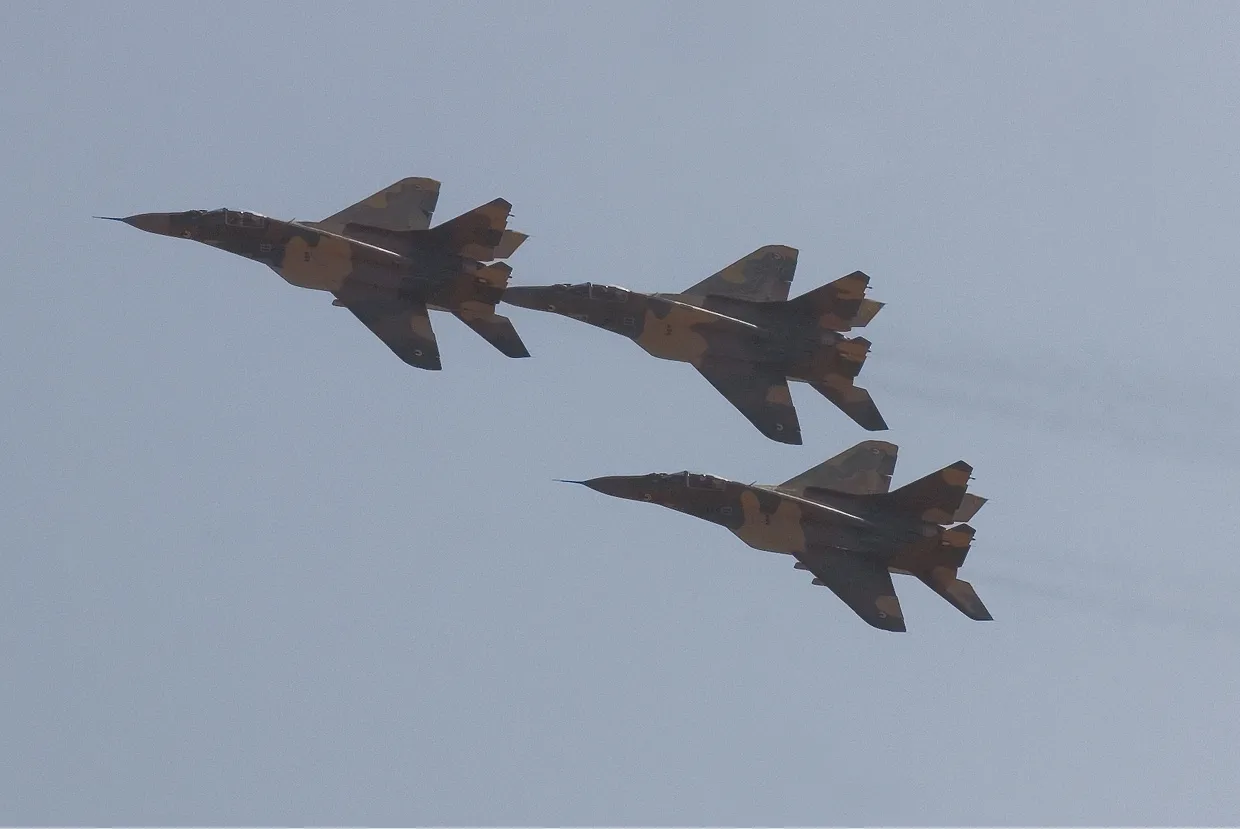
- Combat aircraft: 37 fighters and 36 attack aircraft; the MiG-29SE, Su-24M, Su-25K, Nanchang A-5C and Chengdu F-7M lines side by side
- Multiple rocket launchers: ≈ 800 launchers — the single most numerous firepower item in the inventory and one of the largest rocket artillery parks in Africa
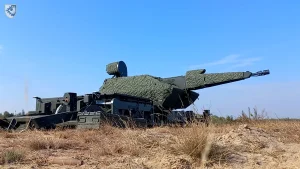
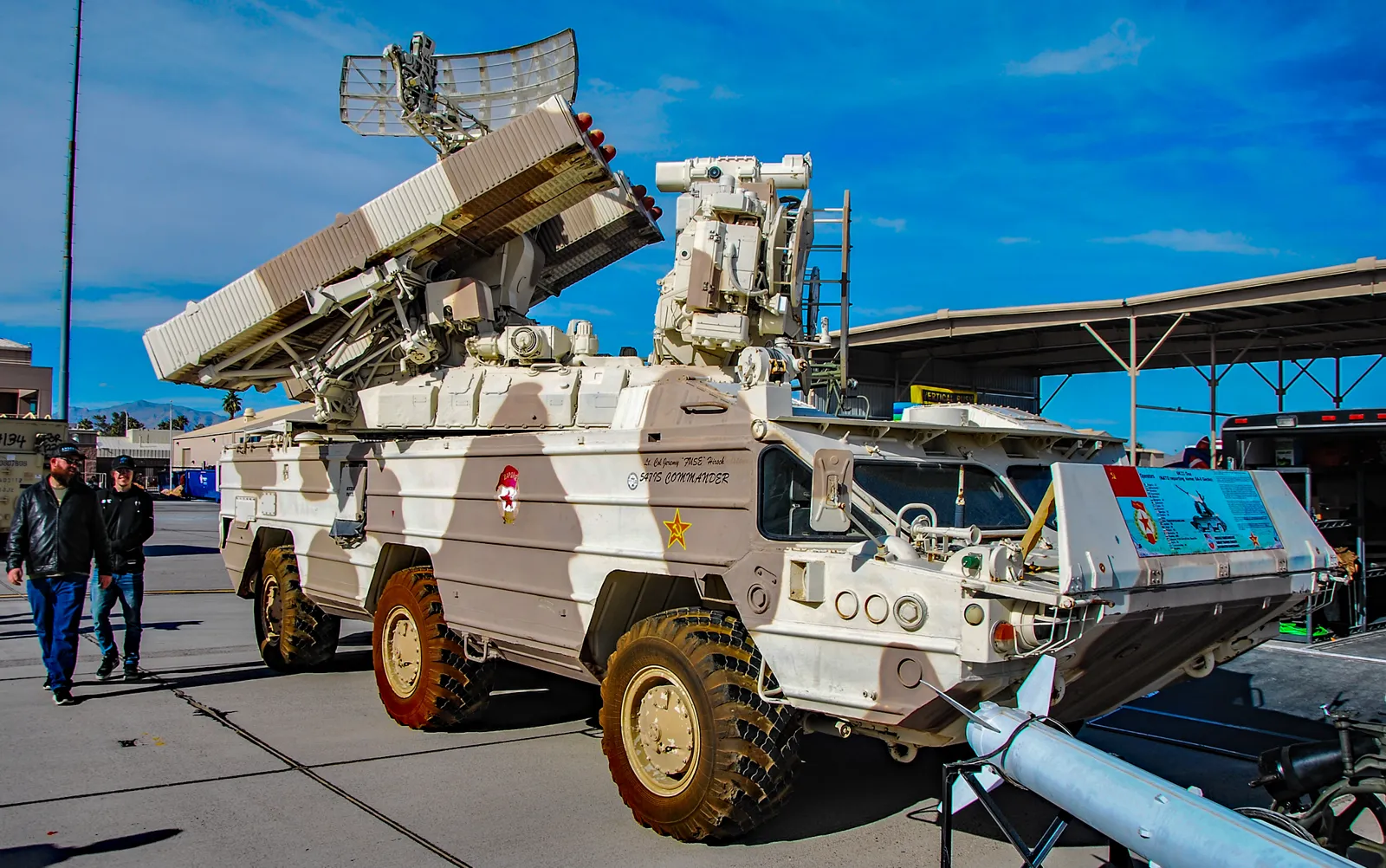
- Air defence: Not a single medium or long-range battery; the layer consists of 30 9K33 Osa systems, shoulder-launched missiles and more than 4,000 anti-aircraft guns
- Navy: 10 naval assets, all in the patrol class; no submarines, frigates or corvettes — set against 850 kilometres of Red Sea coastline
- Turkish-built systems: Bayraktar TB2 and Bayraktar Akıncı unmanned aerial vehicles; the Akıncı entered the inventory in 2025
- Defence budget: ≈ US$394.7 million (2026 estimate) — one of the lowest ratios in this series relative to the size of the inventory
Note: The inventory figures below are approximate values drawn from open sources such as Global Firepower, the IISS Military Balance and SIPRI.
About the Sudan Armed Forces
The Sudanese Armed Forces consist of the army, air force and navy plus the Republican Guard. Global Firepower’s 2026 data shows 300,000 active personnel, 200,000 reservists and 17,500 paramilitary personnel, for a total of around 517,000. The population is 50.5 million and 1.3 million people reach military age each year. That manpower base explains the size of the inventory, but how much of it is serviceable is a separate question: in the civil war that began in April 2023 and has been fought against the Rapid Support Forces, depots, bases and factories have changed hands and a significant number of vehicles and aircraft have been lost or rendered unusable. The tables below give the recorded inventory; the serviceable share in the field is lower.
The second factor shaping the inventory is domestic industry. Established in 1993, the Military Industry Corporation is the umbrella organisation for Sudanese defence production. It comprises the Yarmouk Industrial Complex, inaugurated in 1996; the Elshaheed Ibrahim Shamseldeen Complex, set up at Giad in 2002 to build and maintain armoured vehicles; the Safat Aviation Complex, founded in 2005 for aircraft maintenance and unmanned aerial vehicle production; the Alshagara Complex, producing small arms ammunition since 1959; and the Alzargaa Engineering Complex, which develops electro-optical products. The corporation builds or rebuilds the T-55 hull as the Digna, the Chinese Type 85-IIM as the Al-Bashier, the Type 59 family as the Al-Zubair 2, the Iranian Boragh as the Khatim, the BTR family as the Shareef and the BRDM-2 as the Amir. That makes Sudan one of the few African states that claims serial production in the main battle tank class, and since 2013 it has been trying to sell those products into the African market.
The third factor is the procurement structure. Sudan’s inventory is tied to no single source — on the contrary, it is one of the most multi-sourced in this series: T-72s, MiG-29SEs, Su-24Ms and Mi-24/35s from Russia along with the Project 22460 hulls that are the navy’s most modern units; Type 59D and Type 62 tanks, WZ-551 and WZ-523 armoured vehicles, A-5C and F-7M aircraft, K-8 trainers, FN-6 shoulder-launched missiles and Type-63 rocket launchers from China; Boragh-based vehicles, Mohajer-6 unmanned aerial vehicles and the navy’s fast attack craft from Iran; M113 and M163 Vulcan systems and Swiftships patrol craft from an earlier American supply era; and the Bayraktar TB2 and Akıncı from Türkiye. There is also a layer of constraint on top of that picture: the United Nations arms embargo on Sudan covers the Darfur region rather than the whole country, while the American and European sanctions regime tied to the war narrows the supply channels in practice.
Land Forces Inventory
| System type | Est. quantity |
|---|---|
| Main battle tanks (Digna; the domestic line the Military Industry Corporation builds on the T-55 hull) | ≈ 400 |
| Main battle tanks (T-72AV and T-72B; sourced through Russian, Ukrainian and Belarusian channels) | ≈ 230 |
| Main battle tanks (Al-Bashier; the domestic production line based on the Chinese Type 85-IIM) | ≈ 100 |
| Main battle tanks (Al-Zubair 2; a domestic line derived from the Type 59 family) | ≈ 50-100 |
| Main battle tanks (Type 59D, Type 62 and T-55 family hulls) | The remaining hulls |
| Total main battle tanks (Global Firepower classification) | ≈ 1.055 |
| Infantry fighting vehicles (BMP-1 and the domestic Khatim series derived from the Iranian Boragh) | ≈ 200 |
| Infantry fighting vehicles (BMP-2) | ≈ 100 |
| Armoured personnel carriers (BTR-70 and BTR-80 plus the domestic Shareef series derived from them) | 200+ |
| Armoured personnel carriers (WZ-551 and WZ-523, China) | 200+ |
| Armoured reconnaissance vehicles (BRDM-2 and the domestic Amir series derived from that hull) | A limited number |
| Armoured personnel carriers (M113A3, United States and Walid, Egypt — an older supply line) | A limited number |
| Total armoured vehicles (Global Firepower classification, including light tactical and protected vehicles) | ≈ 8.890 |
| Self-propelled howitzers (2S1 Gvozdika, 122 mm) | ≈ 100 |
| Towed artillery (the M-30 122 mm, D-30 122 mm, M101 105 mm and M-46 130 mm lines) | ≈ 1.150 |
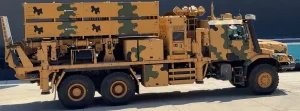
| Multiple rocket launchers (more than 500 Type-63 107 mm, ≈ 120 BM-21 Grad, plus the Egyptian Sakr and Chinese Type-81 lines) | ≈ 800 |
| Anti-tank missiles (the 9M133 Kornet, Chinese HJ-8 and 9K11 Malyutka lines) | 350+ |
Air Force Inventory
| Platform | Est. quantity |
|---|---|
| Total military aircraft (including helicopters) | ≈ 183 |
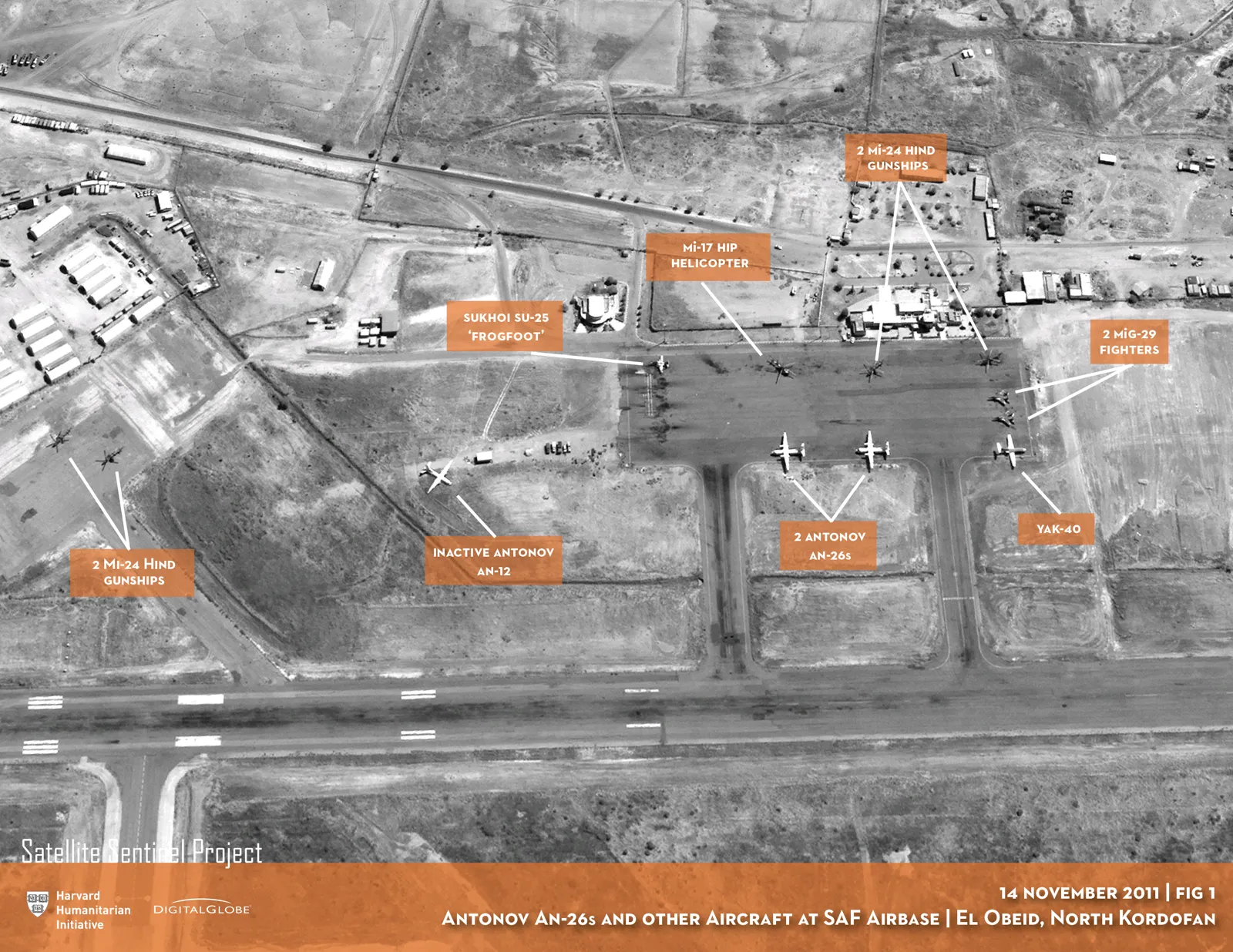
| Fighters (≈ 10 MiG-29SE, ≈ 12 Chengdu F-7M, 4 MiG-23MS and the serviceable MiG-21M airframes) | 37 |
| Attack aircraft (≈ 20 Nanchang A-5C, ≈ 12 Su-25K and ≈ 7 Su-24M) | 36 |
| Unmanned aerial vehicles (Bayraktar TB2, Türkiye; delivered under the 2023 contract and reinforced by later batches) | In service |
| Unmanned aerial vehicles (Bayraktar Akıncı, Türkiye; entered the inventory in 2025 and used on long-range missions) | In service |
| Unmanned aerial vehicles (the Iranian Mohajer-6 plus the domestic Safaroog and Zagil-3M lines) | In service |
| Attack helicopters (Mil Mi-24 and Mi-35) | ≈ 35 |
| Utility and transport helicopters (Mil Mi-8, Mi-17 and Mi-171) | ≈ 24 |
| Light helicopters (Bölkow Bo 105; in the light attack and liaison roles) | ≈ 20 |
| Utility helicopters (IAR 330 Puma, Romania) | ≈ 16 |
| Total helicopters (Global Firepower classification) | 64 |
| Transport aircraft (≈ 3 Il-76, ≈ 5 An-12 plus An-26, An-30 and An-32 airframes) | 13 |
| Training and light attack aircraft (Hongdu K-8 Karakorum, China-Pakistan) | ≈ 23-33 |
| Trainers (FTC-2000 jet trainer, China) | ≈ 6 |
| Trainers (the domestic Safat series, built by the Safat Aviation Complex) | ≈ 37-44 |
| Main air bases | Wadi Seidna, Khartoum, Merowe, El Obeid, Port Sudan and Kassala; western bases such as Nyala and El Fasher changed hands during the civil war |
Missile and Air-Defence Systems
| System | Type / Note |
|---|---|
| 9K33 Osa (SA-8 Gecko, Russia) | A self-propelled short-range air-defence system; the only organised missile-based air-defence line in the inventory, limited to ≈ 30 systems |
| Shoulder-launched air-defence missiles (9K32 Strela-2M, Russia and FN-6, China) | Widely distributed; it provides point defence at low altitude but does not build a layered umbrella |
| Medium and long-range air-defence systems | None — there is not a single Patriot, S-300 or HQ-class battery; the depth of the country’s airspace is not defended in an organised way |
| Anti-aircraft guns (more than 4,000 of the ZPU series, ≈ 740 ZU-23-2 and ≈ 200 S-60 57 mm) | One of the largest gun-based air-defence parks in Africa; in the civil war it is used intensively against both low-altitude and ground targets |
| Self-propelled anti-aircraft systems (M163 Vulcan, United States) | ≈ 80 |
| Ballistic and surface-to-surface missiles | None — Sudan fields no surface-to-surface missile line visible in open sources; the long-range strike task rests entirely on unmanned aerial vehicles |
| Anti-ship missiles | Limited to the Iranian-origin missile fast attack craft; the navy has no organised anti-ship line |
Naval Power
| Class / Type | Est. quantity |
|---|---|
| Submarines | None — the Sudanese navy has no sub-surface arm |
| Frigates and corvettes | None — both classes read zero in the Global Firepower classification; the entire force sits at patrol vessel and fast attack craft level |
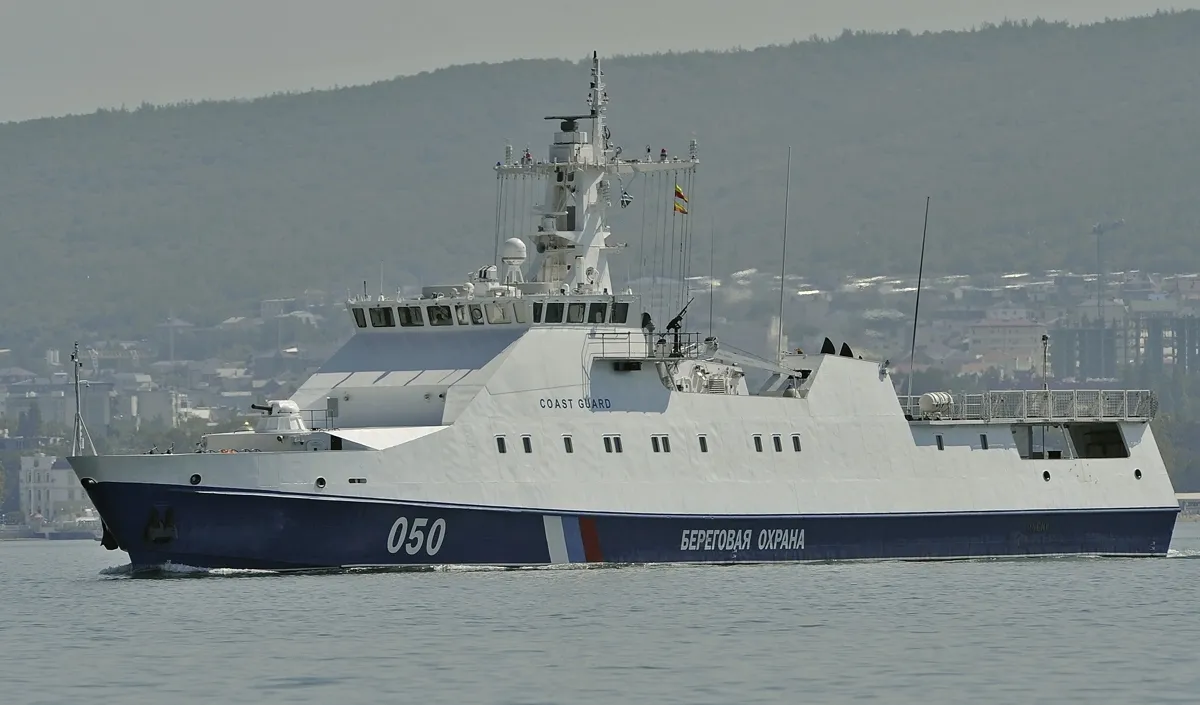
| Patrol vessels (Kurmuk class; the Russian-built Project 22460 Rubin hull — Kurmuk 111 and Al Qadarif 112, the most modern units in the fleet) | 2 |
| Patrol craft (Swiftships 35 metre, United States — Shendi P401 and Al-Fashir P402) | 2 |
| Missile fast attack craft (Al-Marat P504; of Iranian origin, the navy’s only guided-missile carrier) | 1 |
| Gun fast attack craft (Safeya class; of Iranian origin — Safeya P502 and Hunud P503) | 2 |
| Landing and logistics craft plus riverine boats | A limited number; riverine tasks on the Nile are run from the Khartoum base |
| Total naval assets (Global Firepower classification; all in the patrol class) | 10 |
| Naval personnel | ≈ 2.000 |
| Main naval bases | The Port Sudan headquarters base, Flamingo Bay and the Khartoum riverine base on the Nile |
| Coastline | ≈ 850 kilometres of Red Sea coastline, squarely astride the Suez-Bab el-Mandeb line |
The Turkey Angle: Turkish Defence Industry
The institutional framework of the Türkiye-Sudan defence relationship was set in 2017. During President Recep Tayyip Erdoğan’s visit to Khartoum the two countries signed 21 agreements, among them an arrangement on restoring the Ottoman-era Red Sea port of Suakin along with security and military cooperation agreements. During the visit of then Defence Minister Hulusi Akar the establishment of military training centres was raised. After the change of government in 2019 the Suakin file was left in abeyance and Türkiye stated that the island’s use was civilian in purpose; the military cooperation channel, however, did not close.
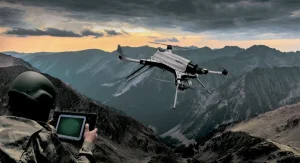
The centre of gravity of the relationship today is unmanned aviation. According to contract documents reported in the international press, an agreement dated 16 November 2023 was signed between Baykar and Sudan’s Defense Industries System; its total value is given as €110.7 million (roughly US$120 million) and its scope covers six Bayraktar TB2 unmanned aerial vehicles, three ground control stations and 600 munitions. The same sources report that the first shipments reached Port Sudan between August and November 2023 and were reinforced by further batches through 2024.
The second stage was the Akıncı. Open sources confirm that the Sudanese Armed Forces took the Bayraktar Akıncı armed unmanned aerial vehicle into their inventory in 2025. The division of labour has become clear as well: the Akıncı is used for long-range strike missions into distant regions such as Darfur, while the TB2 flies tactical reconnaissance and strike sorties along the Kordofan line. Given that Sudan fields no surface-to-surface missile line at all, the army’s entire depth-strike capability effectively rests on these two Turkish platforms.
The most striking development from an inventory standpoint came on 13 July 2026. Northwest of El Obeid in North Kordofan, a Sudanese Akıncı was reported to have shot down a Chinese-built CH-95 unmanned aerial vehicle operated by the Rapid Support Forces using an air-to-air guided munition. Cases in which one unmanned aircraft destroys another in flight remain few, and the engagement was recorded as one of the field indications that the Akıncı is not only a strike platform but an airframe usable in air-to-air roles. In the same context the Akıncı is reported to have been used to establish a protective air umbrella over strategic transport junctions.
What comes next should be read honestly. Sudan is in the middle of an active civil war; it is not a market that opens tenders and runs long-term procurement programmes in the conventional sense, and the sanctions environment complicates every transaction. Against that, the gaps in the inventory align closely with areas where Turkish industry holds products. The army has not a single medium or long-range air-defence battery while the opposing side makes intensive use of unmanned aircraft — precisely the threshold at which low-altitude systems such as KORKUT and GÜRZ and the HİSAR family provide answers. On the armoured vehicle side the backbone of the inventory is still hulls from the 1960s, a gap that mine-resistant vehicles in the Kirpi, Vuran and Ejder Yalçın class address directly. At sea, 10 patrol assets against 850 kilometres of coastline set a precedent for ASFAT, which has signed patrol boat contracts in Qatar and Jordan. The most realistic avenue for progress, though, is sustainment and localisation rather than platform sales: cooperation between Turkish firms and the Military Industry Corporation’s existing production lines on maintenance, upgrade and training is the most likely axis of the relationship in the post-war period.
Frequently Asked Questions
How many tanks does Sudan have? Global Firepower’s 2026 data puts the total number of main battle tanks in the Sudanese inventory at around 1,055. Most of that figure comes from lines the country builds or rebuilds itself: the Digna, produced on the T-55 hull, is the most numerous at roughly 400; the Al-Bashier, based on the Chinese Type 85-IIM, numbers about 100, and the Al-Zubair 2, derived from the Type 59 family, between 50 and 100. To those are added roughly 230 T-72AVs and T-72Bs sourced through Russian, Ukrainian and Belarusian channels, plus the remaining Type 59D, Type 62 and T-55 family hulls. That is the recorded figure; because of the civil war under way since 2023, the serviceable share is assessed to be lower.
What fighter aircraft does Sudan operate? The combat inventory of the Sudanese Air Force falls into two headings. On the fighter side there are 37 aircraft: roughly 10 MiG-29SEs, roughly 12 Chengdu F-7Ms, 4 MiG-23MSs and the serviceable MiG-21M airframes. On the attack side there are 36: roughly 20 Nanchang A-5Cs, roughly 12 Su-25Ks and roughly 7 Su-24Ms. Hongdu K-8 Karakorum trainers should be added to that picture, since the K-8s are also used in light attack roles. Total aircraft in the inventory, including helicopters, stands at around 183.
Which Turkish weapon systems are in Sudanese service? There are two platforms and both are unmanned aircraft. The first is the Bayraktar TB2: according to contract documents reported in the international press, an agreement dated 16 November 2023 worth €110.7 million was signed between Baykar and Sudan’s Defense Industries System, covering six TB2s, three ground control stations and 600 munitions, with the first shipments reaching Port Sudan in the autumn of 2023. The second is the Bayraktar Akıncı: open sources confirm that the Sudanese Armed Forces took the platform into their inventory in 2025 and use it for long-range strike missions. On 13 July 2026 a Sudanese Akıncı was reported to have shot down a Chinese-built CH-95 unmanned aerial vehicle near El Obeid with an air-to-air guided munition.
What air-defence systems does Sudan have? Sudan’s air defence is the most unbalanced link in the inventory. On the missile side the only organised line is roughly 30 self-propelled 9K33 Osa short-range systems, alongside widely distributed shoulder-launched 9K32 Strela-2M and Chinese-built FN-6 missiles. There is not a single medium or long-range battery: no Patriot, S-300 or HQ-class system is in the inventory. On the gun side the picture reverses; with more than 4,000 of the ZPU series, roughly 740 ZU-23-2s and roughly 200 S-60 57 millimetre pieces, this is one of the largest anti-aircraft gun parks in Africa. There are also roughly 80 American-built M163 Vulcan self-propelled systems.
How strong is Sudan’s navy, and does it have submarines? The Sudanese navy has no submarines, and no frigates or corvettes either. All 10 naval assets in the Global Firepower classification are in the patrol class. The most modern ships in the fleet are two Kurmuk-class patrol vessels built in Russia on the Project 22460 Rubin hull: Kurmuk 111 and Al Qadarif 112. To those are added two American-built 35 metre Swiftships craft, one Iranian-origin missile fast attack craft and two gun fast attack craft. Personnel number around 2,000, and the main bases are Port Sudan, Flamingo Bay and the Khartoum riverine base on the Nile. Given 850 kilometres of Red Sea coastline and a position astride the Suez-Bab el-Mandeb line, this force is one of the weakest points in the inventory.
Bottom Line
The Sudanese inventory shows why sustainment capacity, rather than raw numbers, is the measure that matters. On paper there are 1,055 tanks, 8,890 armoured vehicles, 800 rocket launchers and 183 aircraft; the budget that has to keep them running is US$394.7 million. Although the country is one of the few African militaries able to produce in the main battle tank class, it holds not a single medium or long-range air-defence battery, not one frigate and not one surface-to-surface missile. The civil war under way since 2023 has sharpened that imbalance and changed the character of the fighting: the decisive factor is no longer tank counts but unmanned aviation superiority. That the entire depth-strike capability of the Sudanese Armed Forces now rests on the Bayraktar TB2 and Akıncı suggests the inventory’s future will largely be shaped along the same axis. In the post-war period the real question facing Sudan will not be buying new platforms but which partnerships can bring its vast but ageing inventory back to life.