Military Power of Lebanon: How Many Tanks, Aircraft and Ships Are in the Inventory? (2026)

Lebanon’s military inventory shows one of the rare cases in which a national army has been weaker than a non-state armed group on its own territory. On paper the Lebanese Armed Forces (LAF) are an 80,000-strong force with 334 tanks and more than 1,300 armoured personnel carriers; in practice they have not a single fighter jet, medium-range air-defence missile or frigate. The 2019 financial collapse cut soldiers’ pay to a few tens of dollars a month, and the army depends on US, French, Qatari and European donations for fuel, salary support and equipment. In 2026 this army has been tasked with establishing state authority south of the Litani in the middle of the Hezbollah-Israel conflict triggered by the Iran war. Turkish defence industry has no platform in this picture yet, but Ankara’s wish to play a role after UNIFIL keeps the link current.
At a Glance
- Active personnel: Global Firepower counts 80,000 active, 15,000 reserve and 65,000 paramilitary personnel (Internal Security Forces included); conscription was abolished in 2007 and the force is fully professional
- Main battle tanks: Global Firepower counts 334 tanks; the core is about 232 T-54/T-55s, more than 60 M48A5s and 10 M60A3s (Wikipedia)
- Military aircraft: Global Firepower counts 80 aircraft: 0 fighters, 9 attack aircraft (A-29B Super Tucano and AC-208B) and 68 helicopters
- Artillery and rocket launchers: GFP counts 12 self-propelled guns (M109A3), 350 towed guns and 11 rocket launchers; the backbone of the towed artillery is 219 M198 howitzers (Wikipedia)
- Naval platforms: Global Firepower counts 48 naval craft, 42 of them patrol boats; there are no frigates, corvettes or submarines. The largest vessel is the 43.5-metre Trablous
- Defence budget: Global Firepower gives about 800 million US dollars; Wikipedia reports the 2024 budget as 635 million dollars. For pay, fuel and equipment the army depends heavily on US, French and Qatari support
Note: The inventory figures below are approximate values drawn from open sources such as Global Firepower, the IISS Military Balance and SIPRI.
About the Lebanon Armed Forces
The Lebanese Armed Forces were founded on 1 August 1945. The ground forces consist of 5 regional commands, 11 brigades (5 mechanised, 6 light), 6 intervention regiments and 4 land border regiments; the Commando (Maghaweer), Airborne, Marine Commando and Counter-Sabotage regiments form the special forces core. General Rodolphe Haykal was appointed army commander on 13 March 2025; his predecessor Joseph Aoun was elected president on 9 January 2025.
In the Global Firepower 2026 count Lebanon ranks 118th of 145 with a PwrIndx of 2.6521. Active personnel are shown as 80,000, reserves as 15,000 and paramilitary as 65,000; because conscription was abolished in 2007 the force is fully professional. The defence budget is about 800 million US dollars according to Global Firepower, while Wikipedia gives 635 million dollars for 2024. On 15 July 2026 parliament approved supplementary appropriations of about 631 million dollars to fund six extra salary payments for public and military personnel; Qatar has directly supported soldiers’ pay for the past four years.
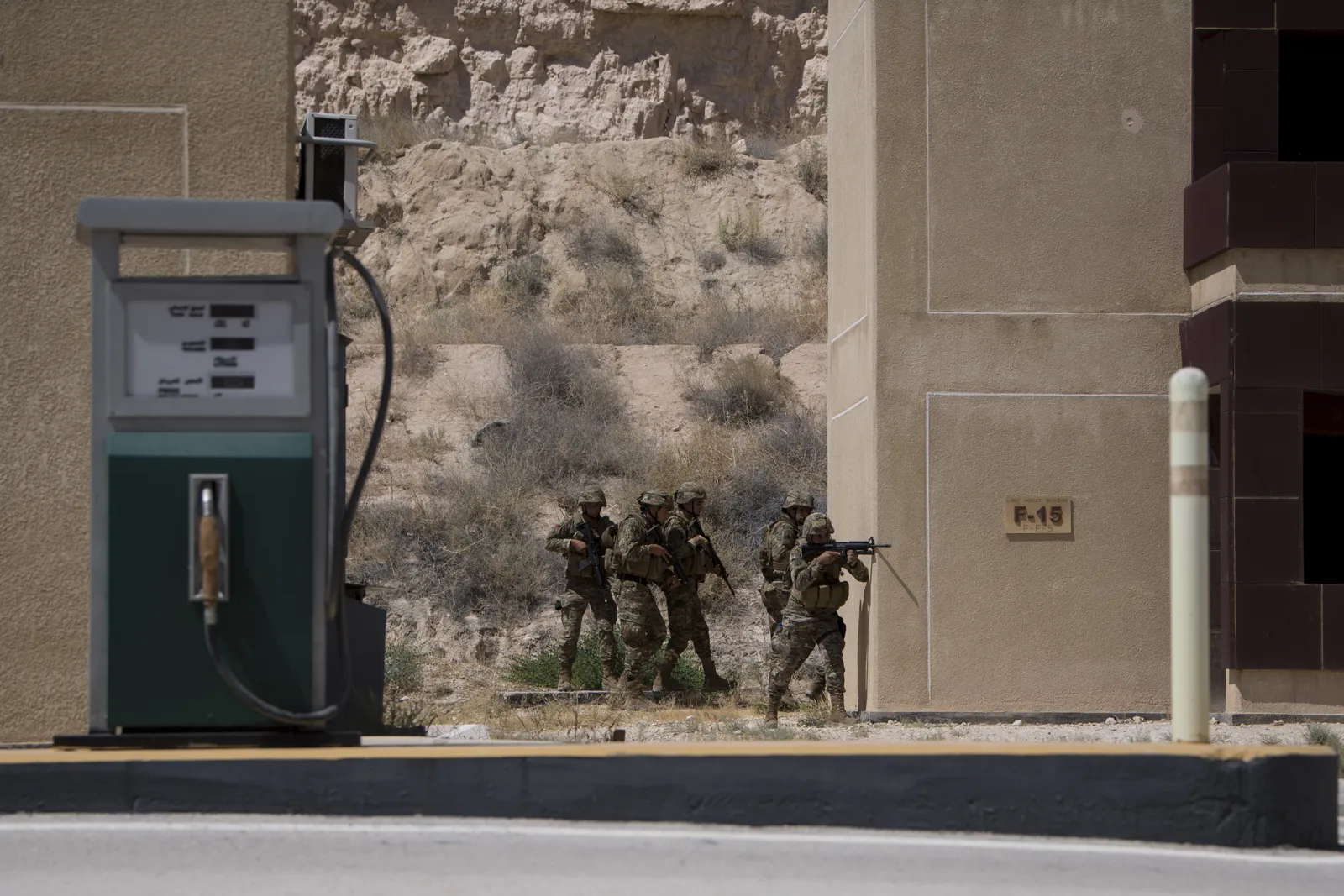
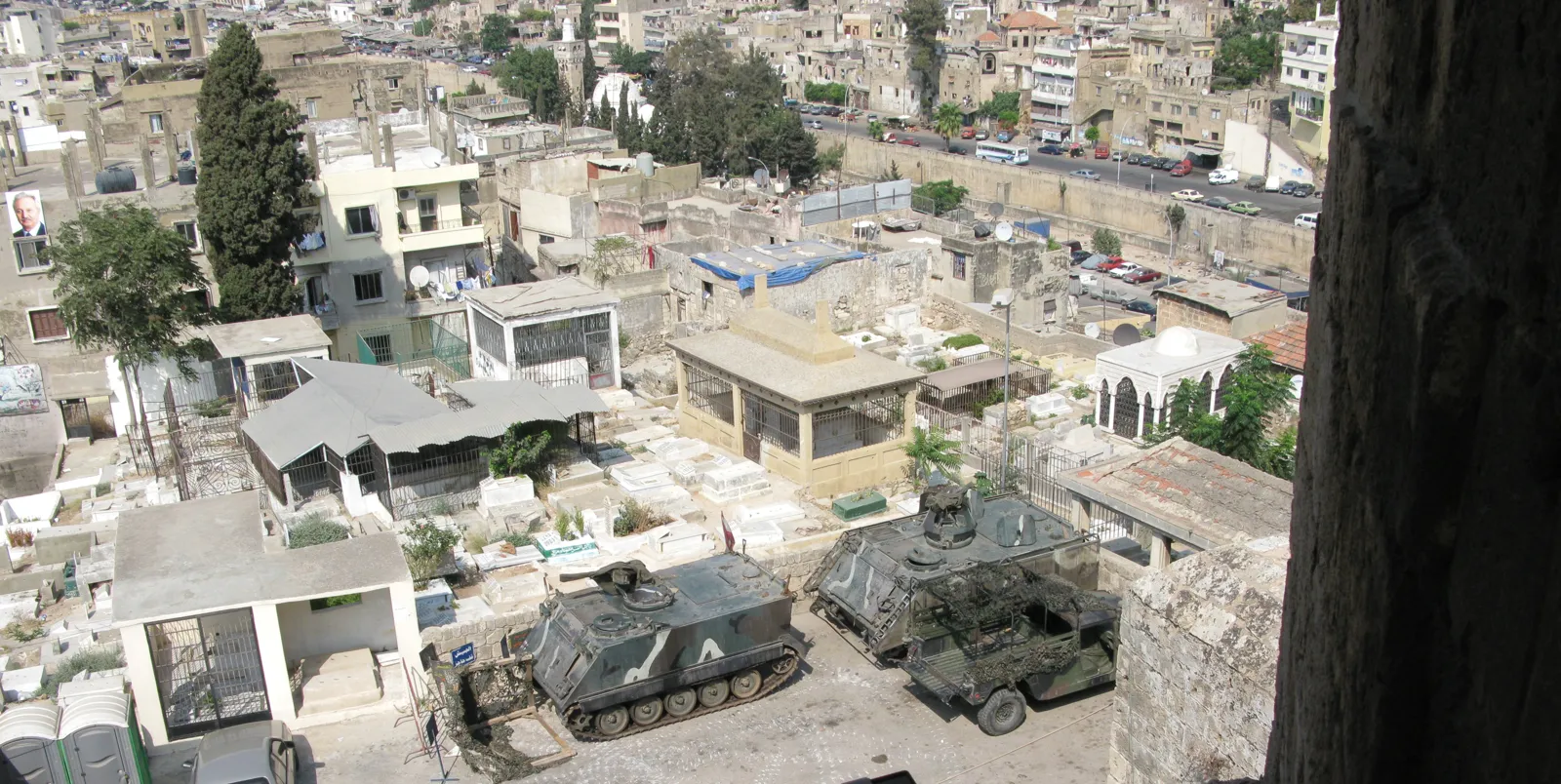
The land inventory has two layers: Soviet-era and American-donated. The tank fleet consists of about 232 T-54/T-55s, more than 60 M48A5s and 10 M60A3s; the modern item is the 32 M2A2 Bradleys delivered by the United States in 2017-2018. The APC backbone is more than 1,300 M113s; Jordan donated 62 in 2024 and Greece 26 M113s plus 20 Steyr trucks in two batches in 2026. France delivered VAB armoured vehicles in two batches of 39 and 19 in 2026. In artillery 219 M198 howitzers and 12 M109A3s stand out; rocket artillery is limited to 6 Grad-Ks and 5 captured BM-11s.
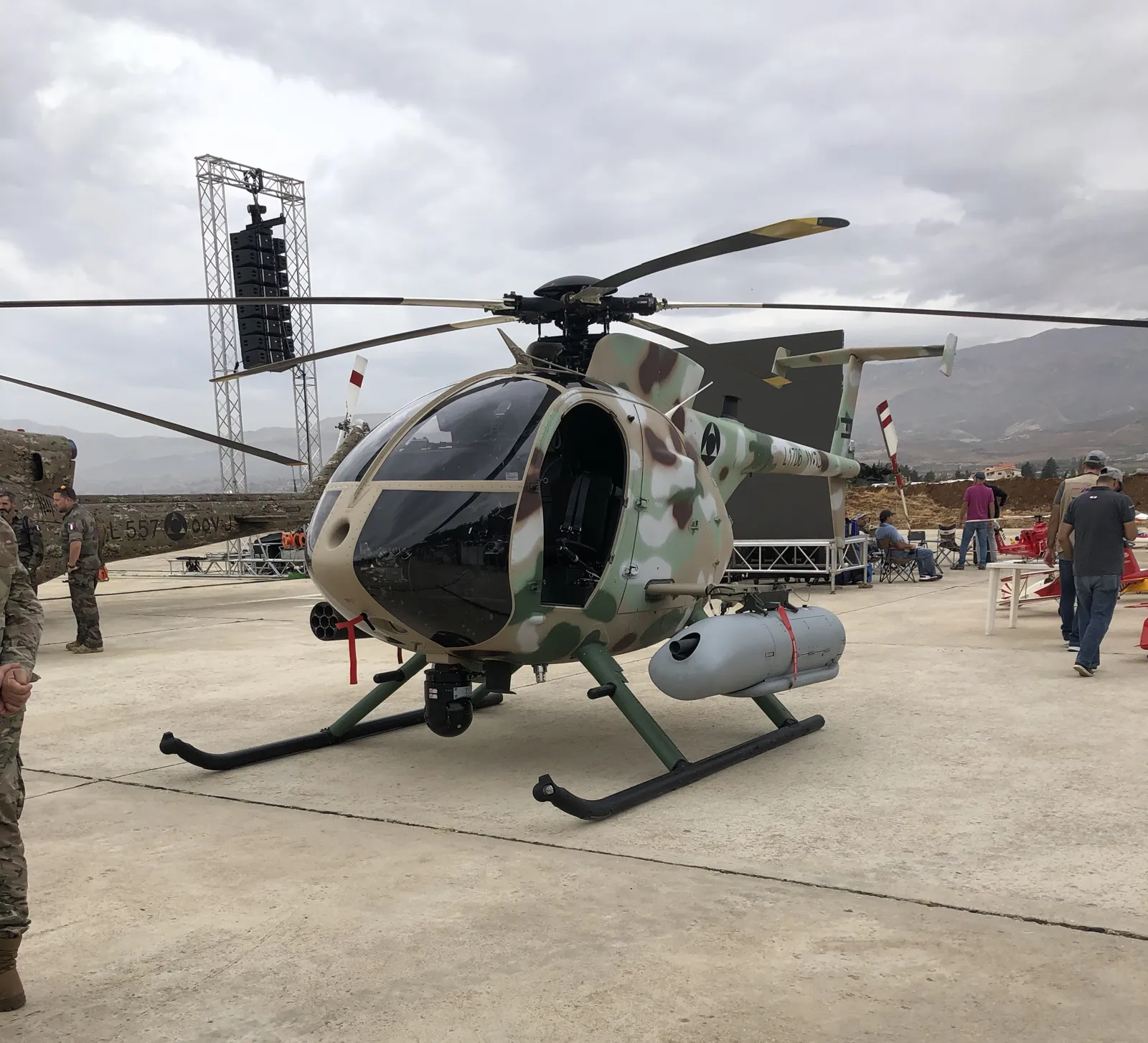
The Air Force has no fighters. Its striking element is the 5 A-29B Super Tucanos at Hamat Air Base (6 delivered through the US programme in 2017-2018, one crashed in 2023), 3 AC-208B Combat Caravans armed with Hellfire and the MD 530F+ light attack helicopters delivered in October 2021 (5 in service). The helicopter fleet includes 14 Huey IIs, 9 UH-1Hs, 7 Pumas, 7 HOT-armed Gazelles and 5 locally refurbished AB212s. Air defence rests on fewer than 50 Strela-2 shoulder-launched missiles and several hundred ZU-23-2 and ZPU anti-aircraft guns; there is no medium or long-range surface-to-air missile system.
The Navy, with about 1,700 personnel and 48 craft according to Global Firepower, is a coast-guard-scale force: the largest ship is the 43.5-metre Trablous, joined by 3 Marine Protector-class boats received from the United States in 2024, the German-donated Tabarja and Nakoura, 2 EDIC landing craft and many armed RHIBs. There are no frigates, corvettes or submarines. A 7-station coastal radar network built with Germany covers the whole coast.
The last 12 months have been the most intense period in the army’s history. On 5 August 2025 the government tasked the army with a plan giving the state a monopoly on arms; Haykal presented a five-phase roadmap on 5 September 2025. On 8 January 2026 the army declared the first phase south of the Litani complete. After the US-Israeli strikes on Iran on 28 February 2026, Hezbollah opened a front on 2 March; Israel launched ground operations on 16 March and a temporary ceasefire was declared on 16 April. The Israel-Lebanon Framework Agreement signed in Washington on 26 June 2026 and its security annex created pilot zones south of the Litani and made the LAF the main implementer of disarmament; the army deployed into the pilot zones vacated by Israel from 21 July 2026. More than 27 LAF soldiers were killed in the war. UNIFIL’s mandate ends on 31 December 2026; a preparatory conference of 17 countries in Paris on 17 September 2026 addressed support for the army and the arrangement that follows in the south.
Land Forces Inventory
| System type | Est. quantity |
|---|---|
| Main battle tanks | About 185 T-54s and 47 T-55s (as of 2024), more than 60 M48A5 MOLFs and 10 M60A3s received from Jordan in 2009; the Global Firepower total is 334 |
| Infantry fighting vehicles | 32 M2A2 ODS Bradleys (United States, 2017-2018, with the Airborne Regiment) and 16 AIFV-B-C25s bought from Belgium |
| Armoured personnel carriers | More than 1,300 M113s (62 from Jordan in 2024 and 26 more from Greece in two batches in 2026), more than 90 French VABs (39 donated in March 2026 and 19 in July 2026), 100 RWMIK Land Rovers and 10 Barracudas; Global Firepower gives 6,912 armoured vehicles in total |
| Anti-tank | The main system is the BGM-71 TOW (200 missiles delivered in 2015), with 35 VAB Mephisto HOT launcher vehicles, 50 Milans donated by France in 2021 and TOW launchers on Humvees and Polaris vehicles |
| Artillery | 12 M109A3s (Jordan, 2015), 219 M198 and 18 M114 155 mm howitzers, 15 M101 and 10 M102 105 mm guns, about 74 Soviet-built 122/130/152 mm pieces; 6 Grad-K (Russia, 2016) and 5 BM-11 rocket launchers |
| Force structure | 5 regional commands, 11 brigades (5 mechanised, 6 light), 6 intervention regiments and 4 land border regiments; the Commando (Maghaweer), Airborne, Marine Commando and Counter-Sabotage regiments form the special forces core |
Air Force Inventory
| Platform | Est. quantity |
|---|---|
| Total military aircraft | 80 (Global Firepower): no fighters, 9 attack aircraft and 68 helicopters; the Air Force has about 2,500 personnel (Wikipedia) |
| Light attack aircraft | 5 A-29B Super Tucanos (6 delivered through the US programme in 2017-2018, one crashed in 2023; Hamat Air Base, 7th Squadron) and 3 AC-208B Combat Caravans armed with AGM-114 Hellfire |
| Light attack and scout helicopters | 5 MD 530F+s (6 delivered in October 2021, one lost in January 2022; Wescam MX-10 turret and rocket pods) and 7 SA342L Gazelles with HOT missiles |
| Utility and transport helicopters | 14 Huey IIs and 9 UH-1Hs, 7 IAR 330SM Pumas (UAE donation, 2010), 5 locally refurbished AB212s and 1 AW139 VIP; 6 Robinson R44 and 3 Bulldog trainers |
| UAVs and bases | 15 RQ-11 Ravens and 5 ScanEagles (United States); bases at Beirut Rafic Hariri, Hamat (Wujah Al Hajar), Rayak and Kleyate (Rene Mouawad) |
Missile and Air-Defence Systems
| System | Type / Note |
|---|---|
| Missile-based air defence | Only 9K32 Strela-2 shoulder-launched missiles (fewer than 50); there is no medium or long-range surface-to-air missile system and airspace defence is effectively absent |
| Gun-based air defence | Several hundred ZPU-2/ZPU-4 and ZU-23-2 anti-aircraft guns, 20 triple-barrel M55 20 mm; 57 ZU-23-2s mounted on M113 chassis and 2 ZSU-23-4 Shilkas |
| Rocket artillery | 6 Grad-K 122 mm (Russian donation, 2016) and 5 BM-11s captured from Hezbollah and mounted on M35 trucks; GFP total 11 |
| Guided anti-tank | TOW 2 (main system), HOT 2 (VAB Mephisto and Gazelle) and Milan; Kornet-type missiles documented in training in 2025 are most likely captured Iranian-built copies (Wikipedia) |
| Precision munitions and the gap | AGM-114 Hellfire (AC-208B), a planned APKWS guidance kit (A-29B) and 827 M712 Copperhead guided artillery shells received in 2018; the 2026 war exposed low-altitude air defence and counter-UAS as the most critical gap |
Naval Power
| Class / Type | Est. quantity |
|---|---|
| Offshore patrol vessel | 1 Trablous (AMP 145, 43.5 m), delivered by the United States in 2012; the navy’s largest vessel |
| Patrol boats | 3 Marine Protector-class 27 m boats (ex-US Coast Guard, 2024), Tabarja (Todendorf class, Germany 2008), Nakoura (Fassmer FPB 20, Germany 2007) and Sarafand (Attacker class); Nexter Narwhal 20 mm remote weapon stations |
| Fast interceptor and assault craft | 16 armed 11 m RHIBs (United States, 2013-2014), 4 SAFE 44s (United States, 2024), 4 Sillinger 1200s (France, 2020) and 4 Asis 11 m interceptors (2022), operated largely by the Marine Commando Regiment |
| Landing craft | 2 EDIC-class 59 m landing craft: Sour and Damour (French donation, 2005) |
| Coastal radar and personnel | The Coastal Radar Organisation set up with Germany covers the entire Mediterranean coast with 7 stations; the Navy has about 1,700 personnel and works daily with the UNIFIL Maritime Task Force |
The Turkey Angle: Turkish Defence Industry
There is no Turkish-made weapon system or platform in the Lebanese inventory; the army’s equipment comes almost entirely from US, French, Gulf and European donations. The relationship between Türkiye and the Lebanese army nonetheless has a real record in the field and at the institutional level. The Turkish Armed Forces joined UNIFIL after Security Council Resolution 1701 of 2006 under the parliamentary mandate of 5 September 2006; the contribution has been renewed every year since, and in October 2025 parliament extended the mandate by two more years. The Turkish contribution includes engineer and naval elements; during the 2024 mandate the number of Turkish personnel in the field was given as 97.
There is also a record of concrete military aid: at a ceremony at the Port of Beirut on 29 May 2025, military equipment, air materiel and medical supplies donated by Türkiye to the Lebanese army were handed over. Ambassador Murat Lütem and Military Attaché Lieutenant Colonel Erdinç Durmaz attended; Brigadier General Imad Huraysh conveyed General Haykal’s thanks on behalf of the army. The itemised list and quantities of the donation were not made public, so it is reported here only in its official description. According to Asharq Al-Awsat, military cooperation between the two countries was launched with a military and financial cooperation agreement worth about 100 million Turkish lira and about 3 million dollars in cash support for the army.
The political ground strengthened markedly in 2026. President Joseph Aoun made his first official visit since taking office to Ankara on 30 July 2026, and Prime Minister Nawaf Salam was in Türkiye the same month. At the joint press conference President Erdoğan said support for the Lebanese Armed Forces would continue and that Türkiye wanted to take part in every initiative established for Lebanon’s security after UNIFIL’s withdrawal. Türkiye also attended the Paris preparatory conference of 17 September 2026. A senior Lebanese official told the Turkish press that Lebanon would work with Turkish defence companies once independent financial resources were secured and that Turkish unmanned aircraft were the priority option; that is a statement of intent, not a contract.
The gaps in the inventory define the market potential for Turkish industry clearly: the 2026 war exposed the lack of low-altitude air defence and counter-UAS, an air force without fighters needs armed UAVs, the armoured fleet rests on 1960s-design M113s and the navy still lacks patrol vessels. No signed contract for Turkish products is recorded in these areas today; the donation-dependent structure of Lebanese procurement and the requirement of compatibility with US programmes mean the framing should be read as a potential market.
Frequently Asked Questions
How many tanks does Lebanon have? The Global Firepower 2026 count gives 334 tanks. The core is about 232 T-54/T-55s, more than 60 M48A5s and 10 M60A3s received from Jordan in 2009; the most modern armoured fighting vehicles are 32 M2A2 Bradleys.
Does Lebanon have fighter jets? No. The Air Force’s striking element is 5 A-29B Super Tucano light attack aircraft, 3 Hellfire-armed AC-208B Combat Caravans and MD 530F+ light attack helicopters. The Hawker Hunters were fully retired in 2014.
Which countries does Lebanon get weapons from? Mostly by donation: the United States (Bradley, M113, Humvee, A-29, Huey II, patrol boats; more than 3 billion dollars in aid since 2006), France (VAB, HOT, Milan), Jordan (M60A3, M109, M113), Greece (M113), Germany (patrol boats, coastal radar), the UAE (Puma, Gazelle) and Qatar (vehicles and salary support).
Does Lebanon have air defence? Missile-based air defence is effectively absent: only fewer than 50 Strela-2 shoulder-launched missiles and several hundred ZU-23-2 and ZPU anti-aircraft guns. This gap was seen as the most critical shortfall in the 2026 war.
Is there defence cooperation between Türkiye and Lebanon? Yes, limited but real: a UNIFIL contribution since 2006 (extended by two years in October 2025), the equipment donation handed over in Beirut on 29 May 2025 and the pledge of army support renewed during Aoun’s Ankara visit on 30 July 2026. There is no Turkish platform in the inventory yet.
Bottom Line
Lebanon’s inventory is that of an army whose heavy-weapon count looks impressive but whose quality stopped in the 1970s: most of the 334 tanks are T-54/T-55s, air defence is gun-based and the navy is coast-guard scale. The 2026 war and the Framework Agreement gave this army the heaviest political task in its history: dismantling non-state armed groups south of the Litani. In return, US, French, Greek and Qatari donations accelerated. The Turkish link today consists of the UNIFIL contribution, the May 2025 equipment donation and the support pledge renewed in July 2026; armed UAVs, low-altitude air defence and armoured vehicle renewal define a concrete potential market for Turkish industry to the extent that Lebanon’s procurement structure becomes independent.
Sources
- Global Firepower — Lebanon
- IISS — The Military Balance
- SIPRI — Arms Transfers Database
- Wikipedia — Lebanese Armed Forces
- Wikipedia — List of equipment of the Lebanese Armed Forces
- Wikipedia — Lebanese Air Force
- Wikipedia — Lebanese Navy
- Wikipedia — 2026 Lebanon war
- Wikipedia — 2026 Israel–Lebanon Framework Agreement
- Al Jazeera — Lebanon army says phase one of disarmament in south complete
- FDD — US approves 230 million dollar package to Lebanese security forces
- The Defense Post — France donates armoured personnel carriers to Lebanon
- The Defense Post — Greece bolsters security ties with Lebanon in second vehicle donation
- Anadolu Agency — Turkish troops’ Lebanon mandate extended
- İstiklal — Turkish military equipment and air materiel support to the Lebanese army
- Turkish Minute — Turkey seeks role in post-UNIFIL security arrangement for Lebanon
- Asharq Al-Awsat — Lebanon navigates the minefield of the Turkish-Israeli rivalry
- Türkiye — Lebanese official: Turkish armed drones are the priority option