Bulgaria’s Military Strength: How Many Tanks, Aircraft and Ships Are in the Inventory? (2026)

Bulgaria’s military inventory is a snapshot of a transition a country that joined NATO in 2004 and the European Union in 2007 has still not completed. Bulgaria ranks 62nd of 145 countries in Global Firepower’s 2026 index with a PwrIndx of 1.2522, fielding 334 tanks, 71 military aircraft and 45 naval platforms. What makes the picture interesting is that two generations overlap in the same inventory: the armoured backbone is still the T-72, the core of air defence is the S-300PMU and the S-200, and the only ballistic system left is the Soviet-built Tochka. Against that, the first eight F-16 Block 70s bought from the United States landed at Graf Ignatievo in 2025, the first Strykers reached the port of Burgas in February 2026 and the German-designed MMPV 90 lead ship Hrabri entered service in December 2025. This article examines Bulgaria’s land, air, missile and naval inventory item by item, using open sources.
At a Glance
- Active personnel: Global Firepower gives 36,950 active and 3,000 reserve personnel. Conscription was abolished in 2008 and the system rests on contracted professionals plus a voluntary reserve
- Main battle tanks: 334 (Global Firepower), all of the T-72 family. Forty-four T-72M/M1 Mod. 2022s were modernised by TEREM with Elbit components and delivered in 2023, with a second batch of 40 planned
- Military aircraft: 71 (Global Firepower, 46 ready): 11 fighters, 5 attack aircraft, 23 helicopters (4 of them attack) and 26 trainers. The first 8 of 16 F-16 Block 70s bought from the United States were delivered in 2025
- Key Turkish platform: None; there is no Turkish-built platform in the Bulgarian inventory. The link with Turkey is not procurement but the joint MCM Black Sea Task Group in the Black Sea, at an institutional level
- Naval power: 45 platforms (Global Firepower), 17 of them mine warfare vessels; submarines 0. The first MMPV 90 multipurpose ship Hrabri entered service on 8 December 2025 and the second, Smeli, is expected by the end of 2026
- GFP ranking and budget: 62nd of 145 countries with a PwrIndx of 1.2522. Global Firepower gives a budget of $2.485 billion; defence spending is about 2.1 per cent of GDP in 2026, against NATO’s 5 per cent target for 2035
Note: The inventory figures below are approximate values drawn from open sources such as Global Firepower, the IISS Military Balance and SIPRI.
About the Bulgaria Armed Forces
The Bulgarian Armed Forces consist of three services, the Land Forces, the Air Force and the Navy, all under the Joint Forces Command in Sofia. Global Firepower’s 2026 tally gives 36,950 active and 3,000 reserve personnel. The commander-in-chief is President Iliana Iotova, the prime minister is Rumen Radev, the defence minister is Dimitar Stoyanov and the chief of defence is Admiral Emil Eftimov. The country joined NATO on 29 March 2004 and the European Union on 1 January 2007, and its defence planning is shaped by both frameworks, with airspace defence tied into NATO’s integrated system through the Combined Air Operations Centre at Torrejón in Spain.
Manpower is Bulgaria’s most debated defence issue. Conscription was abolished in 2008 and the army moved entirely to contracted professionals; an amendment passed on 16 December 2020 introduced voluntary reserve service, and 2026 opened with a new intake for it. The defence ministry’s goals for 2026 include cutting the establishment shortfall by 50 per cent and the voluntary reserve shortfall by 25 per cent by the end of 2029, with improving the system for attracting, selecting and retaining personnel named as a priority. Amendments are planned to the Armed Forces Reserve Act, the Defence and Armed Forces Act and the Labour Code.
On the procurement side four major programmes are running at once. The first is in the air: two letters of acceptance signed in 2019 and 2022 cover 16 F-16 Block 70s, the first batch of eight being delivered between April and December 2025 and marked with a ceremony at Graf Ignatievo on 18 December 2025; production of the second batch is finished and deliveries began in early 2026. The second is on land: the package of 183 Stryker armoured vehicles and 15 support trucks, 198 vehicles in all, approved by the US State Department on 1 September 2023; the contract was signed at $1.376 billion and an amendment passed by parliament in July 2026 raised it to about $1.414 billion. The third is at sea: the roughly €503 million two-ship MMPV 90 contract signed with Lürssen in November 2020. The fourth is air defence: the €182.114 million IRIS-T SLM procurement the government put to parliament on 2 August 2024, within a programme of six SLM batteries and one SLX battery.
What these programmes have in common is how long leaving the Soviet legacy behind has taken. The armoured backbone is still the T-72; the first battalion of 44 vehicles modernised by the state company TEREM with Elbit components was delivered in 2023, a second batch of 40 is planned and hundreds more sit in storage. Air defence rests on eight S-300PMU launchers in service since 1989 and twelve S-200 launchers dating from 1984, making Bulgaria one of very few NATO members operating a Soviet-built long-range surface-to-air missile. The only ballistic system left is the eight OTR-21 Tochka launchers inherited from the disbanded Rocket Forces. Keeping the MiG-29 and Su-25 fleets flying costs 114 million leva, about €58 million, in 2026 alone.
The budget sets the pace of that transition. Global Firepower gives the 2026 defence budget as $2.485 billion, with defence spending at about 2.1 per cent of GDP. According to NATO figures Bulgaria nearly doubled its defence spending between 2014 and 2025, from 1.31 per cent of GDP to 2.14 per cent. The government has said it will support NATO’s 5 per cent target for the 2030-2035 period but has given no timetable for reaching it. The country’s entry into the euro area on 1 January 2026 also moved defence budgeting and procurement onto a new currency footing.
What sets Bulgaria apart from similarly sized militaries in the region is its defence industry. VMZ at Sopot raised its revenue from 191 million leva in 2021 to more than 1 billion leva in 2025 and employs about 5,000 people; Arsenal AD works in infantry weapons and ammunition, Samel 90 in electronics and armoured vehicles and TEREM in maintenance and modernisation. The country’s arms exports have exceeded €6.65 billion since 2022. Plans are on the table with Rheinmetall for two plants producing propellant, artillery ammunition and unmanned systems with total investment above €1 billion, and in March 2026 Bulgaria signed a ten-year defence agreement with Ukraine covering the production of drones and other weapons. Bulgaria, in short, is a country with an ageing inventory but a growing industry.
Land Forces Inventory
| System type | Est. quantity |
|---|---|
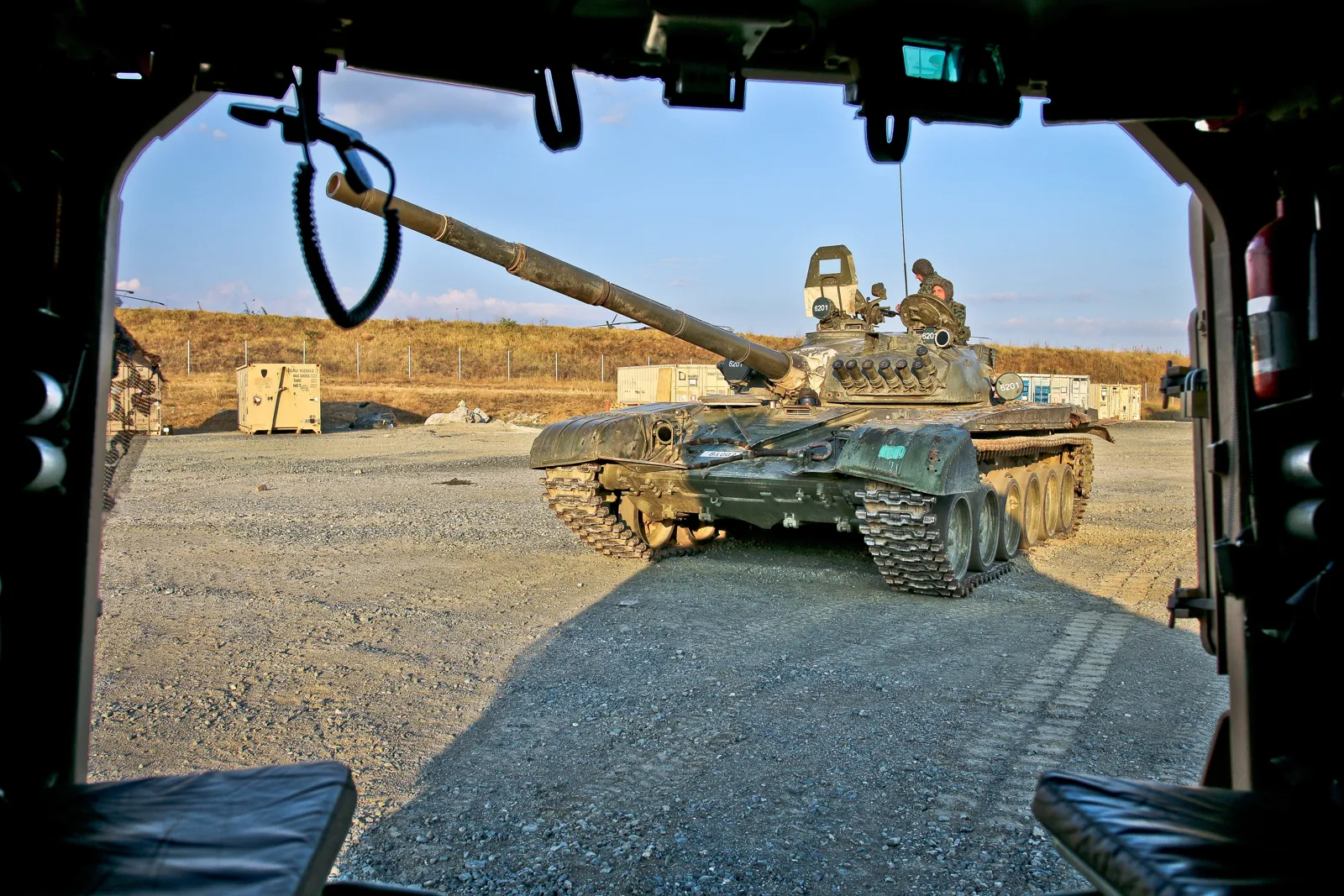
| Main battle tanks (T-72) | Global Firepower gives a total of 334 tanks; the only tank family in the inventory is the T-72 in its Ural, M and M1 versions. In 2023 the first battalion of 44 T-72M/M1 Mod. 2022s, modernised by the state company TEREM with Elbit components, was delivered, and a second batch of 40 is planned. More than 250 vehicles are assessed to be in storage |
| Infantry fighting vehicles (Stryker) | 183 Strykers and 15 support trucks, 198 vehicles in all, are on order. Ninety are M1296 Dragoons with a 30 mm Mk44 Bushmaster II cannon and Javelin missiles; the rest are 17 M1126 infantry carriers, 33 M1130 command, 24 M1133 medical evacuation, 10 M1135 CBRN reconnaissance and 9 M1132 engineer vehicles. The US State Department approved a $1.5 billion sale on 1 September 2023 and the contract was signed at $1.376 billion; an amendment approved by parliament in July 2026 raised it to about $1.414 billion. The first vehicles reached the port of Burgas on 14 February 2026; final assembly is carried out at the TEREM-Ivaylo plant in Veliko Tarnovo and the vehicles go to the 61st Mechanised Brigade at Karlovo |
| Infantry fighting vehicles (BMP-23 and BMP-1) | 70 BMP-23s and 90 BMP-1Ps. The BMP-23 is a Bulgarian-designed tracked infantry fighting vehicle with a 23 mm automatic cannon and a 9K111 Fagot anti-tank launcher with six missiles |
| Armoured personnel carriers | 100 MT-LBs and 20 BTR-60PB-MD1s are active, with hundreds of both types in storage. The MT-LB was built locally under licence and exists in ambulance, command and B1-10 Tundzha self-propelled mortar versions. One hundred BTR-60s were transferred to Ukraine |
| Reconnaissance and light armour | 12 BRDM-2 scout cars and 24 9P148 Konkurs anti-tank vehicles carrying five 9M113 missiles on a BRDM-2 hull; 7 M1117s and 10 Commando Selects, 52 HMMWVs, 27 Plasan SandCats with the military police and 12 IAG Guardian Xtremes. The Guardian Xtreme is built by SAMARM, a joint venture of Bulgaria’s Samel 90 and the UAE-based International Armoured Group. Global Firepower gives 6,724 armoured vehicles under a broad definition |
| Self-propelled howitzers | 48 2S1 Gvozdikas (122 mm), with up to 150 more assessed to be in storage. Some were bought by Czechia and sent to Ukraine. Global Firepower gives a self-propelled artillery count of 48 |
| Towed howitzers and mortars | 24 D-20s (152 mm) are the army’s standard heavy towed piece, alongside 120 mm 2B11, 82 mm M82 and locally produced 60 mm M6-211 mortars. Global Firepower gives a towed artillery count of 24 |
| Multiple rocket launchers | 24 BM-21 Grads (122 mm), with more than 200 assessed to be in storage and a modernisation programme planned. Some went to Ukraine through Czechia. Global Firepower gives an MLRS count of 24 |
| Anti-tank weapons | 107 Javelin lightweight command launch units and 218 FGM-148F missiles are on order for the Strykers; systems already in the inventory are the 9M113 Konkurs, the 9K111 Fagot, the locally built SPG-9DNM recoilless gun and RPG-7V and RPG-22 launchers |
| Combat organisation | The Land Forces have two manoeuvre brigades: the 2nd Tundzhanska Mechanised Brigade at Stara Zagora and the 61st Stryamska Mechanised Brigade at Karlovo. They are joined by brigade commands at Blagoevgrad, Pleven and Sliven, the 4th Artillery Regiment at Asenovgrad, the 101st Alpine Regiment at Smolyan and the 55th Engineer Regiment at Belene. Both mechanised brigades field an Osa-AKM air-defence battalion |
| Personnel and service system | Conscription was abolished in 2008 and the army rests entirely on contracted professionals, with voluntary reserve service introduced by an amendment passed on 16 December 2020. The defence ministry’s 2026 goals include cutting the personnel shortfall by 50 per cent and the voluntary reserve shortfall by 25 per cent by the end of 2029 |
Air Force Inventory
| Platform | Est. quantity |
|---|---|
| Total military aircraft | 71 (Global Firepower, 46 ready): fighters 11, attack aircraft 5, transport 6, trainers 26, helicopters 23, attack helicopters 4 |
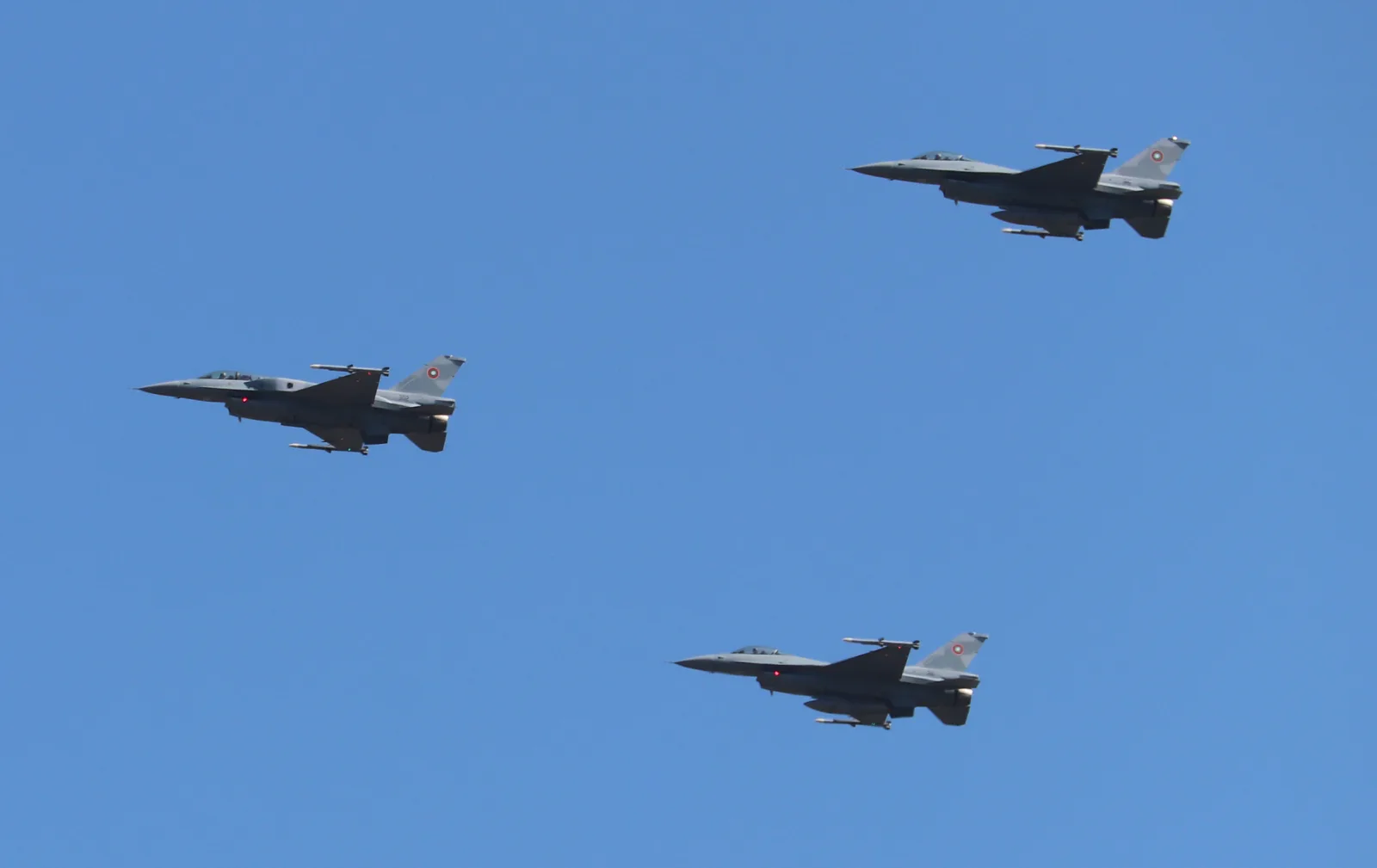
| Fighter aircraft (F-16 Block 70) | Sixteen aircraft are on order in all: a first letter of acceptance for eight in 2019 and a second for eight more in 2022. The first batch of eight (six single-seat C and two two-seat D) arrived at 3rd Air Base, Graf Ignatievo, between April and December 2025, with completion marked by a ceremony on 18 December 2025. Production of the second batch is finished, deliveries began in early 2026 and the programme is expected to end in 2027. Thirty-five AIM-120C-7/C-8 and 44 AIM-9X Block II missiles are on order for the aircraft |
| Fighter aircraft (MiG-29) | The 1st Fighter Squadron at Graf Ignatievo operates 12 MiG-29As and 3 MiG-29UBs, holding the air policing task until the F-16s reach full capability. Bulgaria allocated 86.4 million leva for MiG-29 support in 2026 |
| Attack aircraft (Su-25) | Five Su-25Ks and two Su-25UBKs serve with the 22nd Forward Deployment Air Base at Bezmer. Bulgaria allocated 27.6 million leva for the Su-25 fleet in 2026; together with the MiG-29, keeping the two Soviet-era fleets flying costs 114 million leva, about €58 million, a year |
| Helicopters | 24th Air Base at Krumovo fields 4 Mi-24V attack helicopters, 8 Cougar TTH and 4 Cougar combat search and rescue helicopters, 2 Mi-17s and 6 Bell 206B-3 trainers. AS565MB Panther naval helicopters are based separately at the navy’s Chayka base at Varna |
| Transport and reconnaissance aircraft | 16th Air Base at Vrazhdebna, in the military area of Sofia Airport, operates 3 C-27J Spartans, 2 L-410UVP-E Turbolets, 1 Pilatus PC-12 and 1 An-2 used for parachute training. The single An-30B survey aircraft has been out of service since 2022, stranded in Ukraine where it went for repair |
| Trainer aircraft | 12th Air Base at Dolna Mitropoliya operates 5-6 Aero L-39ZAs, 6 Pilatus PC-9Ms and 2-4 Zlin Z 242L Zeus. A contract was signed with Czech Aero Vodochody for the overhaul and partial modernisation of the L-39ZAs, the first two being sent in January 2023. Global Firepower gives a trainer count of 26 |
| Unmanned aircraft | There is no armed unmanned aircraft in the inventory; all are for reconnaissance and surveillance. They comprise one Aerosonde Mk4.7 system of three aircraft, the domestic Telesys TERES-02 used by the Land Forces since 2025 (two systems of three aircraft each, one in each fitted with synthetic aperture radar), the RQ-11 Raven since 2015, the ScanEagle since 2025 and 12 Aquila vertical take-off systems with 36 aircraft acquired from Greece under the tactical reconnaissance programme |
| NATO shared assets | Bulgaria shares in the 3 C-17A Globemaster IIIs of the Heavy Airlift Wing at Pápa Air Base in Hungary and the 5 RQ-4D Phoenix unmanned aircraft of the Alliance Ground Surveillance programme at Sigonella in Italy. Its airspace defence is tied into NATO’s integrated air defence system through the Combined Air Operations Centre at Torrejón in Spain |
Missile and Air-Defence Systems
| System | Type / Note |
|---|---|
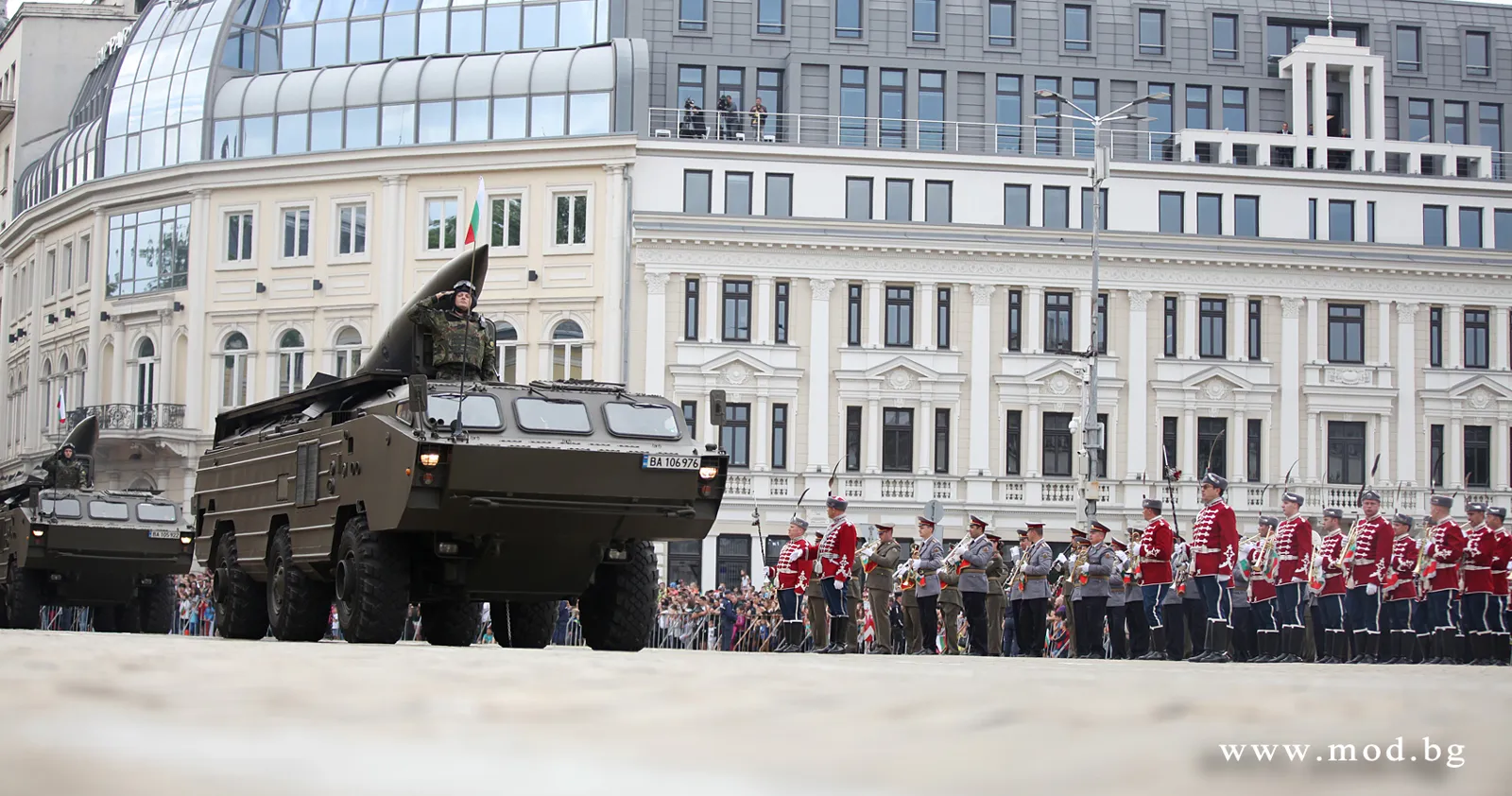
| Tactical ballistic missiles (OTR-21 Tochka) | Eight launchers; this is the only missile system left from the disbanded Rocket Forces and the number of remaining missiles is classified. It sits with the Tactical Surface-to-Surface Missile Battalion of the 4th Artillery Regiment at Asenovgrad and is reported to be in service as of 2023, though rarely seen. Bulgaria is one of the few NATO members still operating a Soviet-built tactical ballistic missile |
| Long-range air defence (S-300PMU) | Eight launchers, in service since 1989 and working with the ST-68U three-dimensional radar. The battalion, under the Missile Air Defence Base in Sofia, is stationed at Bankya. Bulgaria is one of very few NATO members operating a Soviet-built long-range surface-to-air missile system |
| Long-range air defence (S-200 Vega-E) | Twelve launchers, in service since 1984 with the battalion at Kostinbrod. Designed against high-altitude targets, it is the oldest air-defence layer in the inventory |
| Short and medium-range air defence | The air force fields S-125M Neva-M battalions at Kichevo and Chernomorets, a mobile 2K12 Kub battalion at Stara Zagora with about 20 systems, and the S-75M Volkhov used as a training target. The two mechanised brigades of the land forces field 24 9K33M3 Osa-AKMs with a range of 15 km, alongside ZU-23-2 guns mounted on ZIL-131 trucks and Strela-2M and Strela-3 shoulder-launched missiles |
| Next-generation air defence (IRIS-T SL) | On 2 August 2024 the Bulgarian government asked parliament to approve the procurement of one IRIS-T SLM system for €182,114,000; the programme covers six SLM batteries and one SLX battery in total. Once complete it will be the first modern medium and long-range layer in the country’s air defence outside the Soviet legacy |
| Anti-ship missiles and coastal defence | The 2nd Coastal Anti-Ship Missile and Artillery Battalion near Varna is responsible for coastal defence. The new MMPV 90 ships carry RBS 15 anti-ship missiles, MICA VL vertically launched air-defence missiles, the Rheinmetall Oerlikon Millennium close-in weapon system and Leonardo A.244/S torpedoes, the biggest leap in the Bulgarian Navy’s missile capability in thirty years |
Naval Power
| Class / Type | Est. quantity |
|---|---|
| Total platforms | 45 (Global Firepower): 6 frigates, 3 corvettes and 17 mine warfare vessels. Submarines 0, the last Romeo-class boat Slava having been decommissioned in 2011 without replacement |
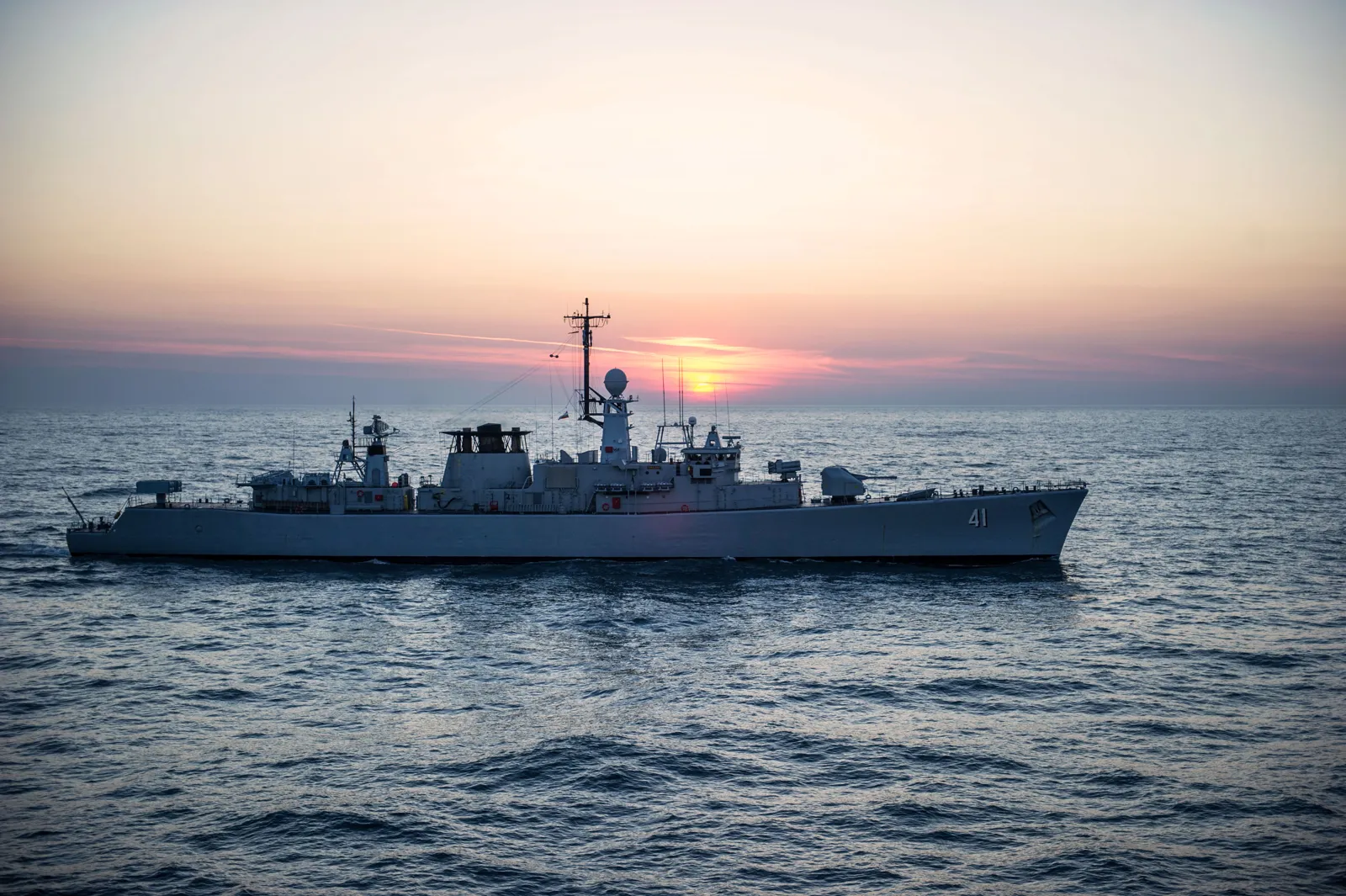
| Multi-role frigates (Wielingen class) | Drazki (41), Verni (42) and Gordi (43); these 2,283-tonne ships were bought from Belgium in 2005 and 2007 and belong to the 4th Patrol Ships Division at Atia. Drazki joined the UNIFIL mission off Lebanon in 2006, the Bulgarian Navy’s first international peacekeeping deployment |
| Multipurpose modular patrol vessels (MMPV 90) | A contract worth about €503 million was signed with Germany’s Lürssen (NVL) in November 2020, the ships being built at the MTG Dolphin yard in Varna. They are 90 m long, displace 2,300 tonnes, have a range of 3,000 nautical miles and carry a flight deck and helicopter hangar. Hrabri was launched on 4 August 2023, began sea trials on 10 November 2025 and entered service on 8 December 2025; Smeli was launched ahead of schedule on 12 December 2024 and is expected to be delivered by the end of 2026 |
| Corvettes and fast attack craft | The 1,440-tonne Koni-class anti-submarine frigate Smeli, the 589-tonne Pauk-class anti-submarine corvettes Reshitelni and Bodri, and the 549-tonne Tarantul-class missile corvette Malniya. All are Soviet-built and split between Varna and Atia |
| Mine warfare vessels | Global Firepower gives 17 mine warfare vessels, proportionally the strongest item in the Bulgarian naval inventory. The force comprises Tsibar from Belgium and Mesta and Struma from the Netherlands (Tripartite-class minehunters), Briz, Shkval and Priboi at Atia, and four inshore minesweepers. Belgium is donating four more Tripartite-class ships and the Netherlands three in 2027-2028 |
| Bases and organisation | Naval Forces Command is at Varna, with two main basing locations at Varna and at Atia near Burgas. Varna hosts the 1st Patrol Ships Division and the 3rd Mine Counter-Measure Division, Atia the 4th Patrol Ships Division and the 6th Mine Counter-Measure Division. They are joined by the Chayka Independent Naval Helicopter Air Base, the Naval Special Reconnaissance Detachment, the Hydrographic Service and the Electronic Surveillance Detachment at Tsarevo |
| The Black Sea mine threat | Since 2022 drifting mines in the Black Sea have threatened trade routes and the coastline. Bulgaria’s 354 km of coast and the ports of Varna and Burgas lie directly in that threat’s path, which is why the country keeps a comparatively large mine warfare force |
| The multinational task group | The Bulgarian minehunter Priboi takes part in the MCM Black Sea Mine Countermeasures Task Group set up by Turkey, Romania and Bulgaria. Command rotates between the three countries every six months and Bulgaria took over from Turkey on 9 July 2026 |
The Turkey Angle: Turkish Defence Industry
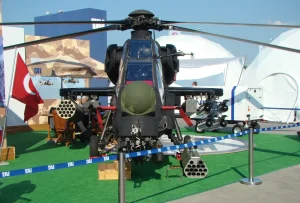
There is no Turkish-built platform in Bulgaria’s inventory: no unmanned aircraft, no armoured vehicle, no electronic system. Yet among the countries examined in this series, Bulgaria has one of the most unusual military links with Turkey: together with Romania, the two countries sail ships in the same naval task group. The MCM Black Sea Mine Countermeasures Task Group, established by a memorandum of understanding signed between Turkey, Bulgaria and Romania in January 2024, became operational on 1 July 2024. Its core mission is to preserve freedom of navigation in the Black Sea through surveillance tasks, the neutralisation of drifting mines that threaten maritime traffic and related search and rescue. Bulgaria’s contribution is the minehunter Priboi.
The group works on an activation and stand-by model in which ships remain under their national flags, while command and headquarters responsibility rotates between the three countries every six months. Turkey held the first command from July 2024 to January 2025, Bulgaria took over from January to July 2025 and Romania from July 2025 to January 2026; the fourth activation period began on 8 January 2026 under Turkish command and passed back to Bulgaria on 9 July 2026. The group’s scope widened in 2026: the Bulgarian cabinet approved an amendment to the memorandum on 1 July 2026 and the amendment was signed on the margins of the NATO Ankara Summit of 7-8 July 2026. It added surveillance and reconnaissance in the operating area and the prevention of deliberate attacks on critical underwater infrastructure, so protecting energy links and submarine communications cables is now among the group’s declared tasks.
The second institutional strand is a trilateral letter of intent. On the margins of the NATO defence ministers’ meeting in Brussels in October 2024, Turkish Minister of National Defence Yaşar Güler, Bulgarian Defence Minister Atanas Zapryanov and Romanian Defence Minister Angel Tîlvar signed a letter of intent covering military activities and aimed at strengthening regional security and defence capabilities. Turkey and Bulgaria also have a bilateral framework affirming non-aggression and providing for transparency and the exchange of information in the military field.
The defence industry side, however, is empty. The Turkish defence industry has yet to place a single item in the Bulgarian market. Otokar’s ARMA 8×8 was shown at the HEMUS 2020 exhibition and offered for Bulgaria’s requirement for 90 wheeled armoured vehicles with 30 mm turrets, but it did not make the first-phase shortlist of four invitees; the programme was eventually settled with the US-built Stryker. Bulgaria’s big-ticket items, the F-16, the Stryker, the MMPV 90 and IRIS-T SL, all went to American and Western European suppliers. To that must be added the strength of Bulgaria’s own industry: VMZ Sopot, Arsenal AD and Samel 90 are competitive in ammunition, infantry weapons and electronics. There is also no publicly announced comprehensive defence industry framework agreement between the two countries.
The political and economic ground, by contrast, is solid. Turkey supported Bulgaria’s NATO and European Union membership, and the two countries are neighbours and allies. Foreign Minister Hakan Fidan travelled to Bulgaria in June 2026 for the South-East European Cooperation Process summit and held bilateral meetings there. Trade has run between $6.4 billion and $8.3 billion a year from 2021 to 2025, with the balance consistently in Turkey’s favour; Turkey is among Bulgaria’s top five trading partners and accounts for about 8 per cent of its external trade. Turkish investment totals roughly $2.7 billion, about 1,500 Turkish companies and two Turkish-owned banks operate in the country, and projects completed by Turkish contractors are worth about $2.1 billion. The Turkish foreign ministry records that more than a million citizens of Turkish origin live in Bulgaria. That ground offers a framework within which defence industrial cooperation could be built even though none exists today; the closest precedent for how such a shift works in a neighbouring NATO member is Croatia, which has procured six Bayraktar TB2s and an ASELSAN weapon station.
Frequently Asked Questions
How many tanks does Bulgaria have? Global Firepower’s 2026 tally gives Bulgaria 334 tanks, and the only tank family in the inventory is the T-72 in its Ural, M and M1 versions. The first battalion of 44 T-72M/M1 Mod. 2022s, modernised in 2023 by the state company TEREM with components from Israel’s Elbit, has been delivered, and a second batch of 40 is planned for modernisation. More than 250 vehicles are assessed to be in storage and some were bought by Czechia and sent to Ukraine. Among infantry fighting vehicles, 70 BMP-23s of Bulgarian design, 90 BMP-1Ps and 100 MT-LBs are active; deliveries of the 183 Strykers bought from the United States began in February 2026 and the vehicles go to the 61st Mechanised Brigade at Karlovo.
What fighter aircraft does Bulgaria operate? The Bulgarian Air Force operates two fighter types. The Soviet-built MiG-29 fleet, 12 MiG-29As and 3 MiG-29UBs at 3rd Air Base, Graf Ignatievo, still holds the air policing task. Sixteen F-16 Block 70s are on order from the United States to replace them, under letters of acceptance for eight aircraft in 2019 and eight more in 2022; the first batch of eight (six C and two D) was delivered between April and December 2025, completion being marked with a ceremony on 18 December 2025, and deliveries of the second batch began in early 2026. On the attack side, five Su-25Ks and two Su-25UBKs serve with the 22nd Forward Deployment Air Base at Bezmer. Krumovo also fields 4 Mi-24V attack helicopters, 12 Cougars and 2 Mi-17s, and Vrazhdebna 3 C-27J Spartan transports. There is no armed unmanned aircraft in the inventory.
Does Bulgaria operate Turkish-made weapons? No. There is no Turkish-built platform, unmanned aircraft or armoured vehicle in Bulgaria’s inventory, and there is no publicly announced comprehensive defence industry framework agreement between the two countries. Otokar’s ARMA 8×8 was shown at HEMUS 2020 and offered for Bulgaria’s wheeled armoured vehicle programme but did not make the first-phase shortlist of four invitees; the programme ended with the US-built Stryker. There is, however, direct military cooperation: the MCM Black Sea Mine Countermeasures Task Group, set up by Turkey, Bulgaria and Romania in January 2024 and operational from 1 July 2024. The Bulgarian minehunter Priboi takes part, command rotates every six months and Bulgaria took over from Turkey on 9 July 2026. The group’s remit was widened to include the protection of critical underwater infrastructure by an amendment signed on the margins of the NATO Ankara Summit of 7-8 July 2026.
How strong is the Bulgarian Navy? Global Firepower counts 45 platforms for the Bulgarian Navy, 6 of them frigates, 3 corvettes and 17 mine warfare vessels. There are no submarines; the last Romeo-class boat was decommissioned in 2011. The backbone is three 2,283-tonne Wielingen-class frigates bought from Belgium in 2005 and 2007, Drazki, Verni and Gordi. The biggest change is the MMPV 90 programme: under a contract worth about €503 million signed with Germany’s Lürssen in November 2020, two 90 m, 2,300-tonne ships are being built at the MTG Dolphin yard in Varna, the first of which, Hrabri, entered service on 8 December 2025, with Smeli expected by the end of 2026. The ships carry a 76 mm gun, RBS 15 anti-ship missiles, MICA VL air-defence missiles and A.244/S torpedoes. The main bases are Varna and Atia near Burgas.
Is military service compulsory in Bulgaria? No. Bulgaria abolished conscription in 2008 and based its army entirely on contracted professionals. An amendment passed on 16 December 2020 introduced voluntary reserve service, under which adult Bulgarian citizens undergo a period of military training and serve as reservists within units of the armed forces, funded from the defence ministry budget. The year 2026 opened with a new intake for that service. According to goals published by the defence ministry, the establishment shortfall is to be cut by 50 per cent and the voluntary reserve shortfall by 25 per cent by the end of 2029.
Bottom Line
Bulgaria’s inventory is one of the clearest illustrations of how long leaving the Soviet legacy behind can take for a NATO member. On paper the picture looks misleadingly strong: 334 tanks, eight S-300PMU launchers, twelve S-200 launchers, eight Tochka launchers and 45 naval platforms add up to a crowded inventory by regional standards. Yet almost all of it is 1980s technology and a large share sits in storage. The real change is happening between 2025 and 2027: the first eight F-16 Block 70s arrived in 2025, Stryker deliveries began in February 2026, Hrabri entered service in December 2025 and the IRIS-T SL programme will create the country’s first modern medium-range air-defence layer. The weaknesses are equally clear: no armed unmanned aircraft, no submarine, a manpower shortfall the army’s own documents identify as a problem, and defence spending at about 2.1 per cent of GDP, just above the NATO floor. In two areas, though, Bulgaria is above the regional average: a 17-ship mine warfare force and the industrial output carried by VMZ Sopot and Arsenal AD. For Turkey, Bulgaria is an unusual case: not a single Turkish item is in the inventory, yet the two countries conduct operations together in the same naval task group. The MCM Black Sea Task Group sits outside the “potential market” framing seen in most countries in this series; it is a direct operational partnership. The missing link is that this military closeness has not carried over to the defence industry, and the Croatian example shows such a shift is possible in a neighbouring NATO member.
Related Reading
Sources
- Global Firepower — Bulgaria
- IISS — The Military Balance
- SIPRI — Arms Transfers Database
- Wikipedia — Bulgarian Armed Forces
- Wikipedia — Bulgarian Air Force
- Wikipedia — Bulgarian Navy
- Wikipedia — List of modern equipment of the Bulgarian Armed Forces
- BTA — Bulgaria welcomes full first batch of F-16 Block 70s
- The Sofia Globe — Bulgaria’s first Stryker vehicles arrive (14 February 2026)
- The Sofia Globe — Parliament approves increased Stryker price (July 2026)
- Naval News — Bulgaria’s first MMPV 90 begins sea trials
- Defence Turkey — MCM Black Sea begins fourth activation period
- The Sofia Globe — Amendment on protecting critical underwater infrastructure
- Turkish MFA — Turkey-Bulgaria relations