





U.S. Army Awards Northrop Grumman $325.5 Million for ‘RangeHawk’ Hypersonic Test Watchdog

The U.S. Army has handed Northrop Grumman a contract worth roughly $325.5 million to develop ‘RangeHawk’, an uncrewed aircraft designed to observe and record hypersonic weapons trials from the air. The program’s core purpose is to gather test data on missiles flying at Mach 5 and beyond directly from a point close to the weapon’s flight path, rather than relying on fixed ground stations.
The contract is managed by the Army Contracting Command in Orlando and rests on a cost-plus-fixed-fee structure, meaning the Army absorbs development costs while paying Northrop Grumman a predetermined, fixed profit. According to the published schedule, the work is slated for completion by 14 May 2031. On the date the contract was signed, roughly $65.7 million from the fiscal year 2026 Research, Development, Test and Evaluation (RDT&E) budget was allocated to the effort.
A watchdog derived from the Global Hawk
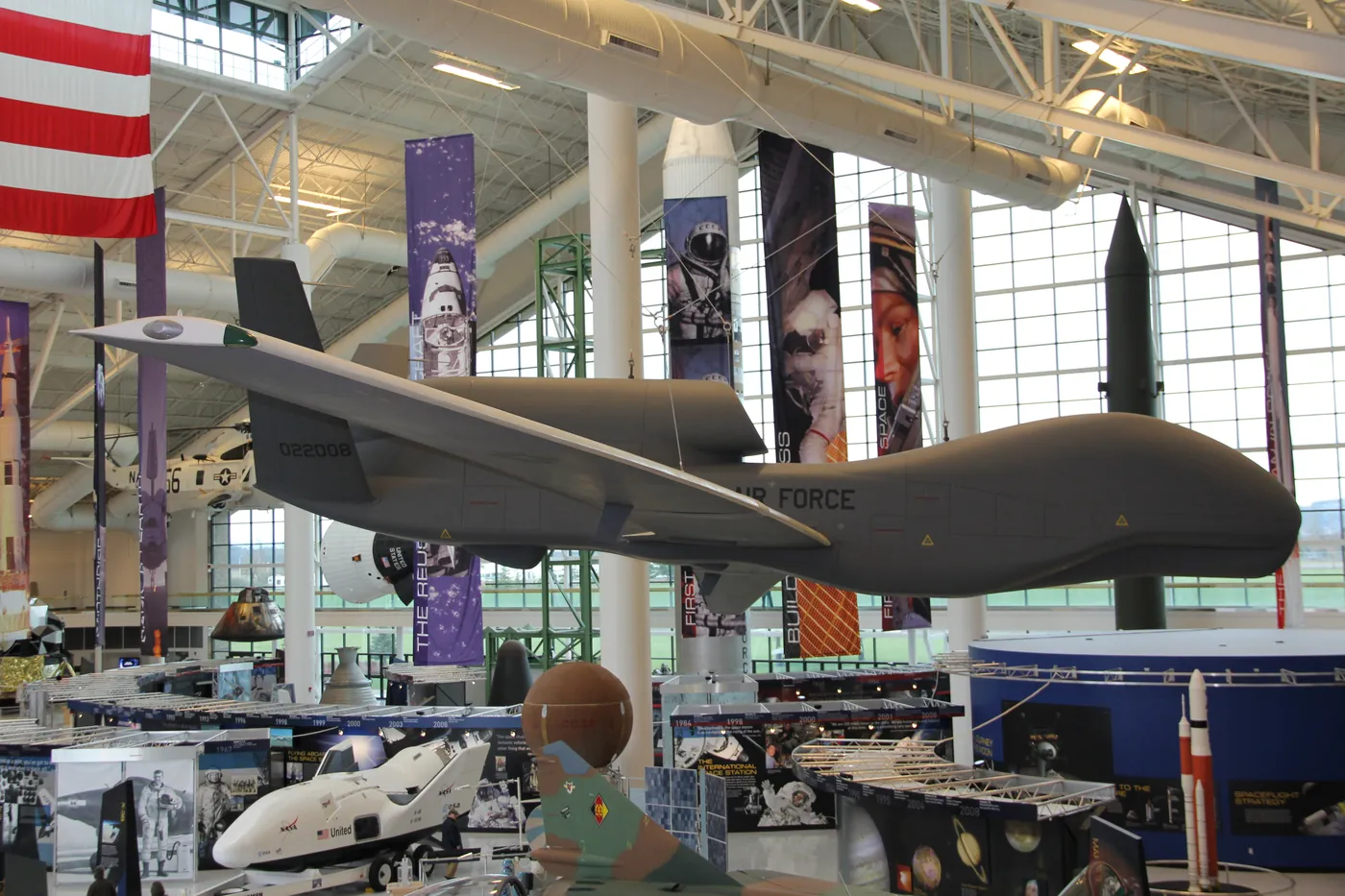
RangeHawk is not a clean-sheet design. It draws on the RQ-4 Global Hawk family, one of America’s long-endurance reconnaissance aircraft, and that choice hands the program a ready-made engineering pedigree. A wingspan exceeding 130 feet (about 40 meters), a ceiling reaching 60,000 feet (about 18 kilometers) and an endurance of more than 34 hours all make the aircraft well suited to sustained, high-altitude observation.
Taken together, those traits should let RangeHawk loiter for hours during a test and follow a missile from launch through to its terminal phase from a single platform. Where fixed radar and telemetry stations are geographically constrained, an airborne asset that can move toward the flight path improves both the quality and the continuity of the test data collected.
It carries sensors, not weapons
RangeHawk’s payload consists entirely of measurement and tracking equipment. Its mission package includes telemetry receivers (devices that collect and relay test data streamed from the missile in flight), phased-array antennas (antennas that steer electronically rather than mechanically to keep a target locked), electro-optical and infrared tracking sensors, precise timing references, mission processors, data storage units and secure communications links.
All of this hardware is built to capture the dense data a hypersonic trial generates in seconds and, where needed, pass it securely to ground teams. The phased-array antennas and electro-optical sensors are critical for keeping a very fast-moving object continuously locked, while the precise timing references ensure that measurements from different sensors can be aligned on the same time axis.
Part of the hypersonic test ecosystem
RangeHawk’s real context is America’s rapidly expanding hypersonic weapons programs and the test infrastructure needed to put them through their paces. Because hypersonic projectiles fly at least at Mach 5 and often maneuver, the fixed sensor networks of conventional test ranges frequently cannot see the whole trajectory clearly. A mobile, airborne observation asset is meant to close that gap.
In open sources, RangeHawk is described as a test asset that will support trials of systems such as the land-based Dark Eagle hypersonic missile. Within that framing it is not a weapon in itself but a measurement platform intended to accelerate the maturation of the next generation of high-speed systems.
The program’s timeline stretching to 2031 signals that this is not a short-term buy but a long-running development and integration effort. The scope covers prototype development, modification of the airframe, sensor integration and logistics support. That suggests the Army is buying not merely an aircraft but a capability aimed at overhauling how hypersonic test data is gathered in the first place.
Open-source verification notes
The contract value (about $325.5 million), the cost-plus-fixed-fee structure, management by the Orlando Contracting Command, the 14 May 2031 completion target and the roughly $65.7 million RDT&E share allocated from fiscal year 2026 all appear consistently across several independent defense sources. The same sources report that RangeHawk is derived from the RQ-4 Global Hawk family and detail the contents of its sensor package. Because final in-service performance figures are not yet a program output, the cited wingspan, altitude and endurance values rest on the known characteristics of the RQ-4 family and may change in the final configuration.
Sources
- Army Recognition — “U.S. Army Awards Northrop $325M Contract for RangeHawk Hypersonic Missile Testing Drone”
- Defence Blog — “Northrop Grumman wins $325M to develop drone that monitors hypersonic tests”
- RealClearDefense — “Army Awards Contract for RangeHawk Hypersonic Missile Testing Drone”
- ExecutiveBiz — “Northrop Books $325M Army RangeHawk Development Contract”