BlackSky is building spy satellites nobody has ordered yet — and betting governments will come

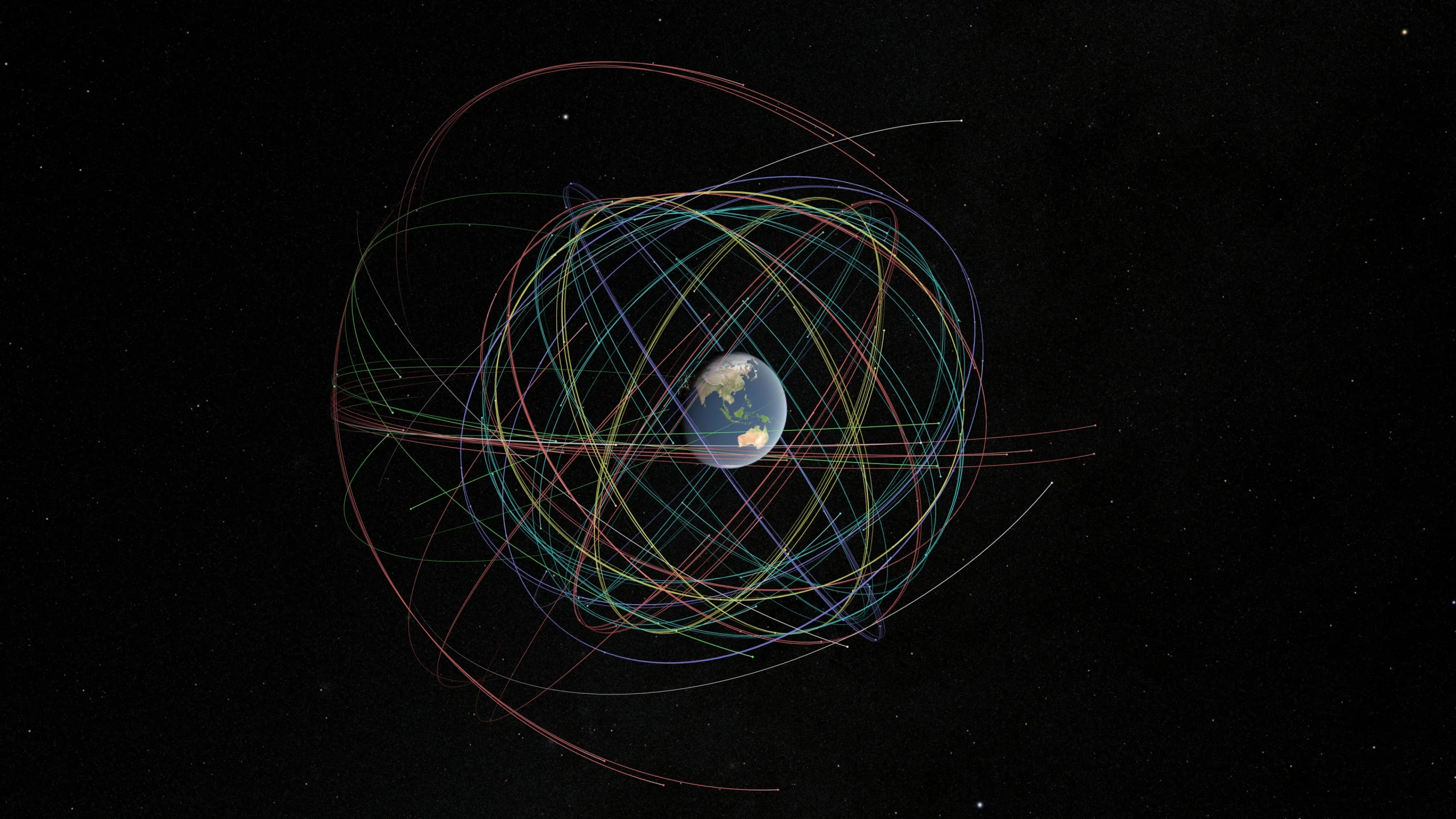
Commercial imaging operator BlackSky says it has more than 20 Gen-3 satellites in production without waiting for orders, part of a bid to collapse the three-to-five-year wait that has long defined sovereign satellite procurement down to roughly twelve months. The company posted $33.3 million in second-quarter 2026 revenue, with international subscriptions up 150 per cent year on year.
At a Glance
- Who: BlackSky, a US commercial Earth-observation operator led by CEO Brian O’Toole.
- What: More than 20 Gen-3 satellites built to inventory, some with no customer assigned.
- Why it matters: Traditional procurement runs three to five years; BlackSky promises about one.
- How sharp: Gen-3 delivers 35-centimetre imagery.
- The money: $33.3 million in Q2 2026 revenue, up 50 per cent year on year.
- The constellation: 12 to 15 satellites for hourly revisit; eight Gen-3 craft in orbit by year end.
- Cost claim: Roughly one-fifth the price of legacy platforms.
Inverting the order book: build first, sell later
Satellite procurement has always been bespoke work. A government decides it wants its own imaging capability, writes a requirement, runs a competition, and then waits while a spacecraft is designed around its specifications, built, tested and finally launched. Industry convention puts that chain at three to five years. O’Toole’s criticism of the field is aimed squarely at that number: rivals, he argues, force customers to wait as long as three to five years.
BlackSky’s answer borrows from manufacturing rather than aerospace. Instead of building to order, the company is building to inventory — pushing Gen-3 spacecraft down the line before a buyer exists. More than 20 are in production, and an undisclosed share of them carry no customer assignment at all. When a government signs, production does not start; a satellite already on the shelf is configured to that country’s mission and prepared for launch.
The commercial exposure is obvious. Unsold spacecraft are capital sitting still. But the wager is that demand has decisively outrun supply. Over the past three years, governments from Europe to the Gulf to Southeast Asia have arrived at the same conclusion: leasing imagery and owning the spacecraft that produces it are not the same thing when a crisis arrives. The war in Ukraine made the gap concrete — decisions about which area gets imaged, at what hour and for whom, ultimately rested with commercial providers and the jurisdictions they answer to.
The company’s sales funnel is built around that anxiety. Governments start as subscribers, buying imagery and AI-driven analysis from BlackSky’s existing commercial constellation. They run the service through real missions, confirm it works, and only then order spacecraft of their own. The purchase decision rests on operational experience rather than a paper specification — which removes the oldest fear in defence procurement, that of spending heavily on a system that turns out not to fit.
What Gen-3 actually delivers: 35 centimetres, hourly revisit, one-fifth the cost
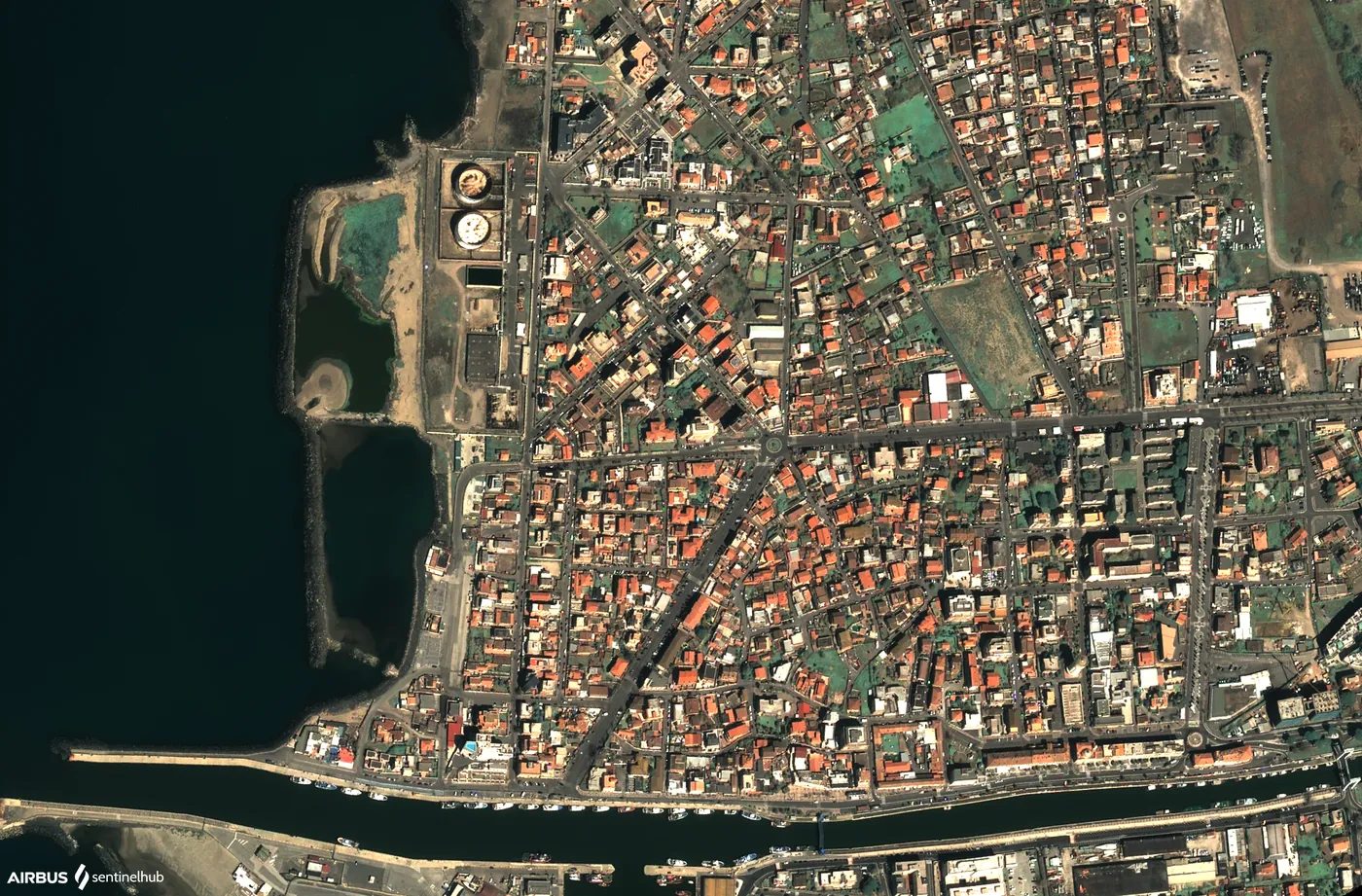
The headline specification is 35-centimetre resolution. In practical terms, the smallest distinguishable detail in an image corresponds to a square roughly 35 centimetres on a side — enough to identify a vehicle type rather than merely note that a vehicle is present, to pick out an aircraft model, or to trace freshly dug earthworks at a site. Military analysts treat that band as the threshold between knowing something is there and knowing what it is.
The company’s real argument, though, is about time rather than sharpness. The decisive measure in satellite intelligence is revisit rate: how often you can look at the same point. A spacecraft passing once a day hands you yesterday’s photograph. A constellation passing hourly shows you movement — the direction of traffic in a harbour, which way a unit is shifting, how far along a launch pad has been assembled. BlackSky’s target is an hourly revisit service built on 12 to 15 satellites, with eight Gen-3 craft planned in orbit by the end of the year and two more slated for launch in the third quarter.
On cost, the company claims Gen-3 runs at roughly one-fifth the price of legacy platforms. That ratio captures the defining shift in space over the past decade: cheaper launch and smaller electronics made fleets of modest satellites economically rational where single exquisite spacecraft once dominated. Losing one satellite no longer means losing the capability, so the fleet model brings resilience along with the savings.
A software layer sits on top of the hardware. The company’s Spectra platform processes incoming imagery with AI-driven analytics, and the intent is not to dump raw frames on a customer but to produce a worked output — three ships in this harbour that were not there yesterday. The bottleneck in modern intelligence has for some time been reading collected data in time rather than collecting it. As frame counts rise, analyst demand rises with them, and automated change detection is the only practical way to close that gap.
BlackSky Gen-3: Key Specifications
| Class | Commercial electro-optical imaging satellite (low Earth orbit) |
| Resolution | 35 centimetres |
| In production | More than 20 spacecraft, some unassigned to customers |
| Year-end target | Eight Gen-3 satellites in orbit |
| Constellation goal | 12-15 satellites for hourly revisit |
| Cost claim | Roughly one-fifth of legacy platforms |
| Delivery claim | About one year from order, against an industry norm of 3-5 years |
| Software layer | Spectra — AI-driven imagery analytics |
| Q2 2026 revenue | $33.3 million, up 50 per cent year on year |
| Backlog profile | More than 80 per cent multi-year international contracts |
The numbers behind the bet
BlackSky’s second-quarter results explain the confidence behind building to inventory. Revenue reached $33.3 million, up 50 per cent year on year. The more striking line is international subscriptions, which grew 150 per cent over twelve months. More than 80 per cent of the backlog — work signed but not yet recognised as revenue — sits in multi-year international contracts. Chief Financial Officer Henry Dubois pointed to milestone contributions from the Mission Solutions side of the business.
That mix says something specific: growth is coming less from US agencies than from foreign governments assembling their own orbital capability. Multi-year contracts, unlike one-off imagery sales, supply predictable cash flow, which is what makes shelving unsold spacecraft financially survivable. The company’s first sovereign delivery is expected during 2026.
Step back and the boundary between commercial space and state intelligence is being redrawn. Satellite reconnaissance was for half a century something only great powers could afford. As costs fall, mid-sized states are pulling up chairs. BlackSky’s model is a lever on that transition: the company carries the capital and the production risk, and the customer simply joins a queue that is already moving.
BlackSky and the commercial imaging market
BlackSky is a US-based commercial Earth-observation company whose business model departs from that of a conventional satellite manufacturer. It operates its own spacecraft and sells imagery as a service, and it will also supply satellites to a government that wants them under its own flag. Earlier generations worked in the sub-metre band; dropping to 35 centimetres with Gen-3 widens access to a quality that only a handful of players held commercially for years.
The market’s present shape was largely set by events since 2022. The war in Ukraine demonstrated that satellite imagery is consumed not only by intelligence services but by the public — shipyard activity, troop concentrations and post-strike damage assessments became matters of open-source argument. That visibility sharpened state appetite for sovereign capability considerably.
The limits of depending on a commercial provider surfaced in the same period. Which imagery gets sold to whom and when, where resolution is restricted, and which legal system a provider answers to in wartime all emerged as the most brittle links in the chain. The case for a sovereign satellite rests on exactly that: the ability to look without asking anyone’s permission.
The Turkish angle: why build-to-inventory is worth studying
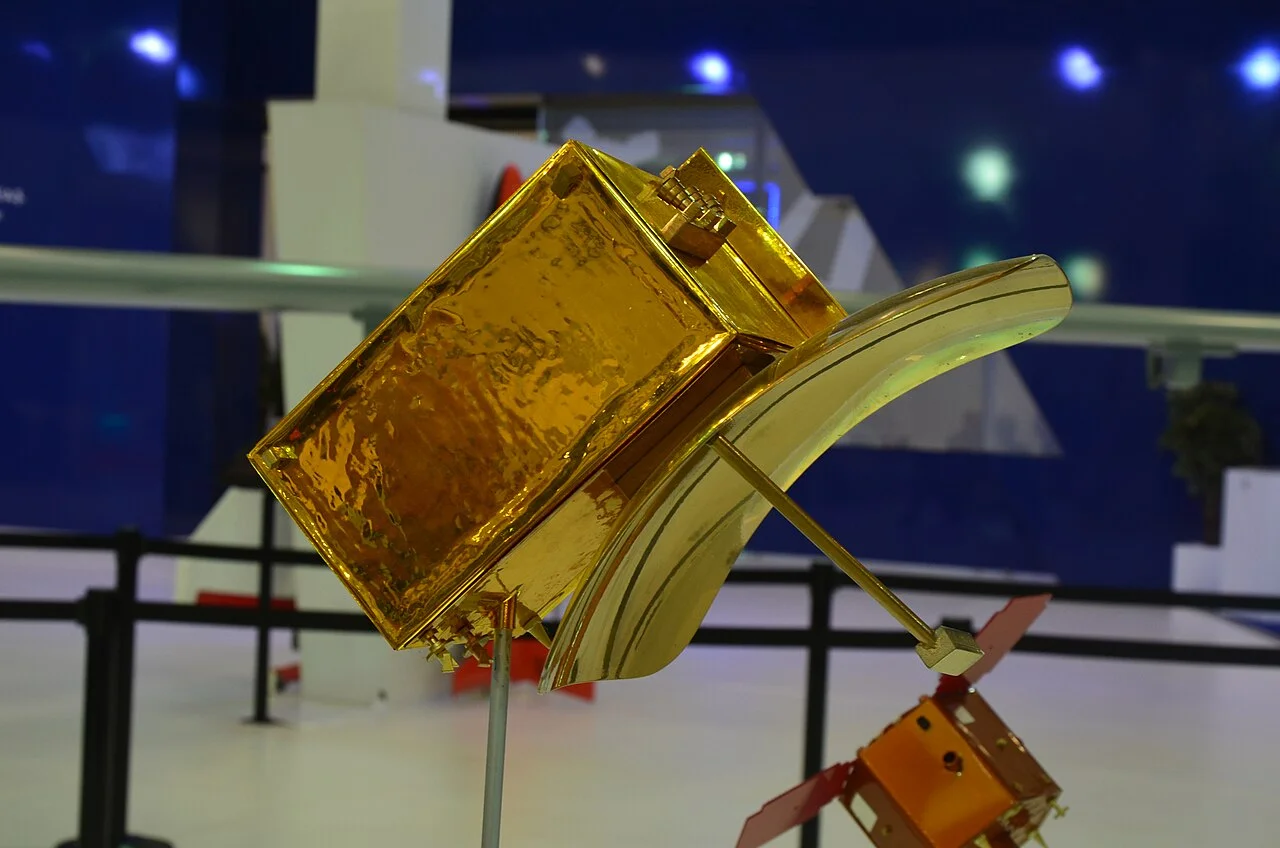
Türkiye brings roughly fifteen years of operating experience to this discussion through the GÖKTÜRK-1 and GÖKTÜRK-2 reconnaissance satellites, with GÖKTÜRK-3 intended to add synthetic-aperture radar imaging through cloud and darkness. Design, assembly and test infrastructure sits along the TÜBİTAK Space and TUSAŞ axis, which means Ankara approaches this debate as both operator and manufacturer rather than as a spectator.
What makes the BlackSky case interesting from Ankara is not the resolution figure but the production logic. National satellite programmes usually lose most of their time not in manufacturing but in the interval between decision and contract — the months spent defining a requirement, committing a budget and freezing a specification, during which the spacecraft’s technology quietly ages. Running a standardised bus and differentiating late, by payload rather than by platform, compresses that wait. The tempo Turkish industry has shown in unmanned aircraft suggests the same logic could travel to orbit.
There is an export dimension too. Demand from mid-sized states for sovereign imaging is growing, and it is currently addressed almost entirely by American and European firms. The stepped model — begin with an imagery service, graduate to selling the spacecraft — resembles the trust-building pattern that carried Turkish drones into export markets. Given that hourly revisit is inherently a constellation problem, offering a service-plus-platform package looks like the more competitive posture.
Sources
- Defence Industry Europe — “BlackSky builds Gen-3 satellites ahead of sovereign orders” (15 August 2026)
- BlackSky Technology — corporate statements and second-quarter 2026 financial results
- Wikipedia — BlackSky Technology; commercial Earth-observation satellites
- TÜBİTAK Space and TUSAŞ — public material on the GÖKTÜRK programme