





An air-defence shield on one truck: Diehl’s IRIS-T SLS MK4 answers drones, helicopters and missiles together

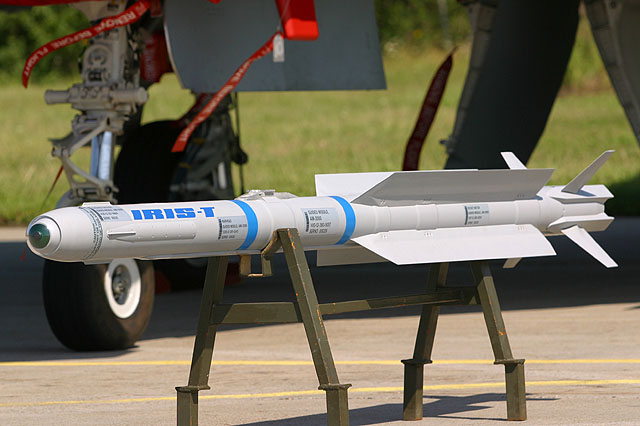
The newest link in the IRIS-T missile family — already battle-proven over Ukrainian skies for three years — went on stage at Berlin’s ILA show. Germany’s Diehl Defence unveiled the IRIS-T SLS MK4, an “all-in-one” approach that puts radar, command-and-control and eight ready-to-fire missiles on a single 6×6 truck, aiming to set a new short-range air-defence standard.
At a Glance
- What: Diehl Defence IRIS-T SLS MK4 mobile air-defence system
- Debut: ILA Berlin 2026 (10-12 June)
- Range: up to 12 km, altitude up to 6 km
- Ready missiles: 8 IRIS-T on a single vehicle
- Platform: Mercedes-Benz Zetros 6×6, twin-cab
- Radar: Saab Giraffe 1X on a retractable mast
- What’s new: all components on one vehicle — fire-on-the-move in development
- Counter-drone: CICADA eMissile integration
Over the past three years, IRIS-T has been the European interceptor most consistently proven over Ukraine — against Russian cruise missiles and Shahed swarms alike. Germany, Norway, Sweden and Israel sit among the dozens of operators; the longer-range SL variant reaches into the mid-range bracket. Diehl’s Berlin debut started exactly there: turn the field record into a faster, more mobile, more integrated architecture. The new SLS MK4’s central pitch fits in a single sentence — fold the four core building blocks of an air-defence battery (radar, command-and-control, launcher, ready missiles) onto a single vehicle.
Look at the detail and the architecture is direct: a Mercedes-Benz Zetros 6×6 twin-cab truck, eight ready IRIS-T launchers up top, a Saab Giraffe 1X search radar on a retractable mast at the rear, and a command-and-control station inside the cab. The numbers behind that physical layout are strong too — 12 kilometres range and altitude coverage up to 6 kilometres. The system is positioned as a one-shot answer to low-altitude threats: helicopters, aircraft, drones and cruise missiles. Diehl says a “fire-on-the-move” software upgrade is also in development; with that capability on board, the system could leave classical short-range systems behind on convoy-protection work.
Worth remembering is that modern air defence today must solve three separate problems: classical aircraft and helicopters, cruise missiles, and the cheap drone swarms that have dominated the news for three years. Diehl has packed an additional capability into MK4 to address all three with one shield: CICADA eMissile integration. CICADA is purpose-built against small drones at a much lower unit cost than IRIS-T. The resulting architecture lets the same launcher, drawing on the same radar picture, knock down a 12-km cruise missile or a Shahed-style swarm. Read it as one of the first concrete industrial answers to NATO’s “cost war” framing.
The wider play is “scale.” Europe’s lesson from Ukraine is that air-defence numbers matter critically; “precious but few” no longer suffices. By folding three separate vehicles — radar, command, launcher — into one hull, Diehl is compressing both production tempo and per-battery cost. Company guidance points to a 2027-2028 window for fielding.

The Turkish angle: the ÇELİK KUBBE family is moving in the same direction
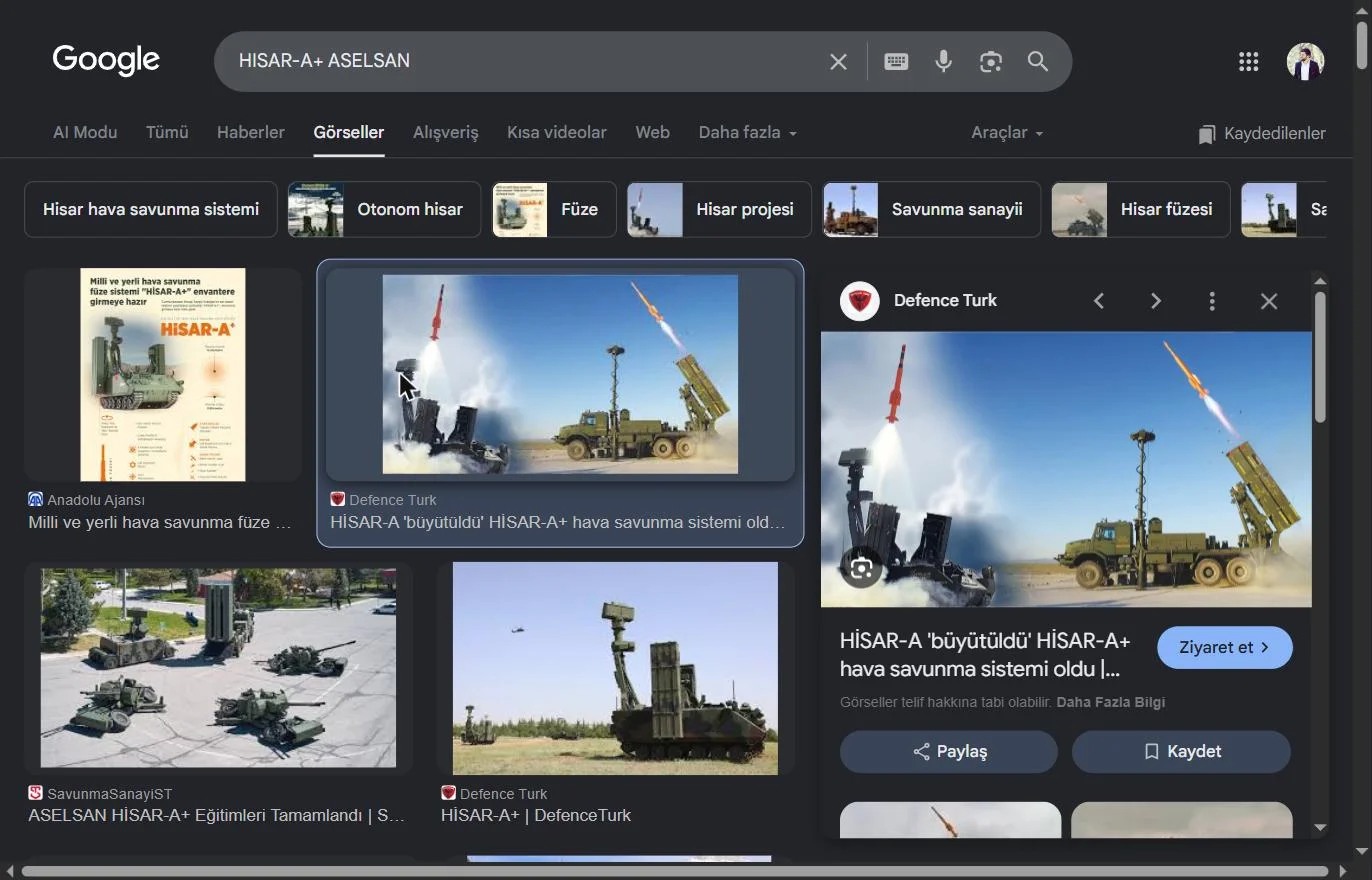
Turkey’s indigenous air-defence journey has been going through a similar transformation for the past five years. HİSAR A+, reaching 12 to 15 km in the short range, lines up against SLS MK4 in the same class; HİSAR O+ mirrors IRIS-T SLM at mid-range; SİPER sits in the Patriot/SAMP-T long-range bracket. Together, under the ÇELİK KUBBE umbrella, they form an integrated air-defence architecture. The “all-in-one” idea SLS MK4 brings to market is no new target for Turkey: ROKETSAN and ASELSAN have been working hard on mobility and integration the past three or four years.
Another important detail: SLS MK4 rides on a Mercedes-Benz Zetros 6×6 — and the same truck’s Turkish distributor and integrator is Koluman. So Turkey is not only a buyer or competitor here; it is a direct supply-chain player. SLS MK4’s export pressure will likely line up directly against the HİSAR family in the Gulf and North Africa. Turkey’s competitive card is familiar: lower than European pricing, close to NATO standards, indigenous production and full technology transfer on the table. Diehl is ahead on product maturity; Turkey’s industry is ready to offer integrated answers across the buy-build-maintain equation.
Sources
- Army Recognition — “Germany’s Diehl Defence Unveils IRIS-T SLS MK4 Mobile Air Defense Missile System at ILA 2026”
- Defence Blog
- Janes
- Diehl Defence official site
- Wikipedia — IRIS-T SLS / SLM / Mercedes-Benz Zetros
Related Coverage
- NATO goes to the “cost war”: a new air-surveillance architecture takes shape by year-end
- India takes delivery of its fourth S-400: the air-defense shield nears full strength
- A historic US Army request: 857 THAAD interceptors, eyes on the Indo-Pacific