US Army Laser Downs 11 Cartel Drones on the Mexico Border: AMP-HEL’s First Real Mission
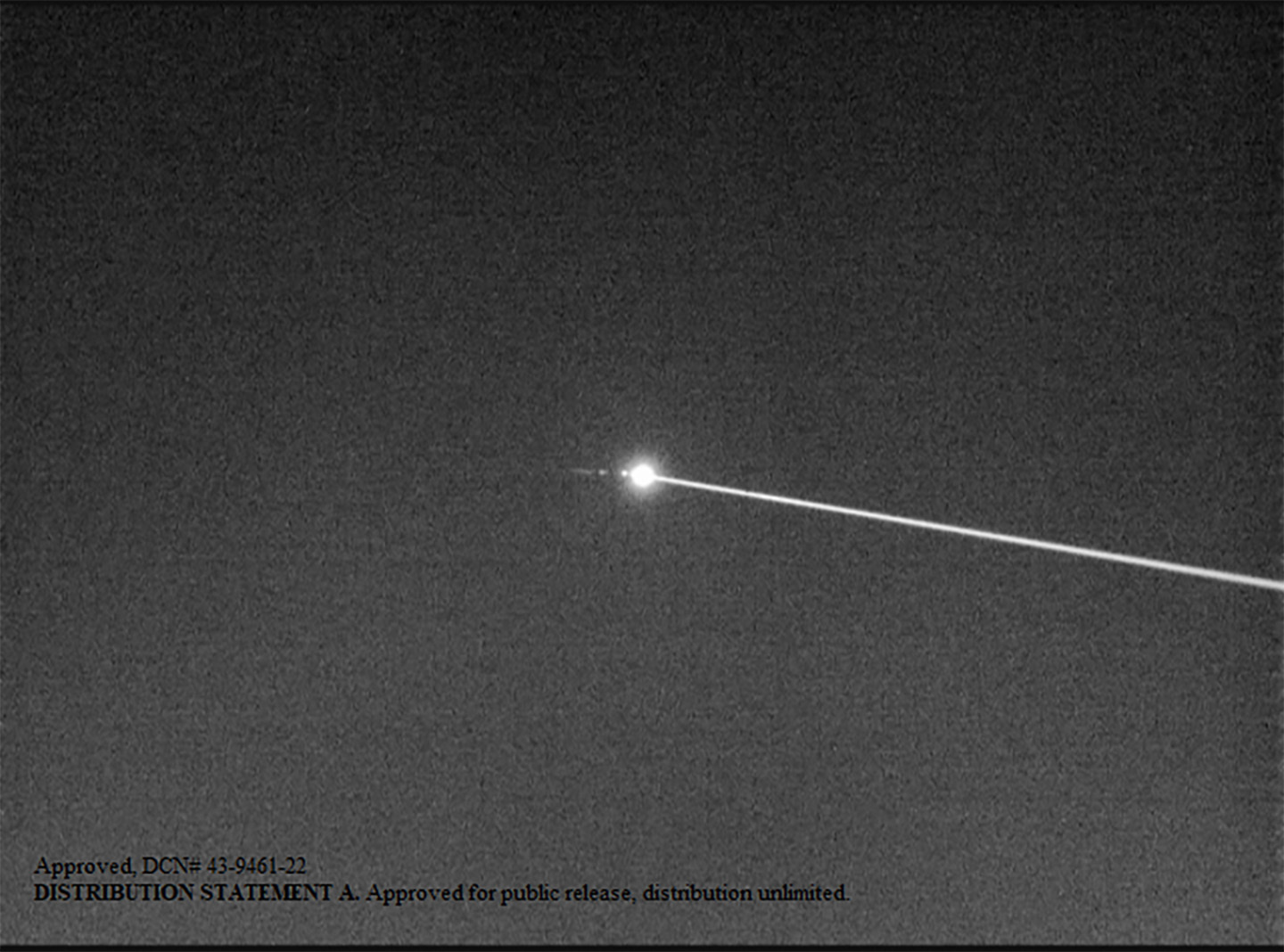
The US Army has fired its high-energy laser at a real threat for the first time — not in a war zone, but along its own southern border. Deployed in the Rio Grande Valley of Texas, the AMP-HEL system has burned down 11 cartel-linked drones since 24 August. It is the moment directed energy stepped off the “promising technology” shelf and onto a duty roster.
At a Glance
- What happened: The US Army’s AMP-HEL laser engaged cartel-linked drones.
- Where: The Rio Grande Valley, on the US-Mexico border in south Texas.
- When: First engagements on the night of 25-26 August; 11 kills confirmed as of 4 September.
- Who: Joint Task Force-Southern Border; manufacturer AeroVironment.
- Power class: 20-kilowatt-class laser on a light tactical vehicle.
- Money: AeroVironment received a $464.8 million Enduring-HEL order on 2 September.
- Why it matters: The first operational use of a high-energy laser against a genuine threat on US soil.
From the test range to the border line
It began on the night of 25 August. Elements of Joint Task Force-Southern Border (JTF-SB) detected unmanned aircraft loitering over US troops and Customs and Border Protection personnel in the Rio Grande Valley. According to the task force, those aircraft were not merely watching; they represented a physical threat to people on the ground. The decision was made, and a beam was used instead of a barrel.
Three drones went down over two nights. The Army announced it less as a tally than as a threshold: until that point AMP-HEL had only ever fired at target drones on instrumented ranges, flying known profiles. The Rio Grande engagements were the first time the system shot at something it had not chosen, at a moment it did not schedule. In the history of military technology, that transition — from demonstration to duty — usually decides a programme’s fate.
The count then climbed quickly. By 4 September the number of drones destroyed by laser on the border had reached 11, with the first engagement dated 24 August. Set against the 300-plus drones the task force says it has defeated during 2026 using both kinetic and non-kinetic means, that is a small slice — small because the laser is still a single system, symbolic because each of those other engagements cost real money and these eleven did not.
Behind the milestone lies a preparation period that was anything but smooth. In February, an engagement near El Paso using a loaned laser turned out to have destroyed Mylar balloons. Later that month, near Fort Hancock, Texas, troops shot down CBP’s own drone because notification procedures had failed. A broader shoot took place at White Sands Missile Range in early March, and in April the Pentagon and the Federal Aviation Administration signed an agreement governing airspace safety. August’s engagements are the last link in that chain.
What AMP-HEL is, and what it rides on

The full name is the Army Multipurpose High Energy Laser. Its heart is a 20-kilowatt-class fibre laser from AeroVironment’s LOCUST line, coupled to a beam director — the precision turret that locks the beam onto a target and focuses it. Twenty kilowatts is modest by laser-weapon standards: effective against small and medium drones, mortar rounds and similar soft targets, but nowhere near enough to stop a cruise missile. The border mission’s threat profile sits squarely in that first category.
Under the first increment, two systems were mounted on General Motors Defense Infantry Squad Vehicles (ISV) — unarmoured, light, air-droppable tactical trucks. That choice was not accidental. Rather than bolting the laser onto a heavy armoured platform, the Army wanted to show how far the package could be shrunk by putting it on the lightest wheeled vehicle a unit already owns. A second increment places two more systems on JLTVs, this time with a larger-aperture beam director. A bigger aperture means focusing the beam into a smaller spot at longer range — more reach, shorter dwell time on target.
The first two prototypes were delivered in September 2025 and tested at Yuma Proving Ground. Those 11 kills therefore came roughly a year after handover. By defence-acquisition standards that is startling; plenty of comparable directed-energy programmes have been cancelled between prototype and fielding without ever engaging anything real.
The institutional owner is telling too. The unit running these engagements is not the Army’s traditional air defence branch but JIATF-401, a joint interagency task force stood up on the border. Its director, Brig. Gen. Matt Ross, describes the work as “a directed energy pilot” and names the two technologies in focus without hedging: high-energy lasers and high-power microwaves. In practice, the border has become an open-air laboratory.
$464.8 million: from prototype to production
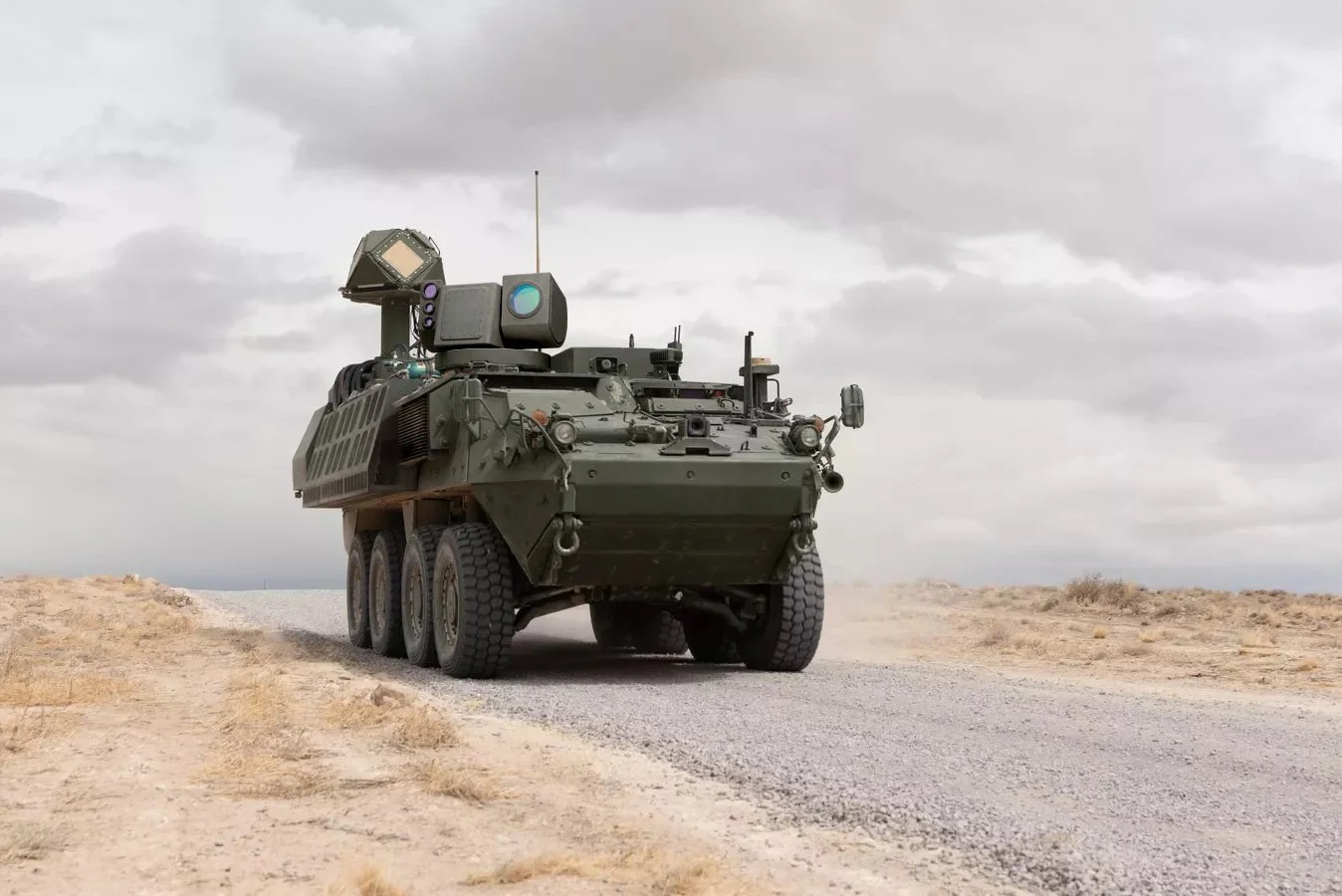
Success in the field found its paper counterpart two days earlier. On 2 September 2026 AeroVironment received a $464.8 million order under the Army’s Enduring High Energy Laser (E-HEL) programme, announced as the service’s first production-scale laser weapon contract and covering the LOCUST X3 configuration.
The sequence is unusual for defence procurement: the system worked against a real threat first, and the large cheque followed. Normally it runs the other way — hundreds of millions are committed up front and whether the thing works becomes clear years later. Eleven border engagements handed the contracting authorities a ready-made justification file.
Nor is that the only money flowing to directed energy on the same stretch of ground. On 31 July 2026 JIATF-401 awarded CACI a contract worth up to $500 million for SkyValor, covering border airspace awareness and counter-UAS tasks. Washington has effectively turned its southern border into the single largest customer for counter-drone technology.
The logic behind the spending is engagement economics. Shooting down a few-thousand-dollar commercial quadcopter with a several-hundred-thousand-dollar interceptor is a tactical win and an economic defeat; Ukraine and the Red Sea have taught that lesson repeatedly over three years. That is where the laser’s appeal lies: the beam is not free, but priced in generator fuel and component wear its cost per shot lands in the low single-digit dollars, and the magazine runs as deep as the electricity supply. Against that, lasers are vulnerable to fog, dust, rain and turbulence, must hold the beam on one spot for seconds to kill, and can only handle one target at a time. Which is why the laser is being placed alongside kinetic air defence, not instead of it.
Technical specifications
| Feature | Detail |
|---|---|
| System | AMP-HEL (Army Multipurpose High Energy Laser) |
| Manufacturer / core technology | AeroVironment — LOCUST high-energy laser family |
| Power class | 20-kilowatt-class fibre laser |
| Increment 1 platform | GM Defense Infantry Squad Vehicle (ISV) — 2 systems |
| Increment 2 platform | JLTV — 2 systems, larger-aperture beam director |
| First delivery | September 2025 (first two prototypes) |
| Test sites | Yuma Proving Ground; White Sands Missile Range |
| First operational engagement | Night of 25-26 August 2026, Rio Grande Valley, Texas |
| Confirmed kills (4 Sept 2026) | 11 unmanned aircraft |
| Production contract | $464.8 million (E-HEL, 2 September 2026) |
| Target set | Group 1-2 small and medium UAS, mortar rounds |
The cartel drone fleet — and why a military answer was needed
The border drone problem is not an air defence scenario in the classical sense. As JTF-SB commander Maj. Gen. Curtis Taylor put it, cartel networks are increasingly employing unmanned aircraft systems to facilitate illicit human smuggling and to actively spy on US personnel and law enforcement partners. These platforms function as cheap intelligence assets, mapping patrol routes, shift changes and sensor gaps.
That description captures one of the defining military trends of the decade: surveillance is no longer a state monopoly. A commercial airframe costing a few thousand dollars now hands criminal organisations a capability that thirty years ago belonged only to large armies. The answer has to be scalable and cheap, because the other side can replace every aircraft it loses the following week.
Framed by Taylor’s line that the task force stands “shoulder-to-shoulder” with its CBP partners, the mission is less air defence than a law-enforcement–military hybrid. That gives the laser a second advantage: a weapon that carries no explosive warhead, makes no noise and leaves no falling debris generates far fewer legal and political complications near populated areas than kinetic options do. February’s Mylar balloon and friendly-drone incidents showed early what kind of complications those can be; April’s Pentagon-FAA agreement is a direct product of those lessons.
The long road of the laser weapon
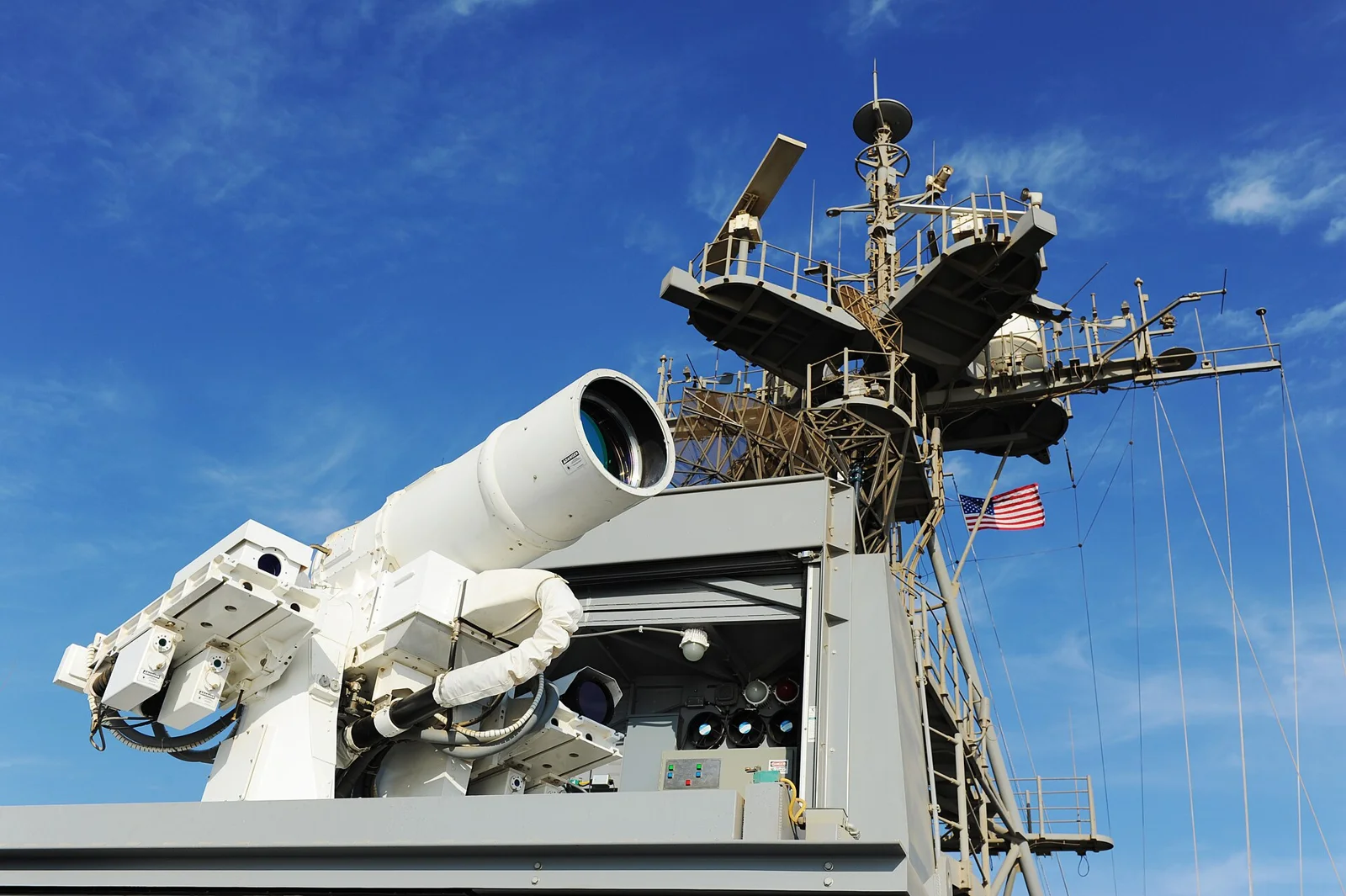
Directed energy is not a new idea; what is new is physics finally catching up with engineering. The chemical lasers of the 1980s demanded tanks of hazardous fuel and fitted nowhere smaller than a Boeing 747. Today’s fibre lasers convert electricity straight into light: modular, chemical-free, and scalable by combining the output of several modules. That architectural shift moved the laser from an aircraft fuselage to a pickup bed.
At sea the first serious step came in 2014, when the US Navy installed the 30-kilowatt-class AN/SEQ-3 LaWS aboard USS Ponce in the Persian Gulf, becoming the first navy to deploy a laser weapon on an operational ship. HELIOS, ODIN and others followed. Ashore, the Army’s DE M-SHORAD project put a 50-kilowatt-class laser on a Stryker; Israel pushed towards the 100-kilowatt class with Iron Beam, and the United Kingdom towards 50 kilowatts with DragonFire.
All of these programmes shared one problem: there is a deep difference between killing a drone on a range and running for days in a unit’s inventory without breaking. Lasers are demanding in cooling, power management, optical contamination and maintenance. AMP-HEL’s performance in the Rio Grande matters less for the number 11 than for offering the first concrete answer to the second question — does it hold up in the field?
The Turkish angle: beam, barrel, or both?

Türkiye did not arrive late to directed energy. ROKETSAN’s ALKA has been shown for years as a hybrid solution pairing a laser with an electromagnetic jammer on one platform; reports that ALKA neutralised an unmanned aircraft in Libya in 2019 circulated widely, though they were never officially detailed. ASELSAN’s GÖKBERK mobile laser weapon system gathers radar, electro-optical tracking and the laser itself onto a single armoured vehicle, purpose-built for the counter-UAS mission.
Those two programmes place Türkiye among the handful of countries able to build a laser weapon. The honest comparison, though, is this: America’s real edge in this story is not the laser but the scale and continuity around it. Pushing a four-system pilot fleet onto a border, running night engagements for ten days, signing an airspace agreement with the FAA to make it legal, then issuing a $464.8 million production order within 48 hours — the chain is the achievement. Türkiye’s laser programmes sit close in technical maturity; what separates the two is how quickly a prototype can be written into a unit’s daily task list.
Türkiye’s genuine force multiplier lies elsewhere: layered architecture. Bring the KORKUT 35 mm gun system, the HİSAR family, SUNGUR and counter-UAS electronic warfare assets under a single battle management layer, as ÇELİK KUBBE (Steel Dome) does, and you get precisely the structure that compensates for what a laser cannot do — when the weather closes in or the target count rises, barrel and missile fill the gap the beam leaves. The Americans are running the same logic on the border: 11 drones by laser, 290 by other means. The difference is that Türkiye has anchored that layered structure to an industrial base capable of exporting it. How fast GÖKBERK reaches serial production and unit inventory will decide where Ankara sits in this picture.
What comes next
Two developments are worth tracking in the short term. First, the fielding of the second-increment systems on JLTV; the larger-aperture beam director should visibly change range and dwell-time figures. Second, the E-HEL delivery schedule: how many systems does $464.8 million actually buy, and will they stay on the border or disperse to units in the Indo-Pacific and Europe?
The larger question is this. When a technology makes its operational debut not in a war zone but along a nation’s own frontier, its doctrinal place is shaped accordingly. That AMP-HEL’s logbook opens with the words “cartel drone” suggests directed energy will mature first in low-intensity, persistent-threat environments rather than in great-power conflict. For the whole counter-drone market — Ankara included — that is a directional signal.
Sources
- Army Recognition — “U.S. Army Uses Laser Weapon to Destroy 11 Cartel-Linked Drones at Mexico Border”, 4 September 2026
- DefenseScoop — “Border task force shoots down ‘cartel-linked’ drones with AV laser”, 28 August 2026
- Defence Industry Europe — AeroVironment E-HEL / LOCUST X3 award, 4 September 2026
- Joint Task Force-Southern Border and JIATF-401 statements
- AeroVironment corporate LOCUST product information