The US Air Force Has Lost 45 Reapers. Now It Wants a $10 Million Drone.

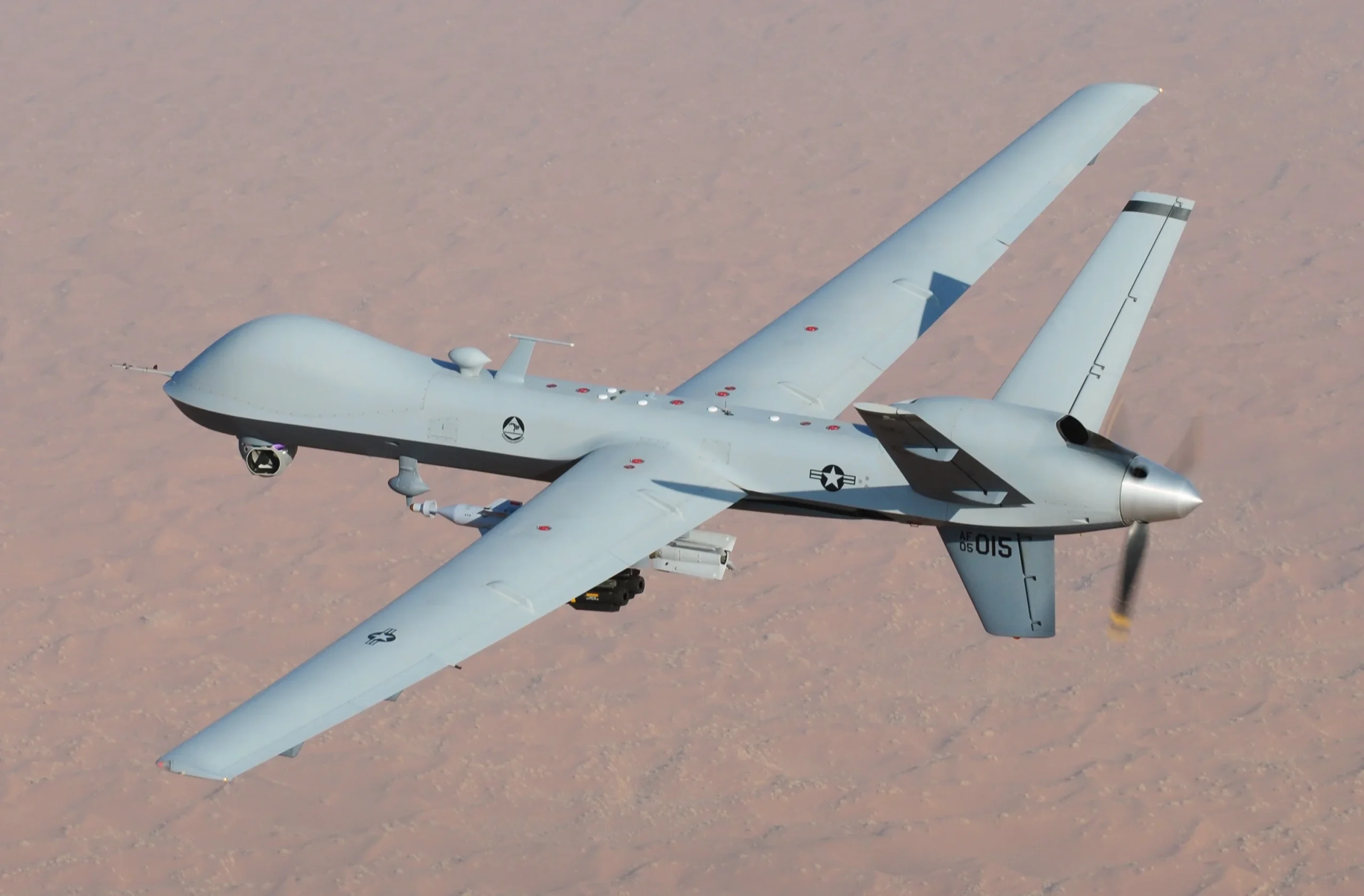
The US Air Force has lost at least 45 MQ-9 Reapers since Operation Epic Fury began in February 2026. That is roughly a quarter of the Pentagon’s Reaper inventory, and senior officers are calling the attrition rate what it is: concerning. The service’s response is not another refresh of an existing airframe. It wants to replace a drone that can cost up to $50 million apiece with one built to a $10 million target — modular, mass-produced, and designed around the assumption that it will be shot down.
At a Glance
- What happened: The US Air Force says it is accelerating the programme to replace the MQ-9 Reaper.
- Losses: At least 45 Reapers since Operation Epic Fury launched in February 2026 — about 25% of the inventory.
- Programme: Mass Modular Aircraft (MMA), launched July 2026 and run by the Defense Innovation Unit.
- Target price: About $10 million per aircraft, against up to $50 million for an MQ-9 and a $20 million goal for CCA.
- Numbers and timing: 20 mission-ready aircraft in FY2031 and “at least 180” in total, with a prototype inside a year and fielding at scale within three.
- Requirements: 8,000 nautical miles one-way self-deployment, a combat radius of at least 2,300 nautical miles with payload, and at least 2,800 lb of sensors and munitions.
- Who is bidding: General Atomics with a design it calls Wildfire; DIU wants a multi-vendor competition.
- The wider point: Washington is converging on a design philosophy — affordable and numerous — that Turkish industry has been building around for years.
The problem is not the Reaper’s quality. It is its price.
Nobody in the US Air Force is arguing that the MQ-9 Reaper underperforms. The problem is arithmetic. On a front line where modern air defences actually function, absorbing the loss of an aircraft that can run to $50 million apiece is not a sustainable way to fight. Forty-five of them, counted on airframe cost alone, represents attrition measured in billions.
Lt. Gen. Christopher Niemi, the Air Force’s chief modernization officer, locates the problem precisely there. “There’s no doubt if we try and pursue the exact same approach that we had with things like the MQ-9, we’re going to get something that costs about the same as an MQ-9,” he said. It is the most familiar self-criticism in defence acquisition: demanding requirements produce expensive aircraft, and expensive aircraft become too valuable to risk.
Niemi is equally direct about where the urgency comes from. “So we want to bring this thing forward because of the fact that, although we have plenty of MQ-9As today, we are going through them at a rate that is concerning to us.” That is the operative sentence. The inventory is not empty. The burn rate is the problem.
Where 45 aircraft went
Most of the losses trace back to missions flown under Operation Epic Fury, launched in February 2026. The Reaper is, by design, a slow aircraft that loiters for hours at low and medium altitude. In permissive skies that profile produces irreplaceable intelligence, surveillance and reconnaissance work and precise strike. Against functioning short- and medium-range air defences, the same profile makes the aircraft a target.
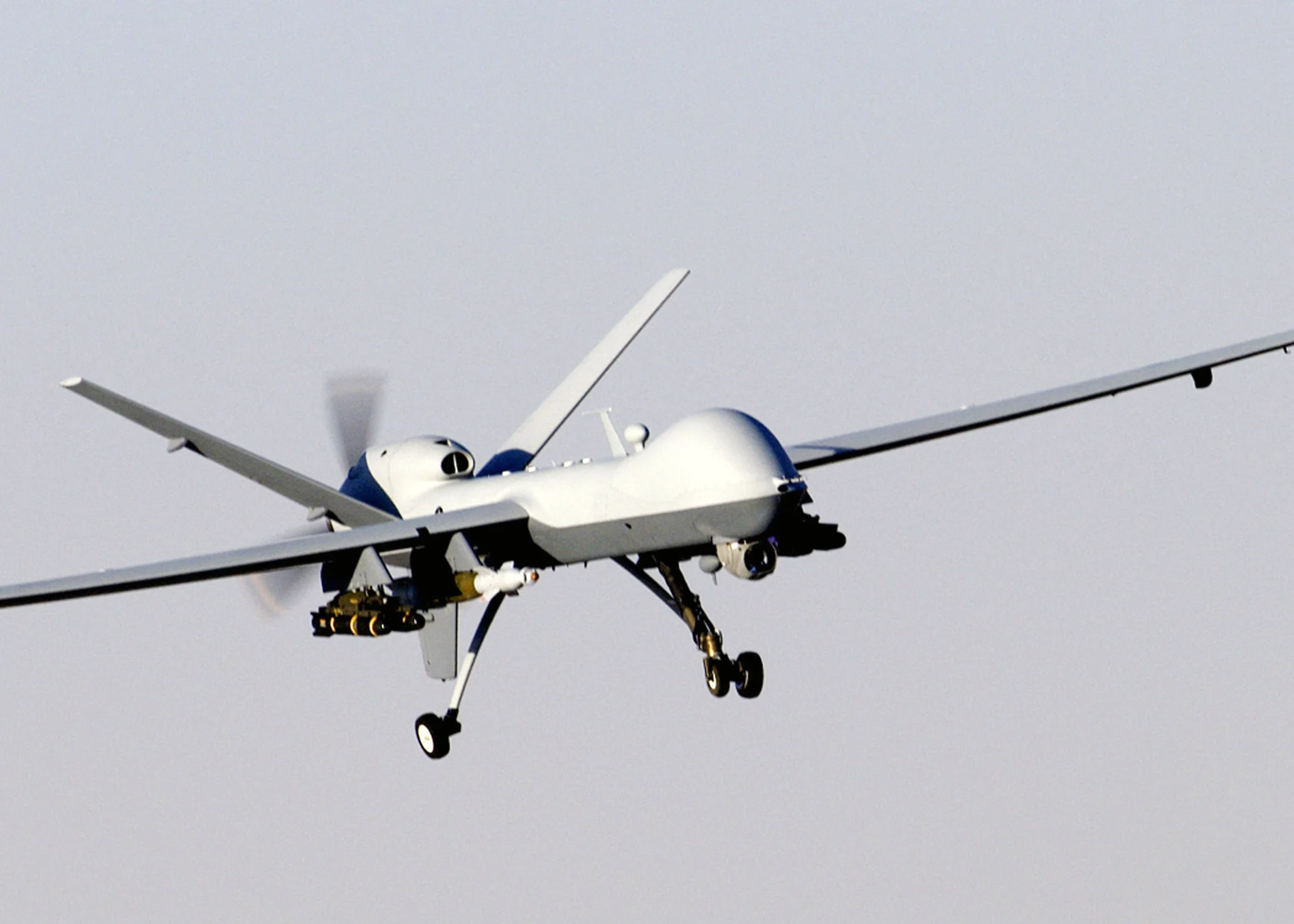
Inventory figures reported in the US press show the scale of the erosion. The Air Force began fiscal 2025 with 231 MQ-9As and fiscal 2026 with 165. Not all of that decline is combat loss — retirements and divestment decisions account for part of it — but the direction of travel is one-way.
General Atomics, unsurprisingly, defends its aircraft. In the words of company spokesman C. Mark Brinkley: “Reaper’s unique combination of endurance, payload, range, sensors, weapons, connectivity, adaptability and reliability is precisely what enables mission effects that others struggle to replicate.” Technically, that is hard to dispute. But the argument was never about what a Reaper can do. It is about what it costs to do it.
MMA: a design that accepts it will be lost
The programme launched in July 2026 is called Mass Modular Aircraft, and it is being run by the Defense Innovation Unit — the Pentagon’s route into commercial technology. That choice is itself a signal. Instead of the customary prime-contractor cycle, the service wants a faster procurement path with more vendors in it.
The conceptual break with previous generations is sharp. Rather than relying on a small number of expensive, high-value aircraft, MMA writes the expectation of losses in a high-end conflict directly into the design. The aircraft is meant to be cheap enough, and replaceable enough, that losing one does not collapse the campaign plan.
The $10 million threshold
The most contested number in the programme is the unit cost target. The Air Force wants roughly $10 million per aircraft. Placed alongside its neighbours, the figure explains itself: one-fifth of an MQ-9 Reaper at up to $50 million depending on payload, and half of the roughly $20 million goal discussed for the Collaborative Combat Aircraft (CCA), America’s “loyal wingman” effort.
The requirement: 8,000 nautical miles and 2,800 pounds
Read next to that price tag, the capability demands show where the difficulty lies. DIU is looking for an aircraft carrying at least 2,800 pounds of munitions and sensors, with an unrefuelled combat radius of at least 2,300 nautical miles with payload, able to self-deploy at least 8,000 nautical miles one way.
That last requirement gives away the geography. An aircraft that can cross from one continent to another without tanker support is being built for Pacific distances. The resulting description — a turboprop with long, high-aspect-ratio wings — confirms the priority. This is an aircraft optimised for efficiency and reach, not speed.
Not an aircraft, an architecture
The second thing separating MMA from a conventional aircraft buy is the acquisition method. The programme will be developed in successive increments, using government reference architectures for both hardware and software. The practical consequence: several designs from several companies could be in production simultaneously, all operated through a common operator interface.
This is a direct answer to vendor lock-in. If the government holds the interface standard, no single manufacturer holds a monopoly over price and schedule. The US Army has been making the same argument on the land side with its next-generation command and control architecture.
The operator’s seat changes too
The least-discussed and possibly most transformative element sits in the human-machine relationship. The Air Force wants a single operator running several aircraft at once. To get there, the control logic moves away from conventional flight controls: officials describe an operator flying the aircraft with “mouse clicks and keyboard as opposed to stick and throttle.”
That sentence captures the shift from piloting to mission management. The aircraft handles routing, altitude and basic manoeuvring; the human makes mission decisions. That level of automation is also the precondition for operating a fleet of 180 aircraft with a plausible number of crews.
General Atomics and the unseen “Wildfire”
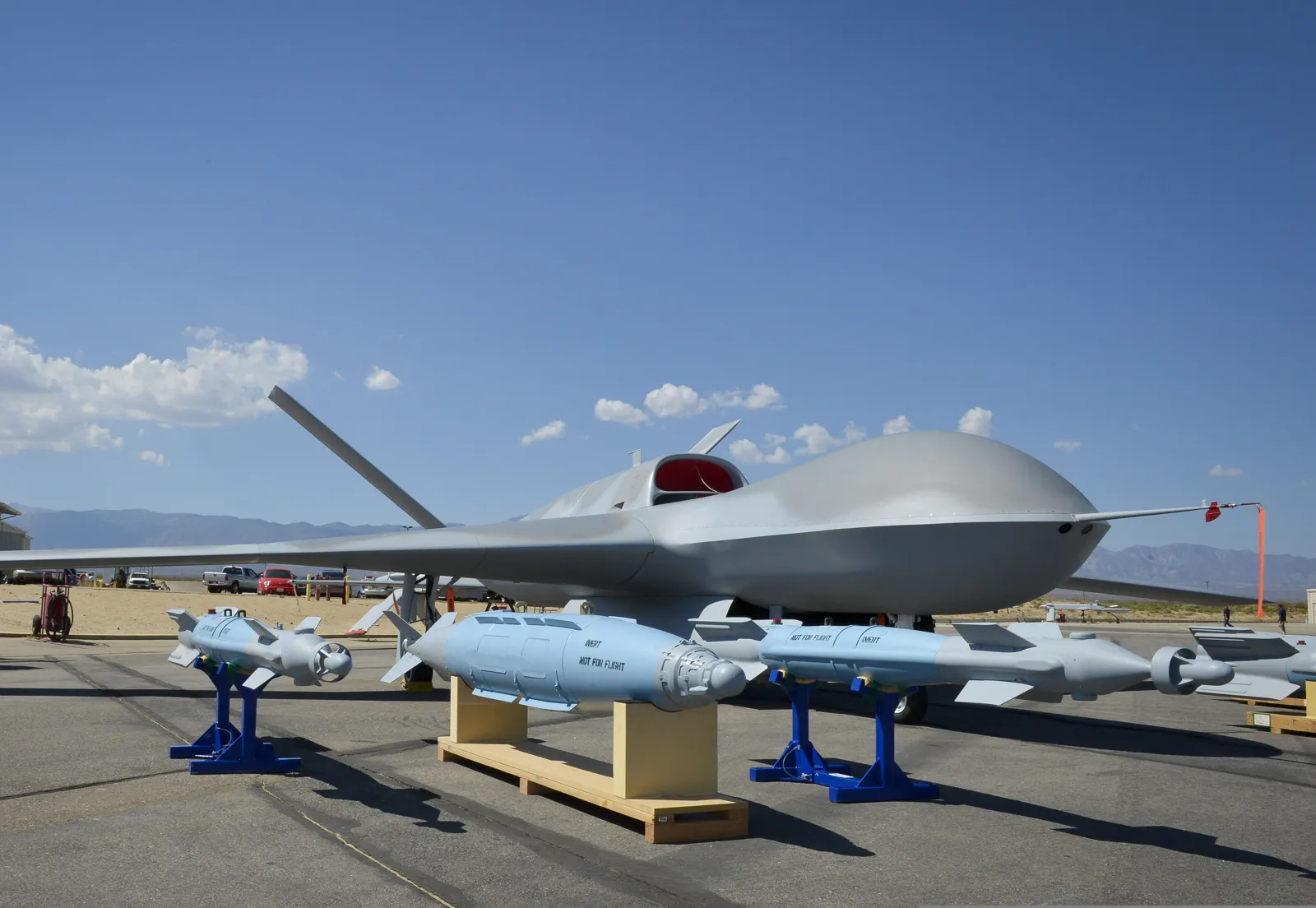
The Reaper’s manufacturer is competing to replace its own product. General Atomics is offering Wildfire, a next-generation medium-altitude long-endurance system it describes as being in the same class as the Reaper. Notably, the company has so far refused to publish a single image of the design.
General Atomics is simultaneously competing in the CCA programme alongside Anduril, which places it in both the loyal-wingman and the mass-modular lanes at once. Given DIU’s preference for a multi-vendor contest, the programme is unlikely to be handed to any one name.
The schedule: a prototype in a year, scale in three
The published timeline is ambitious: a flying prototype within a year and fielding at scale within three. The formal milestone is 20 mission-ready aircraft in fiscal 2031, with a total buy described as “at least 180”.
Whether that schedule survives contact with reality is the programme’s central question. Flying a prototype within a year is an exceptional pace in defence acquisition — and it has to be done while holding a $10 million ceiling. The bet is that commercial production methods and a modular architecture can satisfy both constraints at once.
Reaper, MMA and CCA compared
| Measure | MQ-9A Reaper (current) | MMA (target) | CCA (target) |
|---|---|---|---|
| Unit cost | Up to $50 million (payload dependent) | ~$10 million | ~$20 million |
| Role | ISR and precision strike | Mass, modular multi-role UAV | Loyal wingman to crewed aircraft |
| Propulsion | Turboprop | Turboprop, high-aspect-ratio wing | Jet |
| Payload | Roughly 3,750 lb class | At least 2,800 lb | Not disclosed |
| Combat radius | Tanker dependent | At least 2,300 nm with payload | Tied to escorted aircraft |
| One-way range | Limited self-deployment | At least 8,000 nm | Variable |
| Loss tolerance | Low (high-value asset) | High (attrition assumed by design) | Medium |
| Status | In service, being consumed | Launched July 2026, FY2031 target | Prototype stage |
What the MQ-9 Reaper actually is
Developed by General Atomics Aeronautical Systems, the MQ-9 Reaper emerged as the enlarged, armed successor to the MQ-1 Predator of the 1990s. Where the Predator was primarily a surveillance platform, the Reaper was designed from the outset as a hunter-killer: a more powerful turboprop, far greater payload and the capacity to carry considerably heavier munitions.
It entered US Air Force service in 2007 and quickly became one of the most heavily worked platforms in American airpower. Endurance can exceed fourteen hours depending on configuration. It carries electro-optical and infrared sensor turrets, synthetic aperture radar and signals intelligence payloads, and it fires AGM-114 Hellfire missiles alongside GBU-12 Paveway II and GBU-38 JDAM guided bombs.
The family branched over time. The maritime-optimised SeaGuardian and the MQ-9B SkyGuardian, built around certification for flight in civil airspace, extended the platform’s life in the export market. Beyond the United States, the United Kingdom, Italy, France, Spain, the Netherlands, Japan, India and Belgium have fielded or contracted for variants.
Its operational record runs through Afghanistan, Iraq, Syria, Libya, Somalia and Yemen. What those theatres shared was air superiority held largely by the United States and its partners. That is precisely the condition the MMA programme no longer assumes.
Read from Ankara
The conclusion Washington has reached — numerous and affordable rather than few and exquisite — converges strikingly with the approach Turkish industry has pursued for years. The global impact of the Bayraktar TB2 never rested on the peerlessness of its sensor or its munition. It came from delivering a meaningful combat effect at an attainable price. The appeal was, precisely, the economics of being expendable.

The scales and purposes should not be conflated, however. MMA’s 8,000-nautical-mile self-deployment requirement stems from a force structure operating across intercontinental Pacific distances. Turkey’s operational geography is defined by a very different radius, which makes a direct programme-to-programme comparison misleading. What is comparable is the design philosophy, not the platforms.
Turkey’s own portfolio is already layered. TUSAŞ’s ANKA covers the classic medium-altitude ISR and strike mission; Baykar’s AKINCI moves up into heavier payloads and higher altitude; ANKA-3 pursues a tailless configuration aimed at reducing radar cross-section; and KIZILELMA sits conceptually closest to what the United States is chasing with CCA. The tension between “cheap and many” and “advanced and few” is being managed not by one aircraft but by a family.

The transferable lesson is about governance more than technology. What the United States is attempting with MMA is not merely to make the aircraft cheaper; it is to keep the interface standard in government hands while opening the airframe to competition. Production tempo and cost advantage already exist in Turkey. The next threshold is operating platforms from different manufacturers through a shared mission-management layer — one operator, one interface, multiple airframes from multiple suppliers. That is the part of this debate worth importing.
One closing observation. General Atomics’ predicament is the kind any manufacturer can eventually face. Making a platform continuously more capable also makes it continuously more expensive, and past a certain threshold the product becomes a casualty of its own success. Industries able to spread a product family across price tiers fall into that trap less often.
Sources
- Breaking Defense — “After ‘concerning’ losses, Air Force pushes to replace Reaper faster”, Michael Marrow, 3 September 2026
- Air & Space Forces Magazine — reporting on General Atomics’ Wildfire and the MMA programme
- DefenseScoop — MQ-9 replacement concept refinement, July 2026
- The War Zone (TWZ) — assessment of Wildfire as the Reaper’s successor
- General Atomics Aeronautical Systems — MQ-9A/MQ-9B product information
- US Air Force — MQ-9 Reaper fact sheet