The Army’s New Nervous System: L3Harris Puts NGC2’s Transport Layer in the Field

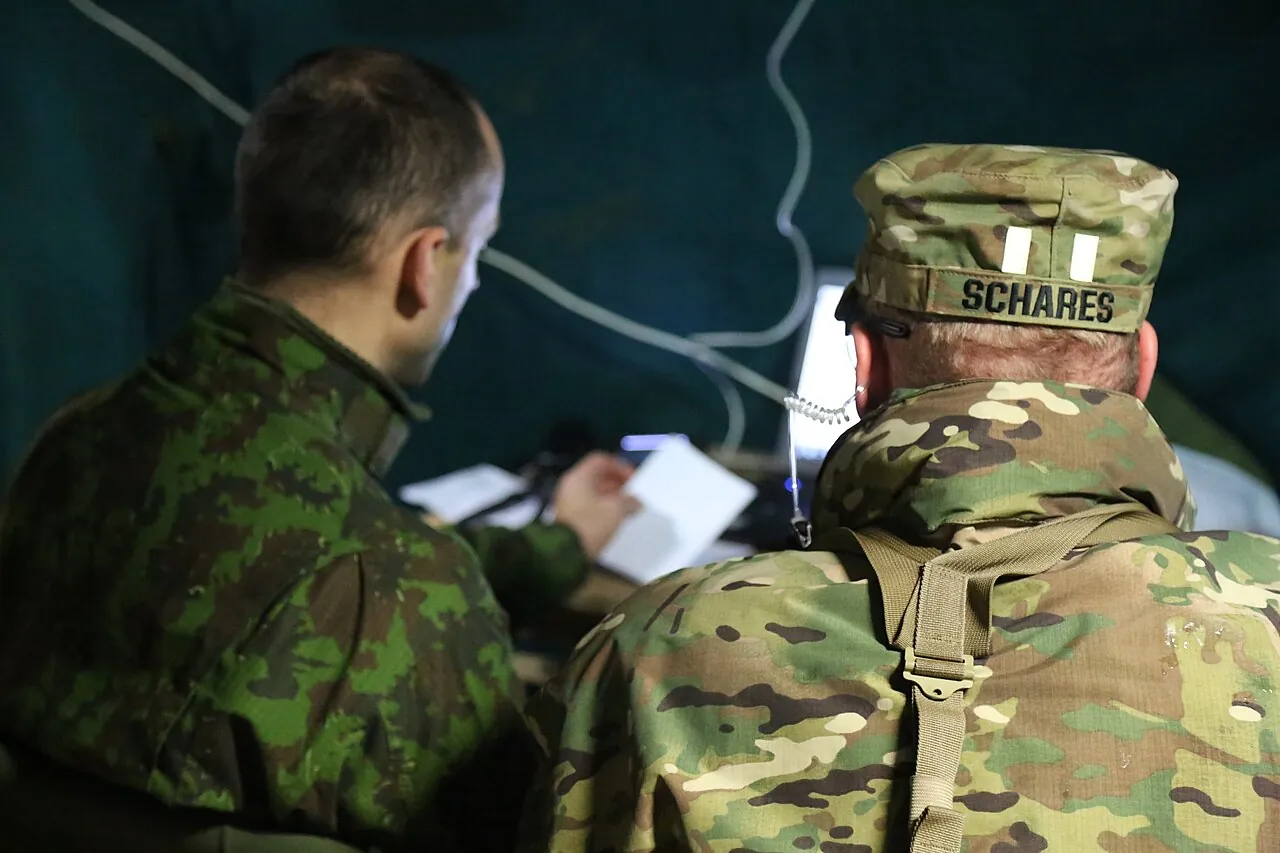
L3Harris says it pulled formations scattered across miles of terrain into a single mission network during the US Army’s Lightning Surge exercise series. The company is one of the transport-layer providers for NGC2 — Next Generation Command and Control, the architecture the Army is building from scratch to replace decades of accumulated command software — and it brought a new software layer called Wraith Shield to the field. The picture that emerges captures where the long argument over military communications has landed: the constraint is no longer how far a radio reaches, but whether information can keep pace with the decision it is supposed to inform.
At a Glance
- What happened: L3Harris announced an integrated mission-networking demonstration at the US Army’s Lightning Surge exercise series.
- Who: L3Harris Technologies — Chris Aebli, President of Communications & Spectrum Dominance.
- Program: NGC2, the Army’s next-generation command-and-control architecture; L3Harris was selected as a transport layer provider.
- New item: Wraith Shield — a software enhancement that adapts communications as network and spectrum conditions shift.
- Architecture: Four layers — transport, integration, data, application.
- Scale target: NGC2 capabilities to all 11 divisions within a five-year window.
- Money: The prototype phase began with a $99.6 million OTA agreement led by Anduril for the 4th Infantry Division.
- Why it matters: Every NATO military faces the same architectural problem — who merges the data, and at which layer.
Communications programs rarely lead a defence news cycle. Missile range, radar cross-section and vertical launch cell counts are concrete and comparable; “the network” is an abstraction. Yet almost every hard lesson of the past decade — the density of electronic warfare in Ukraine, unmanned surface craft in the Black Sea, layered drone defence in the Red Sea — points the same way. Where platform advantage narrows, the network is what opens the gap.
What was actually demonstrated at Lightning Surge
In the announcement issued on 28 August 2026 and expanded by defence trade press on 30 August, L3Harris described fielding what it calls an integrated mission network across the Army’s Lightning Surge exercise series. By the company’s account, the demonstration covered dispersed formations detecting a threat, distributing the resulting data among themselves in real time, and mounting a coordinated response.
The distinction matters: what was shown is not a new radio. It is data moving across different waveforms, different bands and different vendors’ hardware while behaving like a single logical network. The Army’s doctrine of distributed operations — spreading formations wide so they do not present a target to long-range fires — only works if such a network exists. Without it, dispersion is simply a polite word for losing command and control.
Chris Aebli, who leads the company’s Communications and Spectrum Dominance business, tied the demonstration directly to the decision cycle: “Today’s battlefield demands more than reliable communications — it requires the ability to transform information into actionable decisions at the speed of relevance.”
“Speed of relevance” is a term of art in US defence writing. It holds that accuracy alone is insufficient: information must still be useful when it arrives. A target grid that was correct five minutes ago is not data once the target has moved. It is noise.
What NGC2 is, and why it is called next generation
NGC2 is the Army’s attempt to replace decades of layered command-and-control software — dozens of separate systems, each with its own database, interface and connection logic — with a single architecture. The diagnosis behind the program is blunt: the existing structure is hardware-centric, closed and slow, and bringing a new sensor or application into it takes years.
The answer is to build the system data-centric. Rather than applications hoarding data inside themselves, data sits in a common layer and applications draw from it. In commercial software this has been standard practice for twenty years; on the military side it means replacing the whole substructure.
The program has scaled quickly since September 2025, through successive operational training events with the 4th Infantry Division and 25th Infantry Division. In May 2026 the Ivy Mass exercise stressed it at division scale across Fort Carson and the Piñon Canyon Maneuver Site, including fighting through cyber and electromagnetic attack. In July 2026 it went through its largest test to date at Project Convergence–Capstone 6 at Fort Irwin. By early August, Army leaders were describing NGC2 as “ready to scale.”
Four layers: transport, integration, data, application
The NGC2 prototype built for the 4th Infantry Division comprises four layers, and that division of labour explains precisely where L3Harris sits:
- Transport: where data physically moves — radios, satellite links, waveforms, a blend of commercial and military paths. The road layer.
- Integration: the interfaces and translators that let disparate systems speak to each other, bridging legacy kit into the new architecture.
- Data: where information resides, who may reach it under what authority, and how it is distributed by role and warfighting function. The heart of the program.
- Application: what the soldier actually sees — the map, the fire request, the logistics picture, the decision-support recommendation.
The practical consequence is that changing one layer does not require rewriting the others. A new waveform arrives and the applications stay put; a new AI-assisted decision tool arrives and nobody touches the radios. This is what a modular open systems approach looks like when translated into military C2.
Why transport is the hardest layer
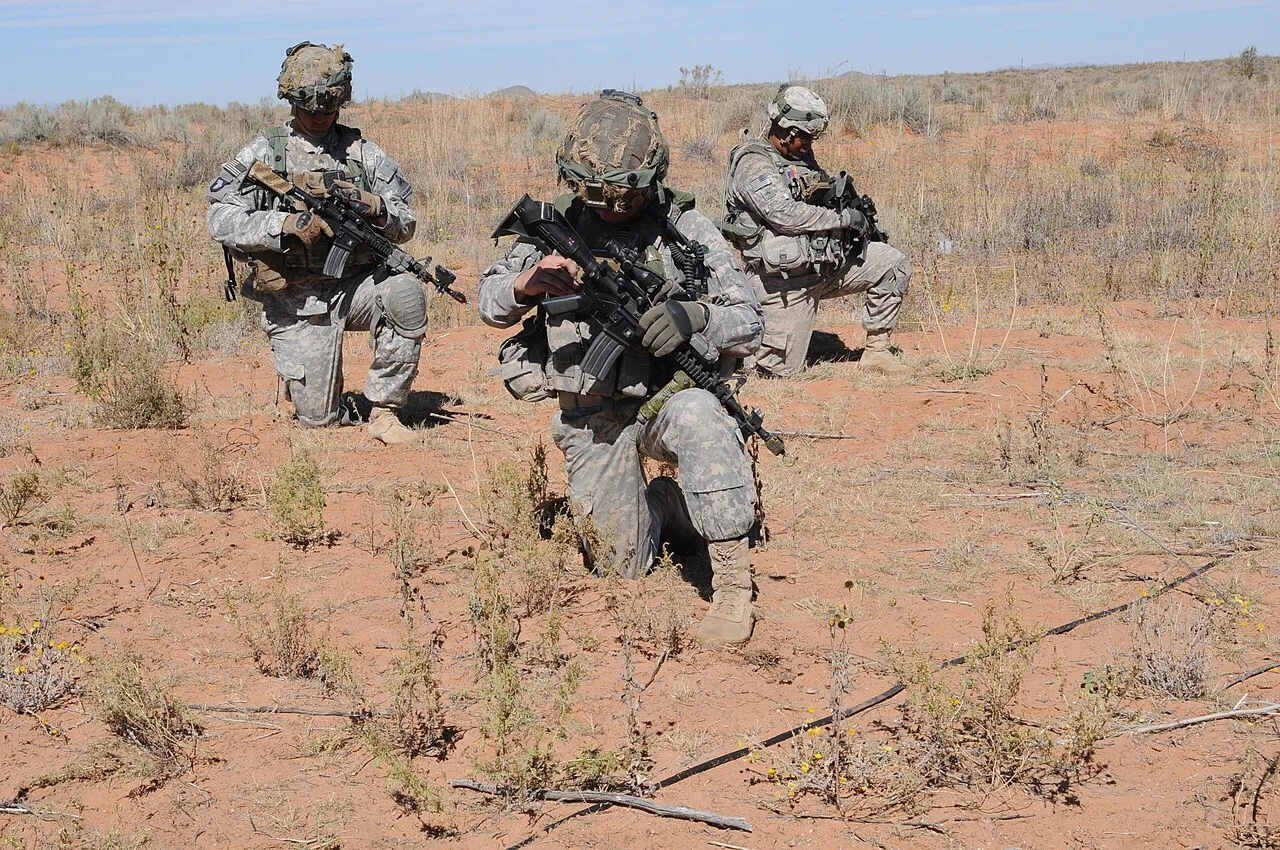
The data and application layers ultimately live on servers and screens. The transport layer contends with physics, and physics does not negotiate.
A tactical network in a modern fight faces congested and jammed spectrum; the fact that every emitter is also a target advertising its own position; links that break and reform constantly because of terrain and distance; and satellite connectivity that may be unavailable at exactly the wrong moment. These happen simultaneously and without warning.
The classical answer was to carry a separate device for each case: an HF set, a UHF set, a satellite terminal, plus a spare. The result was a signals NCO carrying twenty kilos of electronics and four networks that never spoke to one another. The NGC2 approach to transport is less concerned with which boxes are present than with who manages the handover between them.
Wraith Shield: where software rescues the radio
Wraith Shield, the item L3Harris foregrounded in this demonstration, is a software enhancement added to the company’s communications portfolio. Its stated function is to adapt as operational and network conditions change — in other words, to move the decision about how a link is established in a contested electromagnetic environment out of the operator’s hands and into software.
The company released no detailed technical data on it: no contract value, no unit numbers, no measured performance figures. That is the customary boundary of a demonstration announcement in this industry — capability is described, numbers are withheld. Wraith Shield’s real contribution in the field will only be measurable when Army test reporting or subsequent exercise assessments become public.
The direction, though, is meaningful. When software-defined radio emerged in the early 2000s the promise was “same box, different waveform.” What is being described now is a step past that: software also deciding which waveform, at what moment, at what power.
Program at a glance
| Item | Detail |
|---|---|
| Program | NGC2 — Next Generation Command and Control |
| Owner | US Army |
| Architecture layers | Transport, integration, data, application |
| Design philosophy | Data-centric, modular open systems (MOSA), commercial-first |
| Prototype agreement | $99.6 million / 11 months (OTA), Anduril-led, for the 4th Infantry Division |
| Common data layer lead | Anduril (selected June 2026) |
| Full-stack operational implementation lead | Lockheed Martin (25th Infantry Division line of effort) |
| Transport layer provider | L3Harris Technologies (subject of this report) |
| Data infrastructure partners | Palantir (Foundry), Anduril (Lattice), Raft |
| Industry participation | More than 60 companies contributing or under analysis |
| Principal exercises | Lightning Surge 1–4, Ivy Mass (May 2026), Balikatan 2026 (Philippines), Project Convergence–Capstone 6 (July 2026, Fort Irwin) |
| Lead units | 4th Infantry Division (Fort Carson), 25th Infantry Division (Hawaii) |
| Scale target | All 11 divisions within a five-year window |
| Production milestone | Production ecosystem to one division in FY27 |
Who does what: the industrial map
NGC2 is not a conventional single-prime program. The Army deliberately built a fragmented industrial structure, and that structure was reshaped several times through 2026.
The prototype phase opened in March 2025 with an eleven-month, $99.6 million OTA agreement to an Anduril-led team, tasked with producing an end-to-end architecture for the 4th Infantry Division. Anduril works with Palantir on this: Anduril’s Lattice and Palantir’s Foundry combine into an edge-to-cloud data mesh, while Raft handles data and services registries, transformation tooling and federation.
In June 2026 the Army selected Anduril again, this time to lead the common data layer baseline — read at the time as the first major contract step in the move from prototyping to delivery. Lockheed Martin holds the full-stack operational implementation lead and ran demonstrations through the Lightning Surge series that extended as far as live fires execution. L3Harris supplies the physical connectivity all of that software rests on.
By the Army’s own account more than sixty companies are contributing or under analysis. That is a flatter arrangement than the familiar prime-and-subcontractor pyramid — and it brings its own problems.
The cost of going commercial-first
The most contested feature of NGC2 is its commercial-first posture. Rather than software built from scratch to military specification, the program leans on commercial cloud infrastructure, commercial data platforms and a rapid software-update culture. The upside is visible: by the Army’s telling, a voice-command hand mic capability requested by soldiers during Lightning Surge 4 was developed and fielded within days. On a conventional acquisition timeline that is a change request measured in years.
The cost falls under three headings. Security first: a dense commercial component base widens the attack surface, and the Army’s own assessment of Project Convergence–Capstone 6 recorded challenges alongside successes. Dependence second: anchoring the data layer to particular commercial platforms raises long-run vendor lock-in risk. Scale third: an architecture that works in one division has to survive translation into eleven, which is as much a training, maintenance and manning question as a technical one.
The Army has signalled awareness of this, framing the common data layer baseline award as laying “the groundwork for rapid scaling.” The industrial base stays plural; the data standard gets centralised.
Eleven divisions in five years: is the timeline real?
The stated goal is NGC2 capability across all eleven divisions inside a five-year window, with the first production ecosystem delivered to one division in FY27. Measured against the history of defence software, that is ambitious.
In its favour: the program has already been exercised with real units, on real terrain, under real countermeasures. Running at division scale under cyber and electromagnetic attack at Ivy Mass, and fusing sensors, fires and airspace management on a single platform during Balikatan 2026 in the Philippines, is not a laboratory result.
Against it: scale itself. Re-plumbing a division’s communications is not a hardware purchase. It reaches from the physical layout of command posts to training curricula, from the maintenance chain to authorisation procedures. The real examination will not be the next exercise. It will be the first ordinary year in which an ordinary division simply uses the thing.
The same argument, elsewhere
Türkiye met an early version of this argument some time ago. ASELSAN’s TASMUS tactical area communications system, begun in the 1990s, set out to place Turkish field communications on a single backbone and was one of a handful of comparable efforts worldwide in its generation. Software-defined radios, vehicle intercom systems, data links and command-and-control software were layered onto that backbone over the following decades.

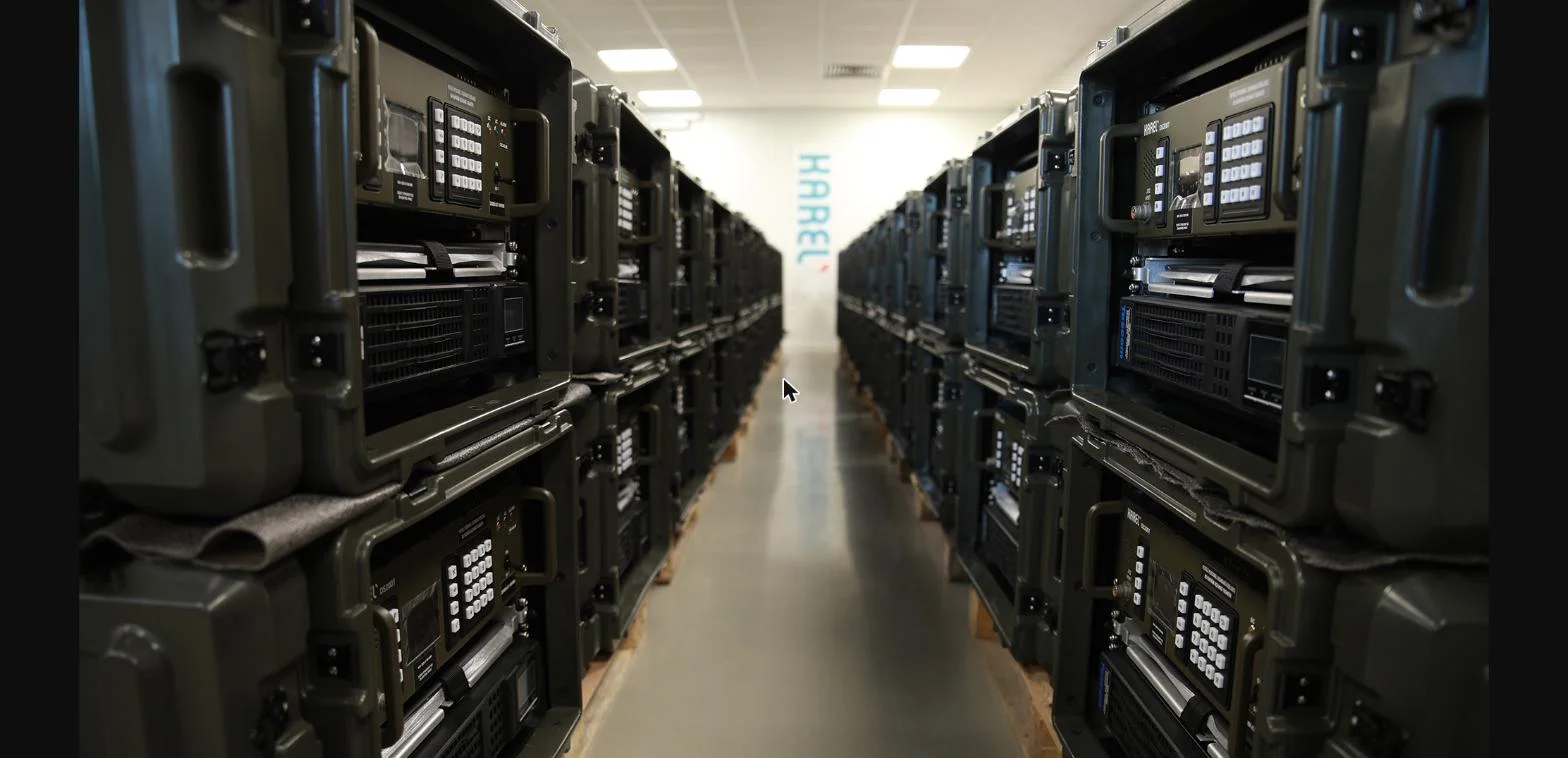
Capability across the Turkish communications chain is not thin: ASELSAN in software-defined radio and spectrum management, HAVELSAN in command-and-control software and operations-centre solutions, SAVRONİK and KAREL in data links and tactical communications hardware. In the air domain, projects such as HAVELSAN’s KARTAL represent an attempt to establish an indigenous node inside the Link-16 world.
The scales are not comparable — the US Army is discussing eleven divisions and a global logistics chain, with budgets to match. But the problem is scale-independent. The question in front of Türkiye is the same one: the data produced by radios, radars, UAV ground stations and command software from different manufacturers — in which common layer, and to which standard, does it converge? A structure in which every system performs beautifully through its own interface, yet the sum yields no single operational picture, is technically successful and operationally incomplete.
This is not a Turkish weakness. It is an architectural problem every NATO military is working on, and the one the United States is spending billions on NGC2 to solve. Türkiye’s advantage is that it builds most of its own communications hardware, so it is not obliged to bend its data standard to an interface imposed from outside. Its disadvantage comes from the same place: when the authority to set standards is distributed, a common layer does not emerge by itself. The most transferable lesson of the NGC2 experience may be governance rather than technology — the Army left industry plural but pulled the data standard into one hand.
Sources
- Defence Industry Europe — “L3Harris says mission-networking demonstration connected dispersed U.S. Army formations”, 30 August 2026
- Defence Connect — “L3Harris demonstrates integrated networking for next-gen US Army operations”, 28 August 2026
- U.S. Army — “Army leaders: Next Generation Command and Control ‘ready to scale'”
- U.S. Army — “Army and industry align on common data baseline, as Next Generation Command and Control moves from prototyping to delivery”
- U.S. Army — “Army announces Next Generation Command and Control (NGC2) prototype award”
- Breaking Defense — “Island surge: The Army’s Next Generation Command and Control in action”, August 2026
- Breaking Defense — “Army picks Anduril to lead Next Gen C2 common data layer baseline”, June 2026
- Breaking Defense — “Army wants to field all 11 divisions NGC2 capabilities in five-year window”, May 2026
- Defense Daily — “Army Readies To Scale NGC2, Details Successes, Challenges From Largest Experiment To Date”