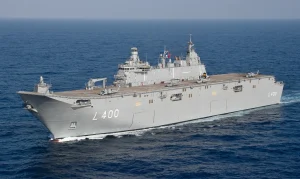
From M60 and Leopard to ALTAY: Türkiye’s Tank Transition

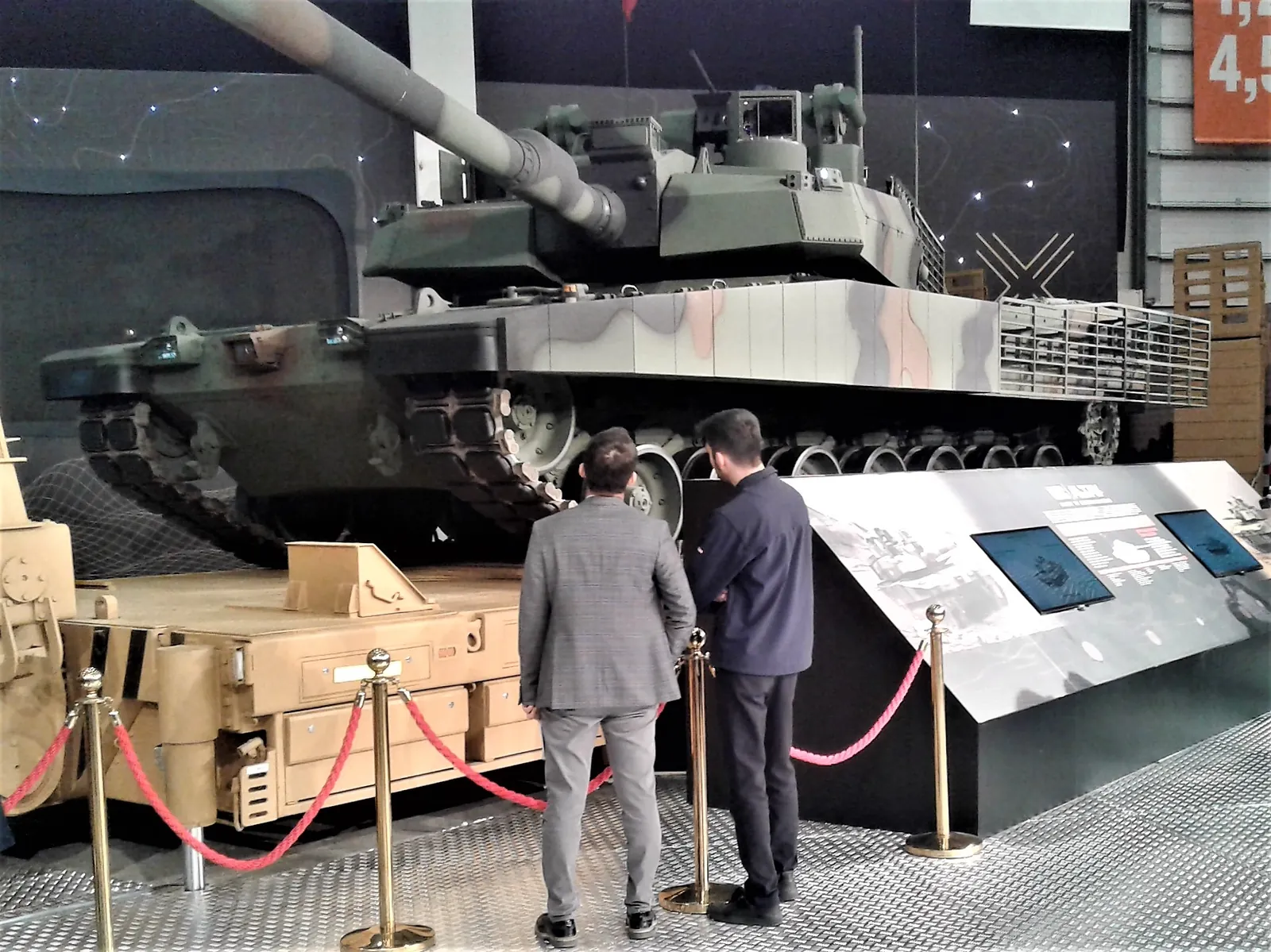
Türkiye’s land forces still field hundreds of M60 and Leopard tanks. Serial production of the domestically built ALTAY has now started, but it has not yet closed that gap.
From Imported to Indigenous series · File 1 · Sarp Güçlü
Class: B — Gradual Replacement
Current status: ALTAY deliveries have begun, but the M60 and Leopard families still make up the bulk of Türkiye’s tank fleet — both generations serve side by side.
1. What was the legacy system?
Türkiye’s main battle tank inventory rests on three separate imported families. The US-built M60 Patton dates from a Cold War-era supply relationship; a large share was later upgraded to the “Sabra Mk.II” standard under a contract signed with Israel’s IMI on 29 March 2002, worth roughly $688 million, with deliveries (designated M60T in Turkish service) running 2007-2009. Leopard 1 tanks arrived from Germany in the 1980s. Leopard 2A4s came in a separate wave: Germany finalised a deal in 2005 to sell 298 second-hand Leopard 2A4s to Türkiye, later locally modified (air-filter changes) as Leopard 2A4TR. No official Turkish count of the combined fleet exists; independent estimates put the Leopard 2 family at roughly 300-350 units, Leopard 1 at 350-400, and M60 at 650-935, depending on the source.
2. Why was a domestic replacement needed?
ALTAY’s origin traces to Türkiye’s decision, formalised in a 2007-2008 contract with Otokar that included design assistance from South Korea’s Hyundai Rotem, to build its own main battle tank. The programme’s original powerpack plan — a German MTU engine and RENK transmission, known as the EuroPowerPack — was abandoned after Germany refused export approval tied to Türkiye’s operations in Syria; this is the documented reason for the years-long search for an alternative powerpack that followed. Separately, after the 2016 Operation Euphrates Shield exposed the M60T/Sabra fleet’s vulnerability to anti-tank guided missiles, the SSB-coordinated, ASELSAN-led FIRAT/M60T and later TİYK-M60T upgrade programmes were launched. These are two distinct tracks — a new indigenous tank, and survivability upgrades for the existing fleet — that have run in parallel rather than one replacing the other.
3. How was the domestic product developed?
The timeline: the 2007-2008 contract with Otokar for four prototypes; the first public 3D renderings in 2010; initial acceptance of the FTR/MTR pre-prototypes in November 2012; delivery of Otokar’s prototypes to the Land Forces in 2016. On 9 November 2018 the SSB signed the mass-production contract with BMC, replacing Otokar as prime contractor. On the powerpack side, South Korea approved export of the Hyundai (formerly Doosan) Infracore DV27K engine and SNT Dynamics EST15K transmission on 22 October 2021; on 30 January 2023 BMC contracted SNT Dynamics for 90 transmissions by December 2027 (with an option for 150 more by 2030); two Korean-powered ALTAY T1 units were delivered for trials on 23 April 2023. In parallel, BMC Power’s indigenous BATU engine (a 1,500 hp V12 diesel) first ran in April 2021, and SSB President Haluk Görgün said factory acceptance testing was completed by late 2025. Mass production officially began on 5 September 2025, and on 28 October 2025, at the opening of BMC’s new Ankara (Kahramankazan) production facility attended by President Erdoğan, the first serial ALTAYs were delivered to the Turkish Armed Forces.
4. Old vs. new: a sourced comparison
| Spec | M60T (Sabra II) | Leopard 2A4TR | ALTAY T1 | ALTAY T2 |
|---|---|---|---|---|
| Origin/design support | US (M60) + Israel/IMI (upgrade) | Germany (Krauss-Maffei) | Türkiye/BMC — Hyundai Rotem design support | Türkiye/BMC |
| Entry into Turkish service | 2002 contract, delivered 2007-2009 | 298 second-hand units via 2005 deal | Serial deliveries started 28 Oct 2025 | Integration planned ~2028 |
| Weight | not disclosed | ~55.15 t | 65 t | 65 t |
| Engine | MTU MT 881 Ka-501 diesel (output not disclosed) | MTU MB 873 Ka-501, 1,500 hp | Hyundai (Doosan) Infracore DV27K, 1,500 hp | BMC Power BATU V12, 1,500 hp |
| Active protection | none | none (base package) | ASELSAN AKKOR | ASELSAN AKKOR |
| Unit cost (FY2025) | not disclosed | not disclosed | ~US$13.75M | ~US$11.75M |
Sources: Defense News (31 Oct 2025); manufacturer/SSB-sourced spec data; 2006 Singapore government archive comparison. “Not disclosed” marks cells with no verified public figure.
5. How much is actually domestic?
ALTAY’s design, armour package (Roketsan’s KSAP-based composite), main gun (MKE 120mm L/55) and the ASELSAN AKKOR active-protection/electronics suite are Turkish. But the single most critical subsystem — the powerpack — on the roughly 85 ALTAY T1 units due by 2028 still runs on the South Korean Hyundai (Doosan) Infracore DV27K engine and SNT Dynamics EST15K transmission. BMC chairman Fuat Tosyalı has described the goal as localising subsystems “that cannot obtain export licences” — a goal only partly met so far: electronics, armour and weapons are domestic; the powerpack is not. The indigenous BATU engine and transmission — which, per Jane’s, BMC confirmed were in testing during Exercise EFES-2026 — are reserved for the ALTAY T2 configuration, planned from 2028. “Fully indigenous” cannot yet be applied to the T1.
6. Has it actually replaced the old system?
It is being replaced gradually. The numbers make this explicit: only two or three ALTAYs entered inventory at the 28 October 2025 ceremony, and SSB President Görgün’s updated January 2026 target for 2026 deliveries is around 10 units — a small fraction next to a legacy fleet numbering in the hundreds. The old fleet is not simply being phased out either: per Army Recognition, just two days after ALTAY’s serial-production milestone, on 30 October 2025, the Turkish Armed Forces accepted a second batch of modernised TİYK-M60T tanks (with the indigenous Volkan-M fire-control system and PULAT active protection). Türkiye is building new tanks and modernising the old fleet at the same time — the definition of gradual replacement, not direct substitution. The stated plan is 85 T1s and then 165 T2s by the end of the decade — 250 tanks against a combined legacy fleet independent estimates put at 1,300-1,600 vehicles.
7. International parallels
Replacing a Cold War tank fleet with an indigenous design is not unique to Türkiye. South Korea completed a similar journey earlier with its own K1/K2 programmes — the same lineage that supplied ALTAY’s original design assistance via Hyundai Rotem. Poland’s effort to complete its Leopard 2/PT-91 fleet with the K2PL and Borsuk, or India’s attempt to replace T-72/T-90s with the indigenous Arjun, have run into the same powerpack-dependency problem. ALTAY’s own path — German engine, then Korean, then (eventually) domestic BATU — is a reminder that subsystem independence usually takes longer than design independence; the programme’s own history illustrates the point it is reporting on.
8. Strategic and industrial takeaway
The most visible industrial gain is that most of the chain from design to final assembly of a 65-tonne main battle tank — armour, weapons, electronics, software — now sits inside Türkiye. BMC’s new Kahramankazan facility is rated, per the SSB, at up to 96 ALTAYs a year, growing a supply ecosystem that includes ASELSAN, Roketsan, Havelsan and MKE. The real industrial threshold will be crossed once the powerpack is localised: a domestically produced engine and transmission in series would put Türkiye among a small group of countries able to build a main battle tank end-to-end. For now the gain is partial but real; the risk is being in a transition period still contingent on a third country’s export decisions. Export interest follows the same early-stage pattern: a 2019 report of a 100-unit Qatari order has not been matched by any confirmed delivery, and 2025 interest from Indonesia and Saudi Arabia has not yet turned into a signed contract.
9. FAQ
Which tanks will ALTAY replace?
ALTAY is meant to gradually replace Türkiye’s M60, Leopard 1 and Leopard 2A4 fleets. The number delivered so far (single to low double digits as of 2025-2026) is a small share of the legacy fleet.
Is ALTAY fully indigenous?
Not yet. Armour, weapons, electronics and software are Turkish, but the delivered ALTAY T1’s engine and transmission are South Korean. The domestic BATU powerpack is reserved for the ALTAY T2, planned from 2028.
Why does ALTAY still use a South Korean engine?
The original plan used a German MTU engine; Germany refused export approval over Türkiye’s operations in Syria. South Korea’s engine and transmission became the bridge solution while the domestic BATU powerpack was developed.
How many ALTAYs have been delivered, and how many more are coming?
Serial deliveries began 28 October 2025. The plan calls for 85 ALTAY T1s by 2028, then 165 ALTAY T2s — 250 total. The 2026 target is around 10 units.
When will M60 and Leopard tanks leave Turkish service entirely?
No official retirement timeline exists. On the contrary, Türkiye continued modernising the M60T fleet (TİYK-M60T) through 2025, alongside the ALTAY deliveries.
Has ALTAY been exported?
A 2019 report described a 100-unit order from Qatar, and 2025 brought reported interest from Indonesia and Saudi Arabia, but none of this is matched by a confirmed completed export delivery.
10. Sources
Primary:
Defense News, “Turkey wants eight Altay battle tanks yearly from new BMC factory” (31 Oct 2025) — statements from SSB President Haluk Görgün and BMC chairman Fuat Tosyalı: defensenews.com
Army Recognition, “Türkiye inducts upgraded M-60T tanks as Altay tank enters serial production phase”: armyrecognition.com
Independent:
Jane’s (Nicholas Fiorenza), “Türkiye tests indigenous transmission for Altay MBT”: janes.com
Overt Defense, “Türkiye Finally Receives Its First Altay Tanks After Long Delays” (31 Oct 2025): overtdefense.com
Overt Defense, “The Turkish Armed Forces Receive The First Batch of Modernized M-60T Tanks” (12 Feb 2024): overtdefense.com
Euro-SD, “Altay serial production begins” (Oct 2025): euro-sd.com
Other files in the From Imported to Indigenous series
The series continues with a new file every three days.