Royal Navy Shadows Russian Convoy for 72 Hours in North Sea and Channel

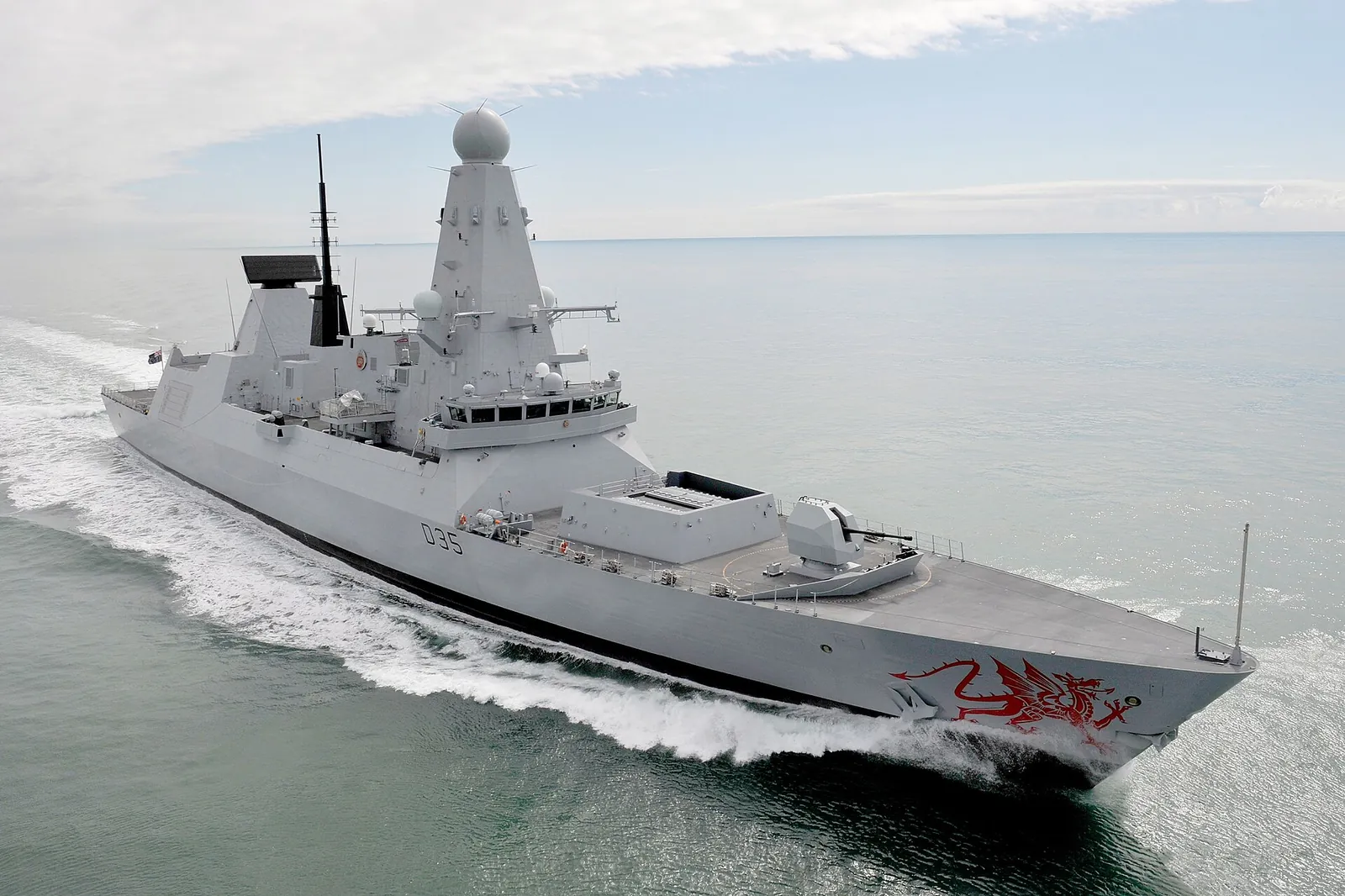
The Royal Navy kept four warships and a Merlin helicopter on station for 72 hours to track a Russian convoy moving south from the North Sea into the English Channel. At the centre of it sat the destroyer Admiral Levchenko, escorting two cargo ships on the UK sanctions list. Activations tied to Russian activity are running 25% higher over the first eight months of this year than in the same period of 2025.
At a Glance
- What happened: A 72-hour Royal Navy operation shadowed a Russian destroyer escorting sanctioned merchant vessels.
- Where: North Sea → Strait of Dover → English Channel, with handover to a NATO ally near Ushant off France.
- Who: HMS Duncan, HMS St Albans, HMS Severn and HMS Mersey, plus one Merlin helicopter.
- Russian side: Destroyer Admiral Levchenko, frigate Neustrashimy, replenishment ship Akademik Pashin, cargo vessels General Skobelev and Sparta.
- The number: Russia-linked Royal Navy activations up 25% year on year over eight months.
- Sanctions picture: More than 500 vessels designated by the UK; Russian oil and gas revenue down 24% in 2025.
- Wider read: The hard part of shadow-fleet work is not firepower but sustaining unbroken maritime domain awareness for days at a time.
Tracking a warship takes far longer than engaging one. The operation the Royal Navy disclosed on 29 August is a clean illustration: no weapon was fired, and four ships plus a helicopter spent three days at sea doing nothing but watching. The object of that attention was a destroyer riding shotgun on two Russian merchant ships under sanctions.
Who Was Watching Whom
According to the Royal Navy, HMS Duncan, HMS St Albans and HMS Severn tracked the Russian destroyer Admiral Levchenko as it escorted the sanctioned cargo vessels General Skobelev and Sparta south through the North Sea. The group was monitored into the English Channel using the British ships’ radars and other sensors.
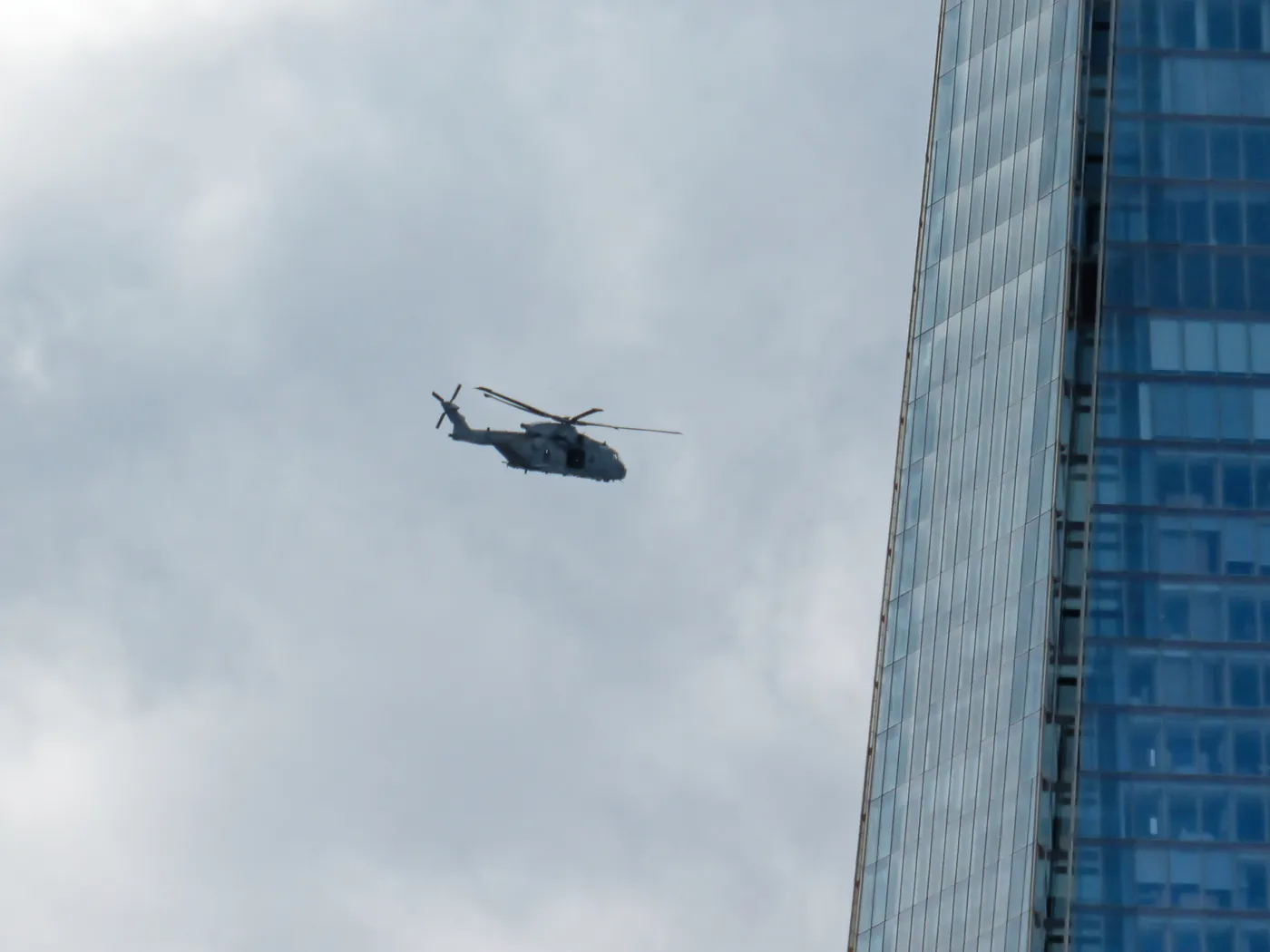
Moscow did not send the destroyer alone. The Royal Navy said Russia also deployed the frigate Neustrashimy to protect the cargo ships. That detail carries its own weight: two warships committed to escorting two merchant hulls is a real bite out of a surface fleet that has limited spare capacity to begin with.
The fourth British ship, HMS Mersey, ran a separate task nearby, shadowing the Russian replenishment vessel Akademik Pashin. Two independent tracking problems were therefore being worked in the same window, across the same stretch of water.
The track did not simply end at the edge of British waters. Responsibility was transferred to a NATO ally near Ushant, off the French coast. That handover looks like housekeeping, but it is the entire alliance model in miniature: the contact does not vanish when it leaves one nation’s area, it changes flags and keeps moving down the chain.
Why the Merlin Mattered at Dover
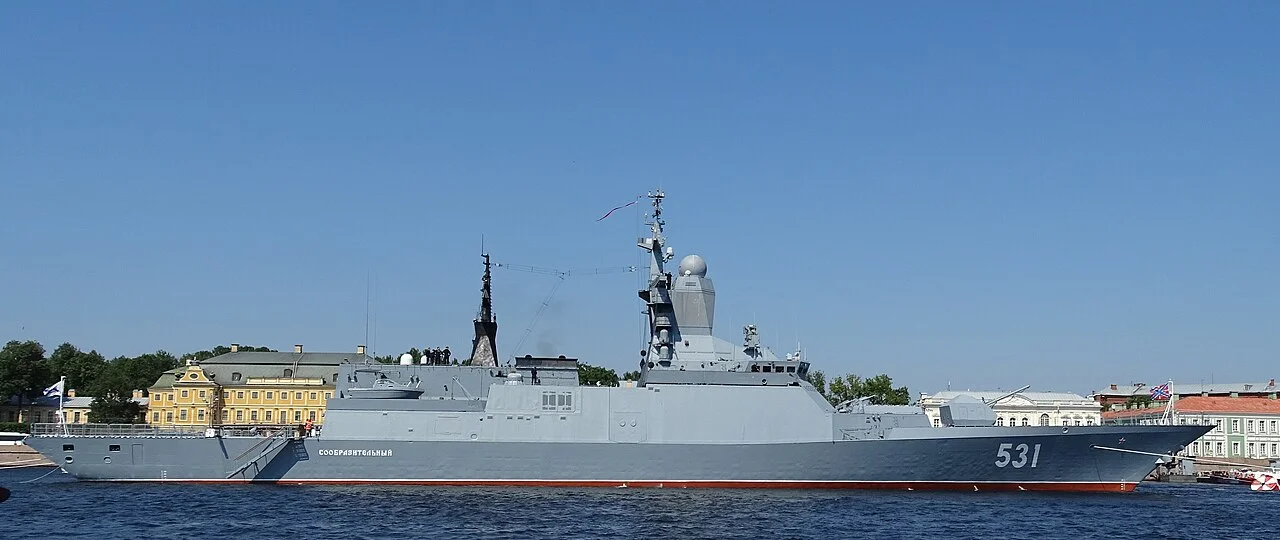
As the vessels approached the Strait of Dover, a Merlin launched from HMS St Albans and stretched the surveillance envelope. A shipborne radar sits close to the sea surface, and the curvature of the earth caps what it can see at a few tens of nautical miles. Lift the same sensor a few thousand feet and the covered area grows dramatically. That was the helicopter’s job: to buy the angle the ships could not reach.
Dover is an unusually hostile place to do it. It is one of the busiest commercial waterways on earth, and holding a specific hull in continuous track through hundreds of civilian contacts is a data-discrimination problem long before it is a sensor problem. The gap between seeing a ship and identifying it opens up precisely in water like this.
There is a sub-surface dimension too. Merlins are equipped for anti-submarine warfare, so they can search for what might be travelling with a convoy rather than only what is visible on it. In an escort scenario that is the practical answer to the question every watch officer eventually asks: is this everything that is out here?
What the 25% Figure Actually Means
The real story is not one transit but the trend behind it. Royal Navy activations linked to Russian activity rose 25% in the first eight months of the year compared with the same period in 2025. Russian naval and commercial movement around British waters has measurably thickened.
An increase like that is paid for in ship-days. Every activation is a training serial postponed, a maintenance window pushed right, or an allied exercise attended by someone else. HMS Severn having sailed on its third such mission in a single month shows how unevenly that load lands.
The Royal Navy said Severn’s earlier assignments in the month included tracking Neustrashimy and, operating alongside HMS Tyne, monitoring the frigate Admiral Gorshkov, the survey vessel Romuald Muklevich and Akademik Pashin. One patrol ship, three separate Russian tasks, one August.
Smyrtos and the Economics of Sanctions
The latest deployments follow Britain’s June interdiction of the sanctioned shadow-fleet oil tanker Smyrtos in the English Channel. General Sir Gwyn Jenkins, the First Sea Lord and Chief of Naval Staff, called that interception “a clear demonstration that the UK and Royal Navy will act against those who seek to evade sanctions to fund Russia’s egregious war on Ukraine.”
Jenkins said the route changes that followed had imposed additional cost and delay on shadow-fleet vessels, and had forced Moscow to divert warships onto escort duty. Shadow fleet ships, he added, “continue to pose an unacceptable risk to maritime security and the environment, wherever they sail.”
The scale of the campaign is in the numbers. The UK has sanctioned more than 500 vessels as part of its effort to restrict Russian energy revenue, and Russia’s oil and gas income fell 24% year on year in 2025, according to the Royal Navy statement.
Why the Shadow Fleet Is Such an Awkward Target
The term describes a loose population of mostly ageing merchant ships used to move sanctioned cargo, with flags, names, insurance and beneficial ownership rotated often enough to blur the paper trail. None of it is a military capability. The capability is legal and administrative ambiguity.
That is why countering it is not a classic naval warfare problem. Deterring a warship is a matter of firepower; stopping a merchant ship requires a legal basis, flag-state consent, or the patience to wait for the right water. What the Royal Navy did here was not interdiction but unbroken observation and documentation, which is the more common and far less cinematic half of the job.
The second risk is environmental. Old hulls, opaque insurance and thin maintenance turn a spill from a possibility into a standing threat in confined waters. That, as much as sanctions policy, explains why coastal states from the Baltic to the Channel treat this traffic as their problem.

Ships and Units Involved
| Ship / Unit | Class and Type | Side | Role in the Operation |
|---|---|---|---|
| HMS Duncan | Type 45 (Daring) destroyer | United Kingdom | Primary tracking unit; sailed on to Copenhagen |
| HMS St Albans | Type 23 (Duke) frigate | United Kingdom | Tracking; launched the Merlin helicopter |
| HMS Severn | River-class offshore patrol vessel | United Kingdom | Tracking; third Russia-related task that month |
| HMS Mersey | River-class offshore patrol vessel | United Kingdom | Separate task shadowing Akademik Pashin |
| Merlin helicopter | AW101-derived naval helicopter | United Kingdom | Airborne surveillance on the Dover approach |
| Admiral Levchenko | Destroyer | Russia | Escorting the sanctioned cargo vessels |
| Neustrashimy | Frigate | Russia | Additional protection for the cargo ships |
| Akademik Pashin | Replenishment ship | Russia | Shadowed separately by HMS Mersey |
| General Skobelev, Sparta | Cargo vessels | Russia | Sanctioned ships at the centre of the track |
Table compiled from the units named in the Royal Navy statement of 29 August 2026.
Type 45 and Type 23: Two Ends of the British Fleet
HMS Duncan, the heaviest unit involved, is the sixth and last of the Type 45 (Daring) class. These destroyers are the Royal Navy’s air-defence backbone, built around the Sea Viper system and the Aster missile family to hold a wide air picture. In a shadowing task, though, their contribution is sensor reach rather than armament.
HMS St Albans is a Type 23 (Duke) frigate, a class optimised in the post-Cold War years for hunting Soviet submarines in the North Atlantic and still carrying the fleet’s anti-submarine expertise. Its embarked helicopter is what turns a single hull into a much wider surveillance footprint.
The Type 23s are being replaced in stages by the Type 26 (City) and Type 31 classes. HMS Glasgow, pictured, is the first of that renewal. Until the transition completes, Britain is absorbing a rising tracking workload with an ageing frigate force, which is where the 25% figure stops being a statistic and starts being a scheduling problem.
The fourth leg of the balance is the River class. Lightly armed and modestly fast, these patrol vessels matter because they remove the obligation to send a destroyer to every contact. That cheap, sustainable platform logic is exactly why HMS Severn could sail three times in one month.
Duncan’s Onward Track: Copenhagen and the High North
After the operation, HMS Duncan sailed for Copenhagen for an engagement focused on defence ties between Britain and Denmark. The destroyer had recently returned from operations in the North Atlantic and High North with the UK Carrier Strike Group.
That routing says something about how London frames the problem: one continuous surveillance space running from the Greenland-Iceland-UK gap down to the Channel. As Commander Oli Ayers, commanding officer of HMS St Albans, put it, his ship was “part of a group of NATO warships and aircraft escorting Russian warships and merchant vessels through the North Sea and English Channel, monitoring their activity,” as part of the UK response to increased Russian activity in British waters.
Ayers added that operations of this kind would continue alongside NATO allies over the coming months. This is a tempo, in other words, not a one-off demonstration.
The Wider Lesson: Persistence Is the Capability
What happened in the Channel is not a purely British problem. A significant share of the same shadow-fleet traffic leaves the Black Sea through the Turkish Straits and the Aegean, where Turkey manages one of the world’s densest tanker corridors under the Montreux Convention and faces the same identification-and-discrimination task every day.
The problems differ in shape rather than in kind. Britain’s difficulty is finding legal grounds to stop a passing hull; Turkey’s is managing volume and ageing-tanker risk inside a narrow waterway. Both point the same way: modern maritime security is now far more about uninterrupted domain awareness than about weapons on rails.
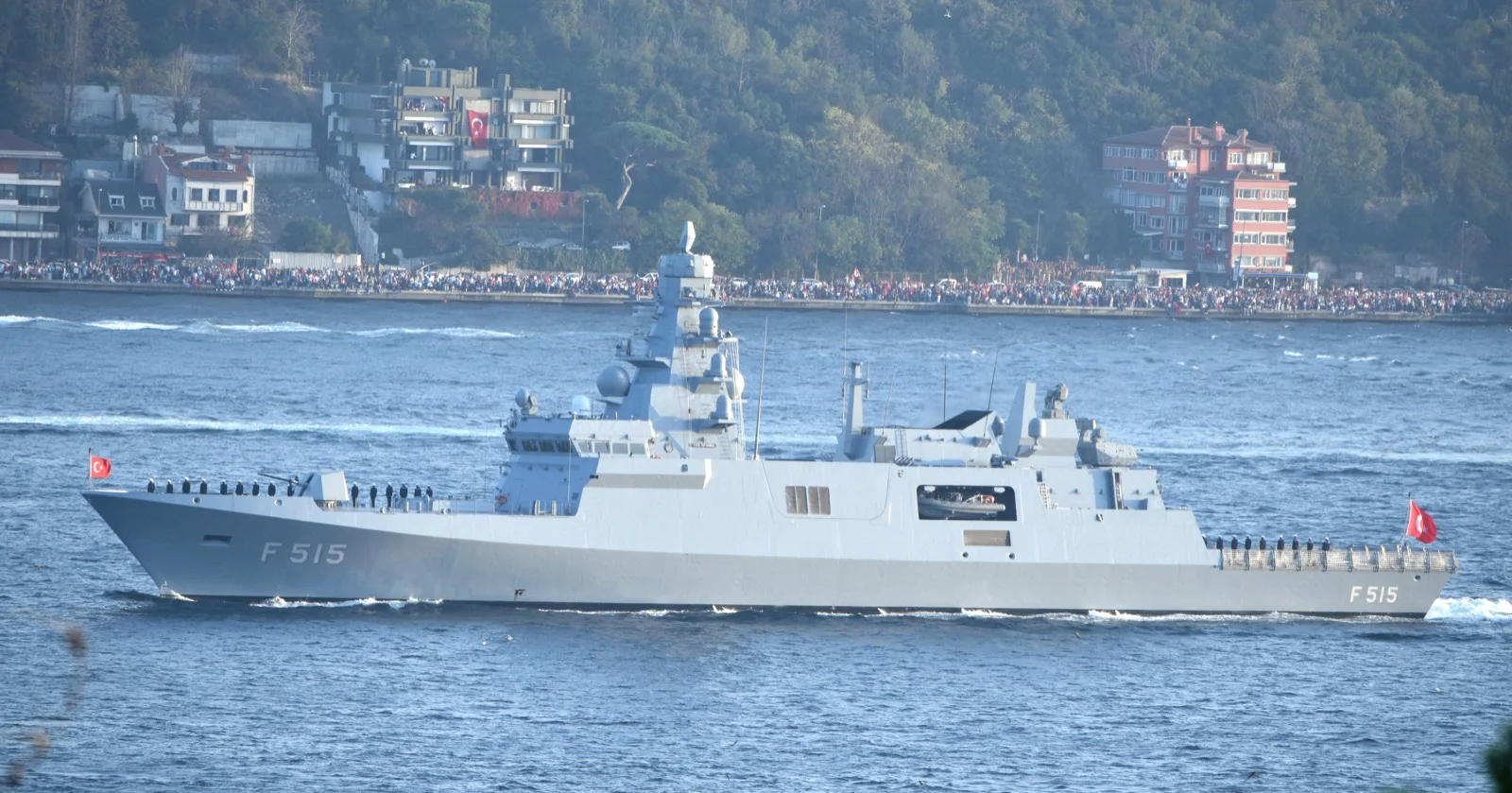
Turkey has built real depth on that side of the ledger. The İSTİF-class frigates and Ada-class corvettes carry indigenous radars and combat management systems as the natural continuation of the MİLGEM programme, while TCG Anadolu extends the surveillance radius by taking unmanned aircraft to sea. Shipborne operation of the Bayraktar TB3 is, in effect, the uncrewed equivalent of what the Merlin did over Dover.
Britain’s own edge, by contrast, is less about platforms than about tempo: decades of NATO surveillance architecture, a routine handover practice between allies, and a patrol-vessel force dedicated to the task. Turkey’s industrial base is broad and fast at producing hulls; the Channel operation is a reminder that persistence, meaning enough ships and a duty roster to hold one contact for days without dropping it, is a separate line of investment.
Sources
- Defence Industry Europe — “Royal Navy tracks Russian warships and sanctioned shadow fleet through UK waters as monitoring activity rises 25% year on year”, 30 August 2026
- Royal Navy statement, 29 August 2026 (quotations as reported by Defence Industry Europe)
- Remarks by First Sea Lord General Sir Gwyn Jenkins and Commander Oli Ayers, commanding officer of HMS St Albans
- Ship class and technical details from manufacturer and official navy sources, and Wikipedia