





Japan Wants a Radar-Killing Missile – Aimed at Warships, Not Batteries

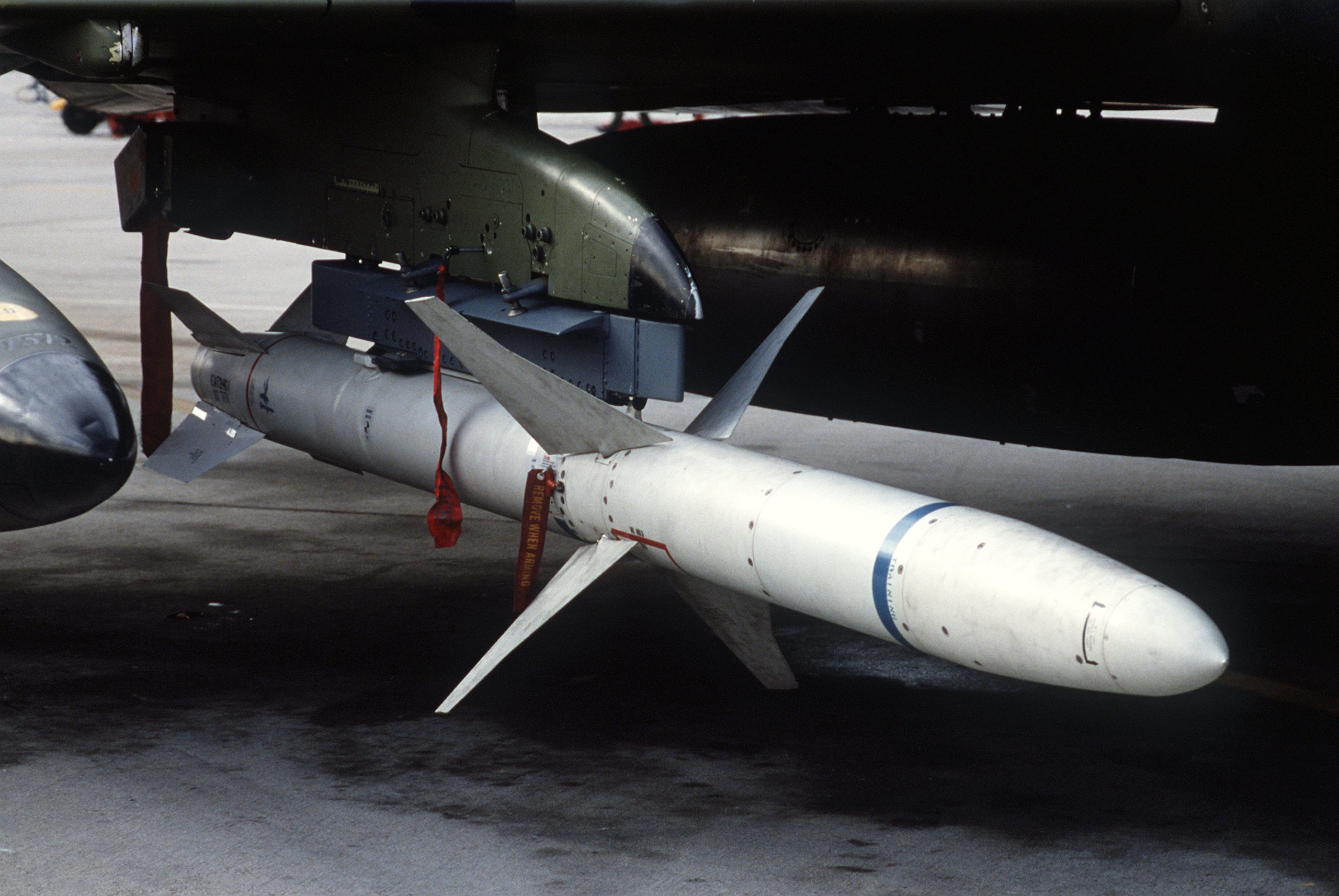
Japan’s Air Self-Defense Force has placed the American-built AGM-88G AARGM-ER on its fiscal 2027 budget request. The unusual part is not the missile itself but where it is meant to point. For decades this class of weapon has hunted ground-based surface-to-air batteries; Tokyo wants to aim it at ships. JASDF Chief of Staff Gen. Takehiro Morita said plainly at a September 1 press conference that the intent is to degrade “the air-defense capabilities of adversary warships.”
At a Glance
- What: A procurement request for the Northrop Grumman AGM-88G AARGM-ER (Advanced Anti-Radiation Guided Missile – Extended Range)
- Who: Japan’s Ministry of Defense / Air Self-Defense Force
- When: FY2027 budget request released August 31, 2026; details briefed September 1
- How much: No figure – submitted as one of roughly 160 unpriced “item requests”
- The wider bill: A record 8.9 trillion yen (~$55.5 billion), widely expected to clear 10 trillion yen for the first time once finalised
- Platforms: F-35A and F-35B
- Why it matters: Moving a mature land-attack suppression doctrine out to sea marks a new phase in anti-ship warfare
An Item With No Price Tag
Japan’s Ministry of Defense unveiled a record 8.9 trillion yen (about $55.5 billion) request for fiscal 2027 on August 31, 2026 – a fifteenth consecutive increase and a thirteenth consecutive record. That number, however, is not the finished picture. Roughly 160 entries went in as unpriced “item requests,” a Japanese budgeting device used when the shape of a purchase is not yet settled. The reason is procedural: the government plans to rewrite the country’s three core security documents before the end of the year, and the figures are expected to firm up only afterwards. Most observers expect the final bill to cross 10 trillion yen for the first time.
AARGM-ER is one of those unpriced lines. Tokyo has not said how many rounds it wants, what it expects to pay, or when deliveries would begin. The request matters anyway, because it signals intent – and because fielding this weapon would push the JASDF into a mission area it has never owned.
Gen. Takehiro Morita confirmed on September 1 that the missile would be integrated on the F-35A and F-35B. He described it as an asset contributing to “the effective conduct of anti-ship attacks,” while declining to discuss operational scenarios on security grounds. In keeping with Japanese practice, the official language names no adversary; the documents speak of “adversary warships” and hostile forces in general terms.
What “Suppressing a Warship’s Air Defence” Actually Means
SEAD – the suppression of enemy air defences – has been a land-attack discipline for half a century. The logic is elegant: a surface-to-air system has to switch its radar on in order to shoot, and the moment it radiates it announces its position. An anti-radiation missile rides that emission down to its source. The radar is either destroyed or, just as usefully, shut down out of self-preservation. That second outcome is what “suppression” means, and a radar that is switched off is a battery that cannot see.
Japan wants to carry that logic to sea. A modern destroyer is, in effect, a floating air-defence battery: a powerful phased-array radar, long-range interceptors and dozens of vertical launch cells throwing a protective umbrella over everything around it. Firing anti-ship missiles straight into that umbrella is expensive, and a well-handled defence will knock down a meaningful share of the salvo.
The proposition is this. AARGM-ER goes first and homes on the ship’s radar emissions. Keep radiating and the ship risks a hit; go quiet and it cannot see the anti-ship missiles coming in behind. Both branches favour the attacker. Air forces have been imposing that dilemma on ground defences for decades; applying it systematically at sea is what is new.
Nor is this purely theoretical. On November 30, 2022, AARGM-ER completed a successful live-fire test against a moving maritime target – demonstrating that the missile can find and strike a radiating platform under way at sea.
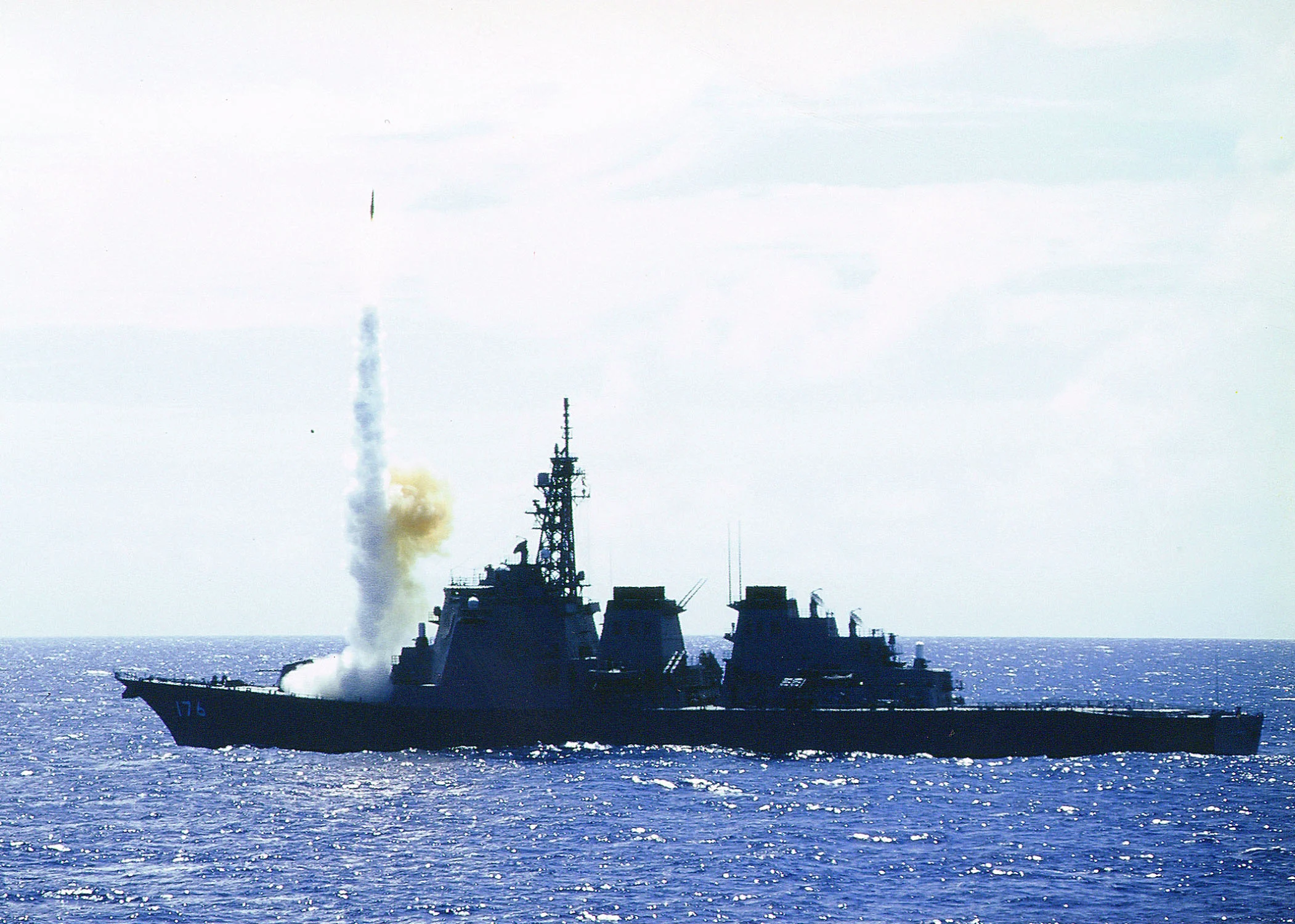
AARGM-ER: The Ramjet Heir to HARM
The AGM-88G is the newest member of the AGM-88 HARM (High-speed Anti-Radiation Missile) family that has been in service since the Cold War. Built by Northrop Grumman, it inherits the guidance section and warhead of the earlier AGM-88E AARGM while replacing the airframe and propulsion outright. The decisive change is the motor: a solid-fuel integrated rocket-ramjet in place of a conventional solid rocket.
A ramjet compresses incoming air by sheer forward speed and burns it, rather than carrying its own oxidiser the way a rocket does. For a given weight it can therefore sustain thrust far longer. The practical result is roughly double the reach: where the AGM-88E is credited with about 80 kilometres, AARGM-ER goes considerably beyond that. The missile measures just over four metres, weighs around 467 kilograms and flies at better than Mach 2.
The seeker is deliberately not dependent on a single sense. It combines an advanced digital anti-radiation homing sensor with a millimetre-wave terminal seeker, GPS and inertial navigation. That mix is the answer to the oldest counter-tactic in the business: if the target radar shuts down at the last moment, the missile continues to the last known position and reacquires with its terminal seeker. Networked connectivity and a weapon-impact-assessment transmission round out the package, letting the missile report back on what it hit.
The weapon is cleared for the U.S. Navy’s F/A-18E/F Super Hornet and EA-18G Growler as well as the F-16 and the F-35 family. Japan’s route runs through the F-35A and F-35B.
Why the F-35 Matters Here
In the anti-radiation mission, the survivability of the launch aircraft counts for as much as the reach of the missile. Conventional SEAD platforms accept exposure as they close on the target, which is why the U.S. Navy hands the job to dedicated electronic-attack aircraft. The F-35 changes that calculus: a low radar cross-section lets it push further in before detection, and its electronic support suite can passively listen to and classify hostile emissions on the way.
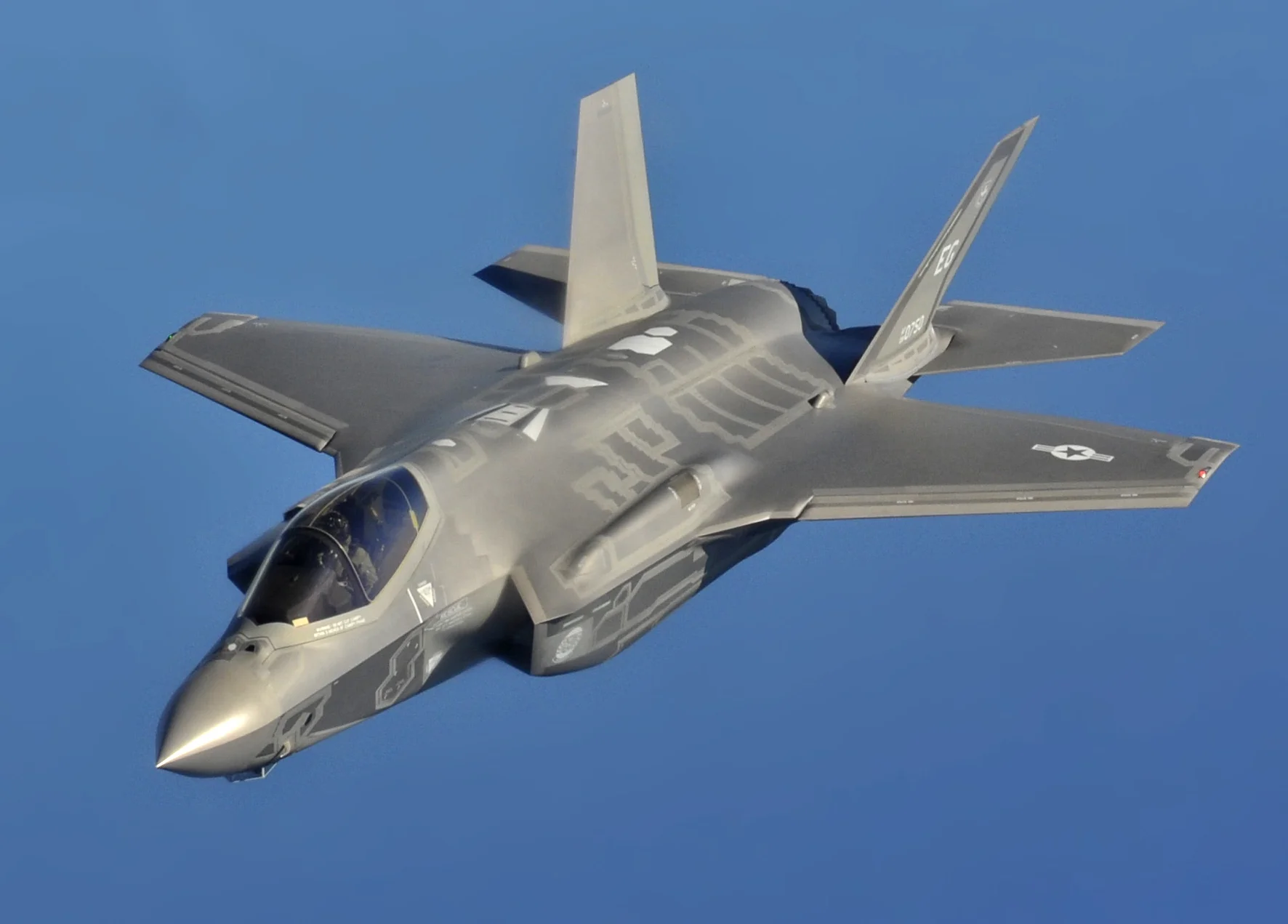
Japan’s F-35Bs add a second option. Short take-off and vertical landing lets them operate from the converted Izumo-class ships and from austere island strips – useful in defending the long chain of islands running southwest from the home islands, and useful for approaching a surface action group from an unexpected bearing.
There is a catch. At over four metres, AARGM-ER does not fit the F-35’s internal weapons bay and would be carried externally, which gives back part of the stealth advantage that made the pairing attractive. That trade-off is familiar to every air force marrying long-range weapons to fifth-generation aircraft: reach makes the missile bigger, and a bigger missile will not go inside.
Specifications
| Attribute | Detail |
| Designation | AGM-88G AARGM-ER |
| Manufacturer | Northrop Grumman (USA) |
| Class | Supersonic anti-radiation missile |
| Length | ~4.05 m (13.3 ft) |
| Weight | ~467 kg (1,030 lb) |
| Speed | Mach 2+ |
| Propulsion | Solid-fuel integrated rocket-ramjet |
| Range | Roughly double the AGM-88E’s ~80 km |
| Guidance | Digital anti-radiation homing + millimetre-wave terminal seeker + GPS/INS |
| Extras | Net-centric connectivity, weapon-impact assessment (WIA) |
| Platforms | F/A-18E/F, EA-18G, F-16, F-35A/B/C |
| Maritime test | November 30, 2022 (moving target, successful) |
Washington Paused It. Tokyo Wants It.
The timing is the curious part. The U.S. Navy declared a strategic pause in AARGM-ER procurement in April 2026, with buys expected to resume in fiscal 2028. Japan is asking for the weapon during the window in which its manufacturer’s home customer has stopped buying.
That is less contradictory than it sounds. Procurement pauses usually reflect budget reprioritisation, a production line being reconfigured, or a wait for a new block standard – not a failure of the weapon. The same family is producing the AGM-88J SiAW (Stand-in Attack Weapon), sized to fit inside the F-35’s internal bay, and reading the pause as part of that transition is entirely reasonable.
From Tokyo’s side, asking early is simply prudent. Foreign Military Sales cases move slowly, and joining the queue late can push deliveries out by years. Putting the line in the budget now – even without a price – is a way of taking a number.
The Wider Japanese Strike Build-Up
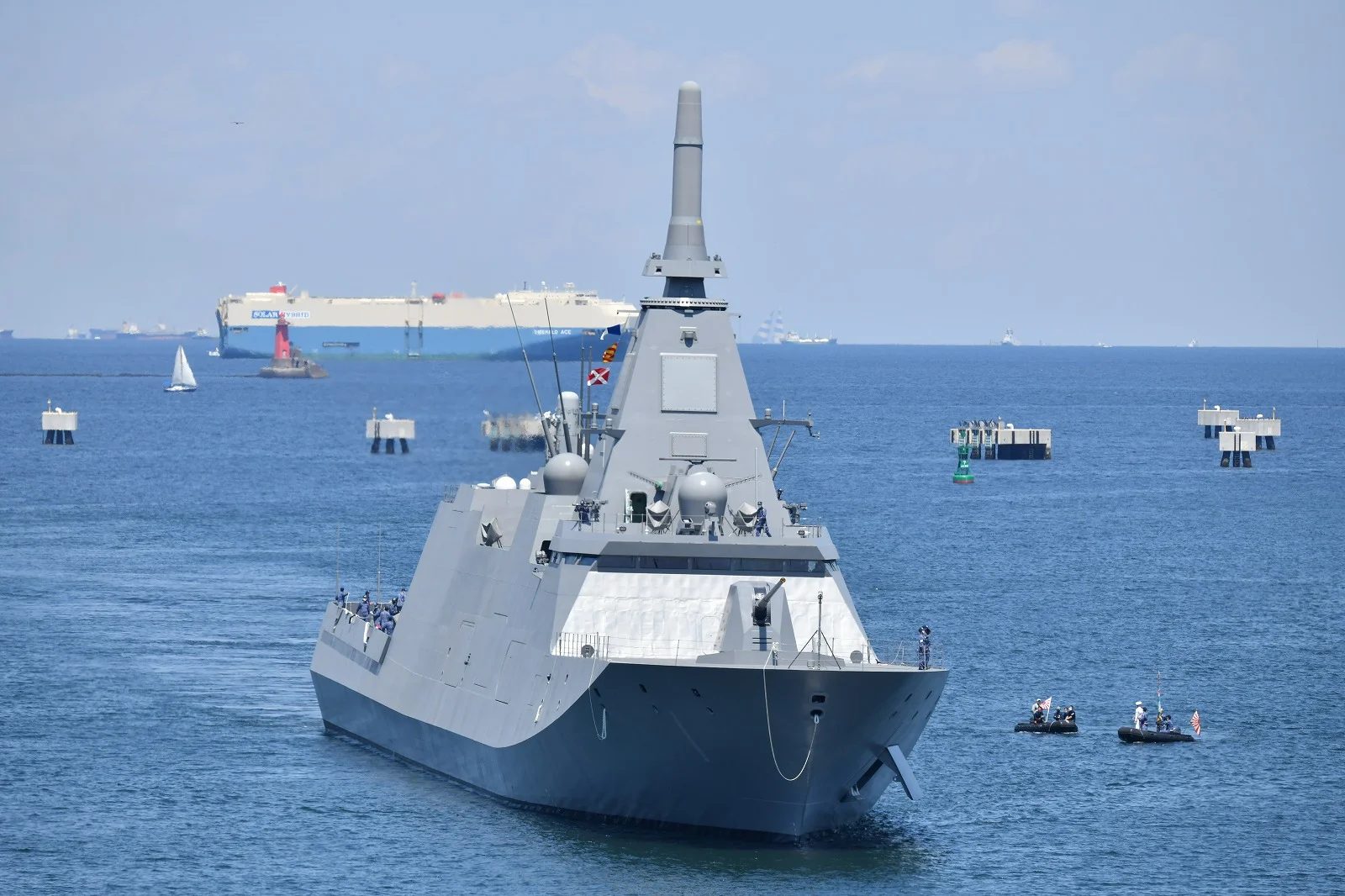
The AARGM-ER request does not stand alone. It belongs to the long-range strike architecture Japan has been assembling for several years. The FY2027 request leans heavily into artificial intelligence and uncrewed systems, new FFM-type frigates and Taigei-class submarine construction, long-endurance UAVs and undersea warfare.
On the missile side the picture is sharper still. Japan plans to acquire up to 400 Tomahawk cruise missiles through Foreign Military Sales. Domestically, the upgraded Type 12 surface-to-ship missile is being stretched in range and diversified across ground batteries, ships and aircraft.
Taken together, this represents the concrete expression of a shift that has been under way in Japanese defence thinking for years. A country that long maintained a short-legged, strictly defensive force posture is now building an inventory designed to hold hostile forces at a distance from its own coastline. AARGM-ER is the piece that opens the door: for the anti-ship missiles to get through, the defence has to be rattled first.
An Anti-Ship Missile Pointed at the Sky
A second item in the same budget cycle is nearly as striking. Japan intends to give its supersonic ASM-3 Kai anti-ship missile an air-to-air capability, and it has named the target set: enemy airborne early warning aircraft and aerial refuelling tankers.
Repurposing an anti-ship weapon against large, sluggish aircraft looks eccentric until you notice it shares a logic with AARGM-ER. Rather than fighting fighters, go after the enablers that keep them in the fight. An air force stripped of its AWACS loses its eyes regardless of how good its jets are; one stripped of its tankers loses its reach.
Read together, the two items describe a coherent approach: instead of defeating a numerically superior force platform by platform, target the nervous system holding it together – the radars, the early warning, the fuel. It is the approach one expects from a smaller, qualitatively strong force facing a larger one.
A Gap Others Share
Japan is not alone in facing this problem, nor in lacking the first link of the chain. Plenty of medium-sized navies have invested heavily in the second half of the equation – capable anti-ship missiles – while leaving the suppression step to allies or to legacy weapons. Turkey is a useful case in point: its air force has flown AGM-88 HARM on F-16s for years, and ROKETSAN’s ATMACA and the submarine-launched ÇAKIR family give it a domestic anti-ship punch, but the air-launched, long-range anti-radiation piece certified against naval targets remains the missing element.
That may not stay true for long. Programmes such as KAAN and KIZILELMA are being developed alongside their weapons rather than after them, which means internal-bay dimensions can be designed around the munition from the outset – precisely the constraint that produced the AGM-88J SiAW in the United States. The scale and threat environments differ too much for a direct comparison, but the engineering problem is the same one Tokyo is now buying its way out of.

What Happens Next
The fate of the request rides on the revision of Japan’s three security documents, due by the end of the year. Quantities and schedules should surface then, followed by the U.S. Foreign Military Sales approval process.
The broader question is whether suppressing air defences at sea stays a Japanese idea or spreads. As shipboard missile defence grows steadily more layered, an approach aimed at closing the defender’s eyes rather than overwhelming its magazines is unlikely to stay a niche one for long.
Sources
- Naval News – “Japan Seeks AARGM-ER to Suppress Enemy Warship Air Defenses” (September 3, 2026)
- Naval News – “Japan’s Record FY2027 Budget Request: Focus on New FFM, ASEV & Submarines” (August 2026)
- USNI News – “Japan Budget Requests Record $55.6B for Unmanned, Long Range Strike Capabilities” (September 1, 2026)
- Northrop Grumman – AARGM-ER programme releases and flight-test announcements
- Naval Technology – AGM-88G AARGM-ER project profile
- Japan Ministry of Defense – FY2027 budget request (August 31, 2026)