World’s Largest Artillery System Manufacturers: The K9’s 60% Market and Fırtına’s Twenty Years (2026)


One name fills the frame in today’s artillery market: Hanwha. The South Korean group’s K9 Thunder, together with its K10 resupply vehicle, holds roughly 60 percent of the world’s mobile artillery market and sits in the inventories or order books of eleven nations — an export base that has outsold America’s M109, Germany’s PzH 2000 and France’s CAESAR. The surprise of 2026 was the K9 planting a flag inside the fortress: in August, the US Army handed its next-generation self-propelled howitzer prototype contract to Hanwha’s wheeled K9MH. In Europe, KNDS is pushing CAESAR output toward eight systems a month under the pressure of the Ukraine war; India is growing its own industry with a giant 307-gun ATAGS order. Türkiye is one of the market’s veterans — the T-155 Fırtına has been in production for over two decades, with the new-generation Fırtına II now delivering. Following our submarine builders file, Envanter Medya compares the world’s artillery system manufacturers across market share, orders, user base and production tempo.
Editorial note: This ranking is an editorial research product compiled by Envanter Medya from publicly available data; it is not an official international ranking. Sources and methodology are explained at the end.
The research at a glance
“Largest” by which measure?
Artillery is the weapon class the Ukraine war pushed back to center stage: the systems that set a front’s volume of fire returned to the top of procurement lists across Europe and Asia. The market runs in three segments — tracked self-propelled howitzers (K9, PzH 2000, T-155 Fırtına), wheeled/truck-mounted systems (CAESAR, Archer, ATMOS, RCH 155, YAVUZ) and towed guns (M777, ATAGS). “Largest” again depends on the yardstick: market share, active orders, user base or production tempo. We measured each separately.
By market share: the K9 is half the market by itself
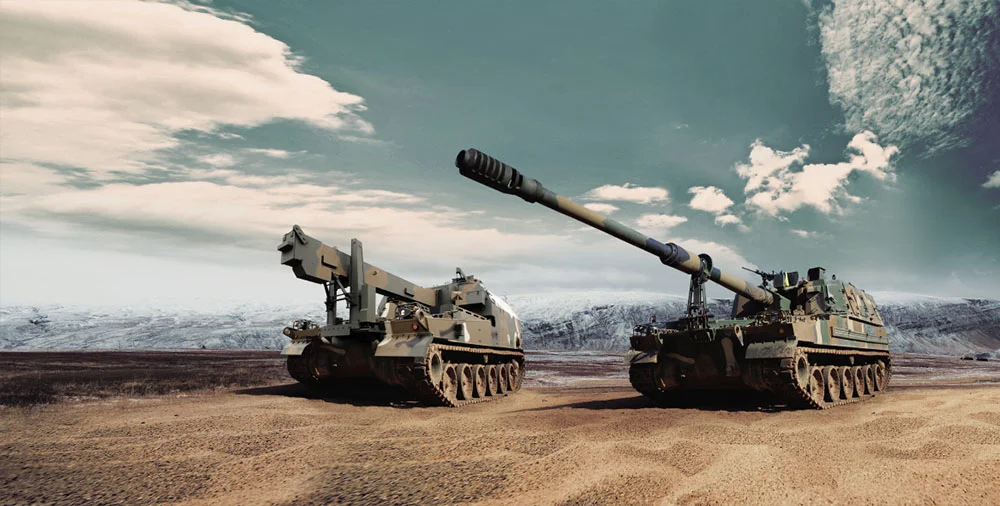
Hanwha Aerospace’s K9 Thunder built its own category: with the K10 ammunition resupply vehicle, the family holds roughly 60 percent of the world’s mobile artillery market. The K9 is the most exported tracked howitzer in history — in service or on order with eleven nations including South Korea: Türkiye (the T-155 via technology transfer), Poland (with a local K9PL line), India (K9 Vajra), Egypt, Australia (AS9), Norway, Finland, Estonia and Romania. Production of the wheeled K9MH began in October 2025 — and August 2026 brought the program’s most symbolic win: the US Army awarded its next-generation self-propelled howitzer (SPH-M) prototype contract, first tranche worth about $100 million, to Hanwha. The selection beat Elbit America’s SIGMA (with Anduril and Oshkosh), the KNDS-Leonardo CAESAR derivative, Rheinmetall’s RCH 155 and BAE’s Archer — Korean artillery’s first major entry into the US market.
By order book: India’s 307-gun line item and the European wave
The largest artillery order of 2025-26 came from India: under a roughly $800 million contract signed in March 2025, Bharat Forge and Tata will build 307 indigenous ATAGS towed howitzers. In Europe the war-driven procurement wave continues: Rheinmetall’s fully automated RCH 155 is in production on German and Ukrainian orders; KNDS has expanded the CAESAR line from a pre-war two systems a month toward a target of eight; Romania signed for 54 K9s in 2024; Denmark is growing its ATMOS and CAESAR fleets. In Türkiye, Fırtına II deliveries to the Land Forces continue batch by batch.
Selected major orders, not an exhaustive list. Poland’s multi-batch K9/K9PL framework and systems granted/supplied to Ukraine in wartime are separate programs and excluded. The US row is a prototype phase (light bar).
Verified production, orders and deliveries
| Company | Country | Systems | Verified production/order indicator | Data type |
|---|---|---|---|---|
| Hanwha Aerospace | S. Korea | K9/K9A1/K9MH, K10 | ~60% of the mobile artillery market; 11 user/order nations; K9MH production began October 2025; US SPH-M prototype contract (August 2026); local production line in Poland | R/T |
| KNDS | France-Germany | CAESAR, PzH 2000 | CAESAR rate rising from 2/month toward 8; combat-proven in Ukraine; Czech order of 52 CAESAR 8×8; PzH 2000 base of 8+ nations | R/T |
| Rheinmetall | Germany | RCH 155 | Fully automated RCH 155 in production on German and Ukrainian (54) orders; also competed in the US race | R |
| Elbit Systems | Israel | ATMOS, SIGMA | ATMOS truck-mounted howitzer serves multiple armies including Denmark; SIGMA was a US finalist | R/T |
| BAE Systems | UK-Sweden | Archer, M777 | Archer serves Sweden and the UK (interim buy); M777 line restart under discussion | R/T |
| MKE + ASFAT 🇹🇷 | Türkiye | T-155 Fırtına, Fırtına II, YAVUZ, BORAN | T-155 Fırtına in production for over 20 years; Fırtına II serial deliveries under way; exported to Azerbaijan; YAVUZ 8×8 truck-mounted and BORAN 105 mm light howitzer in serial production | R/T |
| Bharat Forge + Tata | India | ATAGS | 307-gun order (~$800M, March 2025); indigenous towed howitzer | R |
| NORINCO | China | PLZ-52, SH-15 | Domestic production not disclosed; SH-15 exported to Pakistan | D (domestic) / T (export) |
| Uraltransmash (UVZ) | Russia | Msta-S, Koalitsiya | No reliable production data published since sanctions | D |
Data types: R = official/company statement, T = credible industry reporting, D = insufficient data. Systems transferred to Ukraine under wartime conditions are counted separately.
By user base: the K9 family on top
Approximate figures (T label); wartime grants and transfers excluded. The K9 row covers user and order countries including South Korea. The Turkish program is marked separately.
The Envanter Medya Composite Index: EM-GDPI
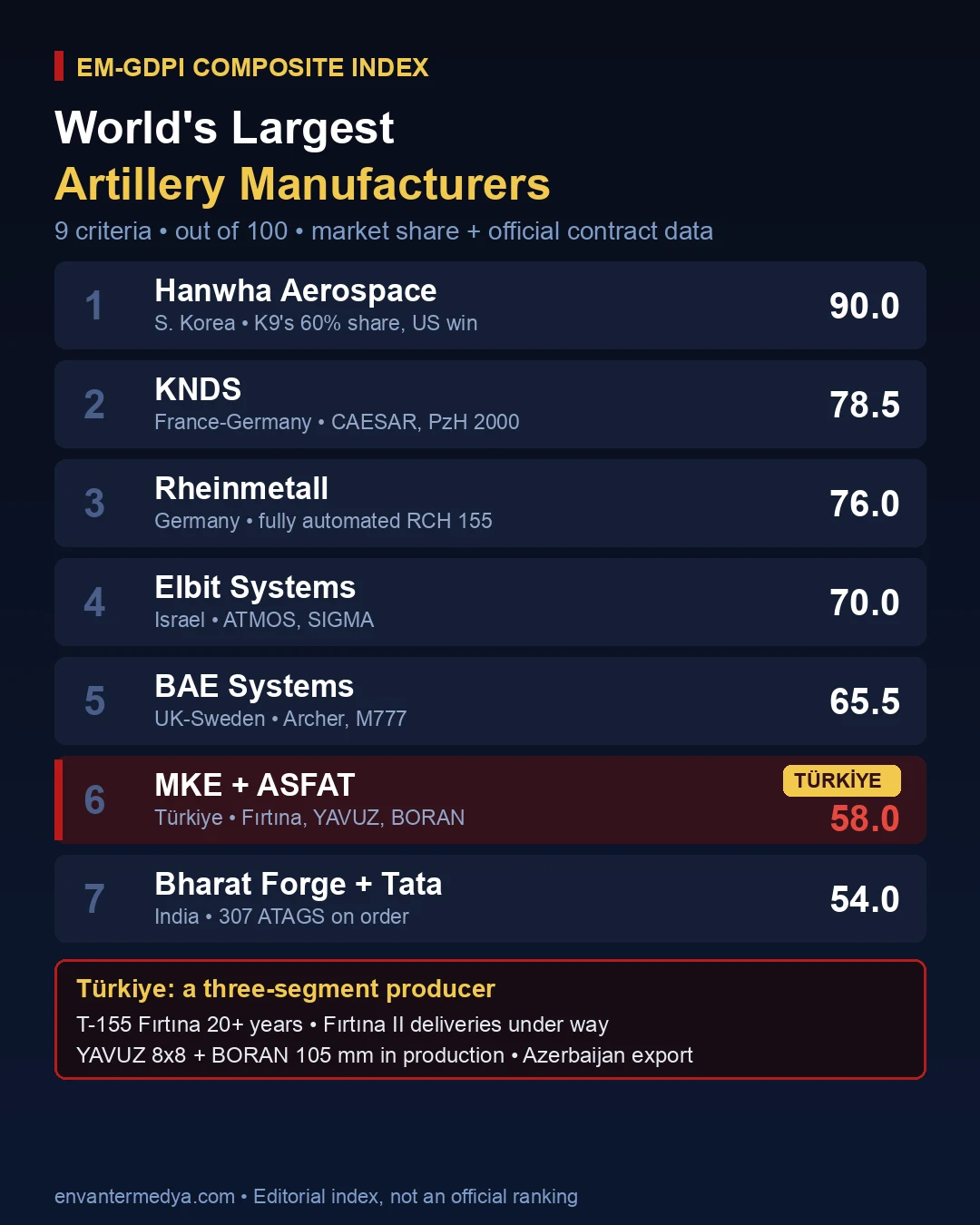
Nine criteria — production 25, revenue 15, exports 15, user countries 10, diversity 10, capacity 10, orders 5, technology 5, growth 5 — feed a 100-point editorial composite. NORINCO and Uraltransmash were not scored because their production data is not transparent — no data, no score.
An editorial composite, not an official ranking. NORINCO and Uraltransmash were not scored. The Turkish program is marked separately.
| Company | Production (25) | Revenue (15) | Exports (15) | Users (10) | Other 5 criteria (35) | TOTAL |
|---|---|---|---|---|---|---|
| Hanwha Aerospace | 22.5 | 12.0 | 15.0 | 10.0 | 30.5 | 90.0 |
| KNDS | 17.5 | 10.5 | 13.5 | 9.0 | 28.0 | 78.5 |
| Rheinmetall | 15.0 | 13.5 | 10.5 | 5.0 | 32.0 | 76.0 |
| Elbit Systems | 15.0 | 10.5 | 12.0 | 7.0 | 25.5 | 70.0 |
| BAE Systems | 12.5 | 12.0 | 9.0 | 6.0 | 26.0 | 65.5 |
| MKE + ASFAT 🇹🇷 | 15.0 | 6.0 | 4.5 | 2.0 | 30.5 | 58.0 |
| Bharat Forge + Tata | 10.0 | 7.5 | 1.5 | 1.0 | 34.0 | 54.0 |
What the index says: Hanwha’s 90 points — among the highest sector scores in this series — rest on near-full marks in the market share-export-user triangle, plus the opened door to America. KNDS ranks on the combat-proven CAESAR and the PzH 2000 legacy; Rheinmetall on the technology leap of the fully automated RCH 155. MKE+ASFAT’s 58 points reflect two decades of uninterrupted production and a three-segment product line (tracked, truck-mounted, light towed) — with the single-country export record (Azerbaijan) marking the clearest path for the score to climb.
Where does Türkiye stand?
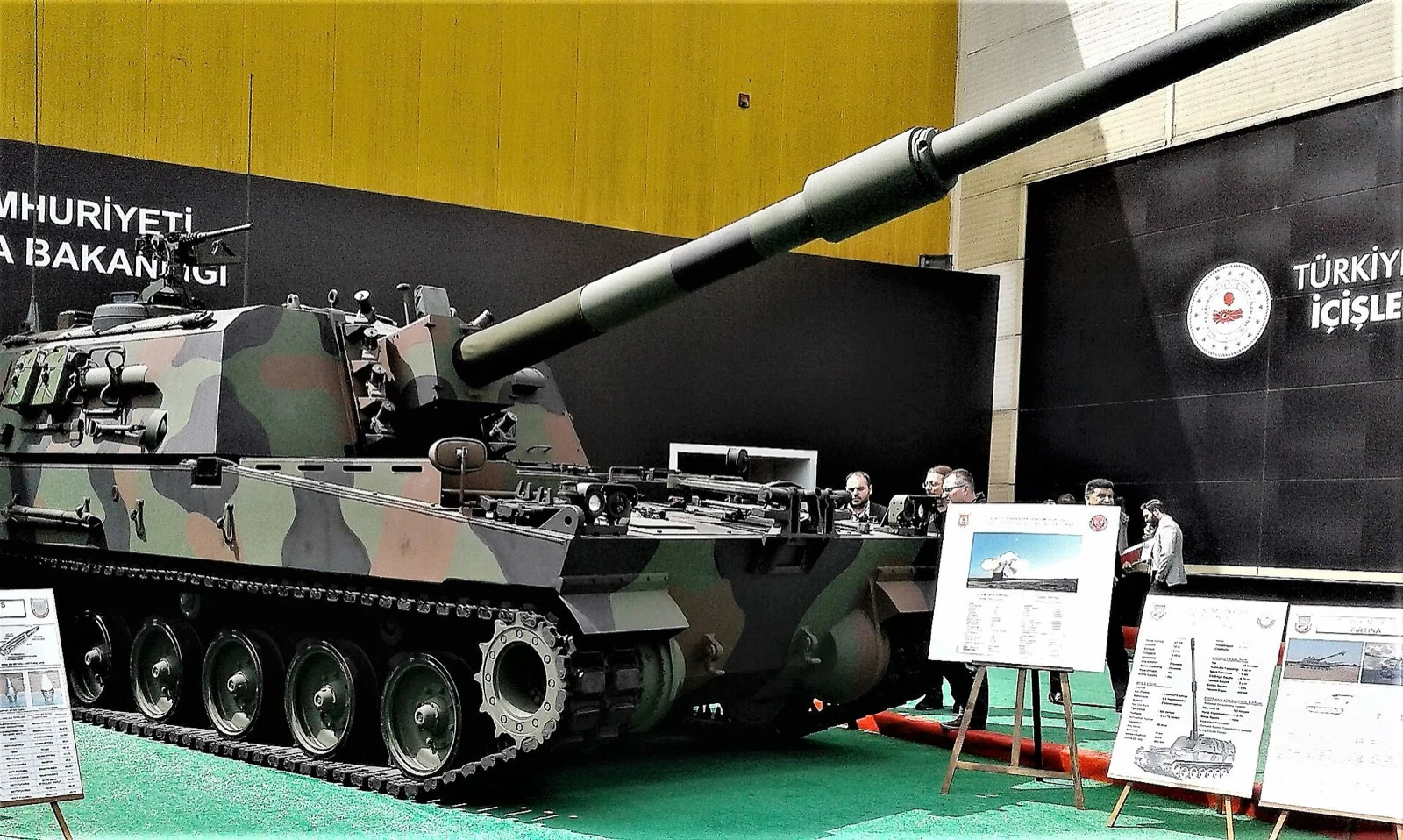
Türkiye is one of its region’s oldest serial artillery producers. The T-155 Fırtına — born of a K9 technology transfer but localized in its barrel, fire control and ammunition — has run for over twenty years; the system exported to Azerbaijan gained combat experience in Karabakh. The new-generation Fırtına II, with a longer barrel, automatic loading and a targeted domestic powerpack, is being delivered to the Land Forces batch by batch. The product line goes beyond one platform: MKE’s BORAN 105 mm light howitzer serves airborne units, and the YAVUZ 8×8 answers the CAESAR class in the truck-mounted segment. On the barrel side MKE is the prime producer of 155 mm guns and their ammunition — a chain we detailed in our ammunition manufacturers file.
Where is Türkiye behind?
Let the data speak: the T-155’s export record is a single country — a clear distance from the K9’s eleven-nation base and CAESAR’s ten-country network. The Fırtına line’s origins lie in a K9 technology transfer, and Türkiye has yet to build the kind of overseas co-production network Hanwha established in Poland. In fully automated turret technology, the RCH 155 has raised the bar. Against that, three data points support optimism: twenty-plus years of uninterrupted production experience, a product line spanning three segments, and a combat-proven system record. Türkiye’s real export muscle sits in the neighboring segment: with the TRLG-230 and SAKARYA multiple rocket launchers, Roketsan holds a growing customer network in guided artillery rockets — covered in our missile manufacturers file.
How this research was prepared
Data year: Order and delivery data from official announcements, January 2024 – August 2026. Scope: Nine groups producing tube artillery (howitzers); multiple rocket launchers are covered in the missile file. Missing data: NORINCO and Uraltransmash production counts are not public and were not estimated. EM-GDPI: Nine criteria scored 0-10 and weighted; relative within the group and editorial.
| Company | Data reliability | Note |
|---|---|---|
| Hanwha, Rheinmetall, Bharat Forge/Tata | A | Official contract announcements current |
| KNDS, Elbit, BAE, MKE/ASFAT | B | Program data partly public; unit breakdown limited |
| NORINCO, Uraltransmash | D | No reliable current data; excluded from the index |
Frequently asked questions
Which company is the world’s largest artillery manufacturer?
Hanwha Aerospace leads by a wide margin in market share, exports and user base: the K9-K10 family holds roughly 60 percent of the mobile artillery market. Hanwha also tops the Envanter Medya composite index.
How many countries operate the K9 Thunder?
Eleven nations, including South Korea, operate or have ordered the K9 — counting technology-transfer derivatives such as Türkiye’s T-155 and India’s K9 Vajra. It is history’s most exported tracked howitzer.
Which howitzer did the US Army pick?
The US Army awarded its next-generation self-propelled howitzer (SPH-M) prototype contract to Hanwha’s wheeled K9MH in August 2026, first tranche about $100 million — beating Elbit America’s SIGMA, the KNDS-Leonardo CAESAR bid, Rheinmetall’s RCH 155 and BAE’s Archer.
How fast is CAESAR production?
KNDS is lifting the CAESAR line from its pre-war two systems a month toward a target of eight — roughly 96 systems a year.
What links the T-155 Fırtına and the K9?
The T-155 emerged from a K9 technology transfer line established in Türkiye; its barrel, fire control and ammunition were localized. It has been in production for over twenty years and was exported to Azerbaijan.
What is different about the Fırtına II?
The Fırtına II is the new generation with a longer barrel, automatic loading and a modern fire-control architecture; deliveries to the Land Forces continue batch by batch.
What is India’s ATAGS order?
Under a ~$800 million contract signed in March 2025, Bharat Forge and Tata will build 307 indigenous ATAGS towed howitzers — the largest artillery order of 2025-26.
What makes the RCH 155 stand out?
Rheinmetall’s RCH 155 claims to be the first serial howitzer able to fire on the move thanks to its fully automated turret; it is in production on German and Ukrainian (54) orders.
What are the YAVUZ and BORAN?
The YAVUZ is MKE’s 155 mm/52-caliber truck-mounted howitzer (CAESAR class); the BORAN is a 105 mm light howitzer for airborne units. Both are in serial production.
How many howitzers do Russia and China build a year?
No reliable public data exists. This research declines to publish unverifiable figures; NORINCO and Uraltransmash were excluded from the index for that reason.
Are multiple rocket launchers in this file?
No — TRLG-230, SAKARYA and HIMARS-class systems are covered in our missile manufacturers file. See the Defense Atlas for platform profiles.
Sources and methodology notes
This study is an editorial research product prepared by Envanter Medya by cross-checking publicly available official company data, institutional reports, contract and delivery records and industry sources. Principal sources:
- Breaking Defense (August 2026) — the US Army’s SPH-M prototype pick and the competing teams
- 19FortyFive (July 2026) — the K9-K10’s ~60% market share and eleven-nation base
- The Defense Post (October 2025) — start of wheeled K9MH production
- CAESAR program records — the production ramp toward eight systems a month
- MKE official data — T-155 Fırtına, Fırtına II, YAVUZ and BORAN programs
- SIPRI Top 100 Fact Sheet (December 2025) — 2024 defense revenues
Last updated: August 24, 2026. This is a living research page, updated as delivery and contract announcements arrive. The next file in the series examines the world’s largest unmanned surface vessel manufacturers. For the full series, see the 2026 Global Defense Industry Report.