





US Navy Refuels an Unmanned Warship at Sea With a Towed Robotic Connector

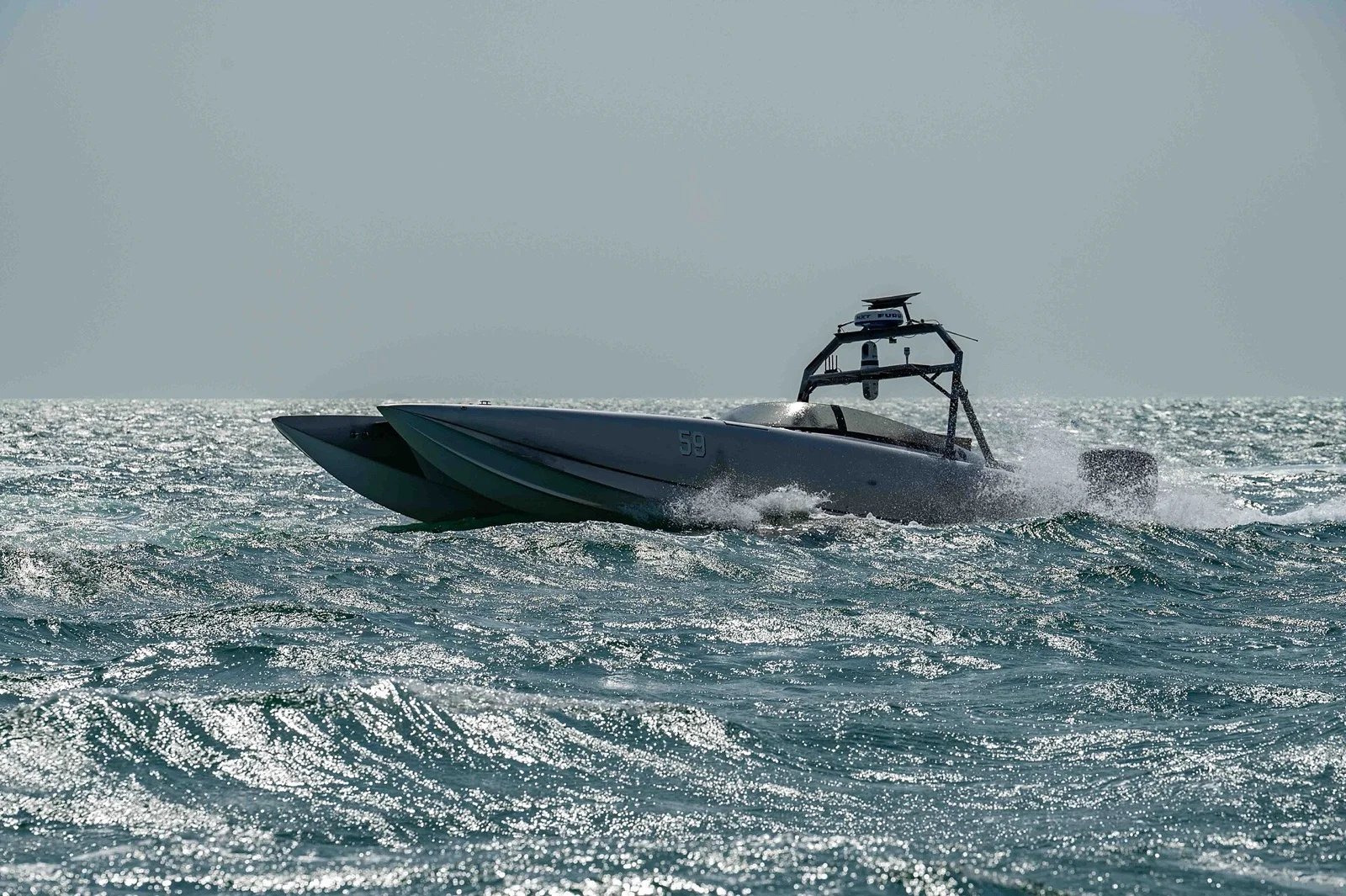
The US Navy has captured, refuelled and released an unmanned warship at sea roughly 100 times using a towed robotic device. Over several days off Virginia, a total of 400 gallons of fuel changed hands. The volume is unremarkable. What it attacks is not: the hardest wall standing in front of robotic fleets is how long an unmanned vessel can stay on station before it has to turn for home.
At a Glance
What happened? An unmanned surface vessel was refuelled at sea through a towed robotic capture and connection device.
Where? Waters off Joint Expeditionary Base Little Creek-Fort Story, Virginia.
When? The at-sea event took place on 11 August 2026, spread over several days with pierside trials.
Who ran it? Naval Air Warfare Center Weapons Division’s Blue Water Instrumentation programme, with industry partners MARTAC and Sealartec and support from Dahlgren and Carderock.
How much? About 100 connection cycles, 400 gallons (roughly 1,500 litres) of fuel in total.
How fast was it built? Seven months from concept to at-sea testing.
Why Turkey should care: With ULAQ, MARLIN and SANCAR, Turkey moved early on armed unmanned surface vessels. The next threshold is keeping those hulls out of sight of land.
For years the conversation about unmanned surface vessels revolved around two questions: how fast does it go, and what can you bolt onto it? A demonstration off Virginia has put a third and arguably decisive question on the table — what happens when the tank runs dry? The Blue Water Instrumentation (BWI) programme, part of the Naval Air Warfare Center Weapons Division, used a robotic device towed behind a training support ship to repeatedly capture an unmanned boat at sea, pass it fuel, and let it go again.
On paper the numbers are modest. Across the trial, a total of 400 gallons — around 1,500 litres — was transferred, barely more than a single fill for a medium unmanned boat. But the measure of this demonstration is not the fuel; it is the repetition. The robotic device completed about 100 connection cycles. That is exactly what an engineering trial is meant to prove. A single success can be luck. A hundred consecutive successes is a process.
Spencer Holloway, director of BWI’s Future Capabilities Office, framed the rationale in a single sentence: every time an unmanned vessel must return to port for fuel, the Navy loses persistence, reduces coverage and redundancy, and interrupts the mission. The arithmetic behind that line is unforgiving. The further the operating area sits from shore, the larger the share of total mission time an unmanned vessel spends simply transiting. Past a certain radius, the boat spends longer travelling than working.
Ronald Raymer, branch head for capability, innovation, science and technology integration at US Fleet Forces Command, points to the other side of the coin. Unmanned vessels that gain endurance can be pushed into higher threat areas without risking manned ships and their crews. Refuelling at sea, in other words, keeps the robot not only out longer but further forward.
A robot arm on a tow line: how the TCCD works
At the centre of the system sits a piece of hardware called the TCCD — a towable capture and connection device. Its logic echoes the probe-and-drogue method used for aerial refuelling, but on the surface of the water: the replenishing ship tows the device astern, the unmanned boat comes up from behind and latches on, and once the transfer is complete it disconnects.
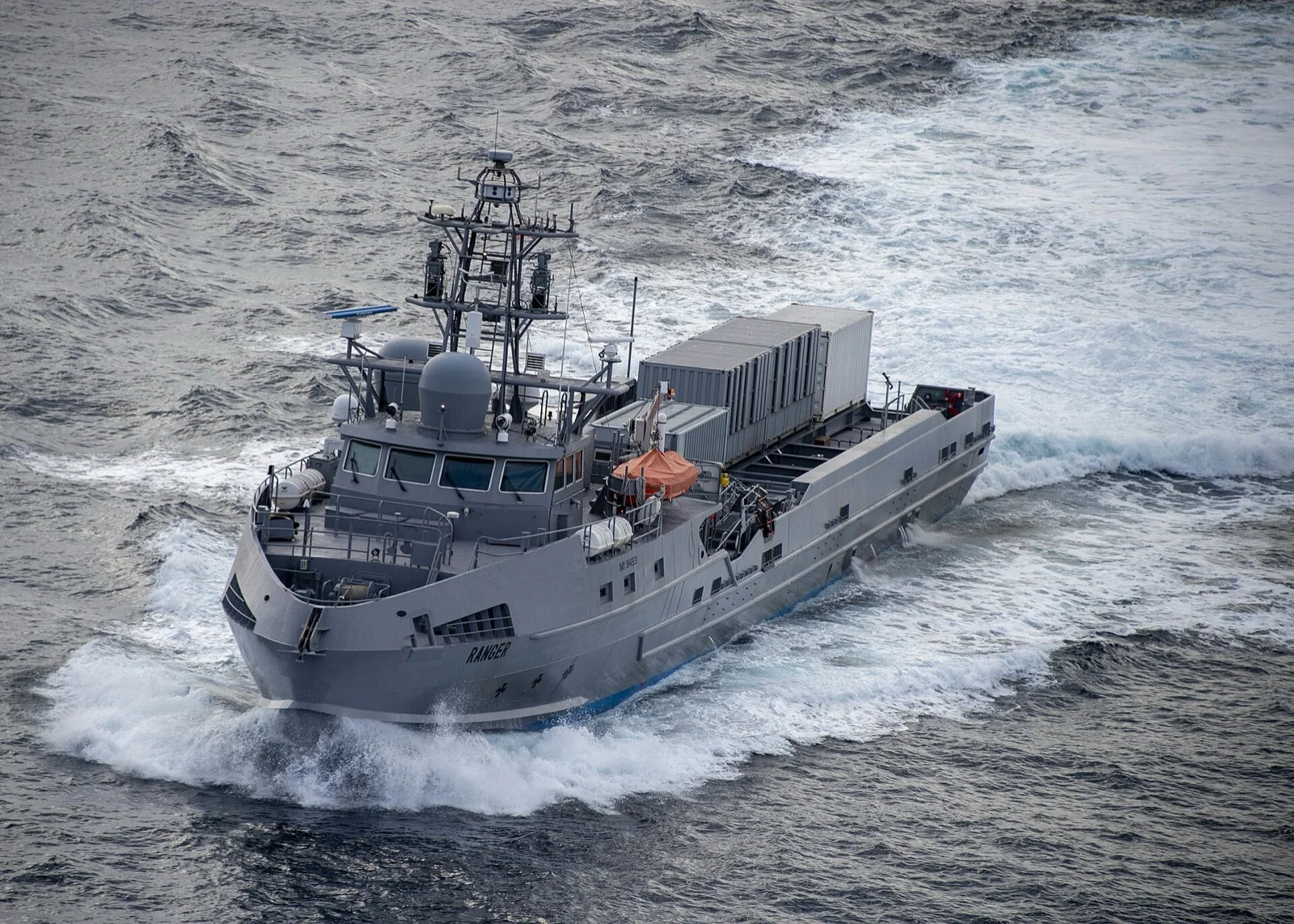
The towing duty fell to the training support vessel USNS Vindicator (TSV 5), while the receiving platform was a Navy-owned T38 unmanned surface vessel built by MARTAC. What reads like a dry equipment list actually encodes a critical design choice: the capability is tied not to a purpose-built and expensive tanker, but to any floating platform able to tow a device astern. That makes spreading the capability across a fleet dramatically cheaper.
For now the process is not fully autonomous; approach and capture are remotely managed. Amitai Peleg, chief executive of Sealartec, says the roadmap moves toward a fully autonomous architecture in which the unmanned vessel approaches the refuelling device on its own, communicates through automated protocols and guides itself into position using manoeuvring algorithms. Taking the operator out of the loop is not an aesthetic preference here. If each of a hundred cycles needs a human at a console, no scalable logistics chain can be built on top of it.
The programme’s next milestone is an end-to-end demonstration in which rendezvous, approach, capture, fuel transfer, disconnection and return to mission are executed as a single unbroken evolution. Clear that bar and the unmanned boat stops being a vehicle that goes home when it runs low, and starts being a permanently available element of the fleet.
Seven months: the speed is the message
The most striking aspect of the trial may be chronological rather than technical. The Navy-industry team went from concept to real at-sea testing in seven months. In defence acquisition, moving a capability from paper to water is usually measured in years. Some of that speed is explained by the small, experimental scale of the effort — but it also reflects a deliberate method.
That method is to put the simplest working version in the water rather than specify the final solution up front, then add layers. Here, the robotic arm was hung off an existing training ship, an existing unmanned boat was used, and autonomy was skipped in the first round. The result is not an elegant system, but a data set gathered a hundred times in real conditions. This is the defining trend in military innovation in recent years: the flawless prototype is giving way to the rough one, tested early and often.
The approach also fits where the US Navy’s unmanned surface programmes are heading. The service has spent years wrestling with cost and maturity questions on its large unmanned vessel efforts, while a nimbler line advances in the small and medium classes, layering military payloads onto commercial hulls. At-sea refuelling is a multiplier for that second line in particular: the small boat inherits the reach of the big one.
There is a second context worth noting — instrumentation. BWI’s core business is wiring up sea ranges for hypersonic and long-range precision fires testing. In those trials, unmanned boats act as sensor carriers and have to hold station through the firing window. The first customer for at-sea refuelling, then, is the test infrastructure itself. But once a capability matures, warfighting use tends to follow on its own.
The demonstration at a glance
| Item | Detail |
|---|---|
| Date | 11 August 2026 at sea; several days including pierside trials |
| Location | Off Joint Expeditionary Base Little Creek-Fort Story, Virginia |
| Receiving vessel | T38 unmanned surface vessel (MARTAC-built, Navy-owned) |
| Towing platform | USNS Vindicator (TSV 5) training support vessel |
| Device | TCCD — towable capture and connection device |
| Connection cycles | Approximately 100 |
| Fuel transferred | 400 gallons in total (~1,500 litres) |
| Autonomy level | Remotely operated; fully autonomous architecture is the goal |
| Development time | Seven months from concept to trials |
| Lead organisation | NAWCWD / Blue Water Instrumentation |
| Supporting bodies | NSWC Dahlgren, NSWC Carderock, PMS 420 |
| Industry partners | MARTAC (Maritime Tactical Systems), Sealartec |
| Next step | End-to-end autonomous refuelling demonstration |
T38 Devil Ray: the boat that took the fuel
The T38 at the centre of the trial is the medium-large member of the Devil Ray family built by Florida-based MARTAC (Maritime Tactical Systems). At roughly 11.6 metres (38 feet), the craft is built on a twin-sponson hull form inherited from offshore powerboat racing, designed to keep the hull planted and stable even at high speed.
On performance, the T38 cruises at around 25 knots and, depending on powertrain and load, can burst to 80 knots — close to 145 km/h, a figure that belongs to racing boats rather than warships. It is designed to operate in sea states 1 to 5 and survive sea state 7, with a payload capacity of roughly 1,800 kilograms, enough for electro-optical surveillance, electronic warfare or weapon fits.
The Devil Ray family has been in the field for years with US Navy unmanned task groups in the Middle East and across a range of exercises, in surveillance and reconnaissance roles as well as armed configurations. In short, the T38 is not a laboratory prototype but a platform with an operational record — and that is precisely where the significance of this trial lies. The novelty is not the boat; it is that the boat can now be fuelled at sea.
The powertrain can be configured with inboard or outboard options, in diesel or petrol. That flexibility matters for the refuelling scenario: the closer the fuel type sits to fleet standard, the more ordinary the replenishing ship can be. The end state envisaged is an unmanned vessel able to take fuel from any auxiliary — and eventually from another unmanned vessel.
Why persistence is the fleet’s real currency
The most common error in debates about unmanned systems is to measure capability by the platform itself. In naval warfare what decides outcomes is not only what a vessel can do but how long it can be there. The number of hulls needed to hold a surveillance line unbroken is inversely proportional to the endurance of a single hull: double the time on station and you roughly halve the fleet required to hold the same line.
That translates directly into budget. At-sea refuelling means covering more water with the same number of unmanned vessels, or the same water with fewer. And the savings are not confined to platform cost: every return to port draws on pier capacity, maintenance crews, fuelling infrastructure and navigational safety margins.
The second dimension is operational. A vessel heading home does not merely leave a gap; it creates a predictable pattern. Once an adversary has worked out the replenishment cycle, they have also worked out the hours in which the line goes thin. At-sea refuelling breaks that rhythm: the vessel now tops up when and where the mission dictates, not when shore infrastructure demands.
The third and perhaps most consequential effect is that refuelling turns unmanned vessels into genuine fleet units. Today robotic boats are mostly conceived for short, shore-tethered tasks. A boat that can take fuel at sea can join the same operational rhythm as manned ships — moving with the group, folded into the same cycle. That is the threshold that moves an unmanned vessel from “auxiliary equipment” to “ship”.
The Turkish view: the weapon is solved, is the reach?
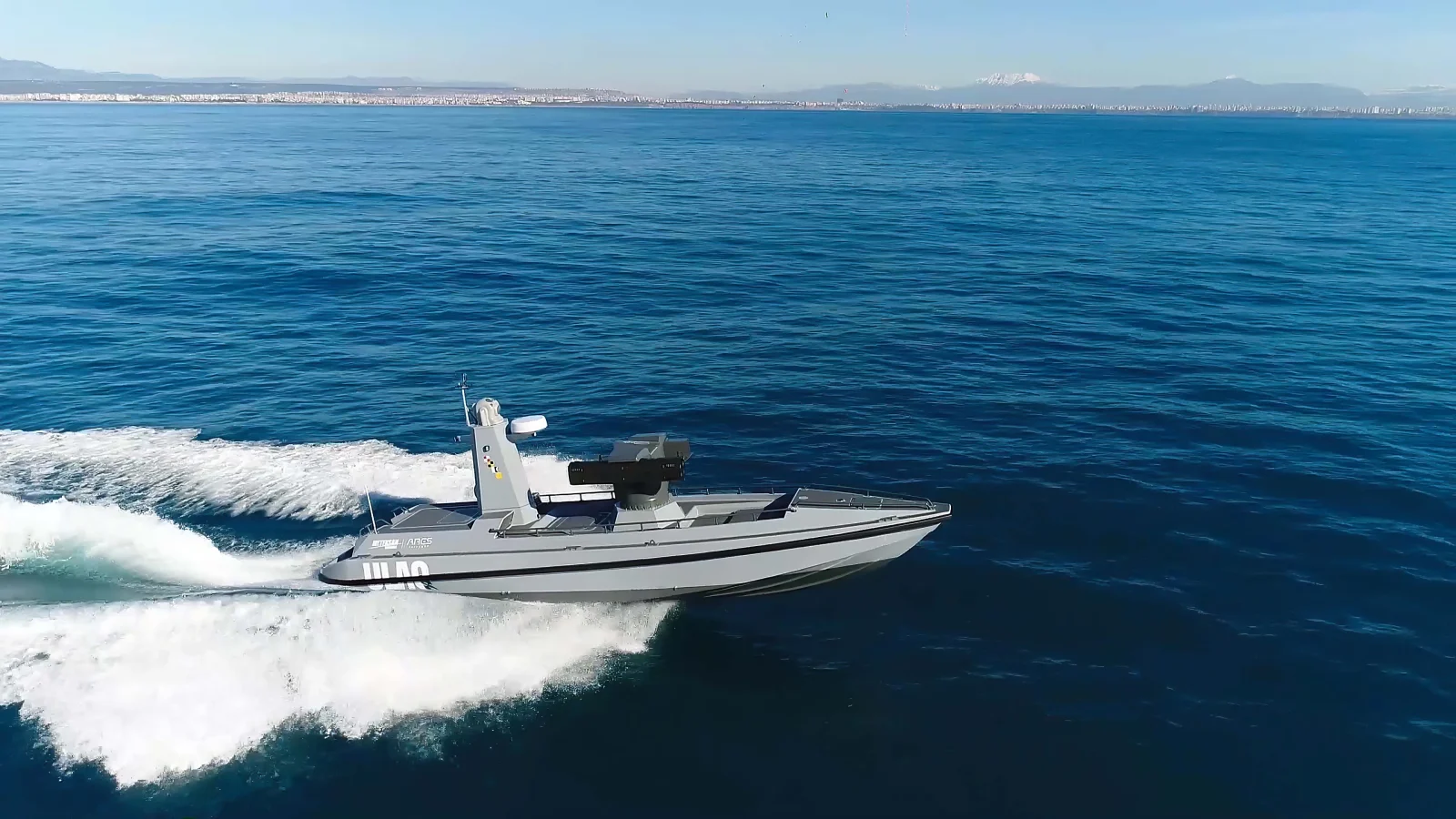
Turkey was among the first movers globally in armed unmanned surface vessels. ULAQ, developed by ARES Shipyard with Meteksan, went into the record as the first Turkish unmanned surface vessel to fire a guided munition at sea. MARLIN, a joint product of Sefine Shipyard and ASELSAN, has taken part in NATO exercises. HAVELSAN’s SANCAR family is pushing on swarming behaviour and autonomous mission management. Turkey’s accumulated experience in this field is neither new nor shallow.
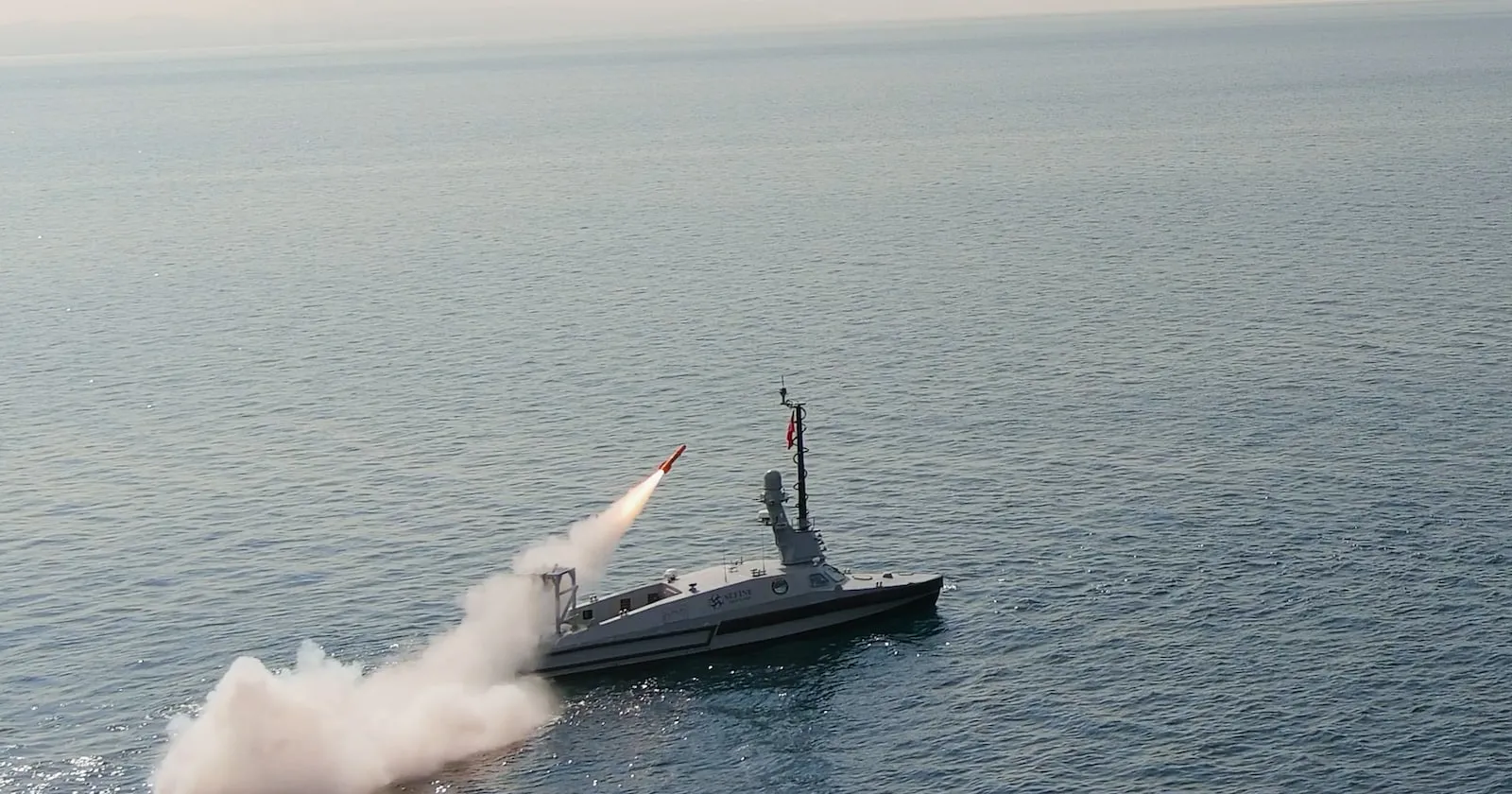
That said, the design logic behind Turkish unmanned surface vessels has largely assumed littoral operations. In the Aegean and Eastern Mediterranean the operating radius is comparatively short and base support is close at hand, so the persistence problem does not bite as hard as it does at Pacific scale. The scales and threat environments differ enough that a direct comparison between the two programmes would mislead. But as the Turkish Navy’s horizon widens to take in Libya, Somalia and the Black Sea, the same problem will arrive at Turkey’s door.
Here Turkey holds an unusual card: TCG Anadolu. Conceived to operate unmanned aircraft, the ship could serve the same function as a floating base for unmanned surface vessels — launched and recovered through the well deck, maintained and fuelled on board. Turkey’s answer to endurance may therefore run through a mothership rather than a towed connector. The American robotic arm and the amphibious-basing approach are two answers to one question, and which fits better depends on geography and mission profile.
The transferable lesson lies in method rather than hardware. Getting a capability into the water in seven months requires an acquisition culture willing to combine off-the-shelf components and to accept imperfection in the first round. Turkish industry has demonstrated that speed repeatedly in unmanned aviation. At sea, the next threshold is not designing another hull but building the autonomous logistics chain that extends the ones already afloat. For a programme that has solved the weapon, the next exam is always reach.
What comes next
The next objective BWI has stated is an end-to-end demonstration in which the unmanned vessel runs the whole chain itself, from rendezvous to return. Clear that and the limit on an unmanned boat’s time on station stops being tank volume and becomes maintenance intervals and the capacity of the replenishing ship.
The longer-term question follows naturally: can the replenishing ship be unmanned too? Because the robotic connector is towed, and therefore does not require a purpose-built vessel, that possibility stays technically open. A fully unmanned replenishment chain would, for the first time, move naval logistics into a domain that carries no human risk. Those 400 gallons off Virginia are a candidate for the first frame of that picture.
Sources
- Naval News — “U.S. Navy Demonstrates USV Refueling At Sea Using Robotic Towed Connector”, 4 September 2026
- DVIDS — Naval Air Warfare Center Weapons Division, Blue Water Instrumentation release
- MARTAC (Maritime Tactical Systems) — Devil Ray T38 product documentation
- Sealartec — autonomous launch, recovery and connection systems product pages
- ARES Shipyard, Meteksan Defence, ASELSAN, Sefine Shipyard and HAVELSAN corporate publications