





US Army Signs First-Ever Laser Weapon Production Contract: $464.8M for LOCUST X3

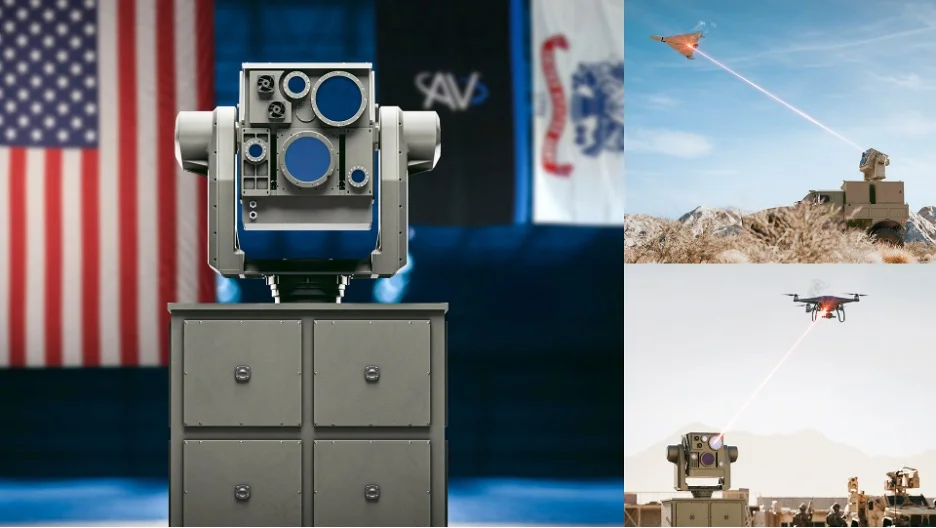
For years, high-energy lasers have lived in the awkward space between promise and delivery — impressive at demonstrations, fragile in the field, never quite reaching a production line. That changed this week. The U.S. Army has committed $464.8 million to AeroVironment for its LOCUST X3 laser weapon under the Enduring-High Energy Laser (E-HEL) programme, the first time a directed-energy weapon has been placed on contract for series production in American history.
What the deal covers
The award was made through an Other Transaction Agreement, the flexible contracting mechanism the Pentagon uses to move faster than conventional procurement allows. AeroVironment says it will deliver “dozens” of LOCUST X3 systems over the coming years, along with sustainment support and operator training.
Company leadership framed the moment in unusually direct terms. Chief Executive Wahid Nawabi called the award “a defining moment not only for AV, but for the future of modern defense.” John Garrity, who leads the relevant business unit, pushed back on the perception that lasers remain experimental: “E-HEL is not a future capability, it is a production-ready system, built on proven technology.”
Inside LOCUST X3
LOCUST X3 is a 30-kilowatt class laser designed to be platform-agnostic. It can ride on a Joint Light Tactical Vehicle, sit in a palletised configuration, or — as an option — be fitted to the Infantry Squad Vehicle. Its target set is Group 1 through 3 unmanned aircraft: everything from a commercial quadcopter carrying a grenade to a medium-sized fixed-wing drone in the several-hundred-kilogram range.
The economics behind that target set explain the Army’s urgency. Shooting down a drone that costs a few thousand dollars with an interceptor missile costing several hundred thousand is a trade no defender wins over time. A laser drawing electrical power reverses that arithmetic entirely, with a cost per engagement measured in dollars rather than six figures, and no magazine to run dry so long as power holds.
The limitations are equally well understood. Fog, dust and heavy precipitation scatter the beam. The weapon must hold its aimpoint on a moving target for seconds at a time. And thermal management — keeping the system cool enough to fire repeatedly — has historically been where laser programmes stumble.
From prototype purgatory to production
The Army has fielded laser prototypes before. Stryker-mounted DE M-SHORAD systems and palletised P-HEL units went to units in the Middle East in small numbers, but none crossed into production. Feedback from those deployments pointed consistently to cooling, power management and maintenance burden rather than to the beam itself.
The word “enduring” in the programme title is a deliberate answer to that record. What the Army is buying now is not a demonstration but a fielded capability with a logistics tail behind it. AeroVironment tested LOCUST at White Sands Missile Range and announced a $30 million investment in its Albuquerque, New Mexico facility in March 2026 — capacity built ahead of the contract rather than after it.
A drone maker that shoots down drones
AeroVironment spent decades known for small unmanned aircraft: Raven, Puma, Wasp, and the Switchblade loitering munition family. Its acquisition of BlueHalo brought directed-energy, space and counter-UAS technology into the portfolio, LOCUST among them. The result is a company selling both the threat and the answer to it — a symmetry that says a good deal about where the counter-drone market is heading.
The wider picture
Turkey is working the same problem from a different direction. ASELSAN’s GÖKBERK combines a laser effector with electronic warfare on a mobile platform, while its earlier ARMOL system was built to neutralise improvised explosive devices at range. Turkish counter-drone practice today leans heavily on electronic warfare and gun-based short-range air defence.
What the E-HEL award signals, for allies and competitors alike, is that the drone-swarm problem is now considered permanent enough to justify permanent hardware. Delivery schedules and unit fielding plans have not been released, and the real test will come in desert dust and coastal humidity rather than at a proving ground.
Sources
- AeroVironment official press release, 2 September 2026
- Defence Industry Europe, 3 September 2026
- Breaking Defense, 2 September 2026