Kuwait’s Military Strength: Tanks, Fighter Jets and Missiles (2026)

Kuwait’s military inventory is one of the clearest cases of how a small country builds a force on a large budget. With roughly 17,500 active personnel the military is among the region’s smallest in scale, yet defence spending per capita ranks among the world’s highest. The key to that picture lies in 1990: the Iraqi invasion and the liberation campaign that followed permanently reshaped Kuwait’s approach to defence. Today the country builds its inventory both from high-quality Western platforms and from alliance relationships, while its own defence industry has not moved beyond maintenance and sustainment.
At a Glance
- Active personnel: ≈ 17,500 (National Guard separate ≈ 6,600)
- Main battle tanks: ≈ 220 (M1A2K Abrams)
- Military aircraft (total): ≈ 130
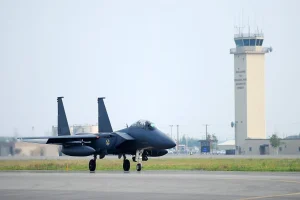
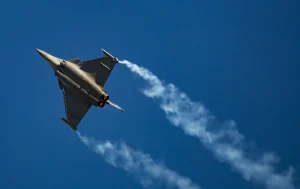
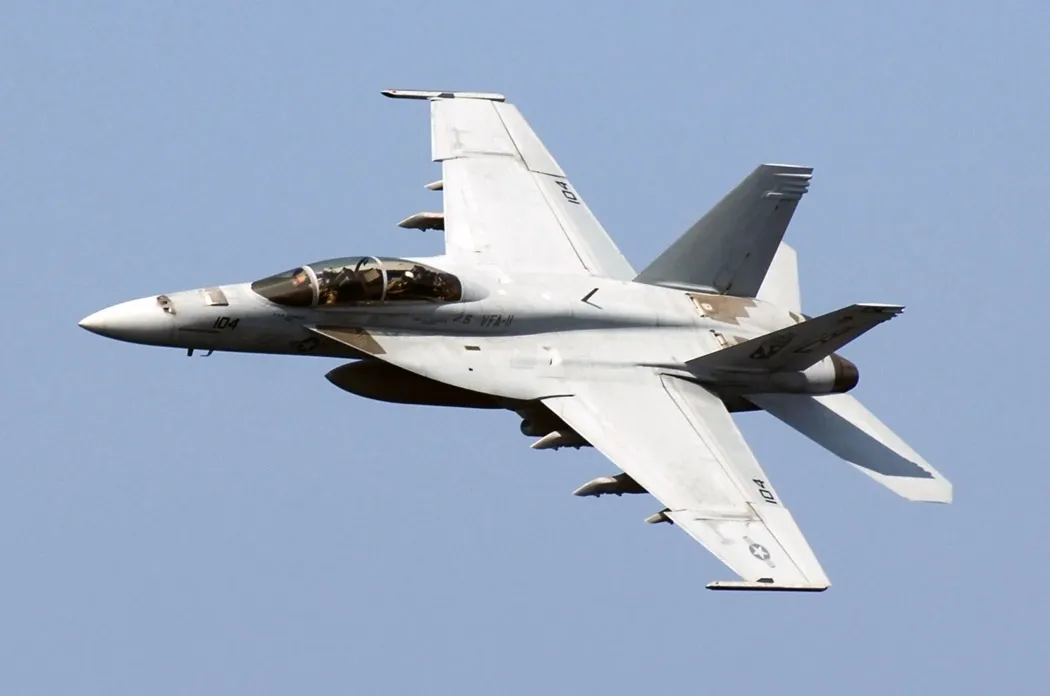
- Key fighter aircraft: F/A-18E/F Super Hornet and Eurofighter Typhoon
- Defence spending: In the 6% of GDP band; among the world’s highest per capita
- Submarines / aircraft carriers: None — the navy is coastal-defence oriented
Note: The inventory figures below are approximate values drawn from open sources such as Global Firepower, the IISS Military Balance and SIPRI.
About the Kuwait Armed Forces
The Kuwait Military Forces comprise Army, Air Force and Navy, joined by the Kuwait National Guard — a separate institution reporting directly to the Emir. Active strength stands at around 17,500, with the National Guard at some 6,600. Conscription was reinstated in 2017; even so, in a country where roughly a third of the population holds citizenship, manpower remains the structural constraint on the size of the inventory. Kuwait therefore favours a force structure built on quality and alliance rather than numbers.
The doctrine was shaped by the 1990-1991 experience. After a coalition liberated the country from Iraqi occupation, Kuwait signed a defence cooperation agreement with the United States in 1991 and was designated a Major Non-NATO Ally in 2004; facilities such as Camp Arifjan and Ali Al Salem Air Base host US forces. Within the same framework, defence cooperation agreements were also signed with the United Kingdom, France, Russia and China. Kuwait is likewise part of the Gulf Cooperation Council’s joint defence structure and of the regional missile-defence architecture.
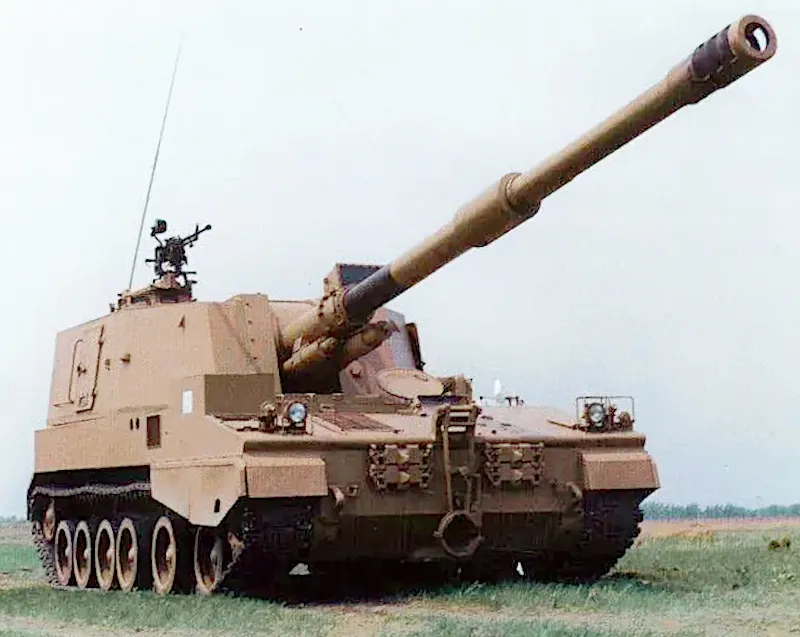
What stands out in procurement is multi-sourcing. Abrams tanks, Apache helicopters, Patriot batteries and Super Hornets came from the United States; Eurofighter Typhoons, Caracal helicopters and Desert Warrior armoured vehicles from Europe; PLZ-45 howitzers from China; BM-30 Smerch rocket launchers from Russia. As the first export customer for the PLZ-45, Kuwait was also decisive in bringing Chinese artillery into the Gulf. Its domestic defence industry, by contrast, is not mature enough to build platforms; capacity is concentrated in maintenance, repair and sustainment. That leaves the sustainability of the inventory largely dependent on relationships with foreign suppliers.
Land Forces Inventory
| System type | Est. quantity |
|---|---|
| Main battle tanks (M1A2 Abrams, the whole fleet upgraded to M1A2K standard; the Yugoslav-built M-84s are largely in storage) | ≈ 220 |
| Armoured fighting vehicles (Desert Warrior, BMP-2 and BMP-3, M113, Pandur and Fahd-class wheeled vehicles) | ≈ 1.000 |
| Howitzers — self-propelled and towed (Chinese-built PLZ-45 155 mm, M109A3, towed M114 and mortar systems) | ≈ 80 |
| MLRS (Russian-built BM-30 Smerch 300 mm) | ≈ 27 |
Air Force Inventory
| Platform | Est. quantity |
|---|---|
| Total military aircraft | ≈ 130 |
| Fighter and attack aircraft — fleet in renewal: 28 F/A-18E/F Super Hornets and 28 Eurofighter Typhoons are replacing the F/A-18C/D Hornets | ≈ 60 |
| Helicopters (AH-64D Apache attack, H225M Caracal, UH-60M Black Hawk, SA-342 Gazelle, AS332 Super Puma) | ≈ 60 |
| Transport, tanker and training aircraft (C-17 Globemaster III, KC-130J, L-100-30, Hawk Mk64, Shorts Tucano) | ≈ 25 |
Missile and Air-Defence Systems
| System | Type / Note |
|---|---|
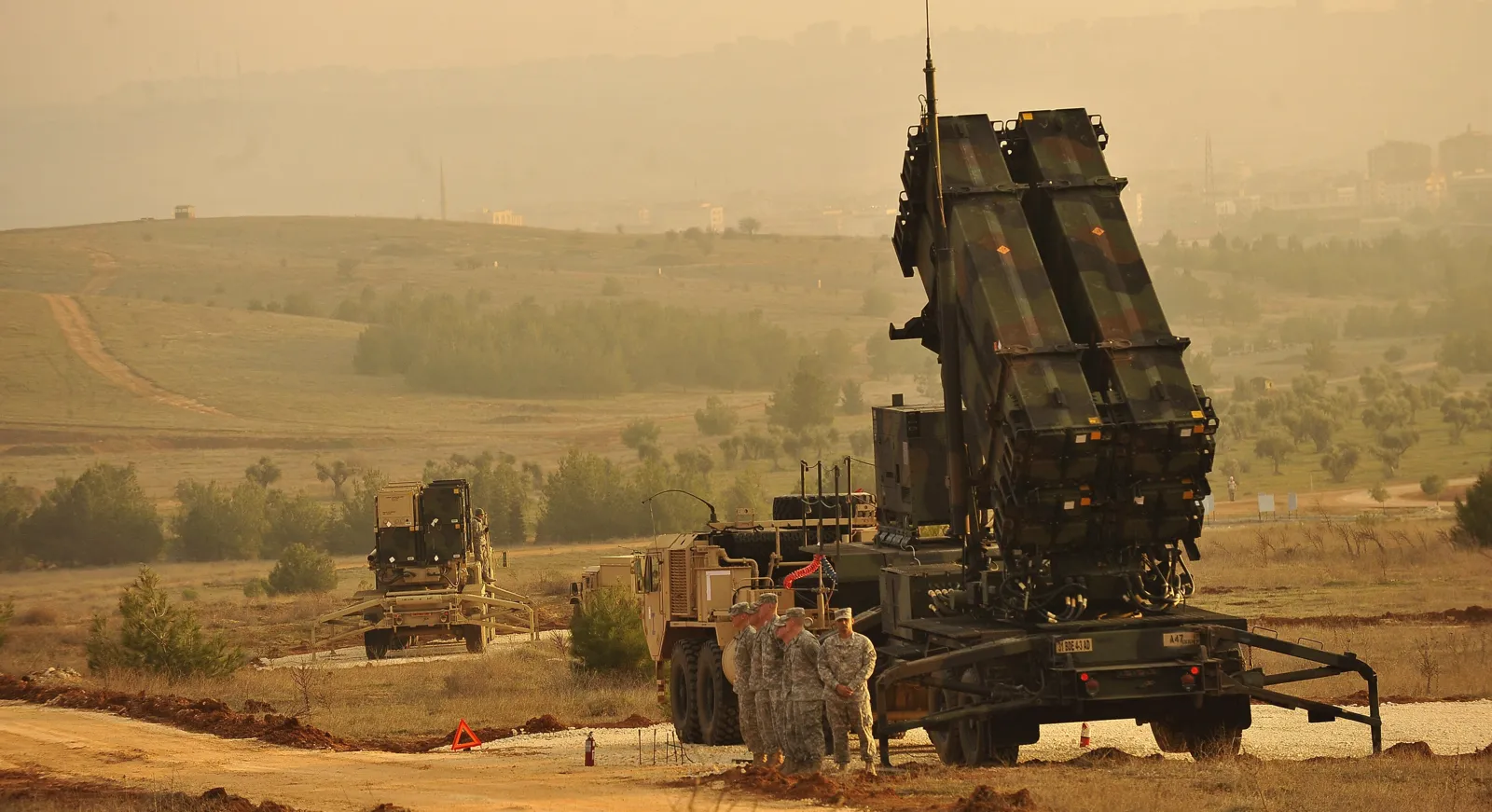
| Patriot PAC-2 GEM-T and PAC-3 MSE | The upper tier of air and missile defence, tied into a shared early-warning architecture with the United States |
| Skyguard-Aspide, Starburst and man-portable air-defence systems | The short-range and point-defence layer, critical to protecting oil facilities |
| AGM-84 Harpoon anti-ship missile and SLAM-ER cruise missile | The stand-off strike capability, entering service alongside the Super Hornet fleet |
| Ballistic missiles and indigenous missile production | None — strike power rests entirely on aircraft and helicopter platforms |
Naval Power
| Class / Type | Est. quantity |
|---|---|
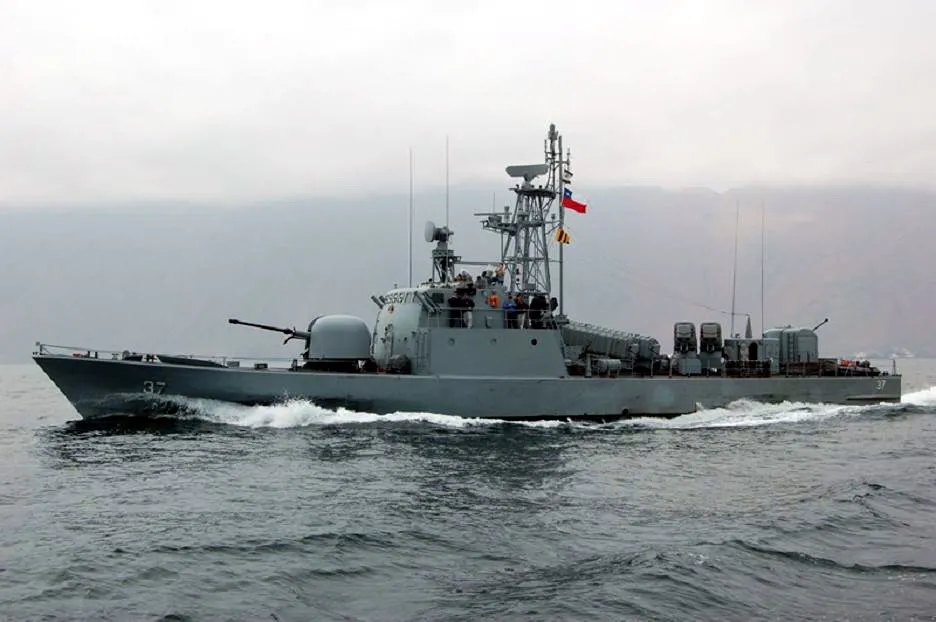
| Missile boats (Um Almaradim / P-37 BR class, armed with Sea Skua anti-ship missiles) | ≈ 8 |
| Patrol boats and fast attack craft (Istiqlal FPB-57, Al Sanbouk TNC-45 and coast guard craft) | ≈ 40 |
| Amphibious and logistics element (landing craft and support vessels) | ≈ 10 |
| Frigates / corvettes / submarines | None — the navy is focused on coastal defence and maritime security |
The Turkey Angle: Turkish Defence Industry
There is no publicly documented major defence platform contract between Turkey and Kuwait, which means the relationship has to be described realistically as a potential market. The historical bond, however, is not weak: during the 1990 Iraqi invasion Turkey closed the Kirkuk-Yumurtalik oil pipeline, delivering one of the most concrete elements of the embargo on Baghdad, and allowed coalition air assets to operate from Incirlik during Operation Desert Storm. The position Turkey took on the road to Kuwait’s liberation sits at the base of the trust between the two countries.
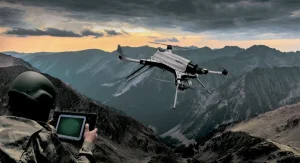
Kuwait’s own procurement record shows there is no doctrinal barrier to Turkish systems. A country hosting US bases has still bought PLZ-45 howitzers from China, BM-30 Smerch launchers from Russia and Typhoons from Europe — meaning procurement is not tied to a single axis. And the real gaps in the inventory overlap with the areas where the Turkish defence industry is strong. Kuwait has no visible medium-altitude long-endurance unmanned aircraft fleet in open sources, yet persistent surveillance of the northern border, the waters around Bubiyan and Failaka islands, and critical oil facilities such as Burgan and Al-Ahmadi is precisely the work of that class of platform. The Bayraktar TB2 and Akinci and the TUSAŞ ANKA answer that requirement directly.
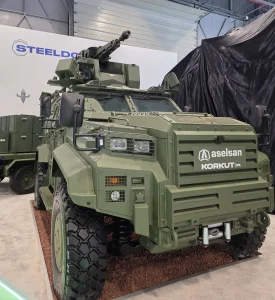
The second area of overlap is low-altitude air defence and counter-drone capability. As the threat to oil infrastructure from unmanned aircraft and cruise missiles has become clearer across the Gulf in recent years, a dense and affordable layer beneath upper-tier systems such as Patriot has become necessary. ASELSAN’s KORKUT and GÜRZ systems, its electronic-warfare-based counter-drone solutions, and ROKETSAN’s short-range air-defence missiles address exactly that gap. The third area is naval: the Kuwaiti navy has no frigates and rests entirely on boat-class platforms, with the Um Almaradim class in service since the late 1990s. Turkish shipyards export in precisely that class; the fleet of boats built in Antalya for the Qatari coast guard is a concrete precedent already delivered in the Gulf.
The strengthening of Gulf precedents in recent years shifts the picture in Turkey’s favour. Qatar has taken Bayraktar TB2s as well as BMC-built armoured vehicles into its inventory and hosts Turkey’s Tariq bin Ziyad base; Saudi Arabia signed an agreement with Baykar covering Akinci production in 2023; the United Arab Emirates agreed with Baykar on unmanned aircraft procurement in the same period. Kuwait is thus left as one of the few Gulf states without a publicly documented major contract with the Turkish defence industry. The cards Turkey plays in this market rest on real axes: an export regime free of political conditionality, cost-effectiveness, openness to technology transfer and joint production, and rapid delivery schedules. Given that Kuwait’s budget is strong but its decision-making cautious, what can realistically be expected in the short term is not a large platform order but a limited opening in areas such as unmanned systems and air defence.
Frequently Asked Questions
How many tanks does Kuwait have? Kuwait has roughly 220 M1A2 Abrams main battle tanks in its inventory. The entire fleet was upgraded to the M1A2K standard under a contract signed in 2016. Most of the M-84 tanks acquired from Yugoslavia in the mid-1990s have been withdrawn from active service and held in storage. Kuwait does not manufacture tanks; sustaining the fleet depends on a US-centred supply and maintenance chain.
Which combat aircraft does Kuwait operate? The backbone of the Kuwait Air Force was for a long time the F/A-18C/D Hornet. The fleet is now in a twin-track renewal: 28 F/A-18E/F Super Hornets from the United States and 28 Eurofighter Typhoons via Italy, with deliveries beginning in 2021. For an air arm this small to run two separate Western fighter lines in the same period is a rare choice worldwide — it means both a leap in capability and a high sustainment bill.
What air-defence systems does Kuwait have? The upper tier is formed by Patriot batteries, with PAC-2 GEM-T and PAC-3 MSE interceptors in the inventory and the system tied into an early-warning architecture shared with the United States. The lower tier comprises Skyguard-Aspide systems, Starburst and man-portable air-defence missiles. Kuwait produces no air-defence system of its own and holds no ballistic missiles.
How strong is the Kuwaiti navy? The Kuwaiti navy is a small force built for coastal defence and maritime security. It has no frigates, corvettes or submarines. Its strike elements are Um Almaradim-class missile boats armed with Sea Skua anti-ship missiles, together with fast attack craft such as Istiqlal and Al Sanbouk, backed by coast guard boats and landing craft. The shallow waters of the northern Gulf are one of the geographic factors that favour boat-class platforms over large warships.
Is there defence cooperation between Kuwait and Turkey? No concluded major platform contract appears in open sources; as of today the relationship is that of a potential market. That said, Kuwait’s multi-source procurement record and the gaps in its inventory in unmanned aircraft and low-altitude air defence create a genuine opportunity for Turkish systems. The agreements reached with Qatar, Saudi Arabia and the United Arab Emirates have also built a strong chain of precedent in the Gulf.
Bottom Line
Kuwait is a military defined not by scale but by quality and by alliance. Some 220 upgraded Abrams tanks, two separate Western fighter lines at once and a Patriot layer show the ceiling a small country can reach with a large budget. The weak links are equally clear: a manpower pool of 17,500, a defence industry unable to build platforms, a navy without frigates, and the burden of sustaining two different fighter fleets simultaneously. The lesson left by the 1990 invasion pushed Kuwait to seek the final layer of deterrence in its relationship with the United States, and that choice is visible in every layer of the inventory. For Turkey, Kuwait is a market with no publicly documented major contract yet, but one that grows in importance as Gulf precedents accumulate; the most realistic entry points are unmanned air systems, counter-drone capability and boat-class naval platforms.