Israel-Germany loitering-munition push: Elbit and Diehl pitch SkyStriker to the Bundeswehr

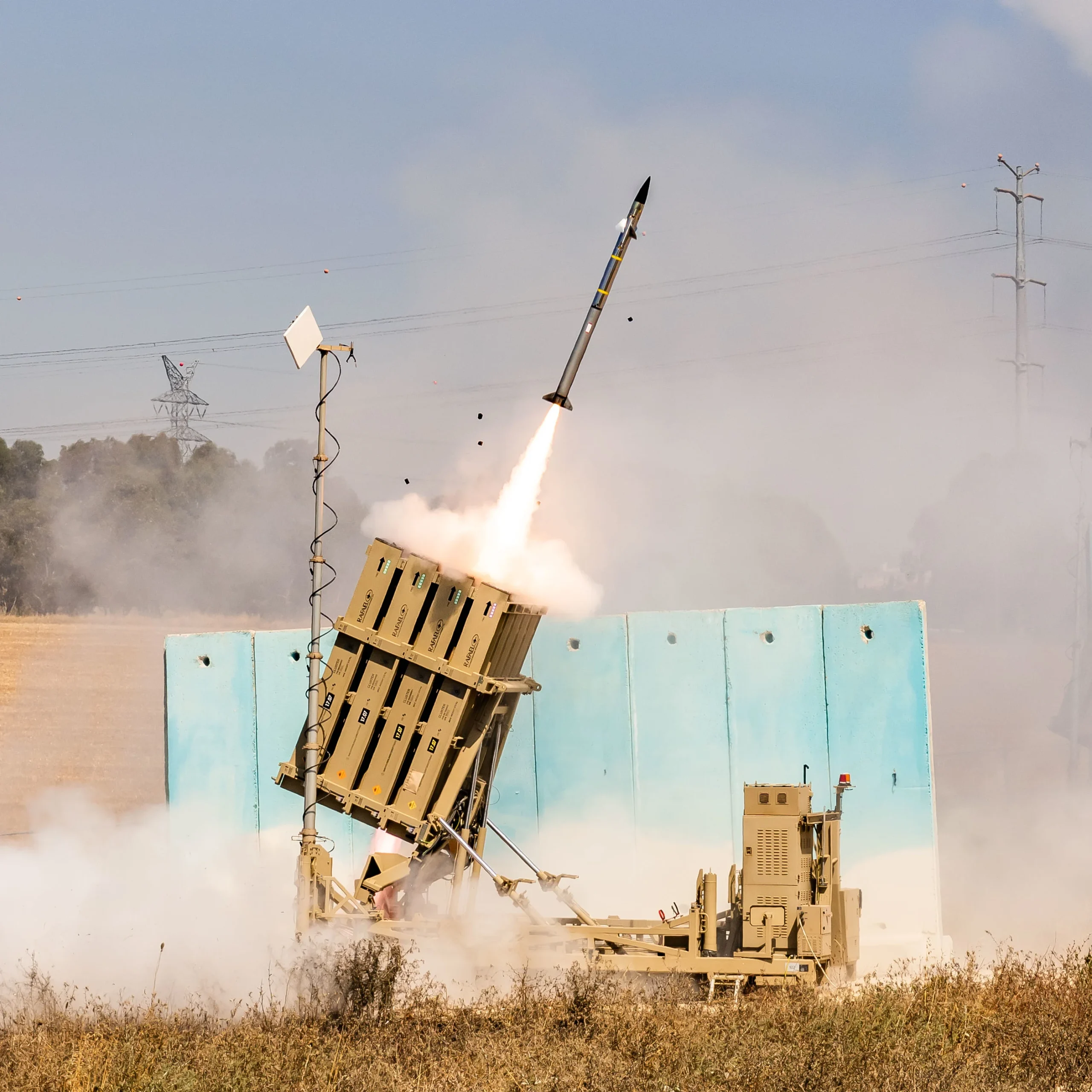
Israel’s Elbit Systems and Germany’s long-established munitions house Diehl Defence have joined forces under a strategic partnership signed at the Berlin Air Show (ILA 2026) to offer the SkyStriker loitering munition to the German armed forces. The arrangement envisions moving production, assembly and integration onto German soil should a Bundeswehr order materialise.
Lead
According to Breaking Defense’s 12 June 2026 report, Israeli defence-electronics group Elbit Systems and Germany’s Diehl Defence have formed a strategic partnership to market the SkyStriker loitering munition to the German military. The deal was announced on 11 June 2026 during the ongoing ILA Berlin 2026 air show. Per Diehl Defence’s statement, the cooperation pairs Elbit’s loitering-munition technology with the German firm’s system-integration and serial-production base, with manufacturing to be carried out in Germany if a procurement decision follows.
Details
The signed instrument is a joint-marketing and industrial-cooperation framework, not a procurement contract. Under it, Elbit remains the design and technology provider, while Diehl would handle manufacturing, assembly, integration and qualification in Germany. Elbit President and CEO Bezhalel Machlis described the partnership as another important step in strengthening the company’s long-standing presence in Europe and supporting Germany’s defence-modernisation priorities; Diehl Defence CEO Helmut Rauch said his company is proud to partner with Elbit to strengthen Germany’s capabilities in loitering munitions.
The framing centres on sovereign capability. Both sides stressed that, should a programme be awarded, manufacturing and qualification would take place at Diehl facilities; the local presence of Elbit Systems Deutschland underpins the localisation pledge. The cooperation builds on Elbit’s 2025 agreement to supply the PULS rocket-artillery system to the Bundeswehr, and SkyStriker’s ability to launch from the related EuroPULS platform points to a shared logistics chain.
What is the system
SkyStriker is a fixed-wing loitering munition developed by Elbit Systems, first unveiled in the summer of 2017. According to open-source data, it autonomously locates, tracks and dives onto operator-designated targets. Electric propulsion gives it a low acoustic signature for covert, low-altitude operations, and after target acquisition and operator authorisation it can dive at speeds up to 300 knots.
It is offered with a 5-kilogram or 10-kilogram warhead inside the fuselage; per Elbit’s documentation, endurance reaches up to two hours in the 5 kg configuration and roughly one hour with the 10 kg warhead. A day/night electro-optical and infrared seeker with an automatic video tracker allows single-operator employment. SkyStriker can be launched from ground vehicles and from dedicated canisters on PULS/EuroPULS rocket systems.
Technical and operational significance
Two technical claims headline the version pitched to Germany: a range exceeding 200 kilometres and a warhead of up to 10 kilograms. A distinction between sources is warranted. Elbit’s standard brochures and references such as Army-Technology have long cited SkyStriker’s range as 100 kilometres. The 200+ km figure in the German pitch likely points to an enhanced variant but should be treated as a marketing claim rather than an independently tested figure.
Operationally, SkyStriker’s appeal lies in combining the low noise and thermal signature of electric propulsion with persistent loitering: it can orbit a target area and wait for the right moment, the core trait separating it from conventional guided munitions. Launch options spanning ground vehicles, the EuroPULS launcher, naval platforms, containers and aircraft give multi-domain flexibility. One of the clearest lessons European militaries drew from Ukraine was the battlefield impact of low-cost yet precise loitering munitions, and the pitch leans squarely on that demand.
Background
SkyStriker is no stranger to Elbit’s export record. Its first foreign user was Azerbaijan, with the sale surfacing in early 2019. In September 2021, India contracted roughly 100 units for about $12.3 million via a joint venture with an Adani Group subsidiary. In November 2023, Elbit announced a $95 million SkyStriker contract with an unnamed European country, with several hundred units over two years. The Diehl partnership is the latest link in a strategy to widen the system’s European footprint.
On the German side, the picture is shaped by rising defence spending. Growing European budgets and Berlin’s post-Zeitenwende modernisation drive push foreign manufacturers to enter via local partnerships. Germany’s emphasis on domestic production and security of supply makes it nearly mandatory for exporters like Elbit to move with an established German partner such as Diehl, repositioning the system from a foreign-origin product into one made in Germany.
Relevance for Turkiye, NATO and the region
Loitering munitions are among the areas where Turkiye’s defence industry has advanced fastest and is most visible in exports. STM’s KARGU, ALPAGU and TOGAN families, Roketsan’s offerings and Baykar’s unmanned-systems ecosystem have placed Turkiye among the prominent suppliers of loitering and kamikaze-class systems; STM’s swarm-capable systems, exported to multiple countries, are early reference products.
For Turkiye, the real significance is that competition is shifting from a technology race toward a market-access and localisation race. European states’ build-it-on-our-soil requirement is a threshold affecting Turkish exporters too. The model Turkiye has followed in unmanned-aircraft exports, co-production, local assembly and technology transfer, is now discussed as a reference framework in Europe; Baykar’s localisation agreements closely mirror what Elbit is attempting via Diehl. A second dimension is NATO standardisation: SkyStriker’s integration onto a proliferating launcher such as EuroPULS reminds that Turkish systems must remain competitive in integration and certification onto comparable NATO-compatible platforms. Turkiye’s advantage is a combat-proven, cost-competitive portfolio; its disadvantage may be political-preference filters in certain European capitals.
Open-source verification
- The Elbit-Diehl partnership, its ILA Berlin 2026 announcement (11 June), and German production/assembly/integration/qualification if awarded are confirmed (Breaking Defense, EDR Magazine, Euro-SD, Diehl release).
- Executive quotes from Elbit CEO Bezhalel Machlis and Diehl CEO Helmut Rauch (Euro-SD).
- Export history: Azerbaijan (2019); India (Sept 2021, ~$12.3M, 100 units); unnamed European country (Nov 2023, $95M) (Jerusalem Post, Defense News, Shephard).
- Manufacturer claim / unverified: the 200+ km range; standard brochures give 100 km.
Assessment
The Elbit-Diehl partnership is less a single munitions sale than a concrete example of Europe’s new rulebook: as decisive as rising budgets is the buyer state’s demand to build it in my industry and not make my supply chain dependent. Despite being a proven product, SkyStriker can enter the German market only through an established German partner, a sign that foreign-origin systems are now hard to sell in Europe without localisation. The lesson for Turkiye is twofold: a field-proven product and cost edge is a serious asset, yet success in European tenders will hinge as much on the localisation and technology-sharing package as on technical superiority. Independent verification of the 200+ km claim is a thread worth tracking.
| Attribute | Standard open-source | Highlighted in German pitch |
|---|---|---|
| Range | ~100 km | 200+ km (manufacturer claim, unverified) |
| Warhead | 5 kg / 10 kg | Up to 10 kg |
| Endurance | Up to 2 h (5 kg) / ~1 h (10 kg) | More than 2 h |
| Propulsion | Electric, low signature | Same |
| Launch | Ground vehicle, PULS canister | Ground/naval/air, EuroPULS, container |
| Known users | Azerbaijan (2019), India (2021), unnamed European nation (2023) | |
Sources
- Breaking Defense — Elbit & Diehl team on SkyStriker pitch for Berlin (12 June 2026)
- Euro-SD — Elbit Systems and Diehl Defence Form Strategic Partnership
- EDR Magazine — Elbit-Diehl partnership on SkyStriker
- Army-Technology — SkyStriker Tactical Loitering Munition
- Defense News — Elbit sells SkyStriker to mystery European customer (2023)