ROKETSAN MAM-L: The 22-Kilogram Bomb Behind the Turkish Drone Success Story, Explained

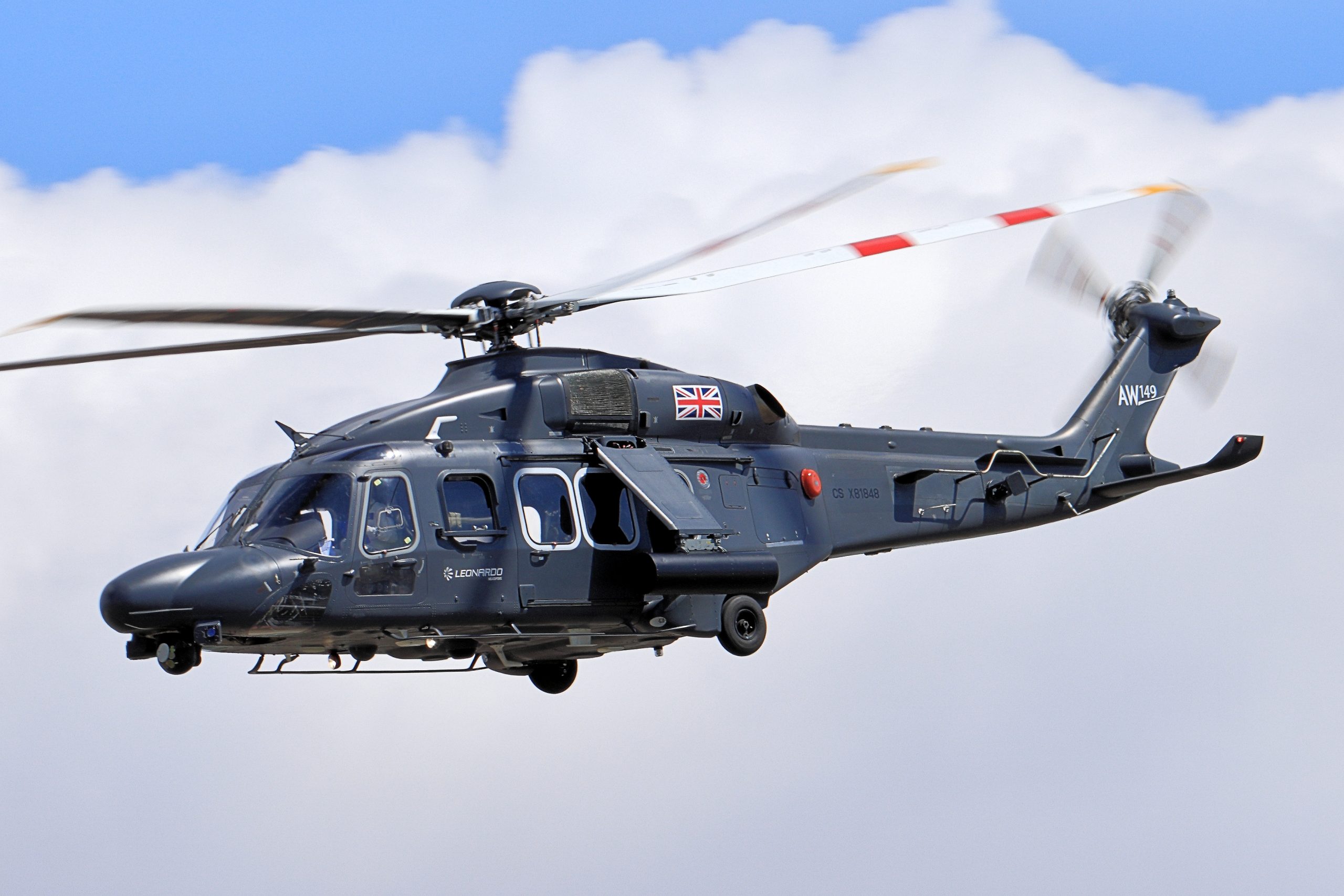
Image: ROKETSAN MAM-L mini smart munition on display at IDET 2017. Photo by Karel Šubrt, Wikimedia Commons, CC BY-SA 4.0.
It is 3 March 2020, the height of Turkey’s “Spring Shield” operation in Idlib, and a strange new pattern is forming on social media. Frame after frame: a Syrian regime tank turret detached and burning. A self-propelled howitzer with a hole punched through its roof. An ammunition depot lifting itself off the ground in slow motion. The captions credit a “Bayraktar.” What the captions do not name — and what is actually doing the work — is the small, finned, 22-kilogram bomb falling under it: the ROKETSAN MAM-L.
MAM-L stands for Mini Akıllı Mühimmat — Large, “smart micro munition — large.” It is the middle child of a three-weapon family: MAM-C weighs about 6.5 kg, MAM-L about 22 kg, MAM-T about 94 kg. The three sizes form a kind of ladder — how much weapon you can spend on how small a target — and MAM-L is the sweet spot: light enough that four of them fit under a Bayraktar TB2’s wings, heavy enough to kill a main battle tank when used correctly. Between 2019 and the early 2020s, MAM-L became, without exaggeration, the most-photographed precision weapon in the world.
The story that made MAM-L famous is the same story across four wars. Karabakh in 2020: Armenian T-72s losing their turrets to top-attack hits. Syria in 2020: regime artillery batteries silenced one barrel at a time. Libya: Haftar-aligned Pantsir air-defence vehicles burning at their own bases. Ukraine in 2022: Russian armoured columns picked apart along Ukrainian roads. Different countries, different opponents, same little weapon falling out of the sky.
At a Glance
Why a 22-Kilogram Bomb Kills a 45-Tonne Tank
A main battle tank is famously hard to destroy from the side. Its turret face and side skirts are deliberately thick. But its roof is thin. Tank engineers worked on the assumption that incoming fire would come from the same height plane — another tank, a missile launcher, an anti-tank gun — not from the sky. A drone broke that assumption. When a MAM-L drops on a T-72 from directly above, the thick side armour stops mattering, because the round is not hitting the side.
That single geometric fact — combined with a tandem-shaped-charge warhead designed to defeat reactive armour — turned MAM-L into the answer to the modern armoured column. The footage out of Karabakh in 2020 made the point in public for the first time, and it has been repeated in every conflict since.
What MAM-L Actually Hits
Three Warheads, One Bomb
What sets MAM-L apart is that it is not one weapon. It is a chassis offered with three interchangeable warheads, and the operator picks the right one for the target before take-off:
- Armour-piercing — a tandem shaped charge optimised for main battle tanks and other heavily-armoured vehicles. The smaller first charge defeats reactive armour; the main charge punches through what is underneath.
- High-explosive fragmentation — for personnel in the open, light vehicles, gun positions.
- Thermobaric — for enclosed targets like bunkers, shelters and storage depots, where a fuel-air pressure wave is more destructive than fragmentation.
A Bayraktar TB2 has four weapon stations under the wings. With MAM-L, a typical mission loadout is three different warhead types — the operator essentially carries a small toolbox of effects and chooses the right tool for whatever appears on the camera.
Specifications
| Specification | Value |
|---|---|
| Type | Laser-guided, winged mini smart munition |
| Weight | ~22 kg |
| Range | Up to 14 km (release-altitude dependent) |
| Guidance | Semi-active laser homing |
| Warhead Options | Tandem armour-piercing / HE-fragmentation / thermobaric |
| Fuze | Impact / proximity |
| Targets | Tanks, light armour, artillery, personnel |
| Platforms | Bayraktar TB2, Akıncı, KARGU, ANKA, AKSUNGUR, light attack aircraft |
The MAM Family
| Variant | Weight | Typical Target |
|---|---|---|
| MAM-C | ~6.5 kg | Personnel, light unarmoured vehicles |
| MAM-L | ~22 kg | Main battle tanks, armoured vehicles, artillery |
| MAM-T | ~94 kg | Hardened structures, larger vehicles (carried by AKINCI) |
How MAM-L Compares Internationally
| Munition | Country | Class |
|---|---|---|
| MAM-L | ROKETSAN — Türkiye | Drone-launched mini munition |
| Brimstone | MBDA — UK | Heavier (~48 kg), longer-range cousin |
| APKWS | BAE — USA | Laser-guided 70 mm rocket — lighter |
| Spike-NLOS | Rafael — Israel | Heavier, longer-range tactical missile |
Why It Matters for Turkey
The numbers behind the MAM-L story are partly commercial. Every country that has bought a Bayraktar TB2 — and that is more than thirty as of the mid-2020s, including Azerbaijan, Poland, Romania, Ukraine, Pakistan, and Saudi Arabia — has bought MAM-L to go with it. ROKETSAN does not publish per-customer figures, but reported production runs are in the tens of thousands per year. For a defence supplier exporting to NATO members and Gulf customers simultaneously, that is a structurally important revenue stream.
The strategic significance is bigger than the revenue. MAM-L is the first Turkish-designed weapon that achieved global brand recognition: foreign generals, military analysts and journalists know the name. It validated, in public, that Turkey could design and field a precision munition that competes with the heavyweights — at half the price, and battle-tested in four wars before any competitor’s catalogue page was updated. That reputation effect now travels with every other Turkish weapon on the export market, from ATMACA to SOM to KAAN.
Summary
| Name | ROKETSAN MAM-L (Mini Akıllı Mühimmat — Large) |
|---|---|
| Builder | ROKETSAN |
| Class | Laser-guided mini smart munition for unmanned aircraft |
| Combat record | Karabakh 2020, Syria 2019–20, Libya 2019–20, Ukraine 2022– |
| Advantage | Three interchangeable warheads, top-attack geometry against tanks |
| Family position | Middle of the MAM family: MAM-C → MAM-L → MAM-T |
Sources: