The EU’s Defence Loan Machine Starts Paying Out — Estonia Goes First

The European Union has spent two years designing instruments to make its members buy weapons faster and buy them together. On 13 August one of those instruments finally moved money: Estonia received €351.6 million under SAFE, the Security Action for Europe facility.
The sum is 15 percent of Estonia’s €2.3 billion total allocation. Greece has drawn a first tranche of €118.2 million. Further payments across the programme are tied to member states meeting the implementation milestones they committed to.
What SAFE actually is
SAFE is a €150 billion loan facility. The European Commission borrows on capital markets and on-lends to member states on favourable terms, which matters most for governments that would otherwise pay a premium to finance a defence build-up on their own balance sheet. It is the financing leg of the wider ReArm Europe / Readiness 2030 package, whose stated ambition is to unlock more than €800 billion in defence investment across the bloc.
The condition attached to the money is the point of the whole exercise: spending is steered toward joint procurement and toward systems manufactured inside the European Union. Andrius Kubilius, the Commissioner for Defence and Space, described the instrument as being about “enabling Member States to invest faster, procure more effectively together, and reinforce Europe’s defence industrial base.”
Where Estonia will spend it
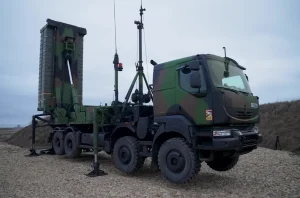
Estonia’s allocation is directed at ammunition, missiles, air defence systems and ground combat equipment. For a country of 1.3 million people with more than 300 kilometres of frontier with Russia, €2.3 billion is not a marginal top-up — it is a structural change in what the force can buy.
Baltic defence planning has been rebuilt along two axes since 2022: scaling NATO’s forward-deployed battlegroups toward brigade strength, and deepening national fires. Estonia has pursued HIMARS rocket artillery, medium-range air defence and coastal defence missiles within that framework. Rebuilding ammunition stockpiles is the common denominator across every European army after three years of watching Ukraine’s consumption rates.
The eligibility question
SAFE’s significance beyond the EU lies in the rules governing who can supply against it. The facility prioritises systems produced within the Union; third-country participation depends on separate arrangements negotiated with Brussels. That places NATO members outside the EU — Türkiye above all, given its capacity in ammunition and land systems — at the centre of an argument about industrial access that has so far been conducted in the abstract.
The first disbursement changes that. Once the money is moving, the question of which factories receive the orders stops being theoretical.
Sources
- European Commission disbursement announcements under the SAFE instrument
- Statements by Andrius Kubilius, European Commissioner for Defence and Space