Guatemala’s Military Strength: How Many Tanks, Aircraft and Ships in the Inventory? (2026)

Guatemala’s military inventory belongs to an armed force shaped less by conventional warfare than by gangs, drug trafficking and disaster response. The country ranks 96th of 145 militaries in Global Firepower’s index and is the strongest in Central America, yet it has no main battle tanks, fighter aircraft or air-defence missiles. Land power rests on light infantry, special forces and 105 mm towed guns; air power on helicopters; and naval power on patrol craft. 2026 marks a turning point: a US embargo that lasted almost half a century has been lifted, and a military framework agreement with Turkey is being put into practice. This article examines Guatemala’s land, air, missile and naval inventory item by item, using open sources.
At a Glance
- Active personnel: ≈ 18,050 active and 63,850 reserve (IISS); army 15,550, navy 1,500, air force 1,000
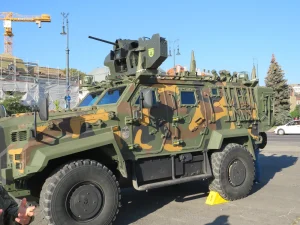
- Tanks: 0; Global Firepower gives a tank count of zero. The armoured element consists of 10 RBY Mk 1 reconnaissance vehicles, 15 M113s, 7 Commandos and 30 Armadillos
- Military aircraft: ≈ 35 (19 ready); zero fighters. The weight of the fleet lies in 20 helicopters and Cessna Caravan and Twin Otter transports
- Missile power: No ballistic, cruise, anti-ship or ground-based air-defence missiles; the only missile system is 82 ageing British-built Blowpipe shoulder-launched missiles
- Naval power: 25 platforms, all patrol and interdiction craft, based at Santo Tomás de Castilla on the Atlantic and Puerto Quetzal on the Pacific. No frigates, corvettes or submarines
- GFP ranking and budget: 96th of 145 militaries with a PwrIndx of 2.1277, the strongest in Central America. Global Firepower gives a budget of $616 million; the defence ministry’s 2026 budget is 4.256 billion quetzales
Note: The inventory figures below are approximate values drawn from open sources such as Global Firepower, the IISS Military Balance and SIPRI.
About the Guatemala Armed Forces
The Armed Forces of Guatemala (Fuerzas Armadas de Guatemala) comprise three services: the Army (Ejército de Tierra), the Navy (Marina de la Defensa Nacional) and the Air Force (Fuerza Aérea Guatemalteca). The official founding date of 30 June 1871 is celebrated as Army Day. The commander-in-chief is President Bernardo Arévalo; the Minister of National Defence, who under the constitution must be a serving officer, is Major General Henry Sáenz Ramos. The army sits at the centre of a combined structure in which it provides logistical support to the other services.
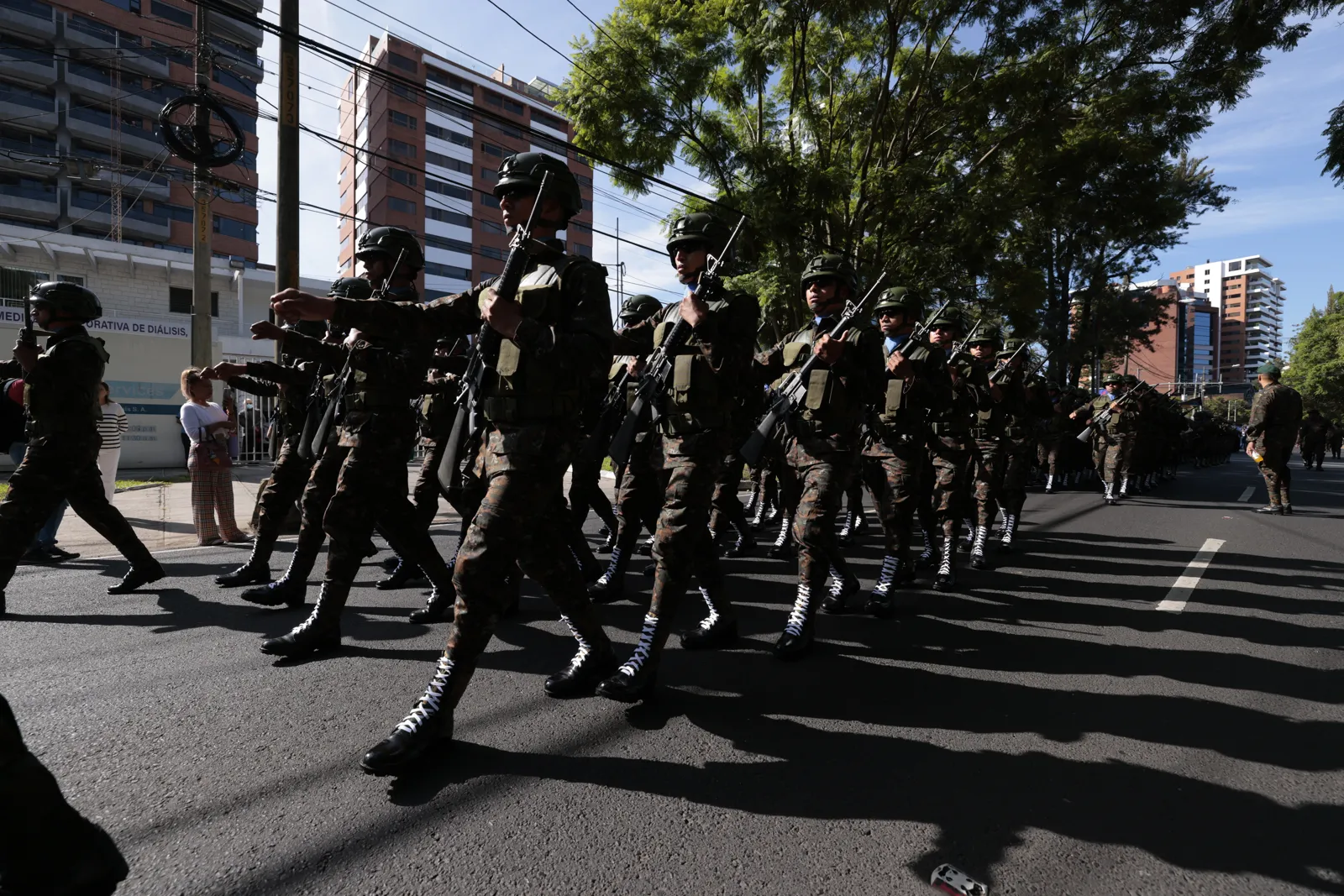
In Global Firepower’s 2026 data Guatemala ranks 96th of 145 militaries with a PwrIndx of 2.1277, making it the strongest military in Central America, ahead of Honduras (2.2575), Nicaragua (2.5894) and El Salvador (2.9973). According to IISS there are 18,050 active personnel and 63,850 reservists, of whom 15,550 serve in the army, 1,500 in the navy and 1,000 in the air force. The army is organised into six infantry brigades, one mechanised brigade, one parachute brigade, three special forces brigades (Kaibil, jungle and mountain operations), two military police brigades and 15 military zones. The Kaibil special forces train at Poptún in Petén and are among the best-known special operations units in the region.
The defence budget varies between sources: Global Firepower gives $616 million and IISS $412 million for 2023, while the defence ministry’s 2026 budget is 4.256 billion quetzales. Today’s force structure is built on the legacy of the 1960-1996 civil war. The conflict, in which some 200,000 people died, ended with the peace agreement of 29 December 1996; personnel numbers were then gradually cut from 46,900, the military zones were reorganised and internal security duties were handed to a civilian police force. The constitution, however, still lists internal security among the army’s tasks.
The most important development for procurement is the lifting of the arms embargo imposed by the US Congress in November 1977 over human rights abuses during the civil war. On 9 March 2026 Defence Minister Sáenz announced that Guatemala could once again buy weapons, ammunition, communications equipment, armoured vehicles, aircraft and ships from the United States, citing the country’s results against organised crime and drug trafficking. A total of 462.65 million quetzales has been allocated for purchases from the United States: M4 rifles for the Jungle Special Operations Brigade in Petén, a Bell 407GXi helicopter, a Twin Otter transport, three Thrush firefighting aircraft and an Island-class patrol boat. As of August 2026, planned new purchases for the land, air and naval forces exceed $55 million, and a team of officers has been tasked with visiting armoured vehicle manufacturers.
In the field, however, the priority is internal security. On 17 January 2026 simultaneous riots broke out in three prisons and 46 guards were taken hostage; gang attacks on the police that followed killed a number of officers. On 18 January Arévalo declared a 30-day nationwide state of siege (estado de sitio), and the army and police deployed together in the capital under the ‘Metropolitan Sentinel’ plan against Barrio 18, which has been designated a terrorist organisation. During the state of siege 83 gang members were captured and nearly five tonnes of cocaine were seized; from 17 February it gave way to a lighter ‘state of prevention’, though joint patrols continued.
Guatemala is also active abroad. Guatemalan troops have served with the UN’s MONUSCO mission in the Congo, where eight Kaibiles were killed in Ituri on 23 January 2006, and in January 2025 soldiers were sent to the multinational security support mission in Haiti. The long-running territorial dispute with Belize is before the International Court of Justice. Military ties with the United States are close: the air force and navy take part every year in US Southern Command’s CENTAM Guardian exercise, and the US 7th Special Forces Group trains Guatemalan special operations units at Poptún. In June 2026 a military cooperation memorandum was also signed with Canada.
Land Forces Inventory
| System type | Est. quantity |
|---|---|
| Main battle tanks | None; zero in Global Firepower’s 2026 count. The Cold War-era M41 Walker Bulldog and AMX-13 light tanks have been withdrawn |
| Reconnaissance vehicles (RBY Mk 1) | 10; Israeli-built light wheeled reconnaissance vehicles. Open-source lists also include 12 old M8 Greyhounds |
| Armoured personnel carriers | 52: 15 M113A1/A2s, 7 Cadillac Gage Commandos and 30 Armadillos. IISS gives a total of 46 armoured fighting vehicles |
| Total armoured and tactical vehicles | ≈ 3,268 (1,961 ready) in Global Firepower’s broadly defined count, which also covers tactical and logistic vehicles |
| Light tactical vehicles | ≈ 250 Jeep J8s, 20 AIL Abirs plus M151s, CJ-7s and Mazda BT-50s; M35 and M54 trucks for logistics |
| Towed howitzers (105 mm) | Global Firepower lists 110 (66 ready); the core is 56 M-56s and 54 M101/M2A1s. There is no self-propelled artillery or multiple rocket launcher |
| Mortars (M224) | ≈ 625; 60 mm, the infantry’s main indirect-fire weapon |
| Recoilless rifles | 56 M40A1s and 64 M-1968s (105 mm); there are no guided anti-tank missiles in the inventory |
| Infantry rifles | ≈ 15,000 Galils, 8,000 Galil Córdovas and 3,000 Galil ACEs; Tavor CTAR-21s with the Kaibil special forces. M4 rifles and M240 machine guns are being bought from the United States in 2026 |
Air Force Inventory
| Platform | Est. quantity |
|---|---|
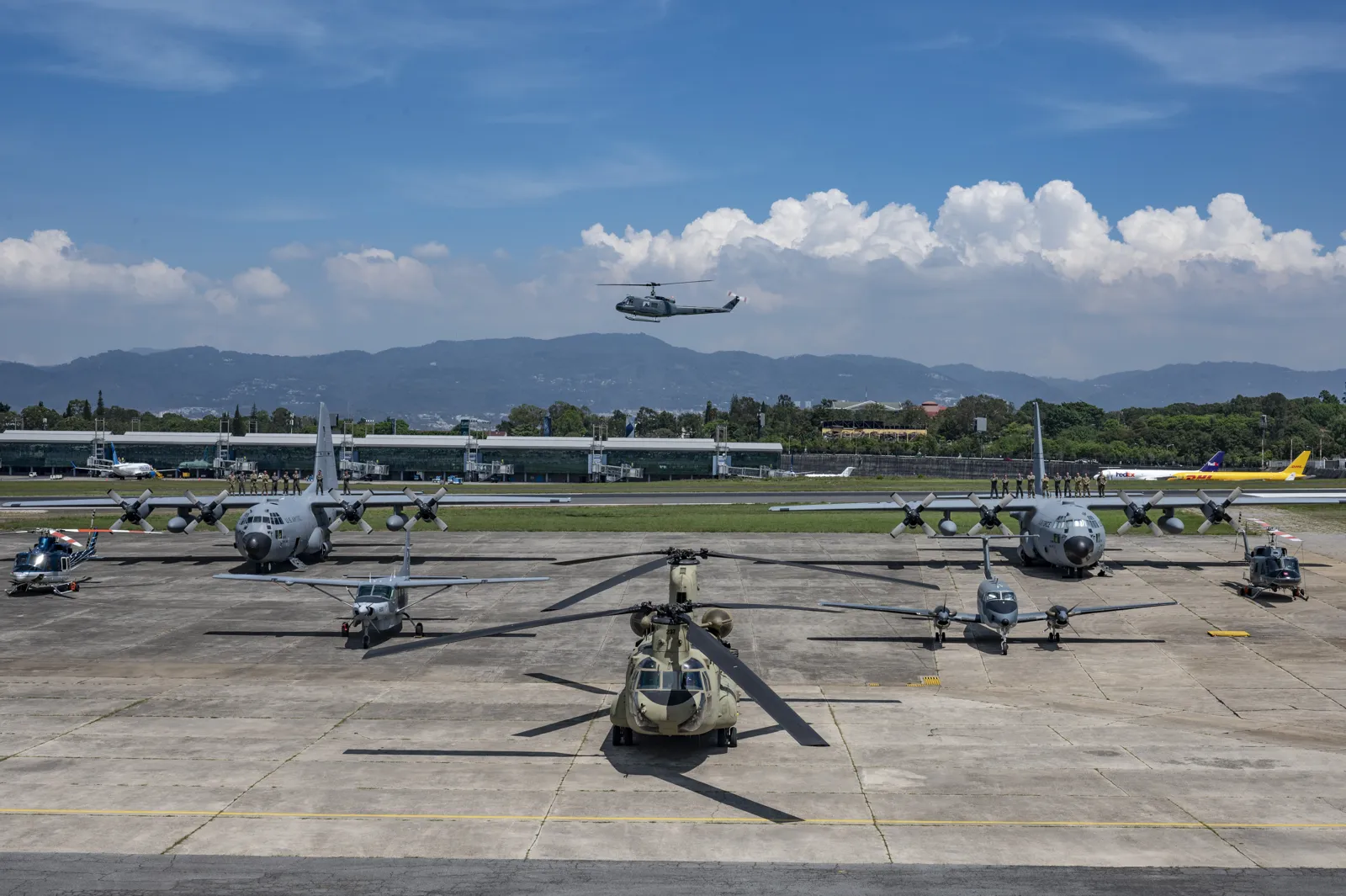
| Total military aircraft | ≈ 35 (19 ready, Global Firepower); fighters 0, attack 3, transports 10, special mission 2, helicopters 20, attack helicopters 0 |
| Light attack aircraft (A-37B and PC-7) | 3 A-37B Dragonflies and 4 Pilatus PC-7s; according to open sources they are not in active flying service, with a return to service under consideration |
| Transport aircraft | 7 Cessna 208B Grand Caravan EXs (one an air ambulance) and DHC-6 Twin Otters (one in service since 2019, a second due in October 2026 and a third in late 2027); 3 Basler BT-67s in storage |
| Intelligence, surveillance and reconnaissance | 2 King Airs (200 and B300) and 2 Pilatus PC-12/47Es; one of the PC-12s was donated by the United States in 2023 |
| Firefighting aircraft (Thrush 710P) | 3; an $18.01 million purchase, with the first delivered in September 2026 and the other two in 2027 |
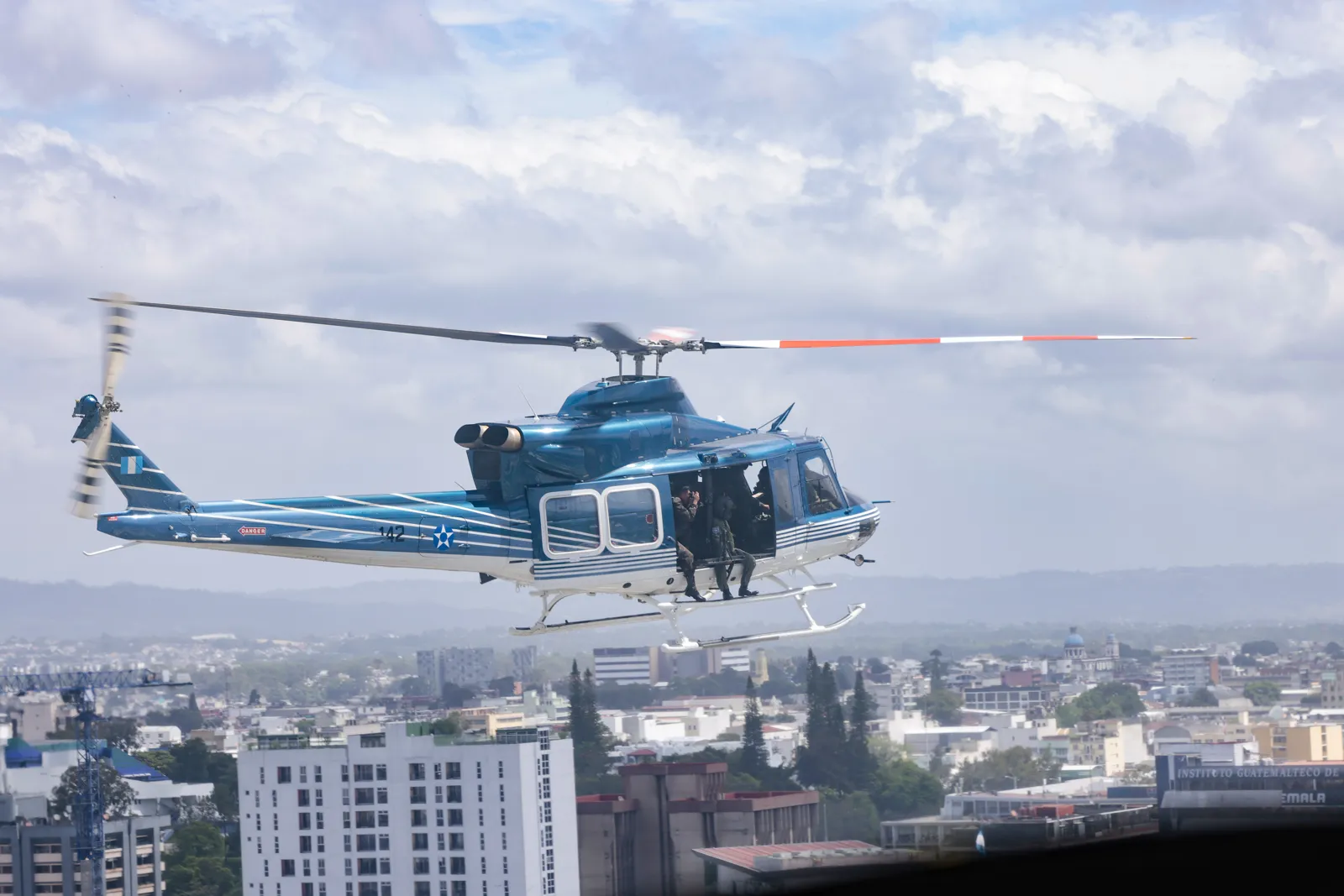
| Medium helicopters (Bell 412 and Bell 212) | 4 Bell 412s (2 presidential, 2 Bell 412EPXs bought in 2022) and 2 Bell 212s; only one of the 7 UH-1Hs in the inventory is active |
| Light helicopters | 3 Bell 429s, 3 Bell 206s (training) and Bell 407s; a new Bell 407GXi was received in January 2026 under a government-to-government deal, while one 407 was lost in a crash in Quiché in December 2024 |
| UAVs | 1 Hydra S-45 Baalam (Mexico, 2021), the first of its kind in Central America. There is no armed UAV in the inventory |
| Air bases | La Aurora (Guatemala City), Mundo Maya/Santa Elena (Petén) and Retalhuleu, under three air commands |
Missile and Air-Defence Systems
| System | Type / Note |
|---|---|
| Ballistic and cruise missiles | None |
| Anti-ship missiles | None; the navy consists only of patrol and interdiction craft |
| Ground-based air-defence missiles | None |
| Man-portable air-defence missiles (Blowpipe) | 82; British-built, command-guided first-generation system of limited operational value |
| Anti-aircraft guns | 16 Zastava M55s (20 mm) and an undisclosed number of Bofors L/60s (40 mm); IISS gives a total of 32 anti-aircraft guns |
| Airspace control | With no fighters or missile layer, the main task is detecting narcotics flights, relying on King Air/PC-12 surveillance aircraft and joint exercises with the United States such as CENTAM Guardian |
Naval Power
| Class / Type | Est. quantity |
|---|---|
| Total platforms | 25 (Global Firepower): 20 patrol vessels; frigates, corvettes and submarines 0 |
| Personnel and bases | ≈ 1,500 active and 650 reserve; two naval regions, with bases at Santo Tomás de Castilla on the Atlantic and Puerto Quetzal on the Pacific |
| Larger patrol vessels | Kukulcán (GC-1051, 105 ft) and Hunahpú (GC-871, 87 ft) |
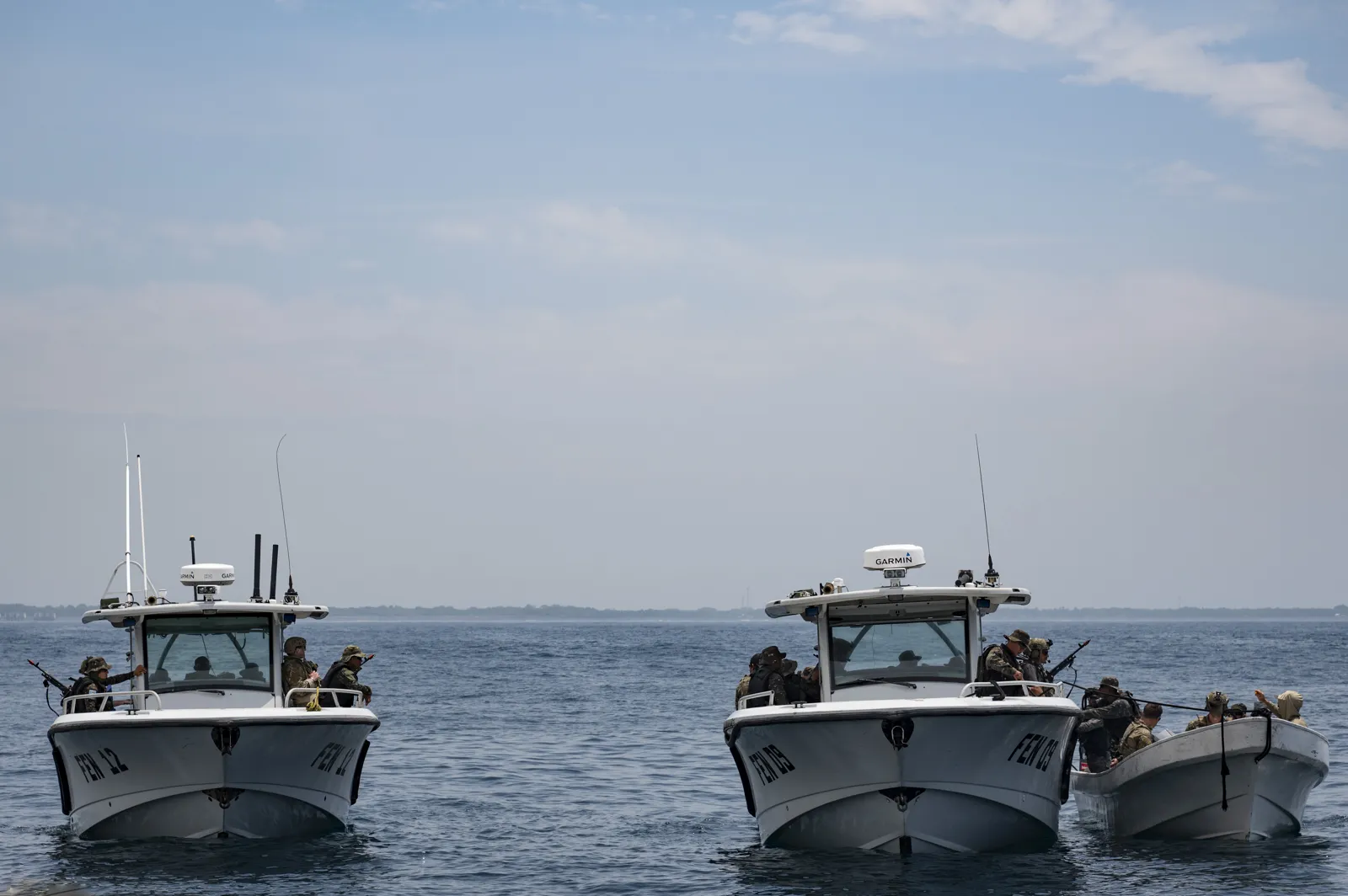
| Coastal patrol boats | 2 Daburs (Israel), 6 Cutlasses (GC-651-656) and 8 Vigilants (GC-271-278) |
| Interdiction craft | 20 Boston Whalers, 6 Midnight Express boats, 6 Silver Ships 43 ft coastal fast response boats (three donated to the Pacific Naval Command) and 22 LP patrol boats |
| River patrol boats | 8 Metal Sharks, 8 shallow-draught river operation boats and 45 Imemsa/Astimar-class boats, on the Usumacinta and Petén river lines |
| Amphibious craft | 1 Golfo de Tribugá-class LCU (Colombia) and 2 Machete-class landing craft; one marine brigade and two reserve marine battalions |
| On order | An Island-class patrol boat from the United States (92.34 million quetzales, entering service in 2027) and two boats from Colombia (late 2026) |
The Turkey Angle: Turkish Defence Industry
There is no Turkish-built platform in Guatemala’s inventory today, but the defence relationship between the two countries has acquired a concrete legal basis over the past year. On 23 July 2025, at the 17th International Defence Industry Fair IDEF 2025 in Istanbul, Guatemala’s Minister of National Defence Henry Sáenz and Turkish Defence Minister Yaşar Güler signed a military cooperation framework agreement. According to the Guatemalan press, the agreement covers joint training, professional military development, technical support, cybersecurity and equipment modernisation, and opens the way for the exchange of knowledge and experience as well as technical and logistical exchanges.
Since then contacts have moved to the industrial level. On the margins of the SAHA 2026 exhibition, held in Istanbul on 5-9 May 2026, Turkey’s President of Defence Industries Prof. Dr. Haluk Görgün met Guatemala’s Deputy Defence Minister, Major General Jorge Mario Lémus Paiz, to discuss areas for joint work on defence technologies and industrial projects. Guatemala’s Deputy Foreign Minister Mónica Bolaños, speaking to Anadolu Agency on 17 April 2026, described Turkey as ‘our strategic partner in Latin America’, saying that the framework signed the previous year served as a roadmap for security and defence industry cooperation and that Turkey had provided significant support on security, migration and digitalisation.
The institutional basis of diplomatic relations has expanded rapidly since 2015. Turkey became an observer to the Central American Integration System (SICA) at a ministerial forum held in Guatemala in February 2015 and opened an embassy in Guatemala City on 31 August 2015; Guatemala opened its embassy in Ankara on 19 April 2017 and has an honorary consulate in Istanbul. Turkish foreign ministers visited Guatemala in February 2015 and May 2019; Guatemalan Foreign Minister Raúl Morales was in Turkey in April 2017 and Mario Adolfo Bucaro Flores in August 2022, when a Cultural Cooperation Agreement was signed.
Whether the framework agreement turns into procurement will depend on Guatemala’s purchasing schedule after 2026. The needs list published by the army overlaps directly with areas where the Turkish defence industry is strong: protected tactical wheeled vehicles for urban operations, unmanned aerial vehicles to monitor Petén’s jungle borders and narcotics flight corridors, coastal and river patrol boats, and infantry equipment. Regional precedents are instructive: in Ecuador, Otokar Cobra II vehicles are in field use against narcotics and terrorism, while in Chile ASELSAN is running the Leopard 2A4 upgrade and HAVELSAN the combat management system for two frigates. That said, with the embargo lifted the United States is regaining weight in Guatemala; the Turkish share will depend on how far Turkish firms can offer financing, rapid delivery and training packages.
Frequently Asked Questions
How many tanks does Guatemala have? Guatemala has no main battle tanks; Global Firepower’s 2026 count gives zero. The M41 Walker Bulldog and AMX-13 light tanks used during the Cold War have been withdrawn. The armoured element consists of 10 Israeli-built RBY Mk 1 reconnaissance vehicles plus 15 M113, 7 Cadillac Gage Commando and 30 Armadillo armoured personnel carriers; IISS gives a total of 46 armoured fighting vehicles. Using a broad definition that includes tactical and logistic vehicles, Global Firepower shows a total of 3,268 vehicles. The artillery consists of 105 mm towed howitzers, 56 M-56s and 54 M101/M2A1s; there is no self-propelled artillery or multiple rocket launcher.
Does the Guatemalan Air Force have fighter aircraft? No. According to Global Firepower, Guatemala has about 35 military aircraft, 19 of them ready; the number of fighters and attack helicopters is zero. The 3 A-37B Dragonfly and 4 Pilatus PC-7 light attack aircraft in the inventory are, according to open sources, not in active flying service. The weight of the fleet lies in helicopters: 4 Bell 412s, 2 Bell 212s, 3 Bell 429s, Bell 407s and 3 Bell 206 trainers. The transport fleet consists of 7 Cessna 208B Grand Caravan EXs and Twin Otters, and the surveillance fleet of 2 King Airs and 2 PC-12s. Two new Twin Otters and three Thrush 710P firefighting aircraft are being delivered in 2026-2027.
What are Guatemala’s air-defence and missile capabilities? Guatemala has no ballistic, cruise or anti-ship missiles and no ground-based air-defence missiles. The only missile system in the inventory is 82 ageing British-built Blowpipe shoulder-launched air-defence missiles. Low-altitude defence rests on 16 Zastava M55 (20 mm) and Bofors L/60 (40 mm) anti-aircraft guns; IISS gives a total of 32 anti-aircraft guns. With no fighters or missile layer, the main task in the airspace is detecting light aircraft carrying narcotics, relying on King Air and PC-12 surveillance aircraft and joint exercises with the United States.
Which ships does the Guatemalan Navy operate? Global Firepower puts Guatemala’s naval inventory at 25 platforms, 20 of them patrol vessels. There are no frigates, corvettes or submarines. The navy, with about 1,500 active personnel, operates from Santo Tomás de Castilla on the Atlantic and Puerto Quetzal on the Pacific. The largest units are the patrol vessels Kukulcán (GC-1051) and Hunahpú (GC-871); alongside them are 2 Dabur, 6 Cutlass and 8 Vigilant-class coastal patrol boats, 20 Boston Whaler and 6 Midnight Express interdiction craft, 6 Silver Ships coastal fast response boats and more than 60 river patrol boats. An Island-class patrol boat from the United States is due to enter service in 2027.
Is there a defence agreement between Guatemala and Turkey? Yes. On 23 July 2025, at the IDEF 2025 fair in Istanbul, Guatemala’s Minister of National Defence Henry Sáenz and Turkish Defence Minister Yaşar Güler signed a military cooperation framework agreement covering areas such as joint training, technical support, cybersecurity and equipment modernisation. On the margins of the SAHA 2026 exhibition on 5-9 May 2026, Turkey’s President of Defence Industries Haluk Görgün and Guatemala’s Deputy Defence Minister, Major General Jorge Mario Lémus Paiz, also discussed defence industry cooperation. However, there is as yet no Turkish-built weapon system in Guatemala’s inventory; the framework agreement provides the legal basis for possible future purchases.
Bottom Line
Guatemala’s inventory is the portrait of an armed force with a weak conventional threat perception and a heavy internal security burden. The absence of tanks, fighter aircraft and a missile layer reflects deliberate prioritisation more than a shortfall: land power rests on light infantry, Kaibil special forces and 105 mm towed guns; air power on helicopter mobility; and naval power on patrol and interdiction craft against drug trafficking. The structure looks adequate on a Central American scale, but the age of many platforms and the fact that only about half of the air fleet is ready to fly are serious constraints. Two developments in 2026 have the potential to change the picture: the lifting of the 48-year US embargo opens the way for long-deferred modernisation, and the January 2026 state of siege clearly showed the need for protected vehicles, helicopters and surveillance capacity. Turkey has made an early entry into this new period with the military framework agreement signed in July 2025 and the industrial contact at SAHA 2026. Whether the agreement turns into concrete procurement depends on Turkish firms offering competitive financing and training packages for the armoured vehicle, UAV and patrol boat requirements Guatemala has announced.
Related Reading
Sources
- Global Firepower — Guatemala
- IISS — The Military Balance
- SIPRI — Arms Transfers Database
- Wikipedia — Armed Forces of Guatemala
- Wikipedia — List of equipment of the Armed Forces of Guatemala
- Wikipedia — Guatemalan Air Force
- Turkish MFA — Türkiye-Guatemala political relations
- La Hora — Guatemala and Turkey sign military cooperation agreement (23 July 2025)
- Infodefensa — Guatemala-Turkey framework agreement
- Anadolu Agency — Bolaños: Turkey is our strategic partner in Latin America
- Infodefensa — End of the US embargo on Guatemala
- La Hora — 462 million quetzales of US purchases
- La Hora — Guatemalan Army modernisation plan (August 2026)
- JURIST — End of Guatemala’s state of siege (February 2026)