Best Turkish Naval and Coastal Security Solutions for Romania: Technical Fit Analysis for Black Sea Needs

Romania is a NATO and EU member with sea access, holding roughly 245 kilometers of coastline on the western Black Sea. Constanța is one of the largest ports in the country and the region, carrying critical commercial and military weight. The Danube delta where the river meets the sea, shallow waters and dense maritime traffic make coastal security a first-order priority for Romania.
The current security environment in the Black Sea has brought forward themes such as the sea-mine threat, unmanned aerial and surface vehicles, missile risks against the coast, and the protection of maritime lines of communication. Romania needs to renew its ageing frigate and corvette fleet, strengthen its anti-ship missile capability and modernize its coastal-surveillance network.
This analysis compiles Romania’s maritime geography, threat environment, current naval inventory and modernization needs strictly from publicly available sources, then evaluates which Turkish naval and coastal-security solutions may be a technical fit for that profile. The aim is not to claim any sale will occur, but to map requirement against solution using open-source data.

Surface Platforms: The Corvette and Frigate Need
The backbone of the Romanian Navy has long consisted of Soviet- and British-origin ageing frigates and domestically built corvettes. The relatively enclosed and shallow nature of the Black Sea technically favors agile corvettes and light frigates carrying strong sensor and weapon packages over large blue-water combatants. Such ships are well suited to maritime patrol, anti-ship/air-defense tasks and the protection of maritime lines of communication.
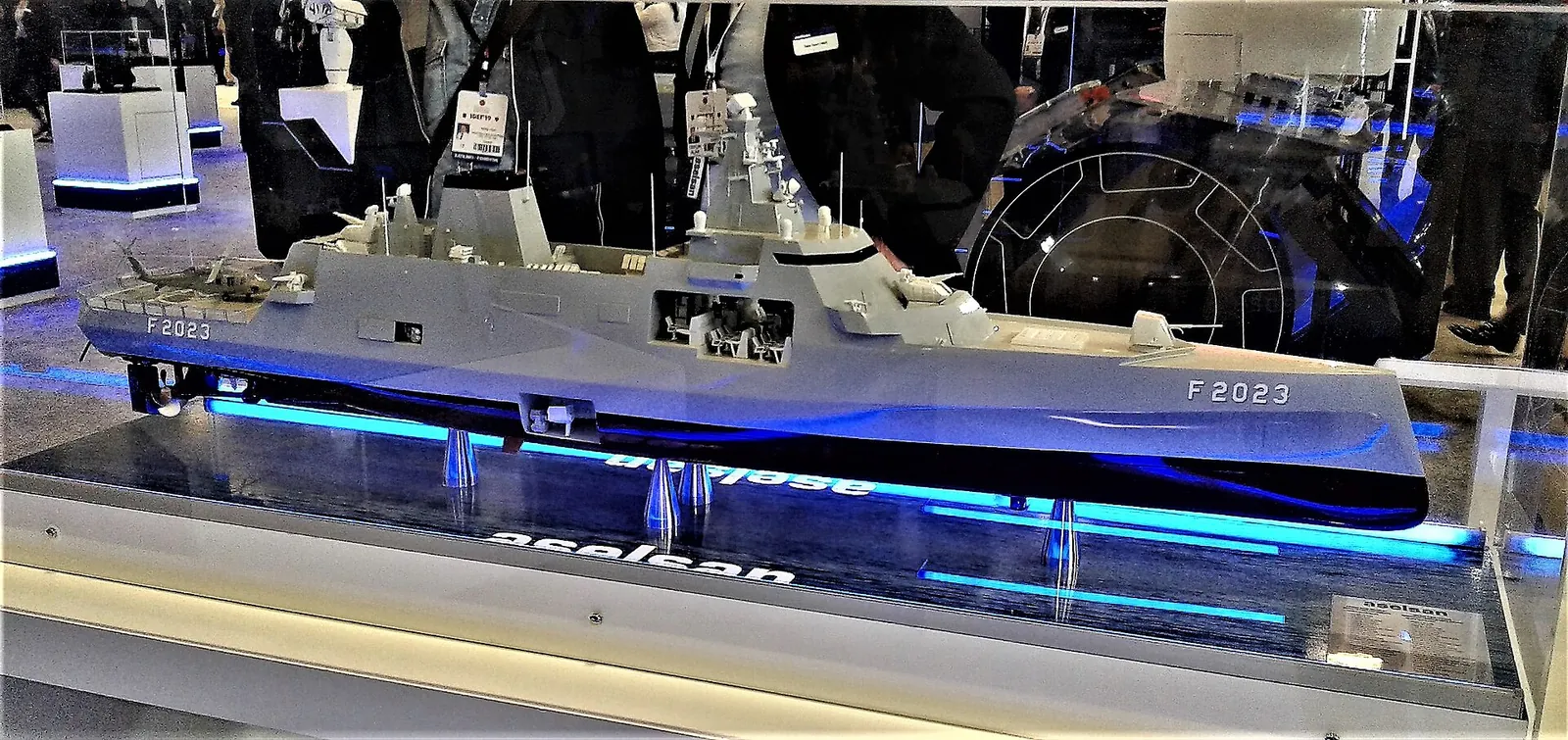
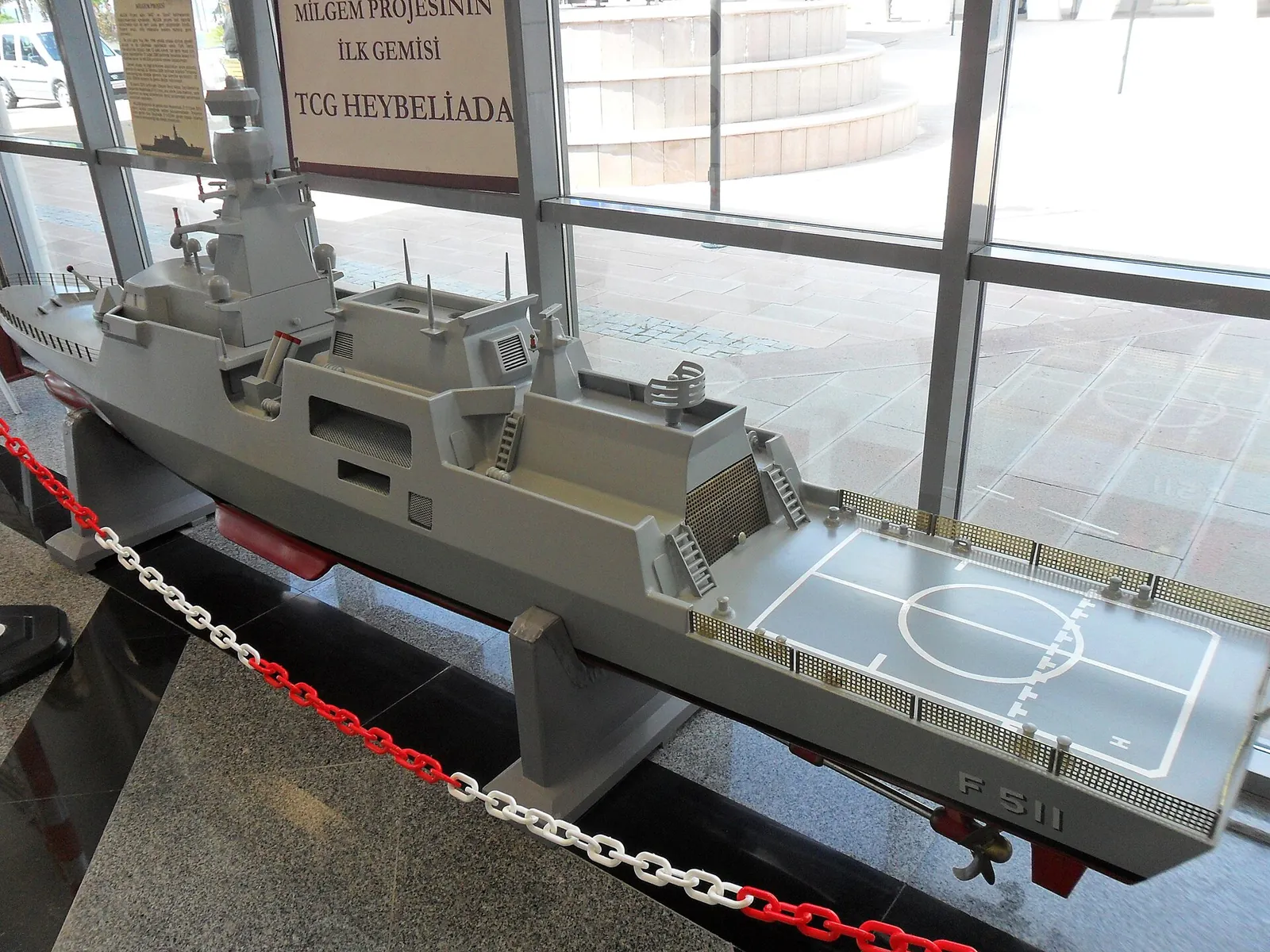
The Ada-class corvette developed under the Turkish MİLGEM program, and the derivative İ (İstif)-class frigate concept, address exactly this scale and mission profile. The Ada class combines anti-ship missiles, point air defense, sonar and helicopter capability in a medium-tonnage hull. Export references (for example MİLGEM derivatives supplied to Pakistan and Ukraine) show the platform’s adaptability. However, it is not a single answer to every need; integration with Romania’s existing European-origin modernization programs and the balance of procurement and localization must be assessed separately.
| Platform class | Black Sea fit | Key role |
|---|---|---|
| Ada-class corvette (MİLGEM) | High — agile, medium tonnage | Patrol, anti-ship, ASW |
| İ-class frigate concept | Medium-high — strong sensors | Air defense + multi-role |
| Fast attack craft / patrol boat | High — shallow water, coast | Coastal patrol, anti-ship |
| Mine-hunting vessel | High — mine threat | Mine hunting/clearance |
Tonnage and mission matches are open-source assessments, not precise performance measurements.
Anti-Ship Missiles and Weapon Systems
In the Black Sea, the deterrent value of surface platforms depends heavily on the anti-ship missile capability they carry. Against coastal and naval targets, range, cruise profile and target discrimination are decisive. The ATMACA anti-ship missile developed by ROKETSAN addresses this mission area with sea-skimming flight, ship- and shore-launch capability and GPS/INS-aided navigation. Open sources cite an ATMACA range of over 200 km; these figures should be treated as unconfirmed estimates.
Alongside the ship-launched version of ATMACA, shore-launched batteries (land-based anti-ship) offer fixed and mobile options for countries like Romania that prioritize coastal defense. In addition, guided light missiles and gun-based systems (remote-controlled gun/weapon stations) provide close-in defense against drone and small-boat threats. Because Turkish systems are designed with NATO/STANAG interfaces, integration into existing command-and-control infrastructure is technically easier. That said, transitioning the missile inventory requires separate planning for logistics, training and interoperability with existing Western systems.
| System | Type | Key feature | Assessment |
|---|---|---|---|
| ATMACA | Anti-ship missile | Sea-skimming, 200+ km (estimated) | Ship and shore launch; deterrent strike |
| Land-based ATMACA battery | Coastal anti-ship | Mobile, fixed-target protection | A coastal shield for ports like Constanța |
| Remote-controlled weapon station | Gun-based close defense | Small-boat/drone defense | Effective against asymmetric threats |
| Guided light missile | Point/close strike | Integrated on light platforms | Flexible for patrol boats |
Unmanned Surface Vessels and Naval UAVs
The most notable recent trend in the Black Sea is the growing role of unmanned systems in naval warfare. Turkish-developed unmanned/armed surface vessels (USV) such as ULAQ and MİR are designed for reconnaissance, surveillance, anti-ship missile carriage and coastal protection. These platforms can be used to protect port entrances, narrow passages and critical maritime infrastructure without putting personnel at risk. In the shallow, crowded coastal waters of the Black Sea, a low-cost, mass-deployable platform approach is technically valuable.
For naval reconnaissance and patrol, maritime-configured UAVs (for example a Bayraktar TB2 adapted to maritime surveillance and AKSUNGUR for greater range/altitude) provide persistent surveillance of large sea areas. AKSUNGUR stands out for wide-area maritime surveillance with long endurance and the potential to carry maritime patrol / anti-submarine warfare (ASW) sensors. These systems complement coastal radars in the early detection of mine-laying activity, suspicious boat movements and drone threats. As a limitation, the resilience of unmanned surface vessels in sea states (waves/currents) and in an electronic-warfare environment requires separate verification.
| System | Role | Key feature | Assessment |
|---|---|---|---|
| ULAQ USV | Armed unmanned surface vessel | Anti-ship/missile carriage, recce | Suited to port and chokepoint protection |
| MİR-class USV | Surveillance / coastal protection | Modular payload | Low-risk persistent patrol |
| Bayraktar TB2 (maritime) | Maritime patrol / ISR | Long endurance, low cost | Fits small budgets, fast to field |
| AKSUNGUR | Wide-area maritime ISR / ASW | High altitude, heavy payload | Persistent watch across the Black Sea |
Coastal Surveillance, Sonar and Coast Guard Systems
For a country with sea access, the foundation of maritime security is an uninterrupted surveillance and situational-awareness network along the coast. ASELSAN’s coastal surveillance radars and electro-optical/thermal tower systems detect surface targets, small boats and unmanned surface vessels at long range and feed them to coast-guard command-and-control centers. Such a sensor network offers a scalable solution for Romania’s ~245 km coastline and the approaches to the port of Constanța.
For underwater threats (mines, submarines, divers), mine-hunting capability with ASELSAN sonar systems (hull-mounted, towed-array or fixed coastal sonars) is critical. Because the sea-mine threat is a current topic in the Black Sea, mine detection and neutralization (including unmanned underwater vehicles) is a high priority. In addition, AREL/naval electronic-warfare systems provide a layer for detecting and jamming enemy radar and communications and for ship self-protection. On the coast-guard side, fast patrol boats and integrated command software (compatible with the ADVENT combat management system) merge different sensors and weapons under a single picture. As a limitation, full integration of these systems with the existing NATO maritime-surveillance network (for example regional maritime situational-awareness sharing) requires interface and data-standard alignment.
| Domain | Turkish solution | Contribution |
|---|---|---|
| Coastal surveillance | ASELSAN coastal surveillance radar + EO/IR tower | Persistent situational awareness for a 245 km coast |
| Underwater / mine | ASELSAN sonar + unmanned underwater vehicles | Detection against mine and submarine threats |
| Electronic warfare | AREL / naval EW | Ship self-protection, jamming, detection |
| Command-and-control | ADVENT combat management system | Sensor-weapon integration, single operational picture |
Technical Fit for Romania’s Needs and Scoring
The assessment below summarizes the open-source technical fit of Turkish systems against Romania’s maritime-security requirement profile (Black Sea coastal defense, protection of the port of Constanța, mine and drone threats, corvette/frigate modernization). It is not a firm procurement recommendation; strengths and limits are presented in a balanced way. Romania’s NATO/EU membership makes interoperability and standards alignment decisive.
Turkish systems and foreign counterparts
| Turkish system | Comparable foreign system | Shared mission area |
|---|---|---|
| Ada-class corvette (MİLGEM) | Gowind class / K130 Braunschweig | Multi-role corvette |
| ATMACA | Harpoon / Exocet MM40 | Anti-ship missile |
| ULAQ / MİR (USV) | MARTAC / Sea Baby class | Unmanned surface vessel |
| ASELSAN coastal surveillance radar | Terma SCANTER class | Coastal surveillance radar |
Ten-criteria suitability scoring
Scores are an open-source technical assessment on a 1–10 scale, not a precise performance measurement.
| System | Black Sea | Shallow water | Range | Maint. | Training | NATO fit | Modular | Versatility | Cost | Overall |
|---|---|---|---|---|---|---|---|---|---|---|
| Ada-class corvette | 9 | 8 | 8 | 7 | 7 | 8 | 8 | 9 | 7 | 7.9 |
| ATMACA | 9 | 8 | 9 | 8 | 7 | 8 | 8 | 7 | 8 | 8.0 |
| ULAQ / MİR | 9 | 9 | 7 | 7 | 7 | 7 | 8 | 8 | 9 | 7.9 |
| Bayraktar TB2 (maritime) | 8 | 8 | 8 | 8 | 8 | 8 | 8 | 8 | 9 | 8.1 |
| AKSUNGUR | 9 | 8 | 9 | 7 | 7 | 8 | 8 | 9 | 7 | 8.0 |
| ASELSAN coastal surveillance radar | 9 | 9 | 8 | 8 | 7 | 8 | 8 | 8 | 8 | 8.1 |
In short, coastal surveillance radars, anti-ship missiles (ATMACA), maritime ISR UAVs and unmanned surface vessels show the highest technical fit for Romania’s maritime-security profile. On the corvette/frigate side, MİLGEM derivatives are a strong option, but integration with existing European-origin modernization programs and the localization balance require separate planning.
Frequently Asked Questions
How long is Romania’s Black Sea coastline?
Romania’s Black Sea coastline is about 245 kilometers. The port of Constanța is the most important naval base and commercial port on this coast and in the region, which makes maritime and coastal security a first-order priority for Romania.
Is Romania a NATO and EU member?
Yes. Romania is both a NATO and an EU member. This makes interoperability, STANAG standards alignment and integration with existing Western systems decisive criteria in naval procurement.
Which Turkish anti-ship missile fits Romania’s needs?
ROKETSAN’s ATMACA anti-ship missile technically suits Black Sea coastal defense with sea-skimming flight and ship- and shore-launch capability. Range figures are cited in open sources as over 200 km but should be treated as unconfirmed estimates.
Which solutions stand out for the Black Sea sea-mine threat?
Mine-hunting vessels, ASELSAN sonar systems and unmanned underwater vehicles technically stand out for mine detection and neutralization; this is a high priority in the Black Sea’s current threat environment.
Why are unmanned surface vessels important for Romania?
In the shallow, crowded coastal waters of the Black Sea, unmanned/armed surface vessels such as ULAQ and MİR offer a low-cost, mass-deployable option for protecting port entrances, narrow passages and critical infrastructure without putting personnel at risk.
Is the MİLGEM/Ada-class corvette suitable for Romania?
The Ada-class corvette, with its agile hull and anti-ship/air-defense and sonar capability, is technically suited to the enclosed and shallow nature of the Black Sea. However, integration with Romania’s existing European-origin modernization programs and the localization balance must be assessed separately.
Is this analysis a sales forecast?
No. The content is purely an open-source technical assessment and makes no claim about any sale, agreement or negotiation. The aim is to map requirement against solution using publicly available data.
What does the ADVENT combat management system do?
ADVENT is a combat management system that merges different sensors, radars, sonars and weapon systems under a single operational picture; it technically enables coastal surveillance, anti-ship and air-defense elements to be managed in an integrated way.
Bottom Line
Romania’s open-source maritime-security requirement profile is shaped around protecting its ~245 km Black Sea coastline and the port of Constanța, defense against sea-mine and drone/UAV threats, anti-ship deterrence and modernization of an ageing corvette/frigate fleet. The Turkish solutions that best match this map technically are coastal surveillance radars and sonar (ASELSAN), anti-ship missiles (ATMACA, shore- and ship-based), maritime ISR UAVs (Bayraktar TB2, AKSUNGUR), unmanned surface vessels (ULAQ, MİR), and the MİLGEM/Ada-class corvette with the İ-class frigate concept.
This assessment contains no forecast about any sale, agreement or political decision; it maps requirement against solution using publicly available technical data only. Because Romania is a NATO and EU member, interoperability, STANAG compliance and integration with existing Western systems are decisive criteria in any procurement scenario. Later files in this series will examine Romania’s naval UAV, anti-ship missile, unmanned surface vessel and coastal-surveillance needs in dedicated depth.
Related Analysis
Sources
- Romanian Ministry of Defense — Naval Forces (Forțele Navale Române) official information
- IISS The Military Balance — Romania section (naval force structure and inventory)
- SIPRI — military expenditure and arms transfers database
- NATO — Black Sea maritime security and allied activity documents
- Manufacturer technical brochures (Baykar, ROKETSAN, ASELSAN, STM, ARES Shipyard)
- Republic of Türkiye Directorate of Communications and SSB — MİLGEM and naval platform statements
- Open-source maritime security analyses (Black Sea mine and unmanned surface vessel reports)