Best Turkish Armored Vehicles for Moldova: Terrain, Mine Threat and Mobility Analysis


Moldova is a small, landlocked state in Eastern Europe, surrounded largely by rolling plains and dense agricultural land. Its ground-force inventory is dominated by Soviet-legacy wheeled armored personnel carriers and MT-LB–type platforms. The ageing of these vehicles makes mobility along the border line and crew protection technically salient needs.
This analysis compiles Moldova’s terrain, mine and hybrid-threat environment, logistics constraints and NATO-compatible modernization needs strictly from publicly available sources, then evaluates which Turkish armored vehicles may be a technical fit for that profile. The aim is not to claim any sale will occur, but to map requirement against solution using open-source data and to present each platform’s strengths and limits in a balanced way.
Wheeled Armored Vehicles
Moldova’s rolling plains and farmland are well suited to wheeled armored vehicles. Compared with tracked counterparts, wheeled platforms offer lower operating cost, high strategic road mobility and simpler logistics — advantages that are technically appealing for a small-budget army seeking to replace a Soviet-legacy fleet. Their limits are lower soft-ground performance and a lighter protection ceiling than heavy tracked vehicles.
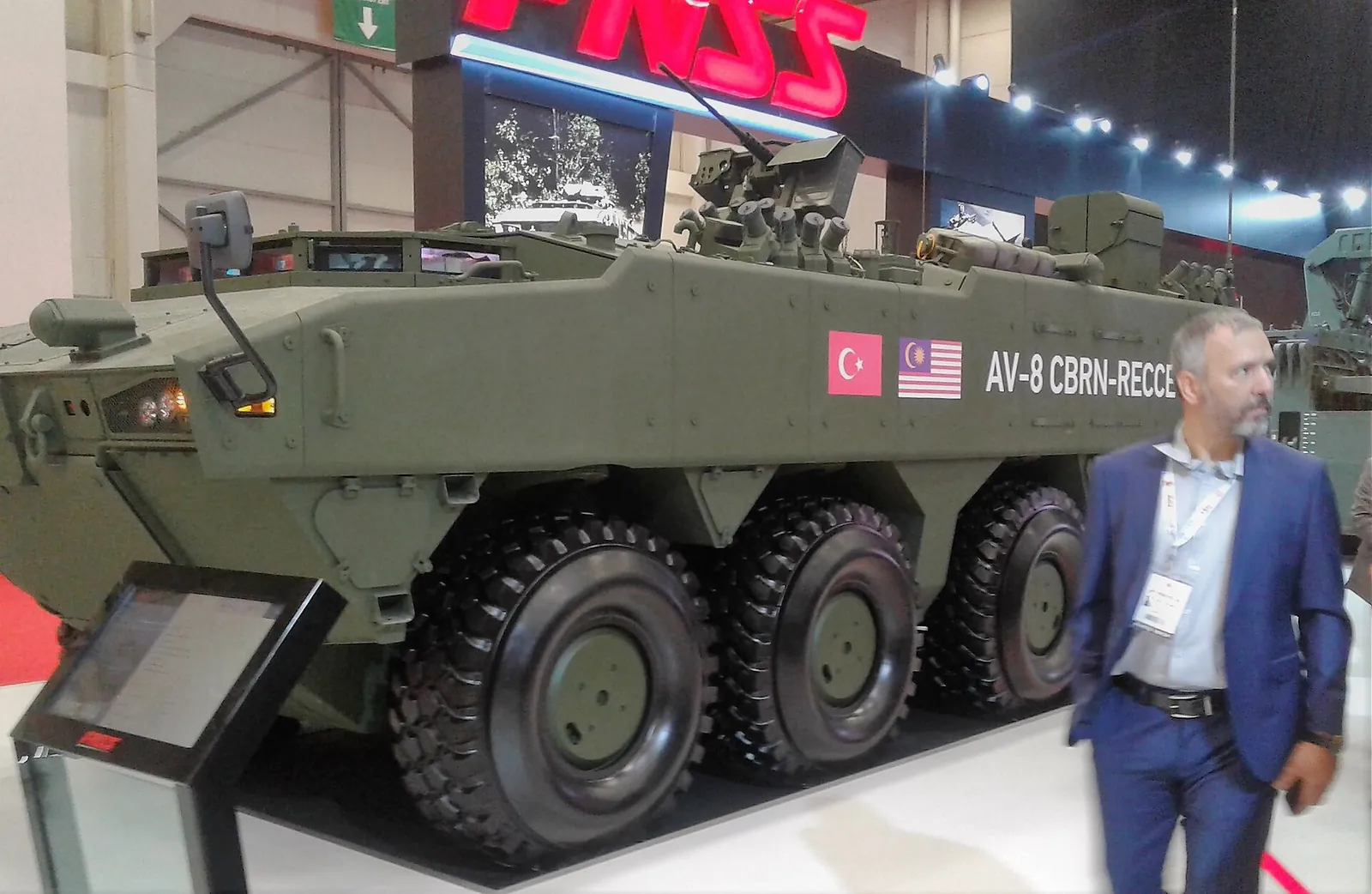
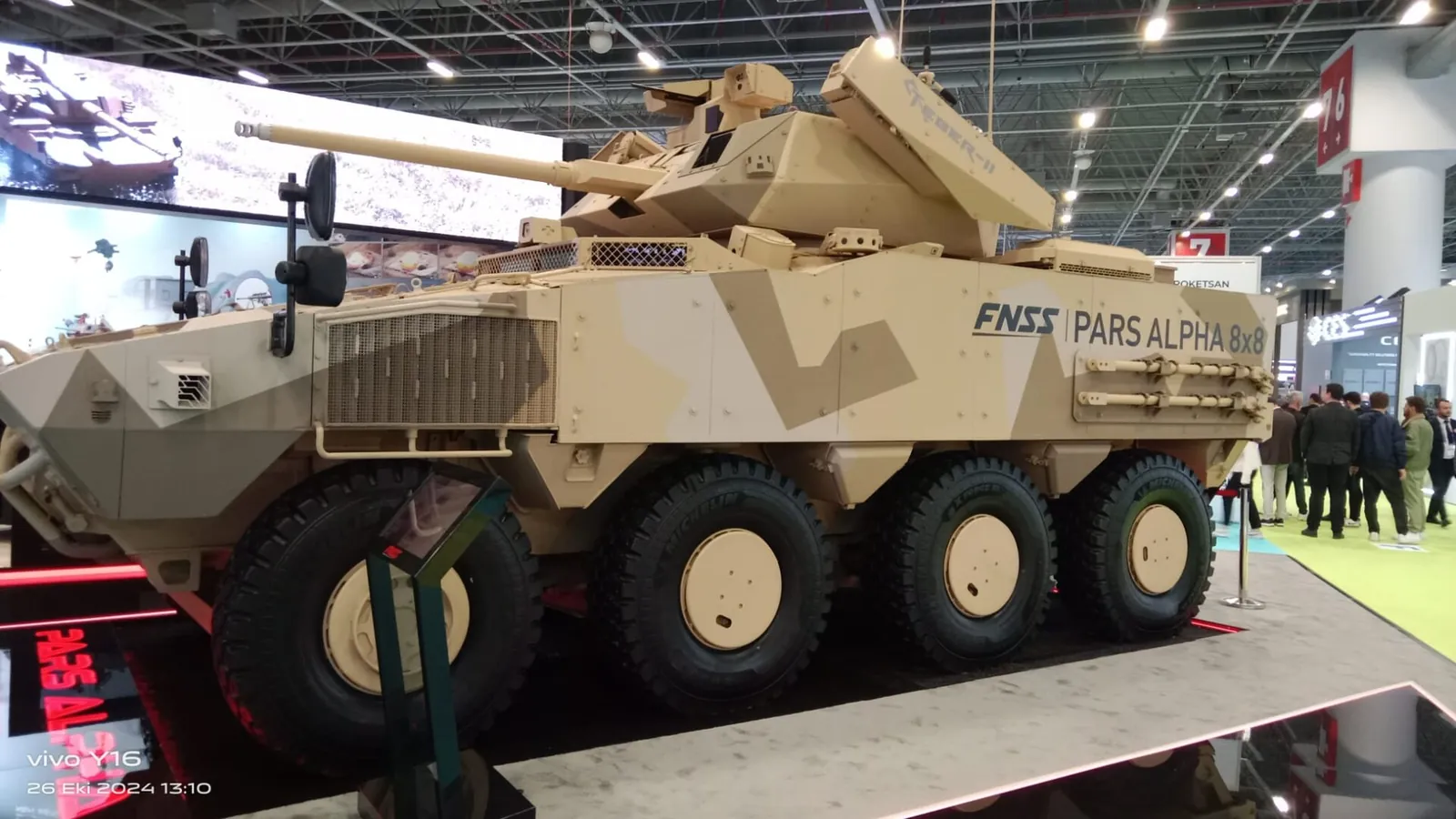
The FNSS PARS family is a modular option available in 4×4, 6×6 and 8×8 configurations; amphibious capability and different mission modules (troop carrier, command, mortar) are stated in open sources. The Otokar ARMA is similarly in the 6×6/8×8 amphibious wheeled class. The Otokar COBRA II is a lighter, mine-protected 4×4 for reconnaissance, patrol and troop transport. Most of these vehicles can be integrated with a remote-controlled weapon station (12.7 mm / 40 mm grenade launcher).
| Vehicle | Configuration | Key feature | Implication for Moldova |
|---|---|---|---|
| FNSS PARS | 4×4 / 6×6 / 8×8 | Modular, amphibious, multi-role | Flexible for river lines and plains |
| Otokar ARMA | 6×6 / 8×8 | Amphibious, high payload | Fast movement along a long border |
| Otokar COBRA II | 4×4 | Light, mine-protected, agile | Economical for recce and patrol |
Configuration and equipment options are based on the manufacturer’s public brochures; any country-specific order content should be treated as an unconfirmed estimate.
MRAP and Mine-Protected Vehicles
The hybrid-threat element in Moldova’s security environment and the regional mine/explosive risk raise the technical value of mine-resistant (MRAP-class) vehicles. Their V-shaped hull deflects blast energy to protect the crew against improvised explosive devices (IEDs) and land mines. For a force moving over plains and road networks, this protection is technically decisive in limiting casualties.
Nurol Makina EJDER YALÇIN is a 4×4 tactical wheeled armored platform offering high ballistic and mine protection, exported to numerous countries and configurable with different weapon stations and mission modules. Nurol Makina NMS (New Military Support Vehicle) is a lighter 4×4 option flexible for reconnaissance, command and troop transport. BMC KIRPI is a classic MRAP with a high hull and strong mine protection, suited to convoy escort and troop transport. BMC AMAZON is a more modern 4×4 tactical MRAP / armored personnel carrier option.
| Vehicle | Class | Protection focus | Typical role |
|---|---|---|---|
| Nurol EJDER YALÇIN | 4×4 tactical armored | Ballistic + mine, modular | Patrol, command, fire support |
| Nurol NMS | 4×4 light | Mine-protected, agile | Recce, troop transport |
| BMC KIRPI | MRAP | High V-hull protection | Convoy escort, transport |
| BMC AMAZON | 4×4 tactical MRAP | Modern hull, mine-protected | Troop transport, patrol |
This class directly answers Moldova’s need to prioritize crew protection in low/medium-intensity and hybrid-threat scenarios. Its limit is that heavy MRAPs are more sensitive to maneuver on soft farmland and to bridge-class constraints.
Tracked Armored Combat Vehicles
Tracked vehicles surpass their wheeled counterparts in soft-ground performance, heavy-armor carrying capacity and large turret/weapon integration. But these advantages come with a cost and logistics burden that must be stated plainly: tracks and drivetrains require heavy maintenance, fuel consumption is high, strategic road movement needs tanker/lowbed transport, and training and sustainment costs rise markedly versus wheeled vehicles. For Moldova, with a small defense budget and limited personnel, this burden is a serious technical constraint.
The FNSS KAPLAN family is a modular platform in the tracked armored combat/assault vehicle class, configurable with different turrets and anti-tank missile integrations per open sources. The Otokar TULPAR is a medium-heavy tracked armored combat vehicle oriented to mechanized infantry with modern turret options. There is also a modernization path: ACV-15 modernization covers powerpack, protection and weapon-system upgrades of the already widely used tracked armored combat vehicle family — a route that can technically soften the logistics transition compared with procuring a new platform from scratch.
| Vehicle | Class | Strength | Logistics / cost note |
|---|---|---|---|
| FNSS KAPLAN | Tracked IFV/assault | Modular turret, heavy armor | High sustainment and training load |
| Otokar TULPAR | Medium-heavy tracked IFV | Mechanized infantry, strong firepower | High fuel/maintenance cost |
| ACV-15 modernization | Existing tracked upgrade | Known platform, phased transition | More economical than a new platform |
In short, while tracked options are superior where heavy combat capability is required, their technical priority is lower than wheeled/MRAP solutions for Moldova’s budget and logistics profile. This honest assessment is the basis of balanced modernization planning.
Comparative Assessment of the Armored Vehicles
The tables below summarize the Turkish armored vehicles covered here in terms of role, protection and mobility, and match them with foreign counterparts. The assessment is based on open sources; it is not a precise performance measurement.
Turkish vehicles and foreign counterparts
| Turkish vehicle | Comparable foreign system | Shared mission area |
|---|---|---|
| FNSS PARS | Patria AMV / Piranha | Wheeled armored transport |
| Otokar COBRA II | Oshkosh M-ATV class | Light 4×4 recce/patrol |
| BMC KIRPI | MaxxPro / Bushmaster | MRAP mine protection |
| FNSS KAPLAN | ASCOD / CV90 class | Tracked armored combat |
Ten-criteria suitability scoring
Scores are an open-source technical assessment on a 1–10 scale, not a precise performance measurement. Higher scores indicate a better fit to Moldova’s requirement profile.
| Vehicle | Terrain | Mine prot. | Mobility | Maint. | Training | NATO fit | Modular | Weapon st. | Cost | Overall |
|---|---|---|---|---|---|---|---|---|---|---|
| FNSS PARS | 9 | 7 | 9 | 8 | 7 | 8 | 9 | 8 | 7 | 8.0 |
| Otokar ARMA | 9 | 7 | 8 | 8 | 7 | 8 | 8 | 8 | 7 | 7.8 |
| Otokar COBRA II | 8 | 7 | 9 | 8 | 8 | 7 | 7 | 7 | 9 | 7.8 |
| EJDER YALÇIN | 8 | 9 | 8 | 7 | 7 | 8 | 8 | 8 | 7 | 7.8 |
| Nurol NMS | 8 | 8 | 8 | 7 | 8 | 7 | 7 | 7 | 8 | 7.6 |
| BMC KIRPI | 7 | 9 | 7 | 8 | 8 | 7 | 6 | 6 | 8 | 7.3 |
| BMC AMAZON | 8 | 8 | 8 | 7 | 7 | 7 | 7 | 7 | 7 | 7.4 |
| FNSS KAPLAN | 7 | 8 | 7 | 5 | 5 | 7 | 8 | 9 | 5 | 6.6 |
| Otokar TULPAR | 7 | 8 | 6 | 5 | 5 | 7 | 8 | 9 | 5 | 6.6 |
| ACV-15 mod. | 7 | 7 | 6 | 6 | 7 | 7 | 6 | 7 | 7 | 6.7 |
As the table shows, wheeled and MRAP-class vehicles show the highest technical fit for Moldova’s profile of plains terrain, mine threat and budget constraints; tracked vehicles, while strong in heavy combat capability, drop on the maintenance/cost criteria.
Technical Fit for Moldova: Synthesis
Moldova’s open-source requirement profile for ground-force modernization can be grouped under four headings: (1) high mobility over rolling plains and farmland; (2) crew protection against mine and hybrid threats; (3) low sustainment burden suited to a small budget and limited personnel; (4) STANAG compatibility for joint NATO/EU training and exercises.
The highest technical overlap with this profile comes from wheeled armor (FNSS PARS, Otokar ARMA, COBRA II) and mine-protected MRAP-class vehicles (Nurol EJDER YALÇIN, NMS, BMC KIRPI, AMAZON). Wheeled platforms provide strategic movement over plains and low cost, while MRAPs answer the protection priority in a hybrid-threat environment. Remote-controlled weapon stations give most of these vehicles firepower ranging from 12.7 mm to 40 mm.
Tracked vehicles (FNSS KAPLAN, Otokar TULPAR) come into play only when a heavy mechanized combat need arises; their technical priority is low for a small army due to high fuel, maintenance and training burdens. Updating the existing tracked inventory via ACV-15 modernization can be assessed as an intermediate solution that softens the logistics transition compared with procuring a new heavy platform from scratch.
| Need | Leading class | Example vehicles |
|---|---|---|
| Plains mobility + economy | Wheeled armor | PARS, ARMA, COBRA II |
| Mine / hybrid protection | MRAP | EJDER YALÇIN, KIRPI, AMAZON, NMS |
| Heavy combat (low priority) | Tracked IFV | KAPLAN, TULPAR |
| Phased upgrade | Modernization | ACV-15 modernization |
This assessment contains no forecast about any sale, agreement or political decision; it maps requirement against solution using publicly available technical data only.
Frequently Asked Questions
What kind of armored vehicle suits Moldova’s terrain?
The country’s rolling plains and dense farmland are well suited to wheeled armored vehicles, which offer low operating cost and high road mobility. Heavy tracked vehicles perform better on soft ground but carry a greater logistics burden.
Why are MRAP vehicles important for Moldova?
The regional mine/explosive risk and hybrid-threat environment raise the technical value of MRAP-class vehicles, whose V-shaped hull protects the crew against blasts. EJDER YALÇIN, KIRPI and AMAZON are leading examples in this class.
What is the advantage of the FNSS PARS?
The PARS family is modular across 4×4, 6×6 and 8×8 configurations; its amphibious capability and different mission modules provide flexibility for river lines and plains terrain. Any country-specific order content should be treated as an unconfirmed estimate.
Why are tracked vehicles a low priority for Moldova?
Tracked vehicles like the FNSS KAPLAN and Otokar TULPAR offer heavy armor and strong firepower, but high fuel consumption, track maintenance and training cost create a serious logistics burden for a small-budget army. Their technical priority therefore trails wheeled/MRAP solutions.
What does ACV-15 modernization mean?
It is a powerpack, protection and weapon-system upgrade of the already widely used tracked armored combat vehicle family. Because it provides a phased transition on a known platform, it is a logistically softer route than procuring a new heavy platform from scratch.
What weapon stations do these vehicles carry?
Most of the wheeled and MRAP vehicles covered can be integrated with a remote-controlled weapon station (RCWS), typically configured, per open sources, between a 12.7 mm machine gun and a 40 mm automatic grenade launcher.
Is this analysis a sales forecast?
No. The content is purely an open-source technical assessment and makes no claim about any sale, agreement or negotiation. All country-specific configuration details should be treated as unconfirmed estimates.
Are Turkish armored vehicles NATO-standard compatible?
Many Turkish armored vehicles are designed to NATO/STANAG protection and interface standards, which is a technical advantage for joint EU/NATO training and exercises and for logistics integration.
Bottom Line
Moldova’s open-source requirement map for its ground forces is shaped around mobility over rolling-plains terrain, crew protection against mine and hybrid threats, a low sustainment burden suited to a small budget, and NATO-compatible logistics. The Turkish solutions that best match this map technically are wheeled armor (FNSS PARS, Otokar ARMA, COBRA II) and mine-protected MRAP vehicles (Nurol EJDER YALÇIN, NMS, BMC KIRPI, AMAZON).
Tracked combat vehicles (FNSS KAPLAN, Otokar TULPAR) are strong in heavy mechanized scenarios but rank lower in technical priority for a small army due to fuel, maintenance and training burdens; ACV-15 modernization of the existing inventory can serve as an intermediate path that gradually eases that burden. This assessment maps requirement against solution using publicly available technical data only and contains no forecast of any sale or agreement.
Related Analysis
Sources
- Moldova Ministry of Defense — National Army official information (army.md)
- IISS The Military Balance — Moldova section (ground-force inventory)
- SIPRI — military expenditure and arms transfers database
- Manufacturer technical brochures (FNSS, Otokar, Nurol Makina, BMC)
- European Union — European Peace Facility and Moldova defense-support statements
- NATO — Partnership for Peace and STANAG standard documents
- Jane’s / specialist defense publications — Turkish armored vehicle family data (open source)