The World’s Most Exported Military UAVs (Drones)

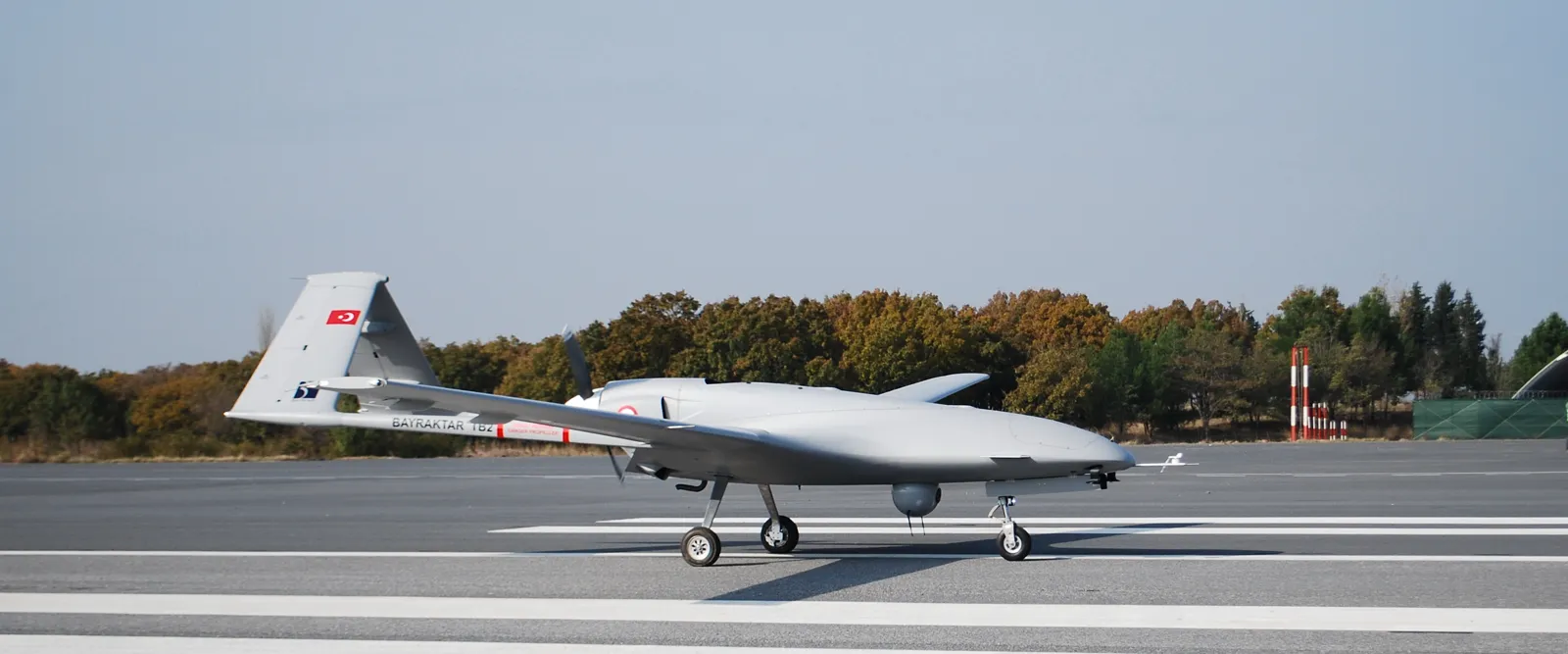
Claiming a drone is the ‘most exported’ is easy; proving it is not. Manufacturers disclose their own export figures at different times and with different scopes (a single platform versus an entire family); US DSCA notifications show a ceiling for a ‘possible sale,’ not a signed contract; and countries such as China or Iran publish no official export list at all, leaving SIPRI’s arms transfers database as the only indirect tracker. In this file we rely only on defence ministries, manufacturers’ own press releases, SIPRI and US DSCA notifications, and we separate what can be verified from what is merely press estimation.
Methodology: how to read an export figure
Most dollar figures in drone-export reporting measure different things. A DSCA notification’s ‘$3.99 billion’ is a ceiling submitted to Congress; the signed contract can end up lower. A manufacturer’s ‘$1.8 billion in exports’ is that year’s total company revenue, not an invoice to a single country. We tag every figure in this file by type:
| Figure type | What it means | Example in this file |
|---|---|---|
| Manufacturer-stated | A company’s own press-release total (revenue, country count); not independently audited. | Baykar’s “TB2: 36 countries” statement |
| Package total ÷ units | The total DSCA-approved package value, not a unit price; usually bundles training, spares and munitions. | UAE: $2.97bn for 18 MQ-9B |
| Notified ceiling ≠ concluded contract | The possible-sale approval notified to Congress can differ from the final signed contract. | India: $3.99bn notified / ~$3.5bn reported as concluded |
| Export band (SIPRI) | A country/unit count derived from SIPRI’s arms transfers database; a volume figure, not a price. | China’s Wing Loong/CH family: 17 countries, 2013-2023 |
| Program total (lease) | The total budget of a multi-year lease program, not a purchase. | Germany: a €1bn program for the Heron TP lease |
- We did not present a DSCA-notified ‘possible sale’ ceiling as a finalised contract.
- We did not sum dollar figures across manufacturers into a ‘global market size.’
- We did not place analyst/press estimates (e.g. an assumed unit price for Chinese platforms) in the same column as manufacturer or SIPRI data.
- We did not inflate country counts by picking the largest figure across differently dated announcements — we used each system’s single most recent manufacturer statement.
How many countries? The officially declared numbers
| System | Manufacturer / Country | Declared country count | Figure type | Source and date |
|---|---|---|---|---|
| Bayraktar TB2 | Baykar (Türkiye) | 36 countries | Manufacturer-stated | Baykar official press release, “Baykar Remains Global UCAV Export Leader in 2025,” 31 January 2026 |
| Wing Loong / CH family (combined) | CASC / AVIC (China) | 17 countries (2013-2023 period) | Export band (SIPRI data) | SIPRI Arms Transfers Database, via the CSIS ChinaPower Project |
| Bayraktar AKINCI | Baykar (Türkiye) | 16 countries | Manufacturer-stated | Baykar official press release, 31 January 2026 |
Second axis: America’s DSCA-approved MQ-9 sales
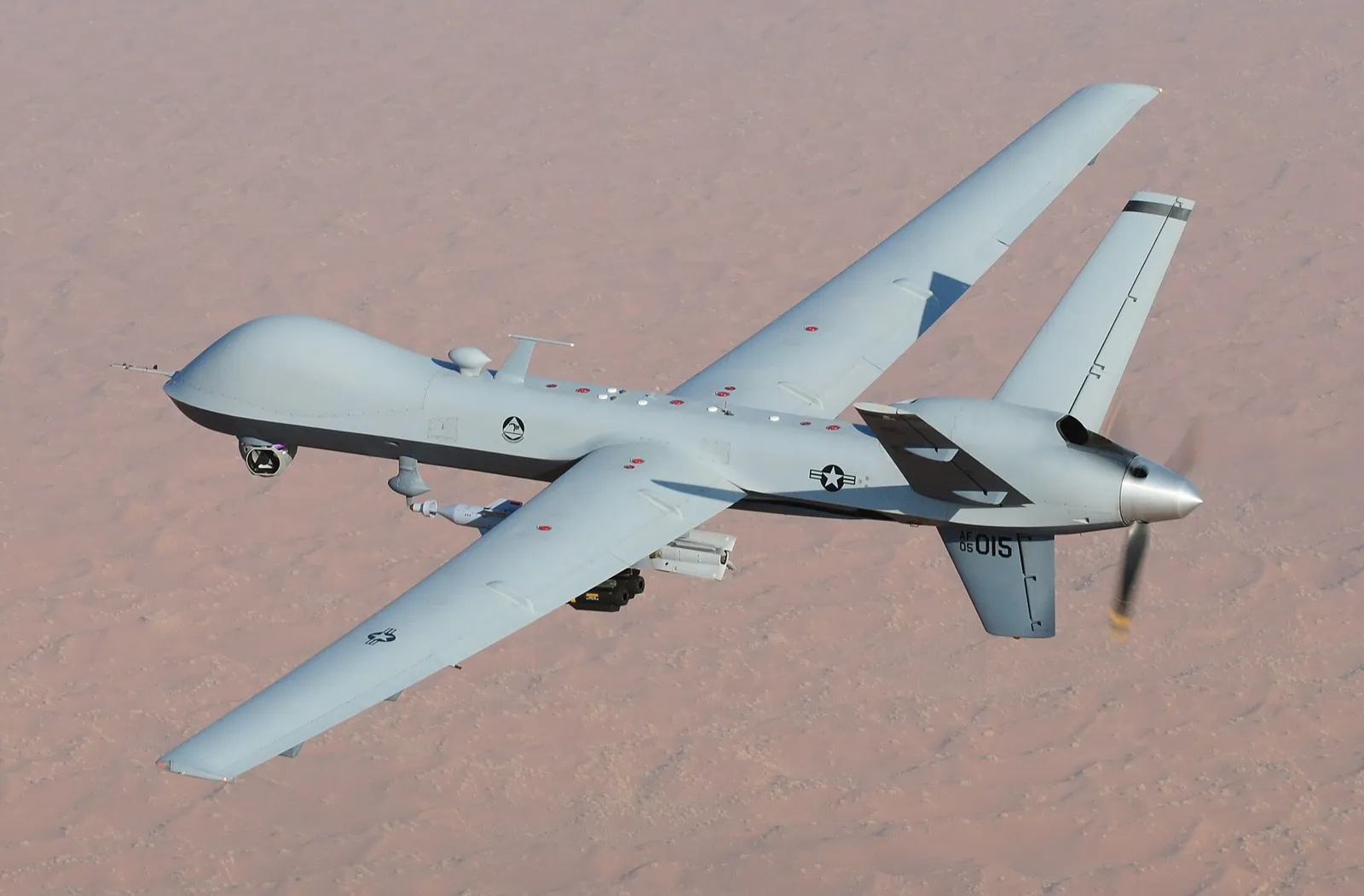
General Atomics’ MQ-9 Reaper/MQ-9B family has no single ‘exported to X countries’ statement; US foreign sales proceed through State Department approval and a DSCA (Defense Security Cooperation Agency) notification to Congress. Because these notifications are public, individual dated sales can be tracked — but each is a ‘possible sale’ approval, not a signed final contract.
| Country | Year | Quantity / detail | Value | Figure type | Source |
|---|---|---|---|---|---|
| Belgium | 2019 | 4 MQ-9B SkyGuardian | $600 million | Package total ÷ units (possible-sale approval) | DSCA notification, 25 March 2019 |
| Taiwan | 2020 | 4 MQ-9B | $600 million | Package total ÷ units (possible-sale approval) | DSCA notification, November 2020 |
| United Arab Emirates | 2020 | 18 MQ-9B | $2.97 billion (part of a $23.37bn F-35/MQ-9/munitions package) | Package total ÷ units (possible-sale approval) | DSCA notification, 10 November 2020 |
| India | 2024 | 31 MQ-9B (15 SeaGuardian for the Navy, 16 SkyGuardian for the Air Force/Army) | $3.99bn notified ceiling; ~$3.5bn reported as concluded | Notified ceiling ≠ concluded contract | DSCA certification, 1 February 2024 |
| Italy | 2024 | MQ-9B Block 5 (quantity not itemised) | $738 million / €671.5 million | Package total | DSCA notification, 15 August 2024 |
| Qatar | 2025 | MQ-9B (quantity not itemised) | ~$1.96 billion | Package total | DSCA notification, March 2025 |
Third axis: Israel’s Hermes and Heron family
| Country | Platform | Year | Value | Figure type | Source |
|---|---|---|---|---|---|
| Philippines | Hermes 900 (3 systems / 9 UAVs) | delivered 2020 | $153 million | Manufacturer-stated (contract total) | Elbit-confirmed reporting (Asian Military Review) |
| Thailand (Royal Thai Navy) | Hermes 900 | delivery 2022-2025 | ~$107.7 million (THB 4bn) | Press-reported contract total | Naval Technology / Jerusalem Post |
| Germany | Heron TP (lease, via Airbus) | approved 2018, program to 2027 | €1bn program; ~$600m IAI-Airbus component (5 aircraft, 9-year lease) | Program total (lease, not a purchase) | German Bundestag budget committee approval, 2018 |
| India | IAI Heron (multiple contracts, ~60 units) | cumulative | ~$1 billion (press aggregate) | Press aggregate of multiple contracts, not one deal | Press reporting — no single official figure disclosed |
Why do the numbers differ so much?
1. Why is the Bayraktar TB2 so far ahead by country count?
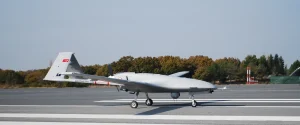
Baykar is a private company operating under direct export licensing rather than the US’s government-to-government FMS process, which shortens its sales cycle compared with America’s multi-agency DSCA route. The TB2’s visibility in the 2019-2022 conflicts in Libya, Nagorno-Karabakh and Ukraine is also widely cited as a demand driver. None of this means Baykar’s self-reported figure of 36 countries has been independently audited — it remains a manufacturer statement.
2. Why did the US share stay low until 2020?
Until 2020, the US applied a ‘presumption of denial’ to most drone exports under the Missile Technology Control Regime’s (MTCR) Category I classification. A concrete example: in 2014 the US refused even to license the unarmed Predator XP for marketing to Jordan, which subsequently acquired Chinese CH-4 drones instead. The US downgraded sub-800km/h UAS to MTCR Category II in July 2020 (finalised in the Federal Register on 12 January 2021), and in September 2025 the State Department said it would review drone exports ‘similarly to fighter aircraft’ — an official told Reuters the explicit goal was to stop ‘ceding that space to Türkiye and China.’
3. Why does China’s country count come from SIPRI rather than a manufacturer?
China’s government and manufacturers (CASC, AVIC/CAIG) do not publish a Baykar-style ‘exported to X countries’ release. That leaves SIPRI’s Arms Transfers Database — relayed in this file via the CSIS ChinaPower Project — as the only available tracker for Chinese platforms’ country and unit counts. The one concrete figure CASC itself has confirmed: since 2014 it has sold more than 30 CH-4s worth over $700 million to countries including Saudi Arabia and Iraq.
4. Why shouldn’t dollar figures be mixed together?
Two dollar figures in the same article often measure different things: DSCA’s $3.99bn notified ceiling for India and the later-reported ~$3.5bn concluded contract are two stages of the same sale; Baykar’s $2.2bn in 2025 export revenue is not an invoice to one country but the company’s total export income for the year; and Germany’s approved €1bn program for the Heron TP is a multi-year lease, not a purchase. Every figure in this file is tagged by type, and figures should not be summed or compared across types unless stated.
Türkiye: Baykar’s export figures and SIPRI’s overall ranking
According to Baykar’s official statement of 31 January 2026, the company earned $2.2 billion of its $2.5 billion total 2025 revenue (88%) from exports, with the TB2 reaching 36 countries and the AKINCI 16. This is the company’s own statement and has not been independently audited. Separately, SIPRI’s March 2026 report “Trends in International Arms Transfers, 2025” ranked Türkiye 11th globally in overall arms exports for 2021-2025, with a 1.8% share — up 122% from 0.9% in 2016-2020. Türkiye’s leading recipients in that period were Pakistan (16%), the UAE (12%) and Ukraine (8.4%). This SIPRI figure covers Türkiye’s total arms exports, not drones specifically; SIPRI’s public report does not publish a drone-only country ranking.
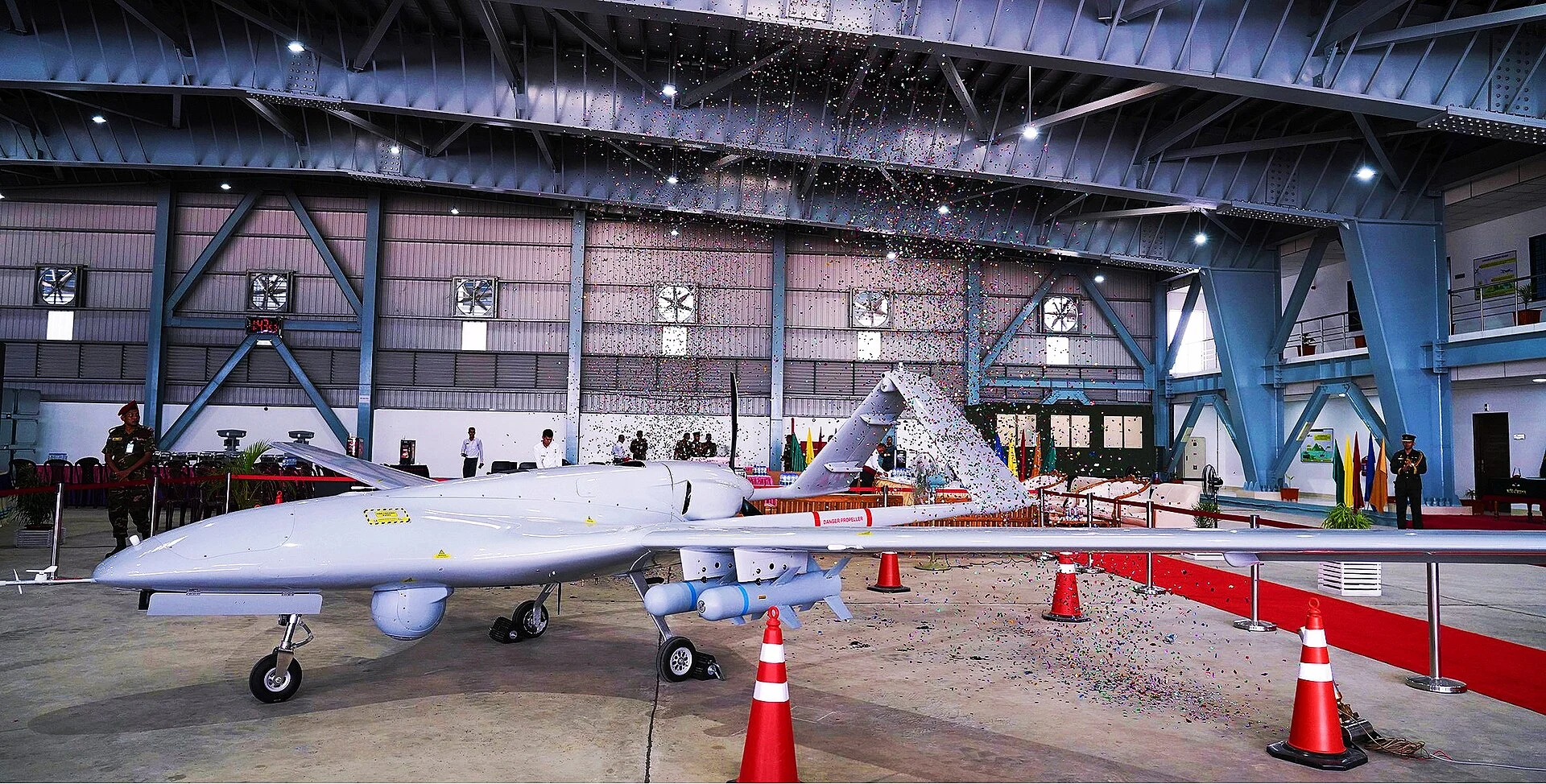
TAI has not published a total country count for its Anka and Aksungur platforms — not disclosed. Known individual cases include Tunisia (Anka-S, TAI’s first export customer), Kazakhstan (Anka, 2021 contract), and Aksungur deliveries to Kyrgyzstan and Chad; the dollar values of these contracts are mostly not officially disclosed and circulate only as press estimates.
Frequently Asked Questions
Which military drone has been exported to the most countries?
Is the AKINCI exported too?
Why is there no single manufacturer figure for China’s drone exports?
Why have US MQ-9 sales stayed limited to relatively few countries?
Are DSCA’s billion-dollar figures finalised contracts?
Is Baykar’s claim of a ‘65% market share’ backed by SIPRI data?
Sources
- Baykar, official press release, “Baykar Remains Global UCAV Export Leader in 2025,” 31 January 2026
- Baykar, official press releases, 19 January 2023 and 4 February 2025
- SIPRI, “Trends in International Arms Transfers, 2025,” March 2026
- SIPRI Arms Transfers Database (via the CSIS ChinaPower Project)
- US Defense Security Cooperation Agency (DSCA), major arms sale notifications, 2019-2025
- CASC (China Aerospace Science and Industry Corporation), public export statement
- Elbit Systems, official press releases, 2020-2025
- German Bundestag budget committee approval, 2018
- Arms Control Association, “U.S. Reinterprets MTCR Rules to Fast Track Drone Sales,” October 2025