Pakistan Missiles List 2026: Ballistic and Cruise Missiles With Range

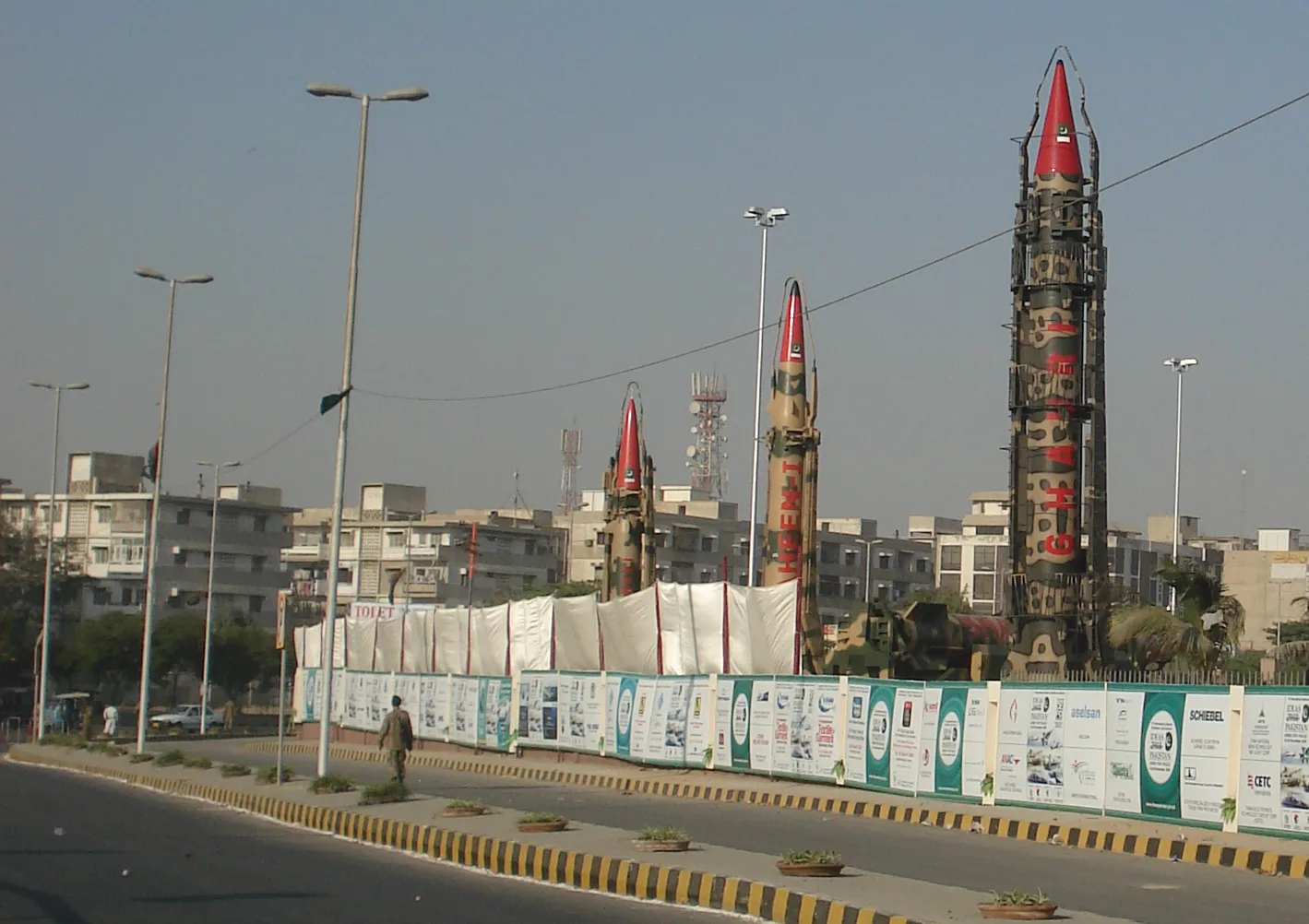
Short answer: Pakistan fields roughly 20 named missile systems. The longest-range is the Shaheen-III ballistic missile at 2,750 km (ISPR, training launch of 9 April 2022); the longest-range cruise missile is the Babur-1B at 900 km (ISPR, December 2021). The Ababeel (2,200 km) is the only system tested with MIRV warheads. Conventional long-range fires moved under a new Army Rocket Force Command in August 2025, whose first inducted weapon is the 750 km Fatah-4. FAS 2025 assesses the Nasr, Abdali, Shaheen, Ghauri, Ababeel, Babur and Ra’ad families as nuclear-capable.
Last updated: 17 September 2026
Pakistan Defence Hub: Pakistan Military Power → Army → Air Force → Navy → Defence Industry → Türkiye–Pakistan
Pakistan missiles list 2026: how to read the ranges
Every range here is the figure Inter-Services Public Relations (ISPR), the military’s media wing, stated at a test or induction. Analyst estimates from IISS, CSIS Missile Threat or the Federation of American Scientists (FAS) are kept in footnotes, and where ISPR has used two figures both are shown with an asterisk. Pakistan does not publish inventory numbers per missile type; warhead totals are estimates only (about 170, SIPRI Yearbook 2026).
Pakistan missiles and their ranges: the master table
Missiles marked with a dagger (†) are assessed as nuclear-capable in the FAS/Bulletin of the Atomic Scientists 2025 Nuclear Notebook; unmarked systems are conventional by official description. “Tested” means no induction has been announced.
| Missile | Type | ISPR-stated range | First test / induction | Producer | Status |
|---|---|---|---|---|---|
| Nasr (Hatf-9) † | Tactical ballistic | 60–70 km | Readiness launches (ISPR) | NESCOM | In service |
| Abdali † | Short-range ballistic | 450 km | Training launch May 2025 (ISPR) | NESCOM | In service |
| Shaheen-I † | SRBM, solid | 650–750 km* | First tested 2003 | NESCOM / NDC | In service |
| Shaheen-IA † | SRBM, solid | 900 km | Tested March 2021 | NESCOM / NDC | In service |
| Shaheen-II † | MRBM, solid | 1,500 km* | Training launches | NESCOM / NDC | In service (FAS 2025) |
| Shaheen-III † | MRBM, two-stage | 2,750 km | Training launch 9 April 2022 (ISPR) | NESCOM / NDC | Tested; induction status not published |
| Ghauri (Hatf-5) † | MRBM, liquid | 1,300 km | Readiness test October 2023 | KRL | In service |
| Ababeel † | MRBM with MIRV | 2,200 km | Tests 24 Jan 2017, 18 Oct 2023 | NESCOM | Testing; July 2025 failure reported, unconfirmed |
| Babur-1B † | Ground-launched cruise | 900 km | Test December 2021 (ISPR) | NESCOM | In service |
| Babur-2 † | Ground-launched cruise | 700 km class | In service | NESCOM | In service |
| Babur-3 † | Submarine-launched cruise (SLCM) | 450 km | First test January 2017 | NESCOM | Tested; sea-based leg |
| Ra’ad (Hatf-8) † | Air-launched cruise (ALCM) | 350 km | In service | NESCOM | In service |
| Ra’ad-II † | Air-launched cruise missile | 600 km | Test 18 February 2020 (ISPR) | NESCOM | Tested |
| Taimoor | Air-launched cruise, conventional | 290 km (export figure)* | Mirage III tests; anti-ship firing 21 Apr 2026 (Janes) | NESCOM (marketed by GIDS) | In service, PAF and Navy |
| Harbah | Ship-launched cruise, dual-role | Not disclosed | Fired from PNS Himmat, 3 January 2018 | NESCOM | In service, Pakistan Navy |
| Zarb | Coastal anti-ship cruise | ~300 km | Tested 2016 | NESCOM | In service (coastal batteries) |
| Fatah-1 | Guided multiple-launch rocket | 140 km | Test 7 January 2021 | NESCOM | In service |
| Fatah-2 | Guided rocket / SRBM | 400 km | Test 28 April 2026 (ISPR) | NESCOM | In service |
| Fatah-4 | Ground-launched cruise (GLCM) | 750 km | Inducted 30 Sep 2025 (ISPR) | NESCOM | In service, Army Rocket Force Command |
| SMASH | Anti-ship ballistic missile (ASBM) | ~350 km | Test announced 25 November 2025 | NESCOM | Tested, Pakistan Navy |
* Shaheen-I: ISPR releases have cited both 650 km and 750 km. Shaheen-II: ISPR has stated 1,500 km; some analyst assessments place it in the ~2,000 km class. Taimoor: 290 km is the GIDS export figure; a domestic range of around 600 km has been reported but not confirmed by ISPR. Nasr: ISPR has used both 60 km and 70 km. Ababeel: the July 2025 failure is a press report.

Ballistic missiles: Nasr, Abdali, Shaheen, Ghauri and Ababeel
The ballistic line runs from a 60–70 km battlefield rocket to a 2,750 km two-stage missile, almost all of it solid-fuelled. The exception is the Ghauri (Hatf-5), a liquid-fuel 1,300 km missile from Khan Research Laboratories (KRL), whose October 2023 firing ISPR framed as a readiness test.
Nasr and Abdali: the short end
The Nasr (Hatf-9) is a 60–70 km tactical ballistic missile fired from a multi-tube launcher; CSIS Missile Threat lists it as the shortest-range system in the inventory and FAS counts it as nuclear-capable, which is why it features in every discussion of “full spectrum deterrence”. The Abdali sits one step up at 450 km, with an ISPR training launch in May 2025.
Shaheen-I, IA, II and III: the solid-fuel spine
Developed at the National Defence Complex (NDC) within NESCOM, the Shaheen family covers 650–750 km (Shaheen-I, first tested 2003), 900 km (Shaheen-IA, tested March 2021) and 1,500 km (Shaheen-II). The two-stage Shaheen-III was fired in a training launch on 9 April 2022 with an ISPR-stated 2,750 km, the longest Pakistan has ever announced. ISPR has not published a formal induction date for it, so the table records it as tested.
Ababeel: the MIRV programme
The Ababeel is a 2,200 km medium-range missile designed for multiple independently targetable re-entry vehicles (MIRV), tested on 24 January 2017 and 18 October 2023; IISS read the 2023 test as confirming Pakistan’s MIRV ambitions. A July 2025 test was reported to have failed, without official confirmation, so the status column keeps it in testing.
Cruise missiles: Babur, Ra’ad, Taimoor, Harbah, Zarb and Fatah-4
Ground-launched: Babur-1B, Babur-2 and Fatah-4
The Babur-1B reached 900 km in its December 2021 test, per ISPR, and is the longest-range cruise missile in the inventory; the Babur-2 is a 700 km-class weapon. Both are assessed as nuclear-capable by FAS. The Fatah-4 is a conventional 750 km ground-launched cruise missile (GLCM) that ISPR described as “newly inducted” on 30 September 2025 under the Army Rocket Force Command. Its range overlaps the Babur family, but the two serve different commands.
Air-launched: Ra’ad, Ra’ad-II and Taimoor
The Ra’ad (Hatf-8) air-launched cruise missile (ALCM) is stated at 350 km; the Ra’ad-II reached 600 km in a test ISPR announced on 18 February 2020. Both are assessed as nuclear-capable. The Taimoor is a conventional ALCM tested from a Mirage III and marketed by GIDS at 290 km; Janes recorded its first known anti-ship firing on 21 April 2026. The carrier aircraft are listed in the PAF aircraft inventory.
Sea-launched: Babur-3, Harbah and Zarb
The Babur-3 submarine-launched cruise missile (SLCM), first tested in January 2017 at a stated 450 km, underpins the sea-based leg of the deterrent. The Harbah is a ship-launched dual-role cruise missile fired from PNS Himmat on 3 January 2018, range undisclosed; the Zarb is a ~300 km coastal anti-ship missile tested in 2016. Launch platforms are in the Pakistan Navy fleet list.
Tactical rockets and the Fatah series
The Fatah family began as guided multiple-launch rockets and grew into a conventional precision-strike line: Fatah-1 (140 km, tested 7 January 2021), Fatah-2 (400 km, tested 28 April 2026 per ISPR) and the Fatah-4 cruise missile (750 km). All are NESCOM products marketed by GIDS, and all give the Army long-range fires outside nuclear command.
Naval strike: SMASH anti-ship ballistic missile
The SMASH is Pakistan’s first anti-ship ballistic missile (ASBM), a ballistic weapon with a manoeuvring warhead meant for ships; the Pakistan Navy announced a successful test on 25 November 2025 at around 350 km. With Harbah, Zarb and the Taimoor, the Navy now has four indigenous anti-ship missiles.
Army Rocket Force Command: what changed in August 2025
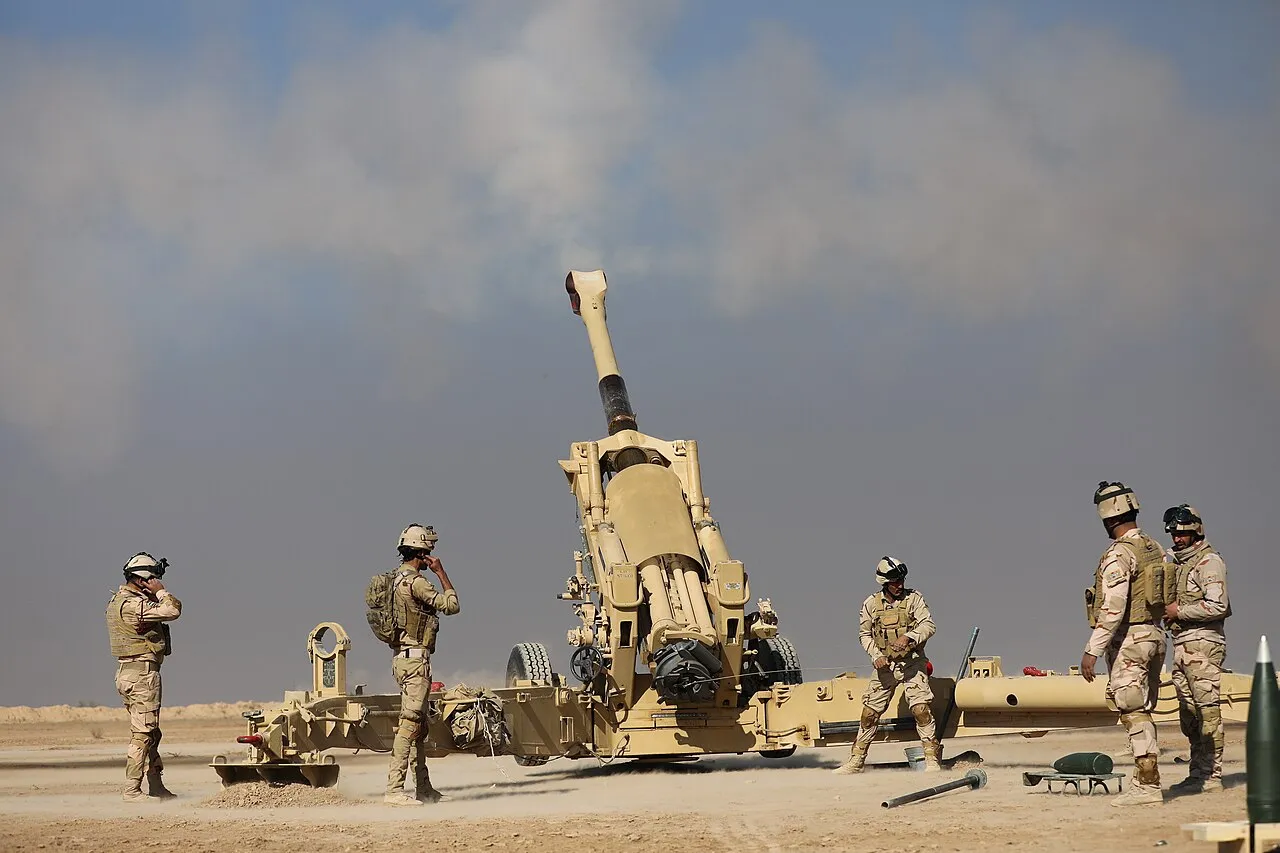
In August 2025 the Pakistan Army raised the Army Rocket Force Command (ARFC) for conventional long-range rockets and cruise missiles, separating deep fires from the strategic forces that control nuclear-capable missiles. Its first named system is the Fatah-4, inducted on 30 September 2025. ISPR has not published its order of battle or launcher numbers.
Who builds Pakistan’s missiles: NESCOM, NDC, AWC, KRL and GIDS
Almost every missile above traces back to NESCOM, a federal civilian science body formalised in 2000 that consolidated the Air Weapons Complex (AWC) and the National Defence Complex (NDC). The liquid-fuel Ghauri, built by KRL, is the exception. Exports run through GIDS, founded in 2007.
| Organisation | Role | Systems associated with it (fact file) |
|---|---|---|
| NESCOM (National Engineering and Scientific Commission) | Federal civilian S&T commission, Islamabad; formalised 2000, consolidating AWC and NDC; chairman Dr Raza Samar | Babur family, Ra’ad, Nasr, Ababeel, Fatah-1/2/4, Taimoor, Harbah, SMASH |
| NDC (National Defence Complex) | NESCOM constituent; solid-fuel ballistic missile design and production | Shaheen-I / IA / II / III |
| AWC (Air Weapons Complex) | NESCOM constituent; air-launched weapons | Ra’ad / Ra’ad-II lineage |
| KRL (Khan Research Laboratories) | Separate strategic organisation; liquid-fuel ballistic line | Ghauri (Hatf-5) |
| GIDS (Global Industrial and Defence Solutions) | State-owned marketing and export arm, founded 2007, Rawalpindi | Markets Fatah-1/2, Taimoor and 200+ products |
| Army Rocket Force Command | Army formation raised August 2025 for conventional long-range fires | Fatah-4 (inducted 30 Sep 2025); Fatah family |
Pakistan missiles maximum range: 2,750 km and what it means
The Shaheen-III at 2,750 km answers the “Pakistan missiles maximum range” question: no official statement claims a longer range, and Pakistan has not announced an ICBM (intercontinental ballistic missile) programme. By the classes in the missile range guide, Pakistan fields short- and medium-range ballistic missiles only.
| Range band | Systems | What it covers |
|---|---|---|
| Up to 150 km | Nasr (60–70 km), Fatah-1 (140 km) | Battlefield targets; Nasr is the shortest-range nuclear-capable system per FAS |
| 300–500 km | Zarb (~300 km), Ra’ad (350 km), SMASH (~350 km), Fatah-2 (400 km), Abdali (450 km), Babur-3 (450 km) | Theatre depth, coastal denial, sea-based leg |
| 600–1,000 km | Ra’ad-II (600 km), Shaheen-I (650–750 km), Babur-2 (700 km class), Fatah-4 (750 km), Shaheen-IA (900 km), Babur-1B (900 km) | Bulk of the strike arsenal |
| 1,300–2,200 km | Ghauri (1,300 km), Shaheen-II (1,500 km), Ababeel (2,200 km, MIRV) | MRBM tier; Ababeel is the only MIRV-tested system |
| 2,750 km | Shaheen-III | Longest range ISPR has ever stated |
Nuclear-capable versus conventional: keeping the two lists separate
Pakistan does not confirm which missiles carry nuclear warheads. The dagger (†) marks follow the FAS/Bulletin of the Atomic Scientists 2025 assessment, an independent estimate. Warhead totals are likewise estimates: about 170 per SIPRI Yearbook 2026. Envanter Medya publishes no technical or operational detail on warhead design or deployment.
FAS assesses the nuclear-capable set as Nasr, Abdali, Shaheen-I/IA/II/III, Ghauri, Ababeel, Babur-1B/2/3 and Ra’ad/Ra’ad-II; the conventional set is Fatah-1/2/4, Taimoor, Harbah, Zarb and SMASH. The doctrine, “full spectrum deterrence” within “credible minimum deterrence” (National Command Authority, December 2017), is explained in the Pakistan nuclear weapons guide.
How Pakistan’s missiles compare with India’s
A side-by-side table needs the same criteria, year and source class for both countries, so this page does not build one. The India–Pakistan military strength comparison 2026 applies those rules, and the India military inventory lists the Agni and BrahMos families with their own official ranges. The full Pakistani picture is in the Pakistan military power 2026 pillar.
Frequently Asked Questions
What is the Shaheen missile range in km?
ISPR-stated ranges: Shaheen-I 650–750 km, Shaheen-IA 900 km, Shaheen-II 1,500 km and Shaheen-III 2,750 km (training launch 9 April 2022), the longest Pakistan has announced.
What is the Babur missile range?
ISPR gave the Babur-1B 900 km after its December 2021 test; Babur-2 is 700 km class and the submarine-launched Babur-3 is stated at 450 km. FAS assesses all three as nuclear-capable.
What is Pakistan’s maximum missile range?
Shaheen-III, at 2,750 km according to ISPR. No official statement claims a longer range and Pakistan has never announced an ICBM programme.
How many nuclear missiles does Pakistan have?
No official number exists. SIPRI Yearbook 2026 estimates about 170 warheads in total; FAS 2025 suggests roughly 200 by the late 2020s. Missile counts per type are not published.
What is the Pakistan Army Rocket Force Command?
A formation raised in August 2025 for conventional long-range rockets and cruise missiles; its first named system is the 750 km Fatah-4, inducted 30 September 2025.
Related Envanter Medya guides
- India–Pakistan Military Strength Comparison 2026
- Is Pakistan a Nuclear Power? History, Estimated Arsenal and Doctrine
- Pakistan Military Power 2026: Army, Air Force, Navy and Defence Industry
- Pakistan Navy Ships and Submarines 2026
- Pakistan Air Force Aircraft Inventory 2026
- SRBM vs MRBM vs IRBM vs ICBM — Missile Range Explained
Sources
- ISPR / Dawn — Shaheen-III training launch (9 April 2022)
- ISPR via Dawn — Babur-1B 900 km test (December 2021)
- IISS — Pakistan missile test confirms MIRV ambitions (October 2023)
- Defense News — Ghauri readiness test (October 2023)
- Arab News — Fatah-4 inducted, Army Rocket Force Command (September 2025)
- Janes — First anti-ship firing of Taimoor (April 2026)
- Army Recognition — SMASH anti-ship ballistic missile test (November 2025)
- CSIS Missile Threat — Harbah cruise missile test (January 2018)
- Bulletin of the Atomic Scientists / FAS — Pakistan nuclear weapons, 2025
- SIPRI Yearbook 2026 — world nuclear forces