Peru’s Military Strength: Tanks, Aircraft and Ships in the Inventory (2026)

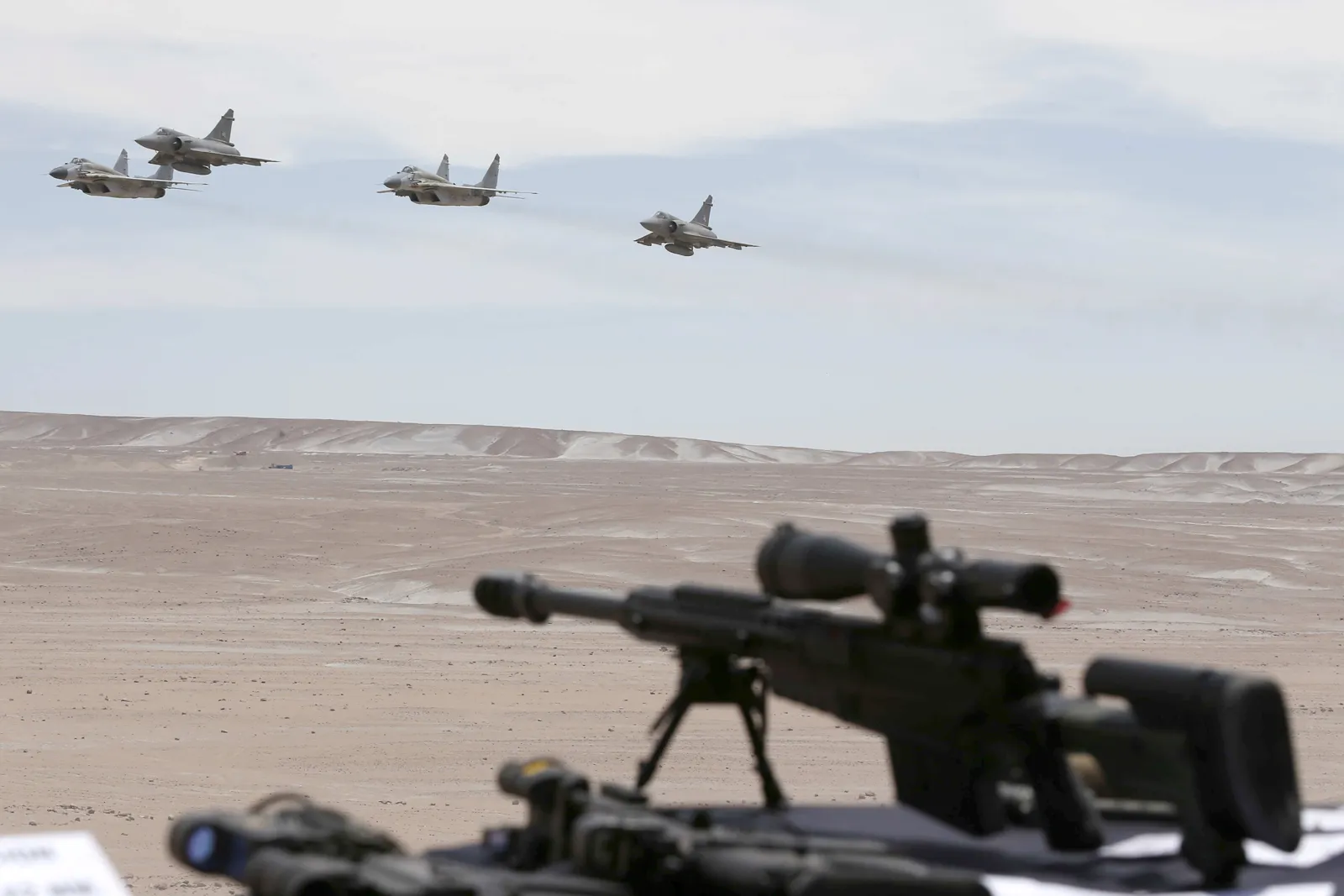
Peru’s military inventory holds some of the sharpest contrasts in South America. With six Type 209 submarines the country fields the continent’s largest underwater force and builds a significant share of its naval platforms at its own SIMA shipyard; yet the army’s tank fleet still consists of T-55s bought in the 1970s and the backbone of its air defence remains the ZSU-23-4 Shilka anti-aircraft gun. Three major procurement lines opened since 2024 — the F-16 Block 70, the K2 Black Panther and the PULS rocket launcher — show that this inventory is set for substantial renewal over the coming decade.
At a Glance
- Active personnel: ≈ 120,000 active, 386,000 reserve and 60,000 paramilitary; the Navy employs 25,988 and the Air Force about 17,900
- Main battle tanks: 355 (GFP 2026, 231 ready); all of them Soviet-era T-55s, with 54 South Korean K2 Black Panthers planned as replacements
- Military aircraft (total): ≈ 252 (139 ready); the combat core is 11 Mirage 2000s, 8 MiG-29s and 10 Su-25s, with a contract for 12 F-16 Block 70s signed on 20 April 2026
- Air defence: Predominantly gun-based: about 35 ZSU-23-4 Shilkas and more than 80 ZU-23-2s; on the missile side, upgraded S-125s plus Igla-1, Strela and Polish-built GROM shoulder-launched systems
- Navy: 6 submarines, 7 frigates, 8 corvettes and 78 platforms in total; with six Type 209s it fields South America’s largest submarine force
- GFP ranking: 50th among 145 militaries (PwrIndx 0.8827); defence budget $2.55 billion (GFP 2026)
Note: The inventory figures below are approximate values drawn from open sources such as Global Firepower, the IISS Military Balance and SIPRI.
About the Peru Armed Forces
The Peruvian Armed Forces comprise the Army (Ejército del Perú), the Navy (Marina de Guerra del Perú) and the Air Force (Fuerza Aérea del Perú), coordinated by a Joint Command. In Global Firepower’s 2026 data the country ranks 50th among 145 militaries with a PwrIndx of 0.8827. Active personnel number 120,000, reserves 386,000 and paramilitary forces around 60,000.
Two factors shape the force structure. The first is geography: a Pacific coastline of more than 2,400 km in the west, the Andes in the centre and, in the east, an Amazon basin covering over half the national territory. Each of these zones demands a different kind of force, which is why the navy operates river patrol craft and hospital ships (PIAS) and why the air force depends so heavily on its short-field DHC-6 fleet. The second factor is internal security: the counter-narcotics and counter-terrorism campaign in the VRAEM — the valley of the Apurímac, Ene and Mantaro rivers — has made the Mi-35 attack helicopters and the Su-25 and A-37B aircraft the most heavily used platforms in the inventory.
On the budget side Peru sits below the regional average. Global Firepower lists a 2026 defence budget of $2.55 billion, roughly 1.2% of GDP and clearly behind Chilean and Brazilian spending. The readiness problem created by that constraint shows in every line of the inventory: of 355 tanks 231 are serviceable, of 252 aircraft 139, and of 112 helicopters only 62.
Land Forces Inventory
| System type | Est. quantity |
|---|---|
| Main battle tanks (T-55) | ≈ 280 in service plus about 75 in storage; a Soviet-era fleet acquired in the 1970s that never received a comprehensive upgrade package |
| Main battle tanks (K2 Black Panther) | 0 of 54 on order; a framework agreement was signed with Hyundai Rotem in November 2024 and in August 2026 the army’s technical committee recommended the K2 for a 150-tank programme |
| Light tanks (AMX-13) | ≈ 108; French-sourced and in the inventory since the 1960s, largely relegated to secondary and training roles |
| Armoured personnel carriers (M113A1, UR-416, Fiat 6614/6616) | ≈ 120 + 150 + 40; the numerical backbone of the inventory, older-generation vehicles from three different sources |
| Wheeled armour (K808 White Tiger) | 30 acquired under a $60 million contract; the framework agreement foresees expansion to 141 vehicles and Hyundai Rotem plans an assembly line in Peru |
| Reconnaissance vehicles (BRDM-2, M9A1) | ≈ 30 + 50; also used by base-security elements of the army and air force |
| Self-propelled howitzers (M109A2) | ≈ 12; 155 mm, the army’s only armoured howitzer battery |
| Towed howitzers (M101, M-56, D-30, M-46, M114) | ≈ 290 (189 ready); six separate types from 105 mm to 155 mm, with the overwhelming majority of the artillery still towed |
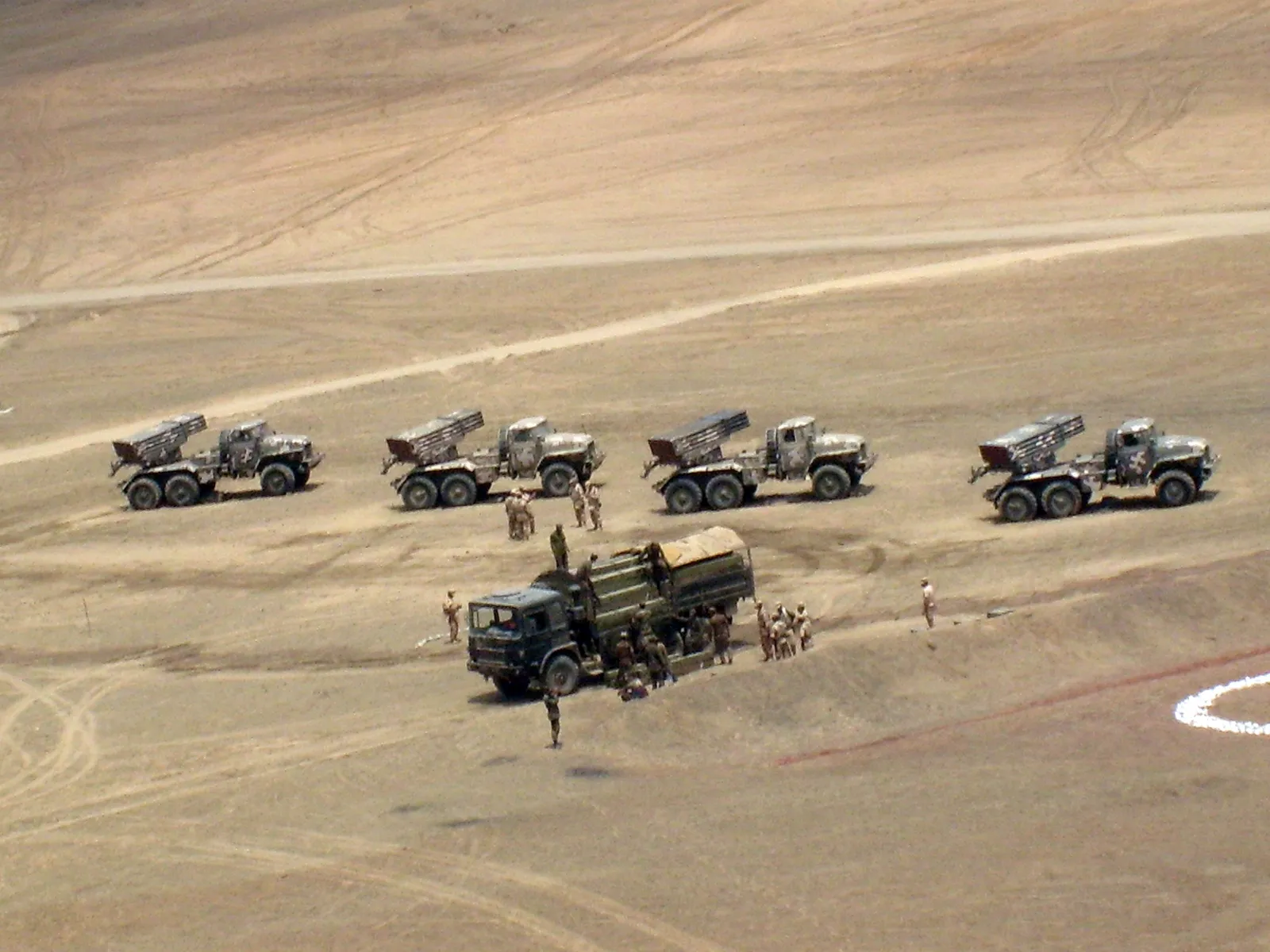
| Rocket artillery (BM-21 Grad, Type-90B) | ≈ 22 + 27 (61 launchers in total); 122 mm class, of Soviet and Chinese origin |
| Rocket artillery (PULS) | Selected in July 2025; an approximately $60 million six-year technology-transfer agreement between Elbit Systems and the state company FAME, with ranges up to 300 km — the first PULS in South America |
| Anti-tank missiles (Kornet-E, Spike-ER, HJ-73C) | A mixed Russian, Israeli and Chinese stock; part of the Kornet launchers are mounted on 22 M1165A2 HMMWVs |
| Armoured vehicles (broad definition) | ≈ 9,168 (5,959 ready); GFP’s broad count, which also covers logistics and support vehicles |
Air Force Inventory
| Platform | Est. quantity |
|---|---|
| Total military aircraft | ≈ 252; 139 of them ready |
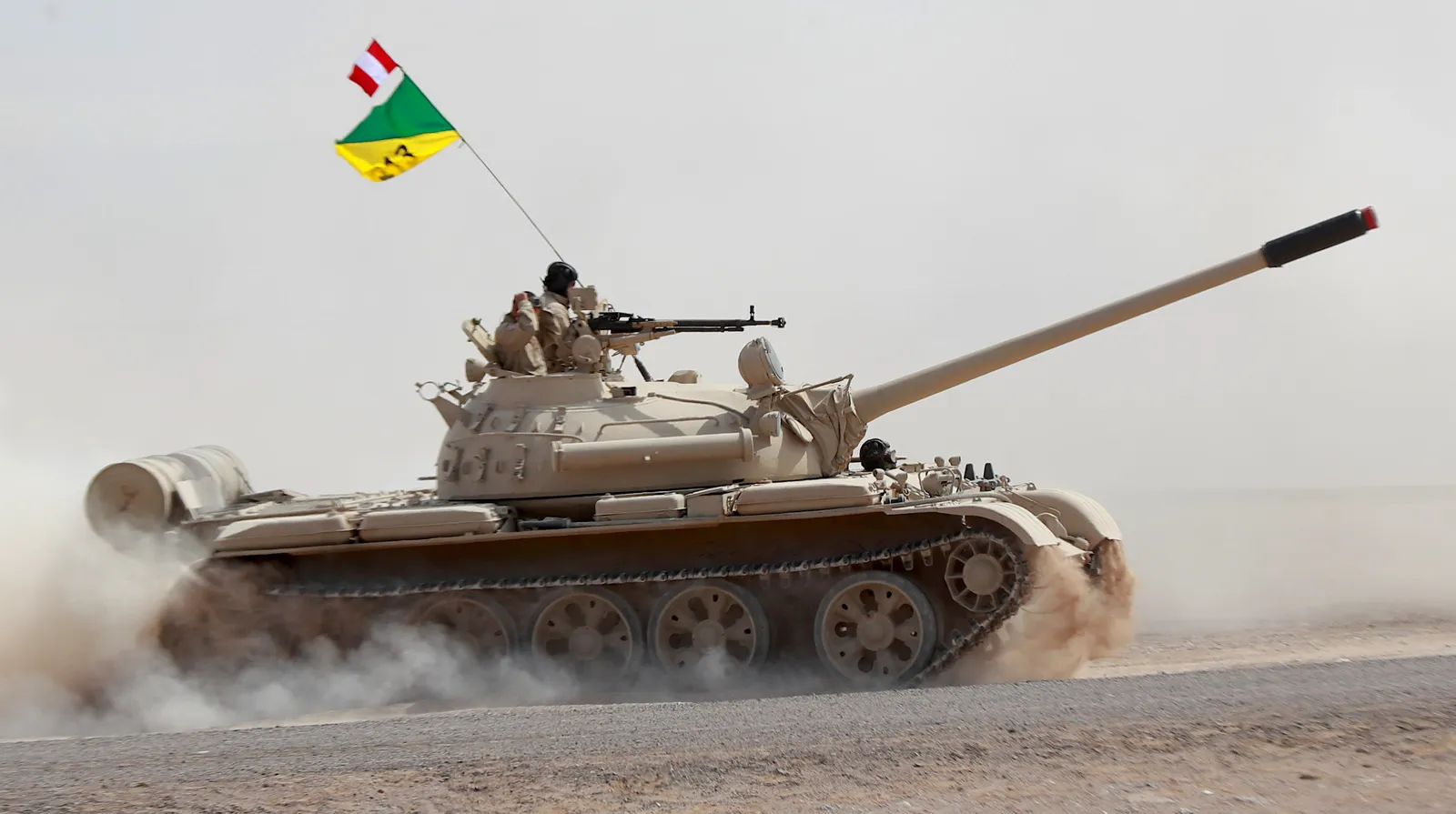
| Fighters (Mirage 2000P/DP) | 11 (9 single-seat + 2 trainers); bought from France in the 1980s, the most capable end of the fleet and next in line for retirement |
| Fighters (MiG-29SMP/UBP) | 8 (6 + 2); sourced from Belarus and Russia and partially upgraded during the 2010s |
| Fighters (F-16C/D Block 70) | 0 of 12 on order; the $3.42 billion contract was signed at Las Palmas Air Base on 20 April 2026, with first deliveries in 2029 and a second batch of 12 under consideration |
| Attack aircraft (Su-25K/UBK, A-37B Dragonfly) | ≈ 10 + 20; the main close-air-support element of internal security operations in the VRAEM region |
| Trainers (KT-1P Woongbi, Zlín Z-242) | ≈ 19 + 3; part of the KT-1P fleet was assembled at SEMAN facilities under South Korean licence |
| Tankers (KC-130, KC-135) | 2 + 1; the element that solves the range problem across a vast area of responsibility spanning the Andes and the Amazon basin |
| Transport (C-27J Spartan, L-100, An-32, DHC-6) | 6 + 3 + 3 + 15; the short-field DHC-6 fleet is the lifeline of isolated Amazon garrisons |
| Attack helicopters (Mi-35P) | ≈ 16-18 (9 ready); the heaviest firepower in the inventory and the strike element of the VRAEM campaign |
| Helicopters (Mi-17/171, Mi-8, Bell 212/412) | 112 helicopters in total (62 ready); eight more Mi-17s are on order, and the Russian-dominated fleet is under spare-parts pressure |
| Unmanned aerial vehicles | ≈ 6 reconnaissance UAVs; there is no armed UAV in the inventory and a production line is being pursued through the domestic firm Diseños Casanave |
Missile and Air-Defence Systems
| System | Type / Note |
|---|---|
| ZSU-23-4 Shilka | ≈ 35; the radar-directed quad 23 mm anti-aircraft system, the most visible and most numerous element of the air defence |
| ZU-23-2 and 23 mm towed anti-aircraft guns | ≈ 130; the numerical weight of the gun layer, used for base and position defence |
| S-125 Neva/Pechora | An upgraded Soviet-era medium-range system; the country’s only fixed surface-to-air missile layer |
| Man-portable air defence (Igla-1, Strela-2/3, GROM) | A mixed Russian and Polish stock; in 2012 Peru bought 150 GROM firing sets and 96 missiles from the TRIAD consortium of Bumar, Rafael and Northrop Grumman |
| Air-to-air missiles (R-27, R-73, MICA, Magic 2) | Carried by the MiG-29 and Mirage 2000 fleets; two separate Russian and French logistics chains |
| Anti-ship missiles (Otomat Mk2, Exocet MM38/SM39) | Aboard frigates, corvettes and submarines; the main element of naval strike power, of Italian and French origin |
| Rocket and artillery missiles (PULS) | Arriving through Elbit-FAME co-production; with precision munitions it reaches up to 300 km and marks a qualitative leap in the army’s deep-fires capability |
| Ballistic and cruise missiles | None; Peru holds no ground-launched ballistic or cruise missile |
Naval Power
| Class / Type | Est. quantity |
|---|---|
| Total naval platforms | ≈ 78 combat platforms (116 vessels in the broad count), operated by 25,988 personnel |
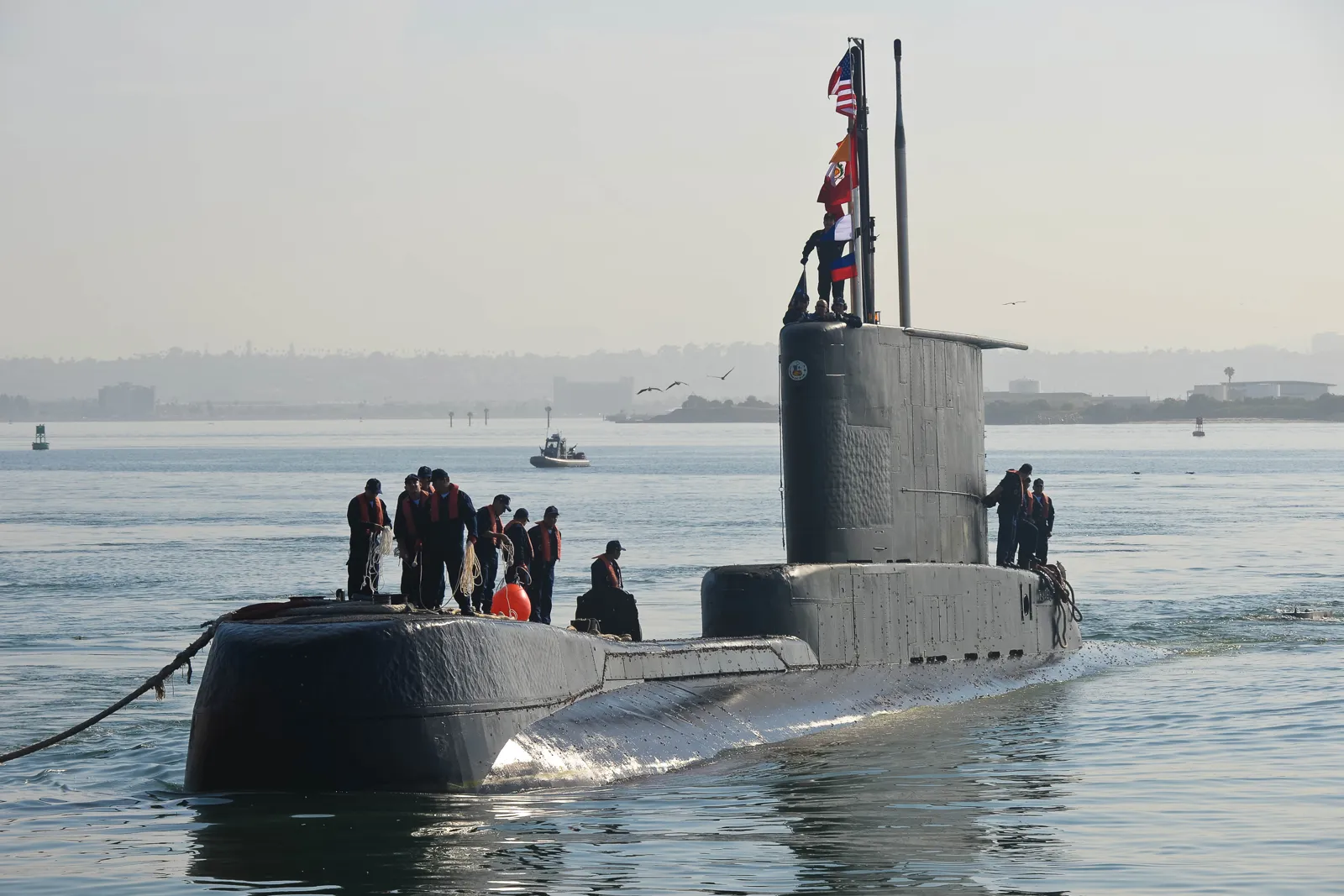
| Submarines (Type 209/1200 — Angamos class) | 4 (Angamos, Pisagua, Chipana, Antofagasta); German-designed and regularly deployed with the US DESI programme |
| Submarines (Type 209/1100 — Islay class) | 2 (Islay, Arica); the oldest pair in the fleet, completing South America’s largest submarine force at six boats |
| Frigates (Carvajal class) | 3 (Almirante Grau, Mariátegui, Villavicencio); the Peruvian version of the Italian Lupo design, part of it built at the SIMA yard |
| Frigates (Lupo class) | 4 (Aguirre, Palacios, Bolognesi, Quiñones); bought second-hand from Italy and armed with the Otomat anti-ship missile |
| Corvettes (PR-72P — Velarde class) | 6; French-sourced fast attack craft armed with the Exocet MM38 |
| Corvettes (Pohang class) | 2; transferred from South Korea in 2016 and 2021, strengthening anti-submarine warfare capability |
| Amphibious (Makassar-class LPD) | 2 (BAP Pisco 2018, BAP Paita 2023); an Indonesian-origin design built at SIMA with South Korean partners, the navy’s largest platforms |
| Patrol vessels (PGCP-50 and offshore patrol craft) | ≈ 13 offshore platforms built domestically at SIMA Chimbote, the backbone of exclusive economic zone and fisheries enforcement |
| Riverine forces and auxiliaries | River patrol craft in the Amazon basin, hospital ships (PIAS), tankers and the sail training ship Unión; in regions without land transport they are the only face of the state |
| New construction programme (HD HHI-SIMA) | Under a $463 million contract signed in April 2024, one frigate (3,400 t), one offshore patrol vessel (2,200 t) and two landing ships (1,400 t) are being built at SIMA; first delivery in 2026, completion in 2029-2030, with a submarine co-development agreement added in November 2025 |
The Turkey Angle: Turkish Defence Industry
There is no Turkish-built platform in Peru’s inventory today, nor any publicly announced defence-industry framework agreement between the two countries. The Turkish defence industry has, however, entered the Peruvian market with a direct and concrete offer: ASELSAN took part in the SITDEF exhibition held in Lima on 24-27 April 2025 with a comprehensive product package. What the company put on the table matched Peru’s inventory gaps almost exactly. In the naval domain it presented modernisation solutions for frigates and submarines that combine combat management, navigation, electronic warfare and weapon integration in a single package, alongside the MARLIN ASW 100 unmanned surface vessel developed for anti-submarine warfare. For air defence it showcased the multi-layered STEEL DOME system. On the radar side it displayed the MURAD 110-A AESA radar, with a 160 km range and developed for F-16C integration, the FULMAR 200-A and 500-A with ranges up to 370 km, the KALKAN II ground radar and the ALPER 100N and CENK 400-N naval radars, together with ANTIDOT 2-U/S counter-UAV jamming systems.
The timing of that offer is notable. On 20 April 2026, at Las Palmas Air Base, Peru signed a $3.42 billion contract for 12 F-16 Block 70 fighters, with a second batch of 12 under consideration. The fact that the MURAD 110-A radar ASELSAN displayed in Lima was developed for F-16C integration leaves a natural opening for Turkish industry to enter that fleet at subsystem level. Likewise, Peru’s six Type 209 submarines and seven frigates will generate a substantial modernisation requirement in the medium term — and the package ASELSAN highlighted at SITDEF was built for precisely that need.
Regional precedents strengthen the Turkish industry’s position in this market. In Chile, ASELSAN won a tender in July 2023 ahead of German competitors and is modernising the fire-control and sighting systems of the Leopard 2A4CHL fleet; HAVELSAN, under an agreement signed on 27 March 2025, will integrate the ADVENT combat management system into two Chilean frigates. Those two projects are direct references showing that technically demanding Latin American customers have chosen Turkish solutions. Peru’s preferred procurement model also aligns with what Turkish industry offers: the country demands technology transfer and local manufacture, as in the PULS agreement between Elbit and FAME; it is asking Hyundai Rotem for an assembly line in Peru for the K2 and K808; and it builds its naval platforms at its own SIMA yard. Joint production and technology transfer is a method the Turkish defence industry has applied and institutionalised repeatedly, from Pakistan to Indonesia.
The political groundwork is in place. Diplomatic relations between Türkiye and Peru were established in 1950, and 2025 marked their 75th anniversary. Accredited to Peru from its Santiago embassy between 1950 and 2010, Türkiye opened an embassy in Lima in 2010; Peru established its own mission in Ankara the same year. The Turkish President made the first head-of-state visit to Peru on 2-3 February 2016. The eighth round of the two countries’ Political Consultations Mechanism was held in Lima on 26 May 2025. Bilateral trade reached $575 million in 2024 and around $650 million in 2025, while TİKA projects and Peruvian students on Türkiye Scholarships form the societal leg of the relationship. At a meeting held on 3 August 2026, Peru’s Ambassador to Ankara, Luz Betty Caballero Morales, and Turkish parliamentarians underlined shared positions on issues ranging from counter-terrorism to irregular migration and natural disasters, and pointed to the boost that direct flights would give to trade.
Frequently Asked Questions
How many tanks does Peru have? Global Firepower’s 2026 data puts Peru’s main battle tank count at 355, of which 231 are serviceable. Almost all of them are the roughly 280 T-55s acquired in the 1970s, with about 75 more held in storage, plus 108 French-sourced AMX-13 light tanks. For renewal, a framework agreement for 54 K2 Black Panthers was signed with Hyundai Rotem in November 2024, and in August 2026 the army’s technical review committee recommended the K2 as the best option for a 150-tank programme.
Which fighter aircraft does the Peruvian Air Force operate? The combat fleet consists of three types: 11 Mirage 2000P/DPs bought from France in the 1980s, 8 MiG-29SMP/UBPs sourced from Belarus and Russia, and around 10 Su-25 attack aircraft, alongside 20 A-37B Dragonflies used intensively in the VRAEM campaign. The fleet’s future now rests on the F-16: 24 Gripen E/Fs were preferred in July 2025 before the decision was reversed, and on 20 April 2026 a $3.42 billion contract for 12 F-16 Block 70s was signed at Las Palmas Air Base, with first deliveries expected in 2029.
How strong is the Peruvian Navy? With 25,988 personnel the Peruvian Navy operates one of South America’s most capable fleets. Its defining feature is the submarine force: four Type 209/1200s and two Type 209/1100s make six boats in all, the largest submarine force on the continent. On the surface it fields three Carvajal-class and four Lupo-class frigates plus six PR-72P and two Pohang-class corvettes. At the centre of its amphibious capability are two Makassar-class landing platform docks built at the SIMA yard. Under a $463 million contract signed with HD Hyundai Heavy Industries in April 2024, one frigate, one offshore patrol vessel and two landing ships are also being built at SIMA.
What does Peru’s air defence look like? It is largely gun-based and of an older generation. Its most widespread element is a fleet of about 35 radar-directed ZSU-23-4 Shilkas plus more than 100 towed 23 mm anti-aircraft guns. The missile layer consists of upgraded S-125 Neva/Pechora batteries together with Igla-1, Strela and Polish-built GROM shoulder-launched systems; the GROM sets were bought in 2012 from the TRIAD consortium of Bumar, Rafael and Northrop Grumman. There is no modern long-range surface-to-air missile system and no ground-launched ballistic or cruise missile in the inventory. The Ministry of Defence lists radar and air-defence procurement among its short-term priorities.
Is there defence-industry cooperation between Peru and Türkiye? There is no Turkish-built platform in Peru’s inventory today and no publicly announced defence-industry framework agreement. The Turkish defence industry has nevertheless entered the market with concrete offers: at the SITDEF exhibition in Lima on 24-27 April 2025, ASELSAN presented Peruvian officials with frigate and submarine modernisation packages, the STEEL DOME air-defence system, the MURAD 110-A AESA radar developed for F-16C integration, the FULMAR and KALKAN II radar families and the MARLIN ASW 100 unmanned surface vessel. The diplomatic groundwork goes back to 1950; 2025 was the 75th anniversary of relations and bilateral trade reached about $650 million that year.
Bottom Line
Peru’s inventory shows armed forces moving at two different speeds. At sea the country stands on its own feet: it operates the continent’s largest submarine force with six boats, builds a significant share of its platforms — from landing ships to patrol craft — at the SIMA yard, and is lifting that capacity to frigate level through a 15-year partnership with HD Hyundai. On land and in the air the picture is far harder: the entire tank fleet consists of T-55s dating from the 1970s, the mainstay of air defence is still the ZSU-23-4, combat aircraft number fewer than 30 and only about half the inventory is serviceable. Peru is trying to close that gap with three major programmes — the $3.42 billion contract for 12 F-16 Block 70s, the K2 and K808 framework with Hyundai Rotem, and the PULS rocket launcher agreement between Elbit and FAME with a local-production requirement. All three share one denominator: technology transfer and manufacture in Peru. The country is no longer simply buying platforms; it is looking for partners to help build its own defence industry. That is precisely where the Turkish defence industry fits. The package ASELSAN brought to Lima for SITDEF 2025 — frigate and submarine modernisation, the MURAD AESA radar for the F-16C, the STEEL DOME air defence, the FULMAR and KALKAN radar families — maps almost one-to-one onto Peru’s inventory gaps. ASELSAN, which won the Leopard 2A4CHL modernisation in Chile ahead of German competitors, and HAVELSAN, which will write the combat management system for two Chilean frigates, have already proven the technical level of Turkish solutions on this continent. More than 75 years of diplomatic relations, bilateral trade approaching $650 million and Peru’s co-production-oriented procurement model keep the ground ready for that cooperation to take concrete form.
Related Reading
Sources
- Global Firepower — Peru
- IISS — The Military Balance
- SIPRI — Arms Transfers Database
- Wikipedia — List of equipment of the Peruvian Army
- Wikipedia — Peruvian Air Force
- Wikipedia — Peruvian Navy
- Turkish MFA — Türkiye-Peru Political Relations
- Defensa.com — ASELSAN at SITDEF Perú 2025
- Aerotime — Peru’s F-16 Block 70 contract
- Zona Militar — Elbit and FAME PULS co-production