World’s Longest-Range Air Defence Systems (2026)

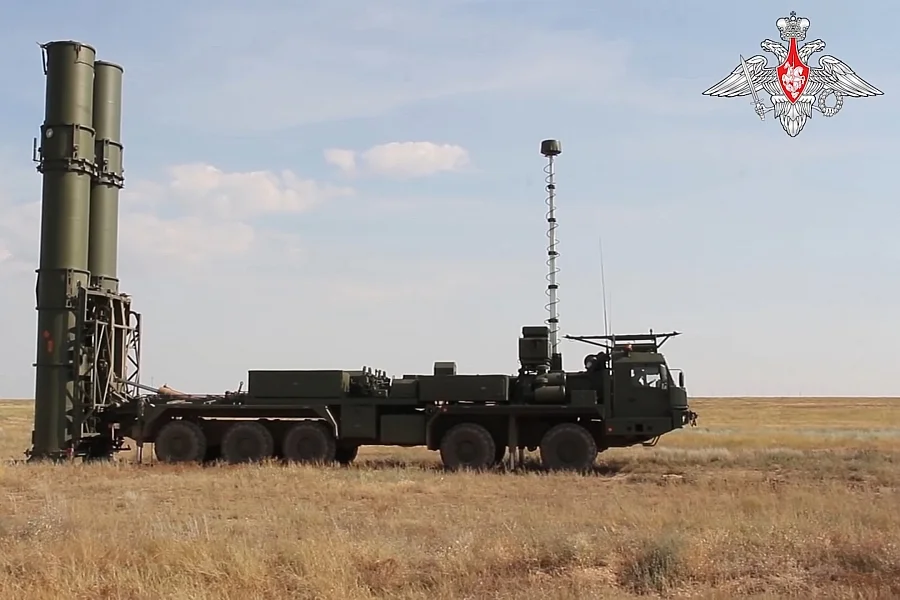
There is no single correct answer to “which air defence system has the longest range,” because the word “range” covers at least four different things in the defence industry: the maximum distance a missile’s motor can physically carry it, the distance at which a radar can see a target, the distance at which the system can actually engage that target, and the number a manufacturer prints in a marketing brochure. These four are frequently not the same.
For this piece, we collected range figures that can be cross-checked against manufacturer catalogues, ministry-of-defence statements, official test data, and independent public sources (SIPRI, IISS, CSIS Missile Threat, globalsecurity.org). Claims we could not verify are marked “undisclosed” and left out of the main table.
Methodology: what do we mean by “range”?
Next to every figure in the tables below, we note the type of source it comes from. We do not present a number from an export brochure with the same confidence as a number from an official government test report.
| Figure type | What it means | Example in this piece |
|---|---|---|
| Official test data | Distance measured by a government body or manufacturer in an audited live-fire test | THAAD (MDA), GBI (MDA), Aster 30 B1NT (Eurosam press release) |
| Manufacturer / MoD statement | Figure announced by a ministry of defence or manufacturer with no independent verification | S-500 (TASS / Russian officials), HQ-9B (Chinese state media) |
| Program target / in testing | A development-stage target value not yet fielded | Final production range for SAMP/T NG, SIPER Block-2 |
| Undisclosed | No official source published; public estimates conflict with each other | SM-3 Block IIA’s exact range, full technical specs of the S-350 Vityaz |
Main table: declared range against aerodynamic targets
The ranking below is based on the maximum engagement range valid against aircraft- and cruise-missile-class targets.
| System | Country / Manufacturer | Range (km) | Figure type |
|---|---|---|---|
| S-500 Prometheus | Rusya / Almaz-Antey | 600 | official statement (no published document) |
| S-400 Triumf (40N6E) | Rusya / Almaz-Antey | 400 | manufacturer/export data |
| HQ-9B | Çin / CPMIEC | 260 | manufacturer statement |
| Antey-2500 (S-300VM) | Rusya / Almaz-Antey | 200 | manufacturer catalogue |
| THAAD | ABD / Lockheed Martin | 200 | official (MDA/Lockheed Martin) |
| SAMP/T NG — Aster 30 B1NT | Fransa-İtalya / Eurosam | 150 | official test data (not yet operational) |
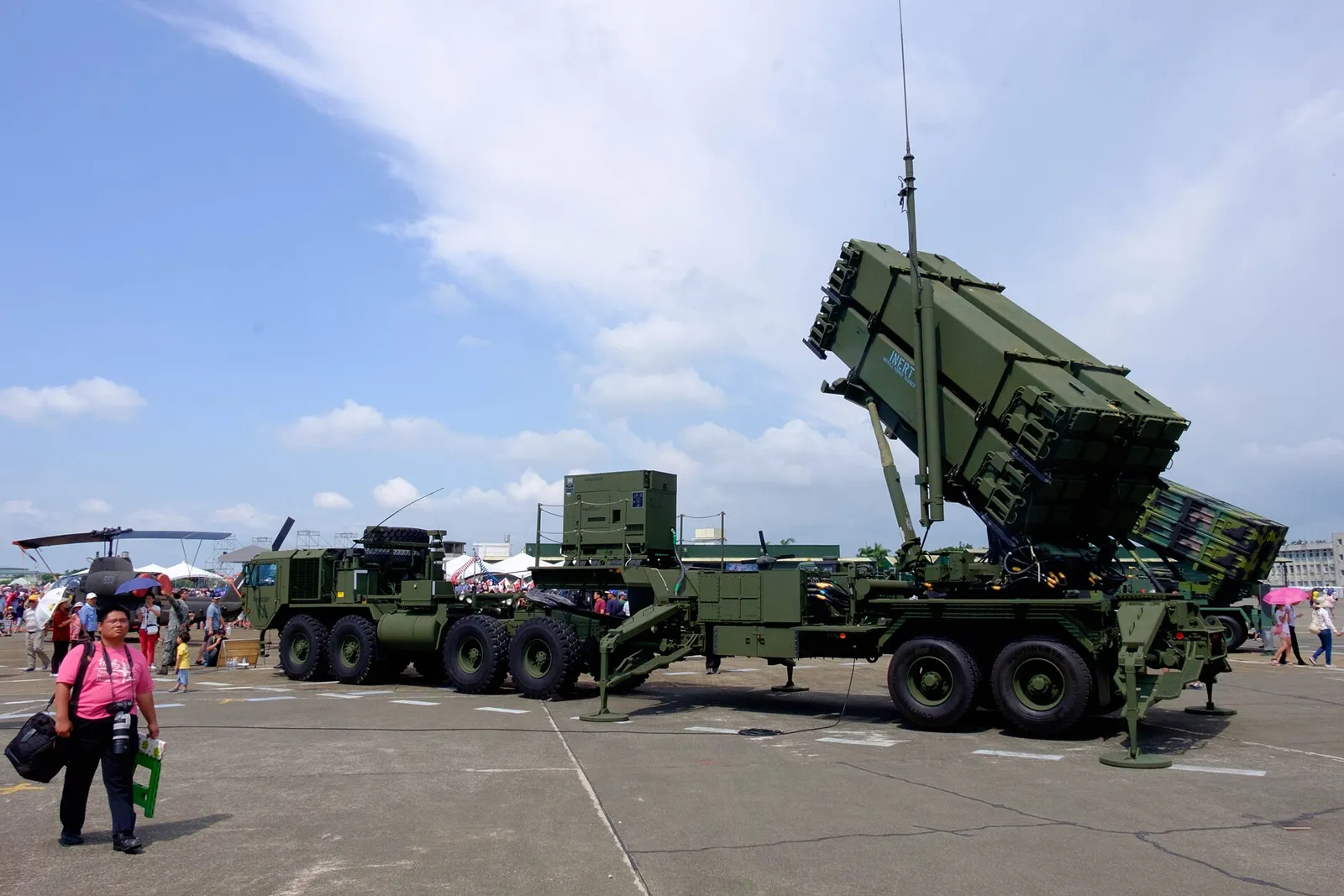
| Patriot PAC-3 MSE | ABD / Lockheed Martin | 120 | official (Lockheed Martin) |
Second axis: a different class — strategic exo-atmospheric interceptors
Some systems are quoted with figures in the hundreds or even thousands of kilometres, but these are not classic “air-defence batteries.” GBI, SM-3 Block IIA and Arrow 3 are built to intercept intercontinental or medium-range ballistic missiles outside the atmosphere (exo-atmospheric). “Range” here refers to the missile’s total flyout distance — not the distance at which it can shoot down an aircraft.
| System | Country / Manufacturer | Figure (km) | Figure type |
|---|---|---|---|
| GBI (Ground-Based Interceptor) | ABD / MDA | 5.300 | test data (public) |
| Arrow 3 (Hetz 3) | İsrail / IAI | 2.400 | undisclosed (press/industry estimate) |
| SM-3 Block IIA | ABD-Japonya / Raytheon | 1.200 | undisclosed (conflicting estimates) |
Third axis: ship-based long-range systems
| System | Country / Platform | Range (km) | Figure type |
|---|---|---|---|
| SM-6 (RIM-174 ERAM) | ABD / Raytheon | 240 | official (conservative) + independent estimate band |
| HHQ-9B (deniz tipi) | Çin | 260 | independent assessment |
| Aster 30 (deniz tipi) | Fransa-İtalya / MBDA | 120 | official (MBDA) |
Why are these figures so contested?
Missile range and radar range are not the same thing
A missile’s motor might carry it 400 km, but if the system’s own radar can only see a target at 100-150 km, that missile cannot independently engage at the longer distance without an external sensor (AWACS, satellite, another radar). This is why the S-400’s 40N6E and similar long-range missiles are subject to the “theoretical range” versus “practical engagement range” distinction.
How does an active radar seeker extend real range?
Older-generation missiles depended entirely on the main radar for guidance (semi-active homing). Newer missiles like the 40N6E carry their own active radar seeker, letting them lock onto a target independently in the missile’s terminal phase — bringing practical engagement range closer to theoretical range. Patriot’s PAC-3 MSE similarly extended its range roughly 50% over the previous generation with a dual-pulse rocket motor.
Why are “air defence” and “strategic missile shield” different classes?
A Patriot battery or an S-400 regiment provides a regional/tactical shield against fighter jets, cruise missiles, and short/medium-range ballistic threats. Systems like GBI and SM-3 Block IIA are built to intercept intercontinental ballistic missiles (ICBMs) in space, outside the atmosphere — an entirely different physics problem, command structure, and threat scenario. Ranking both on the same “range” ruler is misleading.
Is range alone a sufficient measure of superiority?
No. A single verified range figure for a battery says nothing about how many targets it can track simultaneously, how it holds up against a saturation attack (many simultaneous targets), or how it performs in an electronic-warfare environment. Annual assessments by bodies like SIPRI and IISS weigh range alongside these other factors, not in isolation.
Türkiye’s program in this category: SİPER
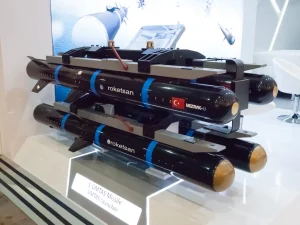
Türkiye’s indigenous long-range regional air and missile defence system, SİPER, is being developed by Roketsan, ASELSAN and SAGE under SSB coordination. According to Roketsan’s own catalogue, the SİPER Block-1 missile reaches a range above 100 km; per Roketsan’s general manager, the Block-2 missile in development targets 150 km. The system began entering Air Force Command inventory in 2024. For related rankings on this site, see our World’s 10 Most Powerful Air Defence Systems and World’s 10 Best Air Defence Systems features.
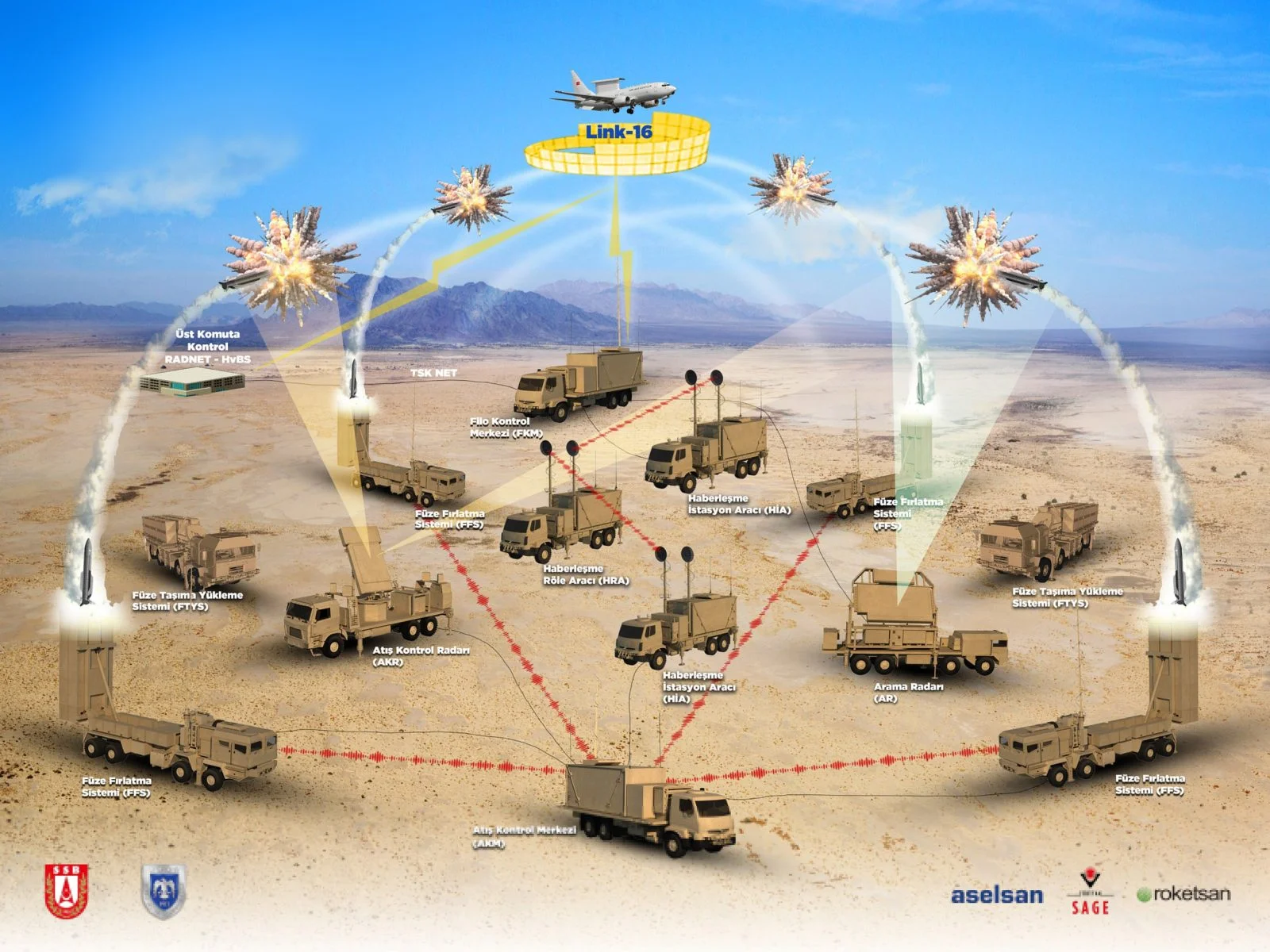
SİPER forms the long-range leg of a layered architecture (alongside the short-range HİSAR family); assessing the system’s overall architecture is a more accurate approach than looking at a single missile’s range figure in isolation.
Frequently asked questions
Which is the world’s longest-range air defence system?
Why is THAAD in the main ranking but GBI is not?
Does the S-400’s 400 km range hold in real combat conditions?
What is the SM-3 Block IIA’s actual range?
Where does SİPER rank globally?
How do you verify these range figures?
Sources
- TASS — S-500 statements attributed to Russia’s Ministry of Defence
- Missile Threat (CSIS) — S-400 Triumf
- Missile Defense Advocacy Alliance — THAAD
- Lockheed Martin — official PAC-3 MSE product page
- Eurosam — official Aster 30 B1NT press release
- Missile Defense Advocacy Alliance — Ground-Based Midcourse Defense (GMD/GBI)
- Missile Threat (CSIS) — Arrow 3
- Roketsan — official SİPER product catalogue (PDF)
- SSB (Presidency of Defence Industries) — SİPER project page
- globalsecurity.org — S-300VM / Antey-2500 compilation