Military Power of Albania: How Many Tanks, Aircraft and Ships Are in the Inventory? (2026)

Albania’s military inventory describes a small Balkan force that joined NATO in 2009 and rebuilt its army from scratch to NATO standards. Communist-era Soviet and Chinese heavy weapons have largely been retired, replaced by light, mobile American, Italian and German systems. Over the past two years one more element has entered the picture: the Turkish defence industry. Bayraktar TB2s, donated loitering munitions and Boran howitzers have made Albania one of the NATO armies in the Balkans operating Turkish systems.
At a Glance
- Active personnel: Global Firepower counts 7,500 active personnel and 500 paramilitary; its reserve figure is zero. Conscription has been abolished and the army is professional
- Main battle tanks: None (Global Firepower: 0). Light armoured vehicles, anti-tank missiles and artillery modernisation take priority over heavy armour
- Military aircraft: Global Firepower counts 20 aircraft, 19 of them helicopters; there are no fighter jets. Bayraktar TB2 drones are based at Kuçovë Air Base
- Artillery: GFP counts 10 self-propelled guns and 270 rocket launchers (mostly legacy Chinese Type 63). In July 2026 an agreement for six Turkish Boran 105 mm howitzers was announced
- Naval platforms: Four Damen Stan 4207 patrol vessels form the core; Global Firepower counts 33 naval craft including small boats
- Defence budget: Global Firepower gives about 720 million US dollars; Wikipedia’s 2026 estimate is 867 million dollars (about 2.6 percent of GDP)
Note: The inventory figures below are approximate values drawn from open sources such as Global Firepower, the IISS Military Balance and SIPRI.
About the Albania Armed Forces
The Albanian Armed Forces consist of the Land, Air and Naval Forces. The Land Force’s main units are the Northern and Southern Infantry Regiments, the Special Operations Regiment, the Light Infantry Battalion and the Combat Support Battalion, all based at Zall-Herr; the Air Force operates from Tirana, Kuçovë and Lapraka, and the Naval Force from Pashaliman in Vlorë and Kepi i Palit in Durrës.
The Global Firepower 2026 count shows 7,500 active personnel and 500 paramilitary elements; with a Power Index score of 1.7258 the country ranks 77th of 145. Conscription has been abolished and the army is fully professional. The figures are approximate; GFP items such as 1,492 armoured vehicles and 270 rocket launchers also cover old and unused inventory.
Albania became a NATO member on 1 April 2009. Because it has no fighter aircraft of its own, its airspace is protected through NATO air policing carried out by Italy and Greece. The country’s defence strategy rests on integration into the alliance network and joint exercises; DEFENDER-Europe and Immediate Response drills have been held on Albanian soil.
Defence spending is about 720 million US dollars according to Global Firepower; Wikipedia’s 2026 estimate is 867 million dollars, roughly 2.6 percent of GDP. The budget growth runs in parallel with the modernisation push common to Western Balkan states since Russia’s 2022 invasion of Ukraine.
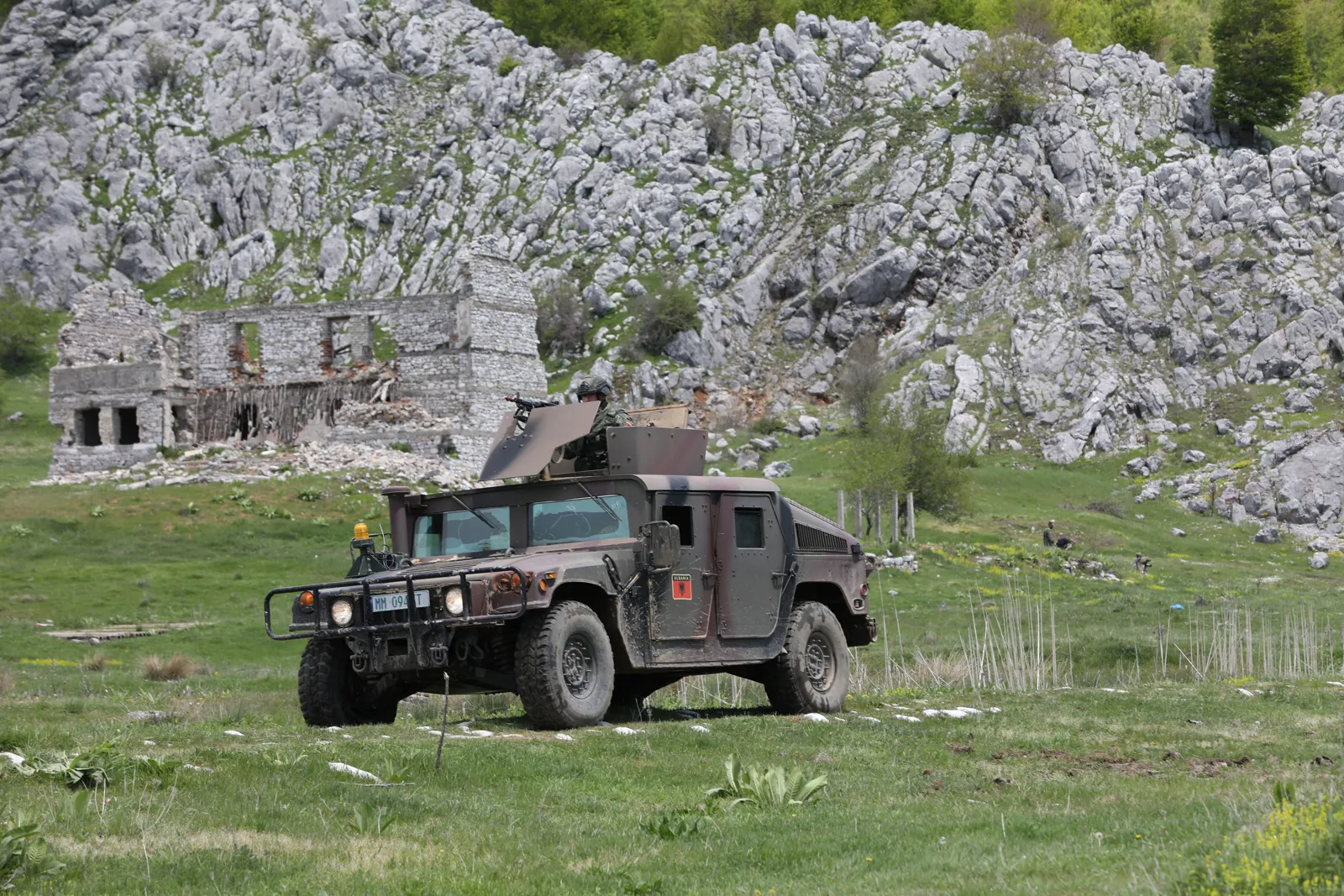
On land the priority is anti-tank capability and mobility rather than tanks. More than 280 Javelin launchers were ordered in May 2022; HMMWV, MaxxPro, Iveco LMV and Nexter Titus/Aravis vehicles carry the infantry. Kuçovë Air Base is being prepared as a NATO tactical air base and hosts the TB2 detachment.
Domestic industry is limited but present: three of the Damen Stan 4207-class vessels were built in Albania, and the TIMAK-branded Shota MRAP and tactical vehicles are cited as locally produced. At sea, patrol vessels transferred from Italy and boats from the UAE round out the fleet.
Land Forces Inventory
| System type | Est. quantity |
|---|---|
| Tanks and heavy armour | None. The Cold War tank fleet has been retired; Global Firepower gives zero tanks |
| Infantry fighting vehicles (BMP-1) | According to Wikipedia about 17 BMP-1s acquired in 1995; effectively a secondary, legacy item |
| Light tactical and MRAP vehicles | 350 or more HMMWV M1114s (the first 77 arrived in March 2017), 36 International MaxxPros (2019), Iveco LMV/VM 90P, Nexter Titus and Aravis; the domestic TIMAK Shota MRAP in limited numbers |
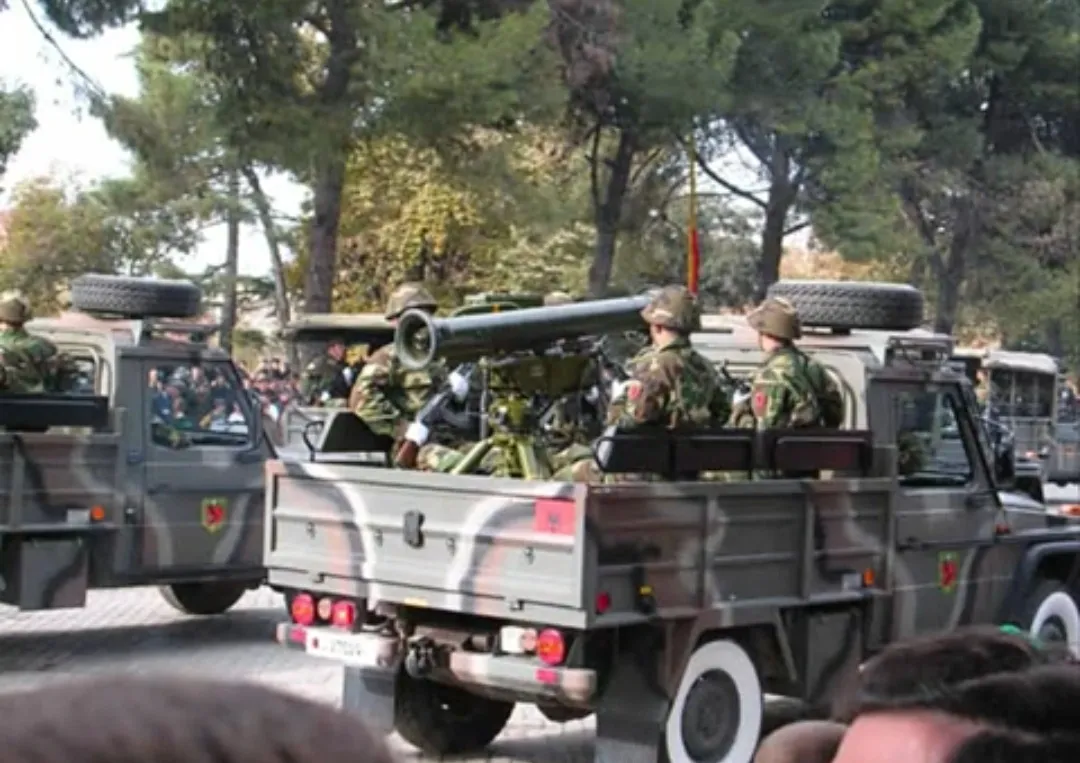
| Anti-tank systems | More than 280 Javelin launchers were ordered in May 2022; TOW, AT4 and the Chinese-made HJ-8 are also in service. A defence concept built around anti-tank weapons rather than tanks |
| Mortars and howitzers | Hundreds of 120 mm Soltam K6 and Hirtenberger 60/81 mm mortars; a contract for six MKE Boran 105 mm light howitzers was announced in July 2026 |
| Small arms and sniper rifles | Colt M4A1, Beretta AR70/90 and ARX160, H&K MG4/MG5, Sako TRG-22/42; the army has moved to NATO standards |
Air Force Inventory
| Platform | Est. quantity |
|---|---|
| Total military aircraft | 20 (Global Firepower), 19 of them helicopters; no fighters or attack aircraft |
| Fighter aircraft | None. Albania’s airspace is policed by Italy and Greece under NATO’s air policing mission |
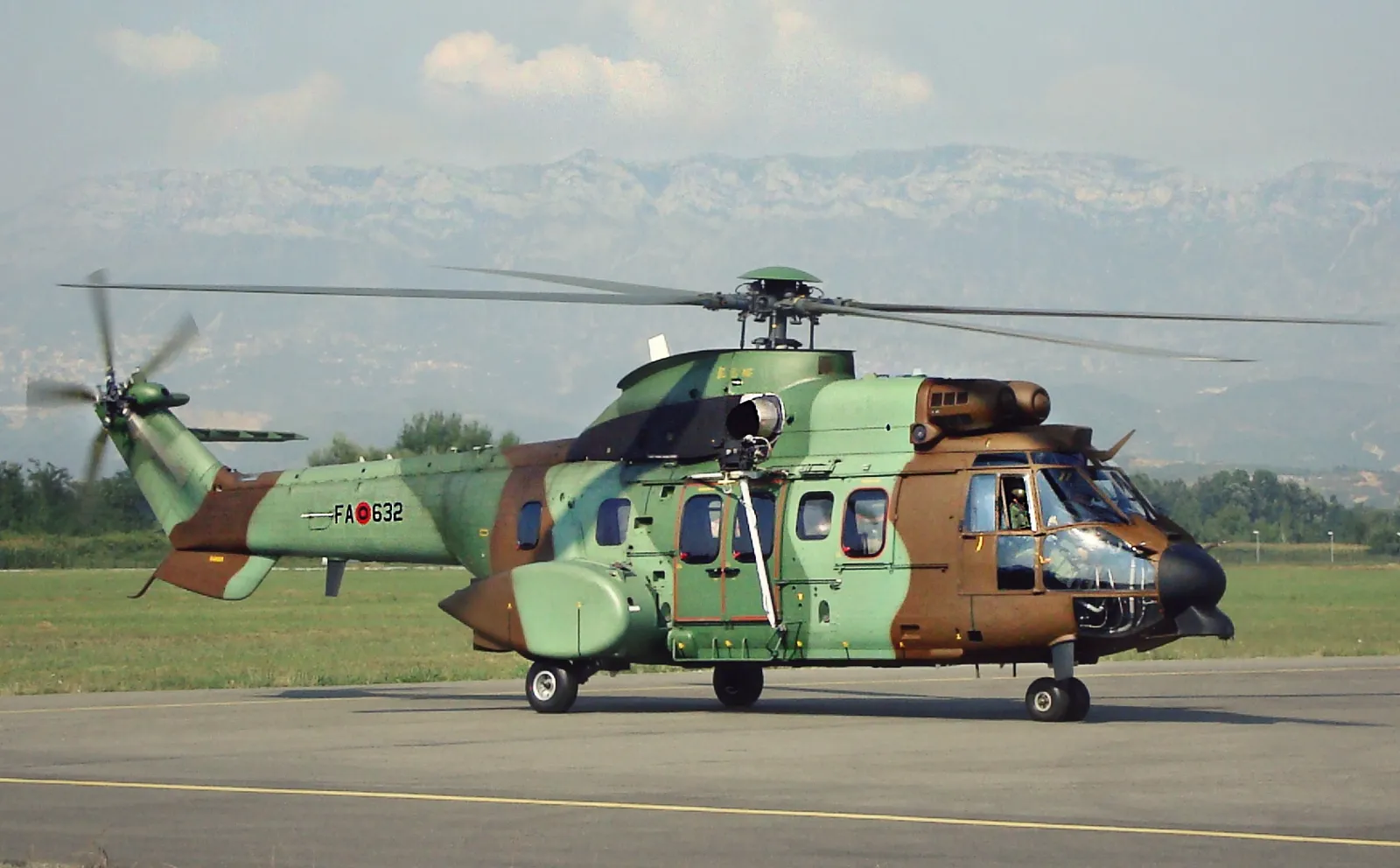
| Medium and heavy helicopters | According to Wikipedia, 4 Eurocopter AS532 Cougars, the backbone of search-and-rescue, firefighting and troop transport |
| Light helicopters | MBB Bo 105 (about four Bo 105E-4s), Bell 205/206 and Airbus H145; the fleet is multi-type and ageing |
| Armed UAVs (Bayraktar TB2) | A contract with Baykar for three TB2s was signed in December 2022; the systems were delivered at Kuçovë Air Base on 2 March 2024. Defence Minister Niko Peleshi said the fleet is expected to grow |
| Radar and surveillance | Thales Ground Master 400 Alpha and AN/TPS-117 radars feed NATO’s integrated air defence network; the air surveillance centre is at Rinas |
Missile and Air-Defence Systems
| System | Type / Note |
|---|---|
| Medium and long-range air defence | None in the inventory; a purchase of the German IRIS-T SL under the European Sky Shield Initiative (ESSI) is expected |
| MANPADS | FIM-92 Stinger (ordered with the Javelin package) and about 100 Chinese HN-5s dating from 1978 |
| Anti-aircraft guns | More than 250 57 mm S-60 and more than 330 ZPU 14.5 mm Soviet/Chinese legacy guns; their practical value is limited |
| Rocket launchers | Global Firepower counts 270 rocket launchers, mostly Chinese-made Type 63s from the 1998 count and widely regarded as effectively out of use |
| Loitering munitions | On his 10 October 2024 visit to Tirana, President Erdoğan confirmed that an unspecified number of Turkish-made loitering munitions would be donated to Albania |
| Ballistic and cruise missiles | None; deterrence rests on NATO’s collective-defence commitment |
Naval Power
| Class / Type | Est. quantity |
|---|---|
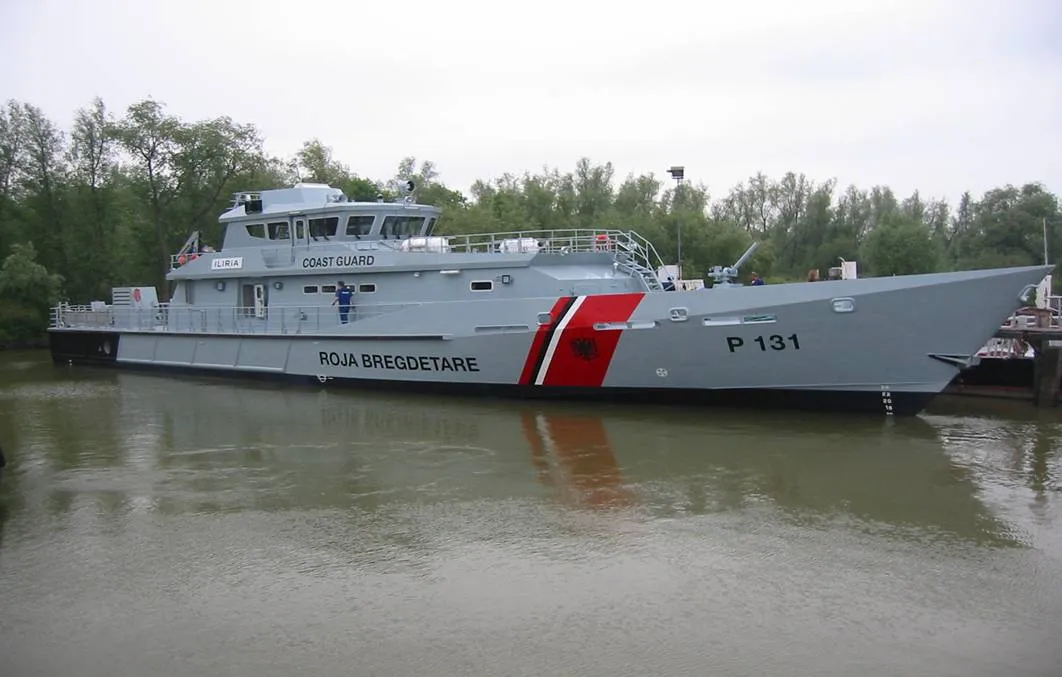
| Offshore patrol vessels | Four Damen Stan 4207-class vessels: Iliria, Oriku, Lisus and Butrinti; three were built in Albania and carry remotely operated 20 mm cannons |
| Ships transferred by Italy | Prime Minister Rama announced the takeover of a former Italian Navy Cassiopea-class patrol vessel in 2025 (76 mm gun, helicopter deck); according to Wikipedia Italy also donated two Cavallari-class ships |
| Small craft | In 2023, 13 boats (including rigid inflatables of various sizes) were received from the UAE’s ASIS Boats for coastal and border patrol |
| Bases | Pashaliman Naval Base in Vlorë and Kepi i Palit in Durrës; the former Soviet Whiskey-class submarines at Pashaliman have only museum or training value |
| Submarines and frigates | None; surveillance of the Adriatic and Ionian coast (about 362 km) relies on patrol vessels and NATO partners |
The Turkey Angle: Turkish Defence Industry
Albania is one of the places in the Balkans where Turkish defence industry has produced concrete results. A contract with Baykar for three Bayraktar TB2s was signed in December 2022 and the systems were delivered on 2 March 2024 at Kuçovë Air Base, about 80 km south of Tirana. Defence Minister Niko Peleshi described the purchase as the first step of a fleet expected to grow.
On a visit to Tirana on 10 October 2024, President Erdoğan confirmed that an unspecified number of loitering munitions would be donated to Albania; Prime Minister Edi Rama described it as a strong message from Türkiye. During the same visit Erdoğan proposed raising bilateral trade to 2 billion euros.
In July 2026 MKE announced it had signed an agreement to supply Albania with six Boran air-transportable light towed howitzers and ammunition. Albania became the second NATO and European country after North Macedonia to procure the Boran. The roughly 1,745 kg, helicopter-liftable 105 mm system matches Albania’s need for light, mobile artillery.
Institutional groundwork lies beneath these purchases: in February 2020 the two countries signed a Defence Cooperation Plan, and a military cooperation agreement supporting the purchase of Turkish products and services was approved in the Albanian Parliament with 105 votes. Türkiye also provides training, logistics and technical assistance to the Albanian Armed Forces, and Albanian personnel train at Turkish military institutions. The gaps in air defence, armoured vehicles and patrol vessels form a natural market space for Turkish industry.
Frequently Asked Questions
How many tanks does Albania have? None. The Global Firepower 2026 count shows zero tanks. The army relies on HMMWVs, MRAP vehicles and Javelin anti-tank missiles instead of heavy armour.
Does Albania have fighter jets? No. The Air Force operates only helicopters and drones; its airspace is protected by Italy and Greece under NATO air policing.
Which countries does Albania buy weapons from? The main suppliers are the United States (HMMWV, MaxxPro, Javelin, Stinger), Italy (Iveco, Beretta, ship transfers), Germany (H&K, Bo 105, planned IRIS-T), the Netherlands (Damen) and France. Since 2024 Türkiye has joined the list with the TB2, loitering munitions and the Boran howitzer.
Does Albania have a navy? Yes, a small one: four Damen Stan 4207 patrol vessels, ships transferred from Italy and many small boats. It has no submarines or frigates.
Is there defence cooperation between Türkiye and Albania? Yes. Three Bayraktar TB2s were delivered in March 2024, a loitering munition donation was announced in October 2024 and an agreement for six Boran howitzers was disclosed in July 2026. Training and technical support also continue under the cooperation plan signed in 2020.
Bottom Line
Albania’s inventory belongs to a small NATO army with a clear direction: no tanks, no fighter jets, but mobility built on light armoured vehicles, anti-tank missiles and helicopters. The missing links are known: air defence, artillery and naval platforms. In these gaps three Turkish items (TB2, loitering munitions, Boran) are already on record; next needs such as air defence and armoured vehicles offer Turkish industry a clear potential market.
Related Reading
Sources
- Global Firepower — Albania
- IISS — The Military Balance
- SIPRI — Arms Transfers Database
- Wikipedia — Albanian Armed Forces
- Wikipedia — List of equipment of the Albanian Armed Forces
- Defence Blog — Albania buys Turkish towed howitzers
- Directorate of Communications — Three Bayraktar TB2s delivered to Albania
- Daily Sabah — Loitering munition donation to Albania
- Daily Sabah — Albania-Türkiye military agreement
- Embassy of Türkiye in Tirana — Bilateral relations