ATMACA Deliveries & Inventory: When Did It Enter Service, Which Ships Use It? (2026)
Summary Not Found.
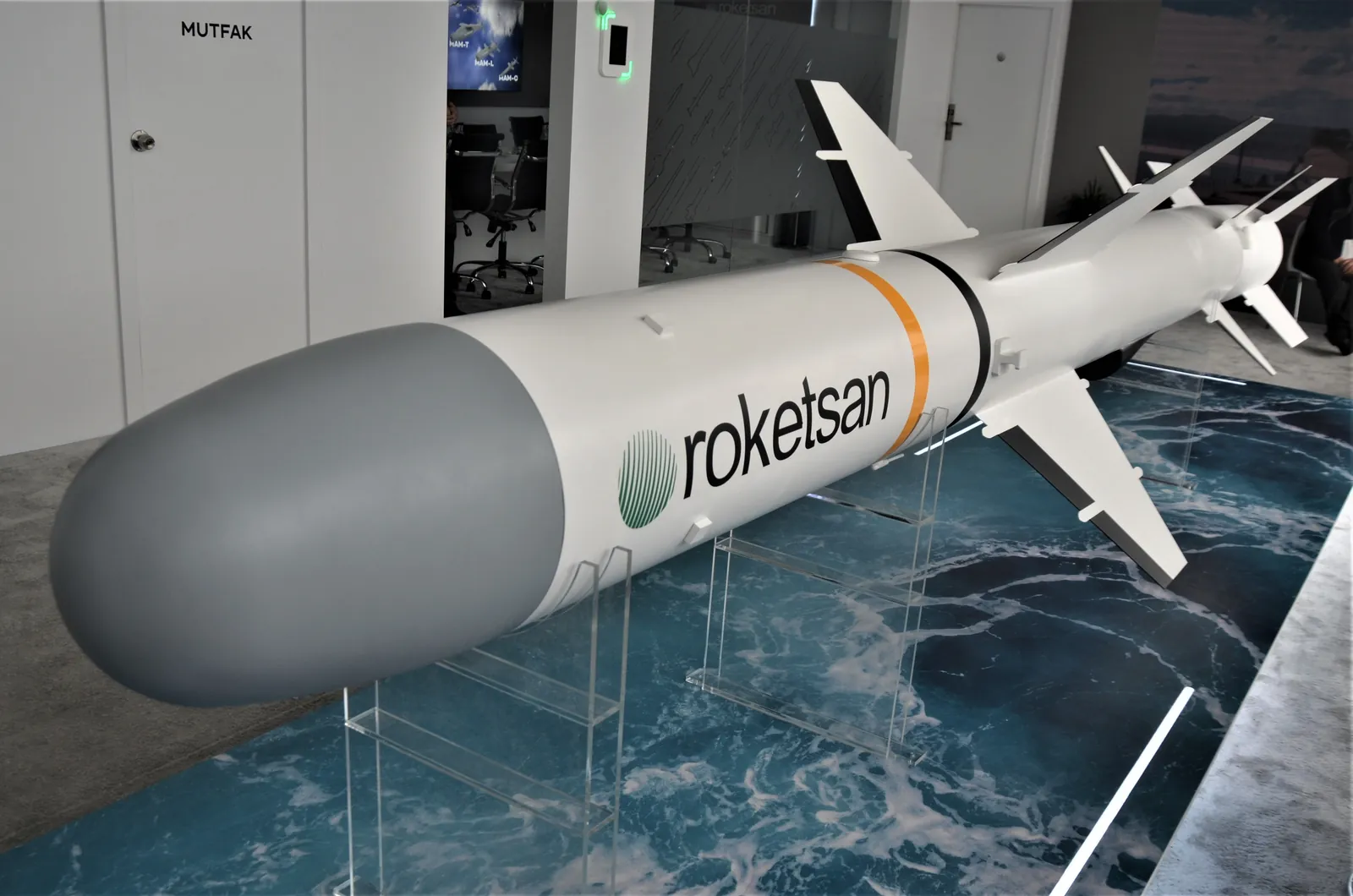
ROKETSAN’s missile family on display at Teknofest 2023; ATMACA is part of this family. Source: Wikimedia Commons.
ATMACA is Türkiye’s first indigenous anti-ship cruise missile, developed by ROKETSAN. It entered Turkish Navy service in 2022 and began replacing the US-built Harpoon. Sea-skimming with a range of more than 250 km, it can be launched from corvettes, frigates, fast attack craft, submarines and land platforms.
This dossier compiles ATMACA’s delivery timeline, host platforms, exports and technical data from open sources and is updated regularly.
2022
Entered service
250+ km
Range (Kara Atmaca 400 km)
TCG Kınalıada
First ship to fire it
Indonesia
First export (45 missiles)
Contents: Tap each heading to expand — what ATMACA is, host platforms, service entry and first firing, exports, timeline, specs, peer comparison, the ATMACA family, manufacturer and FAQ.
What is ATMACA?
ATMACA is the core weapon of surface warfare, built to strike enemy ships at long range. It cruises using GPS/INS and altimeters, then finds the target itself with an active radar seeker in the terminal phase, approaching sea-skimming to reduce the chance of detection by enemy radar and defenses.
Its greatest strategic value is replacing the imported Harpoon long used by the Turkish Navy, ending foreign dependence in this critical capability. ATMACA can also strike land targets, making it versatile.
Which platforms use it?
ATMACA has become the standard anti-ship weapon of the Turkish Navy’s surface units and serves on an expanding range of platforms.
Submarine and land (coastal defense) variants turn ATMACA from a single anti-ship missile into a multi-platform strike system.
Service entry and first firing
Development launches took place in 2018; the first serial-production delivery was in 2021 and the missile formally entered service in 2022. The first ship to field and fire it was the corvette TCG Kınalıada (F-514).
After Kınalıada, other Ada-class corvettes and Barbaros-class frigates began receiving ATMACA, starting the gradual retirement of Harpoon.
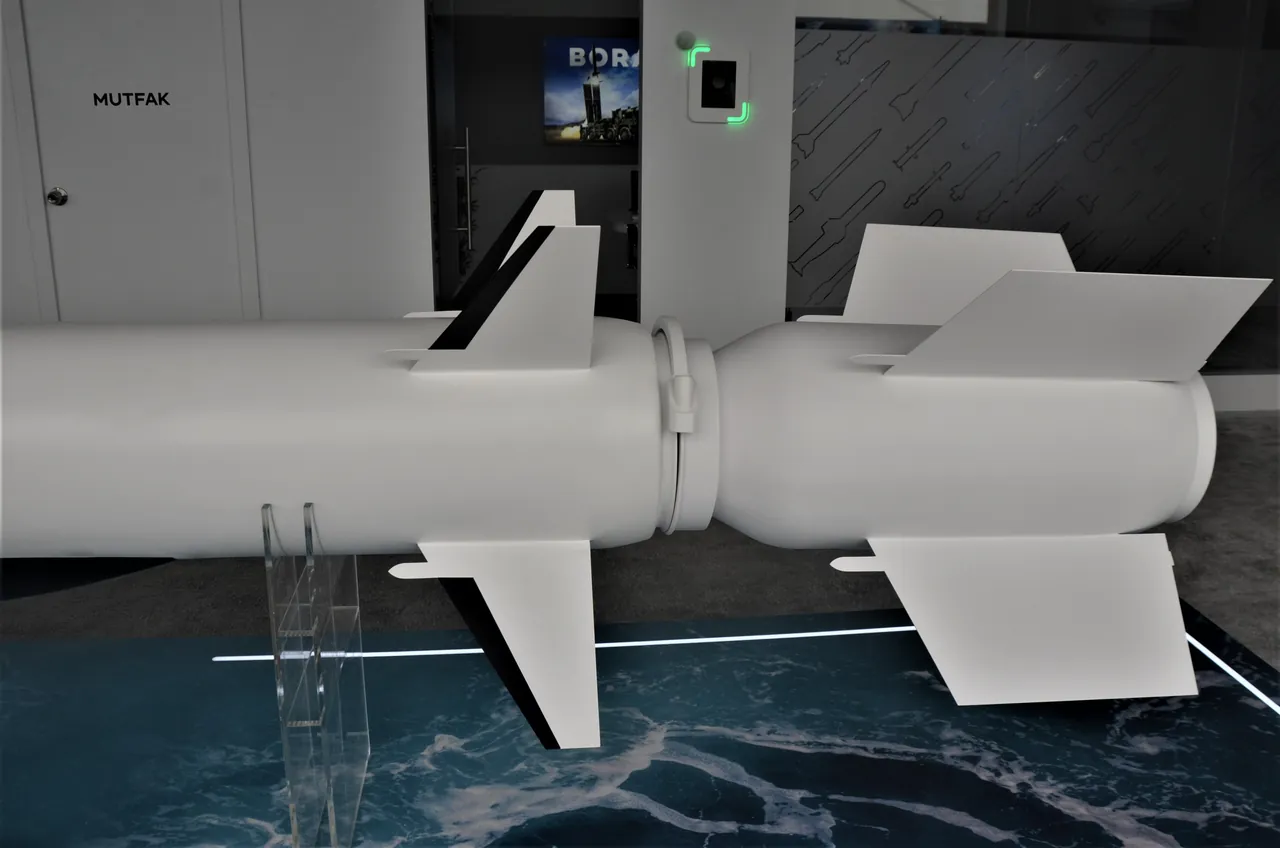
ROKETSAN missiles on display at Teknofest 2023. Source: Wikimedia Commons.
Exports and new variants
ATMACA quickly drew export interest. Indonesia was the first buyer with a 45-missile order, and Malaysia plans to integrate it on Ada-based LMS Batch-2 ships — a result of offering the missile as a package with Turkish ship platforms.
New capability: On 12 March 2025 a submarine-launched ATMACA was successfully tested. The land-to-land variant, Kara Atmaca, adds strategic depth to coastal defense with a 400 km range.
Delivery and development timeline
Date
Event
Party
Source
2018
First test launches
ROKETSAN / Turkish Navy
Open source
2021
First serial-production delivery
Turkish Navy
AA / official source
2022
Entered service; TCG Kınalıada operational firing
Turkish Navy
Wikipedia
2023–2024
Roll-out across Ada and Barbaros classes
Turkish Navy
Open source
2024
First export (45 missiles)
Indonesia
Open source
12 Mar 2025
Submarine-launched test successful
Turkish Navy
Army Recognition
Ongoing
Kara Atmaca (400 km) and air-platform variants
ROKETSAN
Open source
Technical specifications
Feature
Value
Type
Anti-ship / land-attack cruise missile
Range
250+ km (Kara Atmaca: 400 km)
Weight
~750 kg
Warhead
~220 kg
Guidance
GPS/INS + barometric and radar altimeter + active radar seeker (terminal)
Flight profile
Sea-skimming
Launch platforms
Corvette, frigate, fast attack craft, submarine, land (coastal defense)
Targets
Moving/stationary maritime targets and fixed land targets
Comparison with global peers
ATMACA competes with the US Harpoon, France’s Exocet, Sweden’s RBS-15 and Norway’s NSM. With a range beyond 250 km and a modern guidance package, it offers a longer-range, more flexible solution than many versions of the Harpoon it replaces.
Being fully indigenous lets Türkiye update software and targeting independently. With submarine, land and air variants, ATMACA grows from one missile into a multi-layered strike capability.
The ATMACA family
ATMACA — ship-launched anti-ship missile (250+ km)
Kara ATMACA — land-to-land / coastal defense variant (~400 km)
Air-platform integration — under development for air launch
Manufacturer: ROKETSAN
ATMACA is built by ROKETSAN, which developed the propulsion, warhead and guidance components largely in-house for a high level of localization.
Together with ROKETSAN’s SOM cruise missile, ATMACA is a cornerstone of Türkiye’s long-range strike capability and shows the company’s maturity in cruise-missile technology.
Why it matters for Türkiye
ATMACA localizes the Turkish Navy’s most critical strike weapon, providing strategic independence and removing the risk of embargo or software restrictions on imported missiles.
Exporting it and evolving multi-platform variants brings revenue and deterrence under the ‘Blue Homeland’ doctrine; with MİLGEM and GÖKDENİZ, ATMACA is part of an indigenous naval-combat ecosystem.
Frequently Asked Questions
When did ATMACA enter service?
ATMACA entered Turkish Navy service in 2022 after the first serial-production delivery in 2021. The first ship to use and fire it was the corvette TCG Kınalıada (F-514).
Which ships use ATMACA?
Ada-class corvettes, Barbaros-class frigates, Istif-class frigates and Kılıç-class fast attack craft, with submarine-launched and land-based (Kara Atmaca) variants also developed.
What is ATMACA’s range?
The naval version has a range of more than 250 km, while the land-to-land version, Kara Atmaca, reaches about 400 km.
Is ATMACA replacing Harpoon?
Yes. ATMACA is gradually replacing the US-built RGM-84 Harpoon in the Turkish Navy, ending foreign dependence in this critical weapon.
Has ATMACA been exported?
Yes. Indonesia was the first buyer with a 45-missile order, and Malaysia plans to integrate ATMACA on its Ada-based LMS Batch-2 ships.
Can ATMACA be launched from submarines?
On 12 March 2025 the Turkish Navy successfully tested a submarine-launched variant, giving the missile a discreet, long-range strike capability.