What is the Buk-M3 Viking? Russia’s Medium-Range Air Defense System, Explained

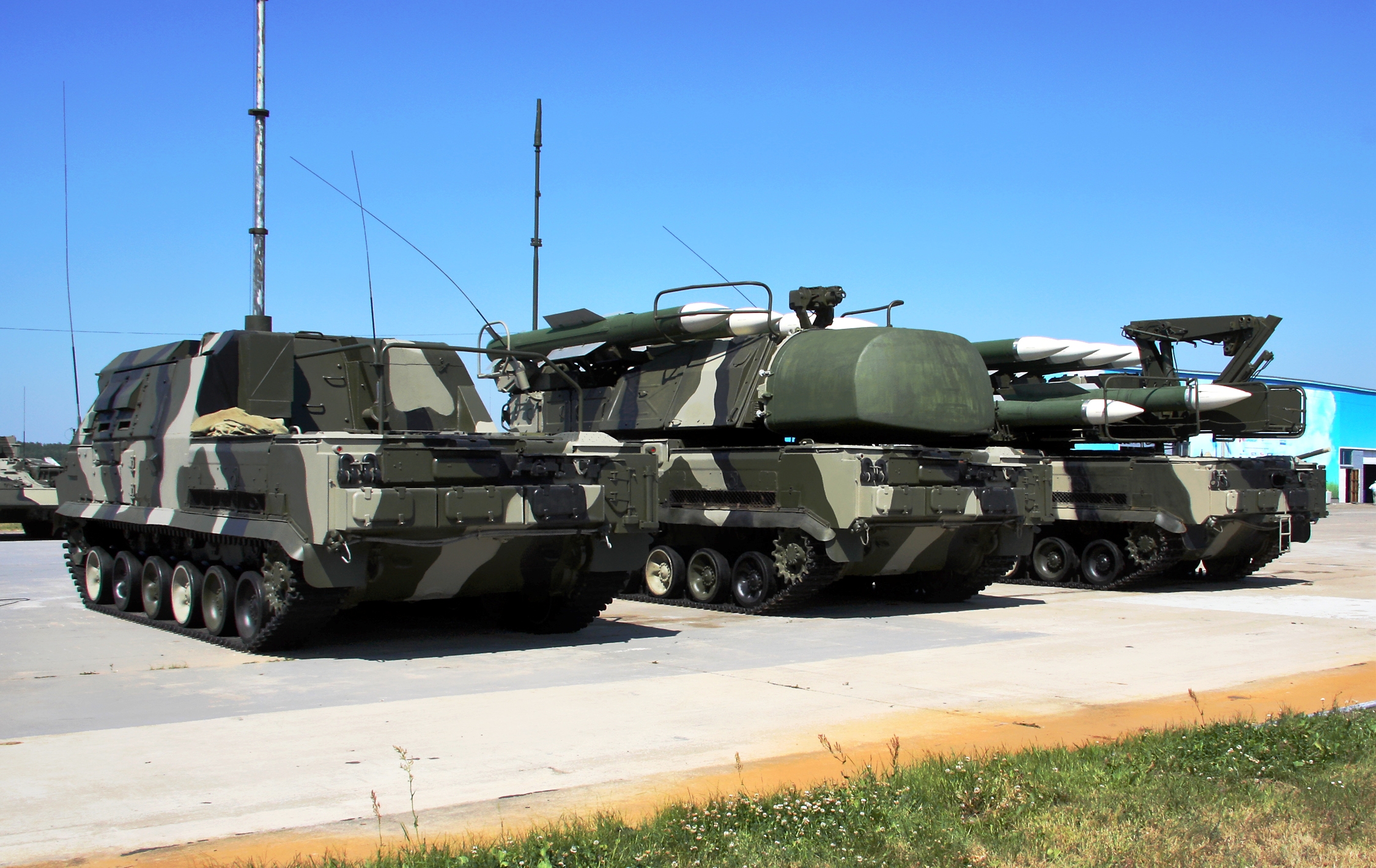
The Buk-M3 Viking – NATO reporting name SA-27 Greyhound – is Russia’s standard medium-range tactical surface-to-air missile system, designed by the Almaz-Antey Concern’s NIIP Tikhomirov design bureau and produced by the Ulyanovsk Mechanical Plant. The most modern variant of the long-running Buk family (originally the Soviet 9K37 from 1979), the Buk-M3 entered Russian service in 2016 and replaces the older Buk-M1 and Buk-M2 systems that had been the standard Soviet/Russian battlefield mid-tier SAM for forty years. The Buk-M3 carries the 9M317M missile with a 70 km engagement range – the largest range increase in the family’s history.
Key facts at a glance
| Attribute | Value |
|---|---|
| Type | Medium-range tactical SAM system |
| Manufacturer | Almaz-Antey / NIIP Tikhomirov / Ulyanovsk Plant |
| In service | 2016 (Buk-M3); 1979 (Buk family) |
| Chassis | GM-5969 tracked (transporter-erector-launcher and radar vehicle) |
| Missile | 9M317M (vertical launch from sealed canister) |
| Range | 70 km |
| Altitude | 35 km |
| Speed (missile) | Mach 4.5 |
| Warhead | 62 kg blast-fragmentation |
| Guidance | INS + radio command + active radar terminal homing |
| Targets simultaneously | 6 (per battery) |
| Battery composition | Command post + Snow Drift acquisition radar + 6 TELAR launchers + 3 TEL reloads (96 missiles total) |
| Reaction time | ~10 seconds |
| Operators | Russia, Belarus, Armenia, Egypt (Buk-M2 export), Syria, Venezuela |
| Unit cost | ~ USD 130 million per battery |
The Buk family lineage
| Variant | NATO designation | Year | Range |
|---|---|---|---|
| Buk (9K37) | SA-11 Gadfly | 1979 | 32 km |
| Buk-M1 | SA-11 Gadfly | 1983 | 32 km (improved) |
| Buk-M1-2 / Buk-M2 | SA-17 Grizzly | 1998 | 50 km |
| Buk-M2E (export) | SA-17 | 2008 | 50 km |
| Buk-M3 (Viking) | SA-27 Greyhound | 2016 | 70 km |
The MH17 controversy
The Buk family entered global public attention on 17 July 2014 when a Russian-supplied Buk-M1 system operated by separatist forces in eastern Ukraine downed Malaysia Airlines Flight 17 over the Donetsk Oblast, killing 298 civilians. The Dutch Safety Board’s 2016 investigation conclusively identified a 9M38 missile fired from a Buk-M1 launcher as the cause. In November 2022, a Dutch court convicted two Russians and one Ukrainian in absentia for their role in the shootdown. The MH17 incident remains the deadliest single attribution of a Buk system in history and continues to influence Western perception of the platform.
The Buk-M3 modernization
The Buk-M3 represents the most thorough redesign of the family since 1979. Key changes from Buk-M2:
- Canister-launched 9M317M missile – sealed missile canisters replace the previous open-launch rail design, dramatically improving missile reliability and reducing required maintenance.
- 6 missiles per launcher (up from 4 on Buk-M2) – 50 percent more ready rounds per battery.
- Range extended to 70 km – 40 percent increase.
- New TELAR design with improved off-road mobility and digital fire control.
- Compatibility with the new Polyana-D4M1 command-and-control system, allowing integration with S-400 and Pantsir-S1 batteries for layered defense.
Combat record
- 2008 – Russo-Georgian war. Russian Buk-M1 batteries downed multiple Georgian Su-25 aircraft.
- 2014-2022 – Ukraine pre-war. Separatist-operated Buk systems (including MH17) engaged Ukrainian aircraft.
- 2022-present – Ukraine war. Russian Buk-M2 and Buk-M3 deployed extensively. Confirmed Russian-claimed kills include several Ukrainian Su-25s and MiG-29s. Verified Russian Buk losses to Ukrainian counter-strikes (including Storm Shadow and HIMARS) number in the dozens.
- 2024 – Syria. Russian Buk-M3 deployed alongside S-400 at Khmeimim airbase.
Buk-M3 vs. its peers
| Buk-M3 Viking | NASAMS 3 | MEADS | IRIS-T SLM | |
|---|---|---|---|---|
| Range | 70 km | 40 km | 40 km | 40 km |
| Altitude | 35 km | 14 km | 30 km | 20 km |
| Missile speed | Mach 4.5 | Mach 4 | Mach 5 | Mach 3 |
| Mobility | Tracked (cross-country) | Towed/mobile launchers | Wheeled | Truck-mobile |
| Combat-proven | Heavy (Ukraine) | Yes (Ukraine, heavy) | Limited | Yes (Ukraine) |
Why the Buk-M3 matters
The Buk-M3 has been the standard Russian battlefield mid-tier SAM through one of the most intense modern air-defense engagements in history. Its tracked mobility, vertical launch, and 70 km range make it the only Russian mid-tier system that can move with armored formations while engaging cruise missiles and high-altitude aircraft. Despite documented losses to Ukrainian precision strikes, the system remains in production at Ulyanovsk and continues to be the workhorse Russian mid-tier SAM. The Buk-M4 next-generation variant is publicly discussed but has not yet entered series production.