





Bradley’s successor reaches the field: first XM30 prototype handed to the US Army

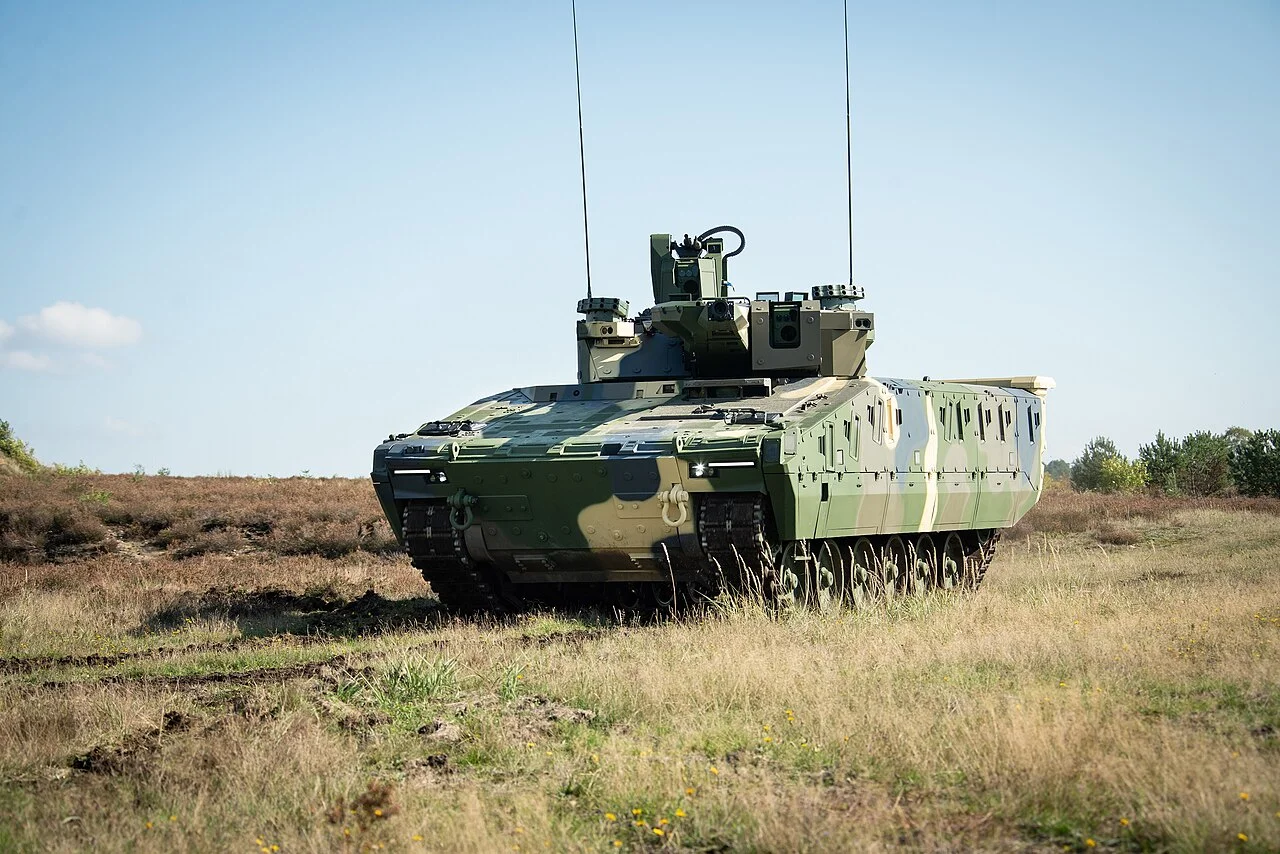
The US Army’s long effort to replace the half-century-old M2 Bradley has cleared a concrete milestone. American Rheinmetall delivered the first prototype built under the XM30 Mechanized Infantry Combat Vehicle programme on 1 September 2026.
The vehicle is the first of eight prototypes the company will produce. The remaining seven are due for delivery later in 2026, after which the fleet moves into unit-level operational assessment.
A $764 million development phase
The prototypes are being built under a Phase 3/4 Engineering and Manufacturing Development contract worth approximately $764 million. This is the final major technical validation step between design maturation and a serial production decision.
Matt Warnick, the company’s chief executive, described the handover as “an important step as the XM30 Combat Vehicle program enters a more visible phase.”
Design choices
The XM30 derives from Rheinmetall’s Lynx family but has been reworked around US Army requirements. Three features stand out in what the company has disclosed:
- Hybrid-electric powertrain. Intended to extend silent watch duration and increase onboard electrical generation — a prerequisite for power-hungry sensors, electronic warfare suites and any future directed-energy fit.
- Modular construction. Armour packages, weapon station and mission payloads are designed to be swapped, allowing reconfiguration against a changing threat picture across the vehicle’s service life.
- Open architecture. Standardised interfaces so new sensors and software can be integrated without vendor lock-in — a requirement the Army has pressed hard on in its recent ground vehicle programmes.
A two-horse race
The programme is being run competitively. General Dynamics Land Systems delivered its own prototype in the same period, and the Army will assess both designs before committing to production.
That structure reflects lessons from the predecessor effort. The Optionally Manned Fighting Vehicle programme was restarted in 2020 after a single bid failed to meet the specification, and the requirements were subsequently rewritten with more flexibility.
Why replace the Bradley
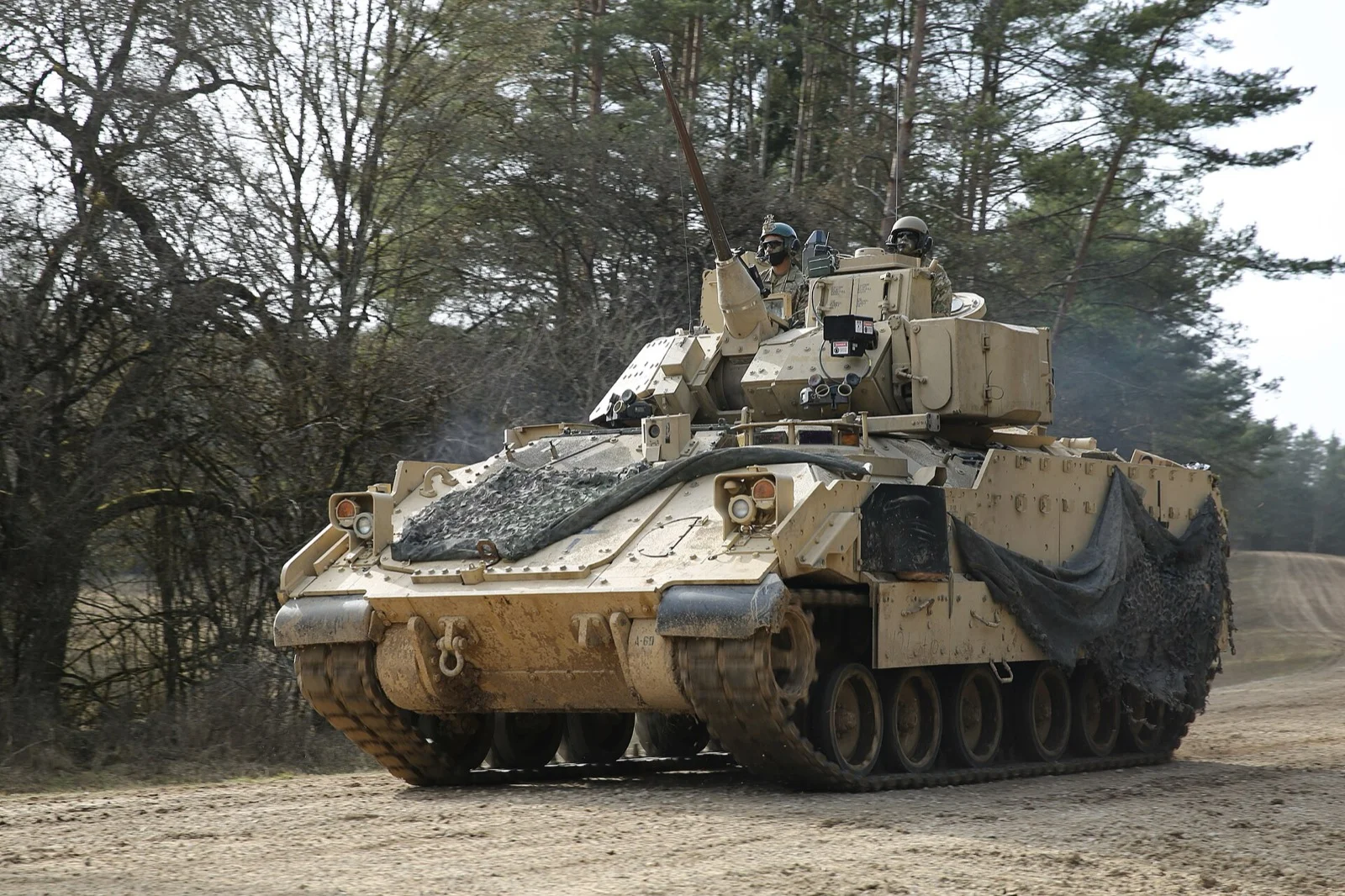
The M2 Bradley entered service in 1981 and has seen action from the Gulf War through Iraq. It has been upgraded repeatedly, but the physical limits of the hull design have been acknowledged for years.
The core constraint is weight and power budget. Every additional armour package, active protection system and electronics fit loads the suspension and powerpack further. On the Bradley that margin is largely spent. Combat experience in Ukraine has sharpened two requirements in particular: protection against top-attack munitions and drone-delivered threats, and crew survivability.
Programme timeline and open questions
Once all prototypes are delivered, the vehicles face laboratory and proving-ground testing alongside unit-level evaluation. Putting crews into realistic mission scenarios surfaces the things engineering tests cannot measure — usability, maintenance access, ergonomics.
The Army’s recent approach to ground vehicle programmes has been to defer the production decision as long as possible and base it on as much data as possible. The reasoning is historical: the cancelled Future Combat Systems programme and the halted Ground Combat Vehicle effort both illustrate the cost of early commitment.
Weight remains the most-debated variable in this vehicle class. As active protection, applique armour and electronics accumulate, modern infantry fighting vehicles routinely pass 40 tonnes, which constrains strategic airlift and bridge classification.
The hybrid-electric choice is partly an answer to this. Decoupling electrical generation from the engine’s mechanical load meets high power demand without carrying an additional generator. But hybrid systems raise their own questions about battery protection under combat damage and field maintainability. Data from the prototype assessment on that point will be among the programme’s most closely watched outputs.
European and Turkish context
The XM30’s kinship with the Lynx family means the outcome is being followed in Europe. The Lynx KF41 is in serial production in Hungary and was selected for Australia’s LAND 400 Phase 3 programme. A US Army decision would materially shape the platform’s long-term export position.
For Turkey, the programme functions as a reference point for domestic tracked vehicle work. FNSS keeps hybrid drive and modular armour on the agenda for the Kaplan family and Tulpar in a comparable weight class. Whatever technical choices emerge from the XM30 competition will also raise the requirement bar in international tenders across this segment.
Sources
- American Rheinmetall company statement, 1 September 2026 — delivery, prototype count, contract value and the Warnick quotation. Manufacturer primary source.
- EDR Magazine, 1 September 2026 — contract structure and technical detail.
- The War Zone, 1 September 2026 — confirmation that the competing General Dynamics Land Systems prototype was also delivered.
Image note: the photograph shows the Rheinmetall Lynx KF41, the design basis for the XM30. This article will be updated when an official image of the delivered XM30 prototype is released.