The World’s Fastest Missiles (2026): Why the Mach 20 Claims Can’t Be Verified

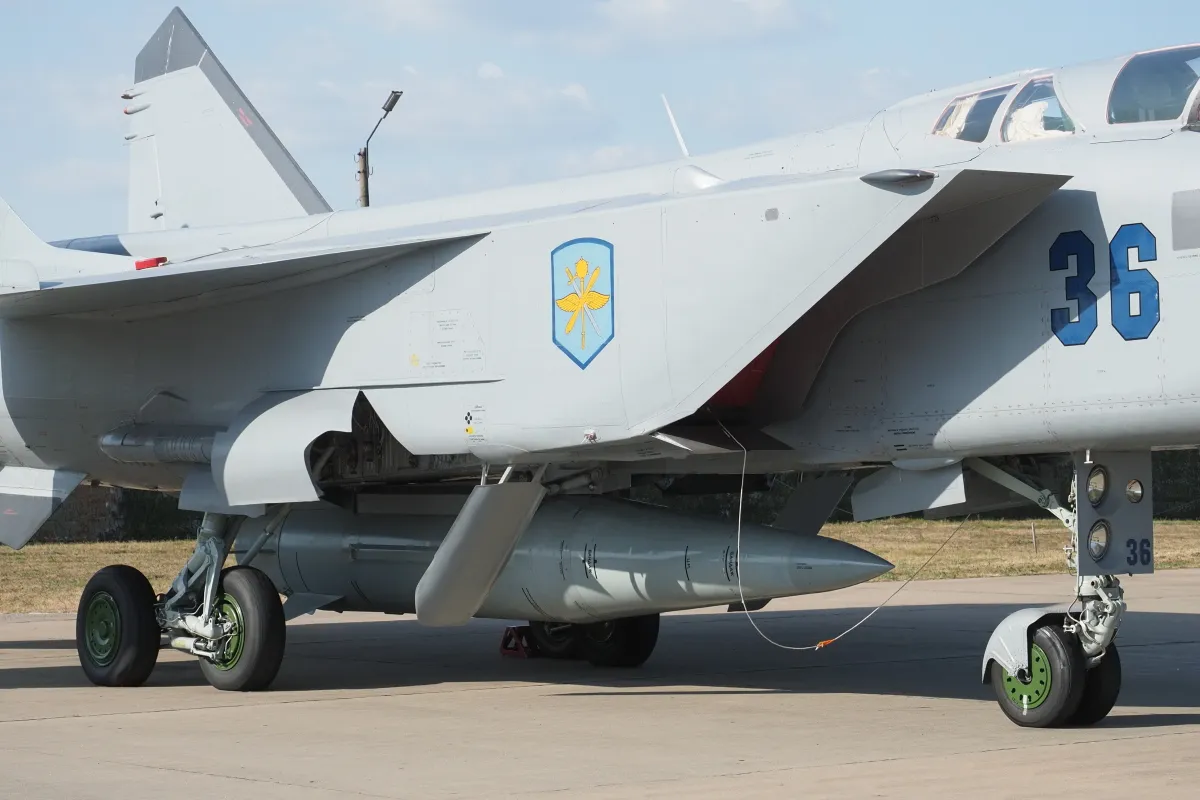
There is no single correct answer to “what’s the world’s fastest missile,” because the question conflates three distinct physical phenomena: the speed of a powered cruise missile, the glide speed of a hypersonic glide vehicle moving through the atmosphere, and the speed an ICBM warhead picks up under gravity alone as it re-enters the atmosphere.
These are not the same category, and headlines routinely blur them together. This file keeps the three separate and labels, line by line, who made each claim and how much confidence it deserves.
Methodology: which numbers do we trust, and how much?
Missile speed claims are one of the murkiest corners of defense journalism, because most figures reach the public through the launching government’s own statement rather than independent telemetry. We relied only on official sources — defense ministries, armed-forces technical fact sheets, manufacturer spec pages, SIPRI, IISS, the U.S. Congressional Research Service (CRS), GAO, DSCA, MDA — and tagged each number with its confidence tier. No unverifiable figure was estimated; systems with no traceable source are marked “undisclosed” and excluded from the main ranking.
| Data type | What it means | Example in this file |
|---|---|---|
| Official verified fact sheet | Data a government body (e.g. U.S. Air Force/Navy) publishes with technical confirmation | Minuteman III, Trident II D5 reentry speed |
| Government/military claim (unverified) | A state announcement that no independent intelligence body has confirmed | Avangard, Kinzhal, Zircon Mach claims |
| Manufacturer / program target | Performance a company or program is aiming for, not yet demonstrated in the field | BrahMos-II, LRHW / Dark Eagle |
| Intelligence / analyst assessment | An open-source intelligence judgment from an official body (e.g. U.S. DoD) | DF-17 glide-speed band |
| Undisclosed | No official figure exists; no estimate was made, excluded from ranking | Tayfun, Bora, HACM, Hwasong-19, Yars, Agni-P |
Hypersonic glide vehicles and cruise missiles: the Mach claims
| System | Country | Class | Claimed Mach | Data type | Source / note |
|---|---|---|---|---|---|
| Avangard | Russia | Hypersonic glide vehicle (HGV) | Mach 20 (claimed) | Government claim — unverified | CRS R45811: “reportedly reaching Mach 20”; TASS, Dec. 27, 2019 combat-duty announcement |
| Kinzhal (Kh-47M2) | Russia | Aeroballistic missile | Mach 10 (claimed) | Government claim — unverified | CRS R45811: a claim based on Russian media that “have not been publicly verified by U.S. intelligence agencies”; CRS classifies it as an aeroballistic missile, not a classic glide vehicle or cruise missile |
| DF-17 | China | Hypersonic glide vehicle (HGV) | Mach 5–10 (band) | U.S. intelligence assessment | U.S. Department of Defense, China Military Power Report (2021, 2024) |
| YJ-21 | China | Hypersonic cruise / terminal | Mach 6 cruise, Mach 10 terminal (claimed) | Military-linked social media — weak sourcing | 2023 PLASSF social-media post; the DoD report confirms the system exists but does not itself cite the Mach figures |
| Zircon (3M22) | Russia | Hypersonic cruise missile | Mach 6–8 (CRS range); Putin cited Mach 9 publicly | Government claim — unverified | CRS R45811; Russia’s Defense Ministry called its May 2022 test result “more than Mach 8” — three Russian sources give three different figures |
| BrahMos-II | India–Russia | Hypersonic cruise missile (in development) | Mach 5+ (manufacturer) / Mach 7 (CRS) | Manufacturer / program target | BrahMos Aerospace’s own site; CRS R45811 — IOC has slipped to 2025-2028, not yet fielded |
| LRHW / Dark Eagle (C-HGB) | USA | Hypersonic glide vehicle (HGV) | Mach 5+ (minimum stated) | Official program target | CRS R45811: the glide body was “adapted from a Mach 6 Army prototype warhead”; the exact combat speed remains a closely held program detail |
A different physics class: ICBM reentry speed
The table above covers powered or glide systems; an intercontinental ballistic missile’s (ICBM/SLBM) warhead, by contrast, falls back into the atmosphere purely under gravity once third-stage burnout is complete, with no engine power at all. This “reentry speed” is not a guided flight in any meaningful sense — it’s the outcome of free-fall physics — which is why we treat it as a separate axis rather than mixing it into the main table.
| System | Country | Claimed Mach (reentry) | Data type | Source / note |
|---|---|---|---|---|
| Trident II D5 | USA | ~Mach 24 | Official fact sheet | U.S. Navy Fact File: speed in excess of ~20,000 feet per second after third-stage ignition |
| Minuteman III | USA | ~Mach 23 | Official fact sheet | U.S. Air Force Global Strike Command fact sheet: burnout speed of ~15,000 mph |
| Hwasong-17 | North Korea | ~Mach 22 (Nov. 2022 test) | Third-party government assessment | South Korean Joint Chiefs of Staff assessment of the test — North Korea’s own state media (KCNA) did not publish this figure itself |
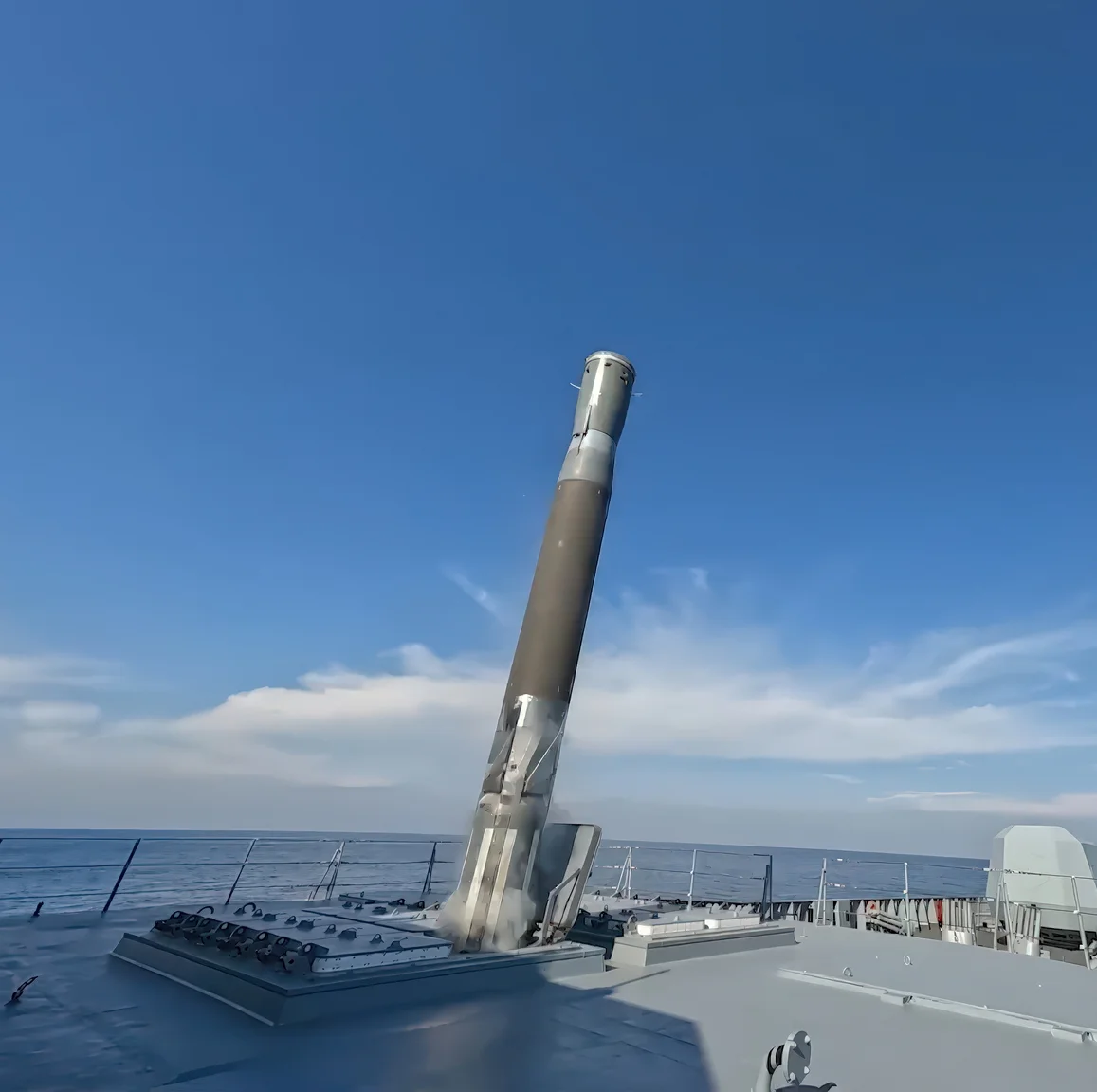
How fast is a Mach number, really? A km/h comparison
Mach numbers can feel abstract, so we place the same figures alongside their approximate sea-level, standard-atmosphere km/h equivalents and a few familiar reference points. The actual km/h value of a given Mach number varies with altitude and temperature; this conversion is meant only to give a sense of scale.
| Reference / system | km/h (approx.) | Mach equivalent | Note |
|---|---|---|---|
| Speed of sound (sea level, 15°C) | 1,235 | Mach 1 | Physical constant, needs no source |
| Airliner typical cruise speed | ~1,050 | ~Mach 0.85 | General commercial-aviation practice |
| Rifle bullet (7.62×51mm NATO) | ~2,965 | ~Mach 2.4 | Standard NATO ammunition muzzle velocity |
| F-16 top speed | 2,470 | Mach 2 | U.S. Air Force fact sheet |
| Zircon (Russia) | ~9,880 | Mach 8 (claim, upper bound) | Russian Defense Ministry statement — unverified |
| Kinzhal (Russia) | ~12,350 | Mach 10 (claim) | Russian government claim — unverified |
| Avangard (Russia) | ~24,700 | Mach 20 (claim) | Russian government claim — unverified |
Why are these numbers so contested?
Telemetry is secret, statements are public
A missile’s true speed can only be confirmed through independent radar or telemetry measurement, and that data is almost never shared publicly. What the public gets instead is the launching government’s own press statement — a channel that is naturally open to exaggeration.
Why is Kinzhal a contested “hypersonic” example?
In CRS’s own classification, Kinzhal is not a hypersonic glide vehicle or cruise missile but an aeroballistic missile derived from the Iskander ballistic missile. The report explicitly notes it is included only because it comes up in “hypersonic weapons” discourse, not because it fits the report’s own taxonomy.
Why did the U.S. shelve the AGM-183 ARRW program?
The U.S. Air Force notified Congress on March 29, 2023 that it did not intend to pursue follow-on procurement of ARRW; the final test flight took place in March 2024, and FY2026 budget documents describe the program as “completed.” That’s why we did not place ARRW in the main ranking as if it were a system still competing in the field.
Why is ballistic-missile reentry speed its own category?
A cruise missile or hypersonic glide vehicle is powered and steered through most of its flight. An ICBM warhead, once third-stage burnout ends, simply falls under gravity’s acceleration — a fundamentally different physical process, and putting the two side by side in one ranking would be misleading.
Turkey’s work in this category
We found no official Mach figure for Roketsan’s Tayfun ballistic missile or Bora missile — not on the company’s own corporate materials, and not in any document from the Presidency of Defense Industries (SSB) or the Ministry of National Defense. Coverage of the Tayfun Block-4, unveiled at IDEF 2025, cited figures around Mach 5 alongside a “hypersonic” label (Janes, Army Recognition), but those numbers are inconsistent across outlets and do not trace back to Roketsan’s own technical specifications. We therefore did not include Tayfun or Bora in the main Mach-claim table.
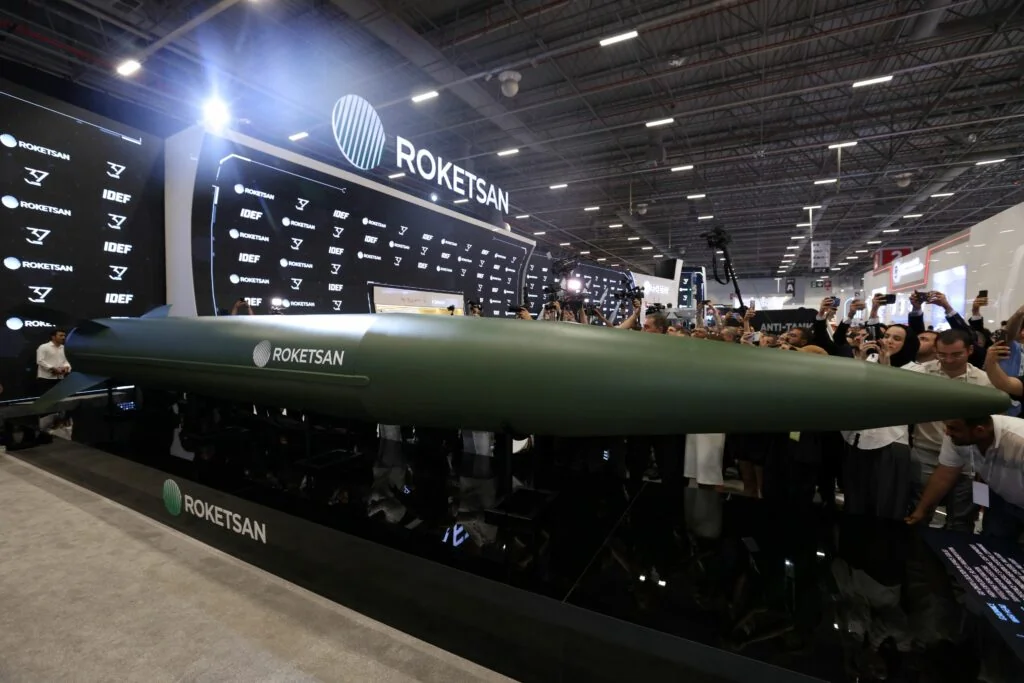
We will update this file if Roketsan or the SSB/MSB publishes an official technical fact sheet in the future.
Frequently asked questions
What is the world’s fastest missile?
Is Kinzhal really “hypersonic”?
Why are Russia’s Mach 20+ claims treated with skepticism?
What happened to the U.S. AGM-183 ARRW hypersonic missile program?
Does Turkey have a hypersonic or high-speed missile program?
Why aren’t ballistic missile reentry speeds and cruise missile speeds ranked together?
Sources
- Congressional Research Service (CRS), Hypersonic Weapons: Background and Issues for Congress, R45811 (updated Aug. 27, 2025)
- SIPRI, “A matter of speed? Understanding hypersonic missile systems” (2022)
- U.S. Department of Defense, Military and Security Developments Involving the People’s Republic of China (2021, 2024 reports)
- U.S. Air Force Global Strike Command, LGM-30G Minuteman III fact sheet
- U.S. Navy, Trident II (D5) Fact File
- TASS, Russian Ministry of Defense, and Kremlin.ru statements (Avangard, Kinzhal, Zircon test/combat-duty announcements) — marked as government statements
- South Korean Joint Chiefs of Staff assessment of the Hwasong-17 test (press coverage)
- KCNA (North Korean state media), Hwasong-19 test statement, Oct. 31, 2024 — marked as a state statement
- BrahMos Aerospace official corporate site
- Janes and Army Recognition, IDEF 2025 Tayfun Block-4 coverage — marked as press sourcing, not an official technical fact sheet