National Defense Systems Delivered to Turkish Forces After 2023

In the period after 2023, the Turkish defense industry moved a large number of national platforms from the prototype and testing stage into serial production and inventory entry. This period stands out as a threshold in which systems that had their first flight or first launch in earlier years actually began joining the inventories of the Turkish Armed Forces, the Gendarmerie and the Naval Forces. This analysis relies solely on deliveries and inventory-entry information confirmed by official sources.
Based on the activity reports of the Presidency of Defense Industries (SSB), manufacturer statements, Anadolu Agency and specialist publications, it is seen that between 2023 and 2025 multiple national systems in the air, land, naval and missile/air-defense domains were handed over to operational users. The TCG Istanbul frigate, the first series ALTAY tanks, the GOKBEY helicopter and ROKETSAN’s air-defense and cruise-missile family are among the concrete outputs of this period.
In the sections below, the delivered platforms are tabulated by domain, together with the date and the branch of the armed forces they were delivered to. Figures that could not be confirmed or lack official verification are separately flagged. Throughout the text, key concepts such as national fighter jet, unmanned aerial vehicle, air-defense system, national frigate and cruise missile are used in their technical sense.
The data basis of the analysis consists of SSB’s 2023 and 2024 activity reports, manufacturer press statements, official delivery ceremonies, and confirmed reporting by Anadolu Agency and specialist publications. Some figures appear as annual totals in official reports, while individual platform delivery counts are mostly kept project-specific and undisclosed. For this reason, the text treats category totals and individual delivery events separately, and unconfirmed figures have been left out.
The defining feature of the post-2023 period is that national systems developed in previous years moved into the serial-production and inventory-entry phase. According to the SSB 2024 Activity Report, 47 air-defense, radar and electronic-warfare systems were delivered to the Turkish Armed Forces during the year; the sixth, seventh and eighth ships of the MILGEM Project were launched, and the first two ALTAY Main Battle Tanks were handed over to the army.
Notable delivery/inventory events of the period
| System | Domain | Status / Date | User |
|---|---|---|---|
| TCG Istanbul (F-515) | Naval | Entered inventory, 19 Jan 2024 | Naval Forces |
| GOKBEY (T625) | Aviation (helicopter) | First delivery, 29 Oct 2024 | Gendarmerie Gen. Cmd. |
| ALTAY (series, T1) | Land | Entered inventory, 28 Oct 2025 | Land Forces |
| SIPER Block 1 | Air defense | In inventory (series delivery) | Air Force |
| 47 air-defense/radar/EW systems | Mixed | During 2024 | Turkish Armed Forces |
This context matters for interpreting delivery data: the same platforms both enter domestic inventory and generate export revenue. For example, unmanned aerial vehicle exports were reported in 2024 at roughly 770 platforms to more than 50 countries. Among the aggregate export figures announced by SSB are more than 4,500 land vehicles to 40 countries, corvettes to three countries, 140 naval platforms, and ammunition and missiles to 42 countries. These figures show that domestic delivery and export delivery are fed by the same production lines.
Distinguishing delivery, first flight and serial production
A correct reading of this analysis requires separating three concepts. First, a first flight or first launch is the output of the prototype stage and does not mean the platform has entered inventory. Second, the start of serial production shows that the design has matured and a production line has been established. Third, inventory entry or delivery is when a serially produced platform is handed over to an operational user and begins duty. In the post-2023 period these three stages fell in different years for different platforms; therefore the status of each system must be assessed separately.
Another structural feature of the period is that deliveries were not limited to the Turkish Armed Forces but extended to users such as the Gendarmerie General Command and the Coast Guard Command. That GOKBEY’s first delivery went to the Gendarmerie shows that national platforms are being distributed across the inventories of different law-enforcement and security units. This diversification is also a determining factor in planning production quantities.
In the air domain, the 2023-2025 period was one in which first flights and first deliveries overlapped. The key distinction is that first flight (testing) and inventory entry (delivery) dates differ for most platforms.
First flight and projected inventory timeline
| Platform | First flight | Inventory/delivery |
|---|---|---|
| KAAN (national fighter) | 21 Feb 2024 | 2028 (planned) |
| HURJET (jet trainer) | 25 Apr 2023 | From 2027 (planned) |
| ANKA-3 (unmanned combat) | 28 Dec 2023 | Late 2026 / 2027 (target) |
| GOKBEY (T625 helicopter) | Previous years | First delivery 29 Oct 2024 |
| Bayraktar KIZILELMA (UCAV) | 14 Dec 2022 | First deliveries 2025-2026 (manufacturer statement) |
Within this table, GOKBEY stands out as the only domestically produced helicopter that actually entered inventory after 2023: on the 101st anniversary of the Republic, on 29 October 2024, it was delivered to the Gendarmerie General Command. TUSAS has stated it aims to produce more than 350 GOKBEY, ATAK and ATAK-2 platforms and close to 500 KAAN, HURJET and HURKUS aircraft over the medium term; these figures are production targets, not deliveries.
Another significance of GOKBEY’s delivery to the Gendarmerie lies in its connection with domestic helicopter engine work. While part of the platform is currently delivered with a foreign-origin engine, SSB has reported that the TS1400 turboshaft engine developed by TEI completed its first flight aboard a GOKBEY in 2023. This shows that powertrain localization is progressing gradually in the helicopter segment as well. On the HURJET side, two prototypes flew on 25 April 2023 and 12 November 2023 respectively, and serial deliveries are planned to begin in 2027 with four Block-0 aircraft followed by 12 Block-1 aircraft.
Unmanned aerial vehicles
Baykar carried out the process of preparing the TB3 and KIZILELMA for operations from TCG Anadolu after 2023. The TB3 conducted take-off and landing trials from the deck of TCG Anadolu in 2024. The manufacturer stated that the platform can take off under its own power without needing a catapult system and has a dedicated braking system to stop on the ship’s deck. The manufacturer announced that KIZILELMA had entered serial production and that the first series aircraft had been made ready for delivery; the first delivery to the Turkish Armed Forces was stated as falling in the 2025-2026 range (manufacturer timeline).
Bayraktar TB2 and AKINCI continued to be used in domestic inventory after 2023 while also forming the backbone of exports. According to manufacturer data, TB2 entered the inventory of 34 countries, while AKINCI was exported to 10 countries. Following the agreement with Croatia in November 2024, TB2 was present in the inventory of six NATO allies and four European Union members. It was also announced in the same period that TB2 had surpassed 1 million flight hours. These indicators show that the unmanned aerial vehicle family is a mature segment with an established serial delivery regime.
In the land domain, the most important output of the period is the serial production and inventory entry of the ALTAY Main Battle Tank. After a long development process, ALTAY actually began being delivered to the Land Forces during this period.
ALTAY timeline
| Stage | Date | Description |
|---|---|---|
| Handover of first two ALTAYs | 2024 | SSB 2024 report: first two main battle tanks delivered to the Turkish Armed Forces |
| Start of serial production | 5 Sep 2025 | Official start of the serial production line |
| Inventory entry | 28 Oct 2025 | Official entry into service of the serial ALTAY-T1 |
| T2 configuration | From 2028 | Transition to a domestic powertrain is envisaged |
According to publicly available information, part of the first batch of T1 tanks will be equipped with a South Korean-origin engine and transmission until the integration of the domestic powertrain is complete. A plan to produce 165 ALTAY-T2 units after the T1 batch has been announced; these figures represent a production plan, not delivered inventory.
ALTAY’s inventory entry also made visible the technical limits of powertrain dependency in land platforms. The delivery of the first series batch with a South Korean-origin engine and transmission — even though the hull, turret, fire-control system and armor are largely localized — shows that localizing the powertrain that provides mobility is being pursued as a separate program. With the maturation of the BATU powertrain effort, a full transition to a domestic powertrain is targeted for the T2 configuration. This approach reflects a strategy of running inventory entry and localization in parallel without delaying serial delivery.
Armored vehicle and artillery segment
In the armored-vehicle segment, tracked and wheeled platforms from FNSS, Otokar and BMC were produced both for the Turkish Armed Forces and for export orders. Annual delivery counts for these vehicles are project-specific, and officially confirmed totals for individual line items are not always public. On the export side, however, land-vehicle volume reached more than 4,500 units to 40 countries in 2024 according to SSB data, making it one of the sector’s highest-volume items.
In the artillery and rocket-systems domain, ROKETSAN’s multiple-launch rocket-system families, guided artillery ammunition and land-to-land missiles were also delivered to users under serial production throughout the period. The KARA ATMACA land-to-land cruise missile, the TAYFUN ballistic missile and the SUPERSONIC air-to-ground IHA-230 missile were featured in official delivery statements as national systems extending the land forces’ strike range. Some of these systems are designed for multiple users, to be integrated onto land platforms in part and onto naval and air platforms in part.
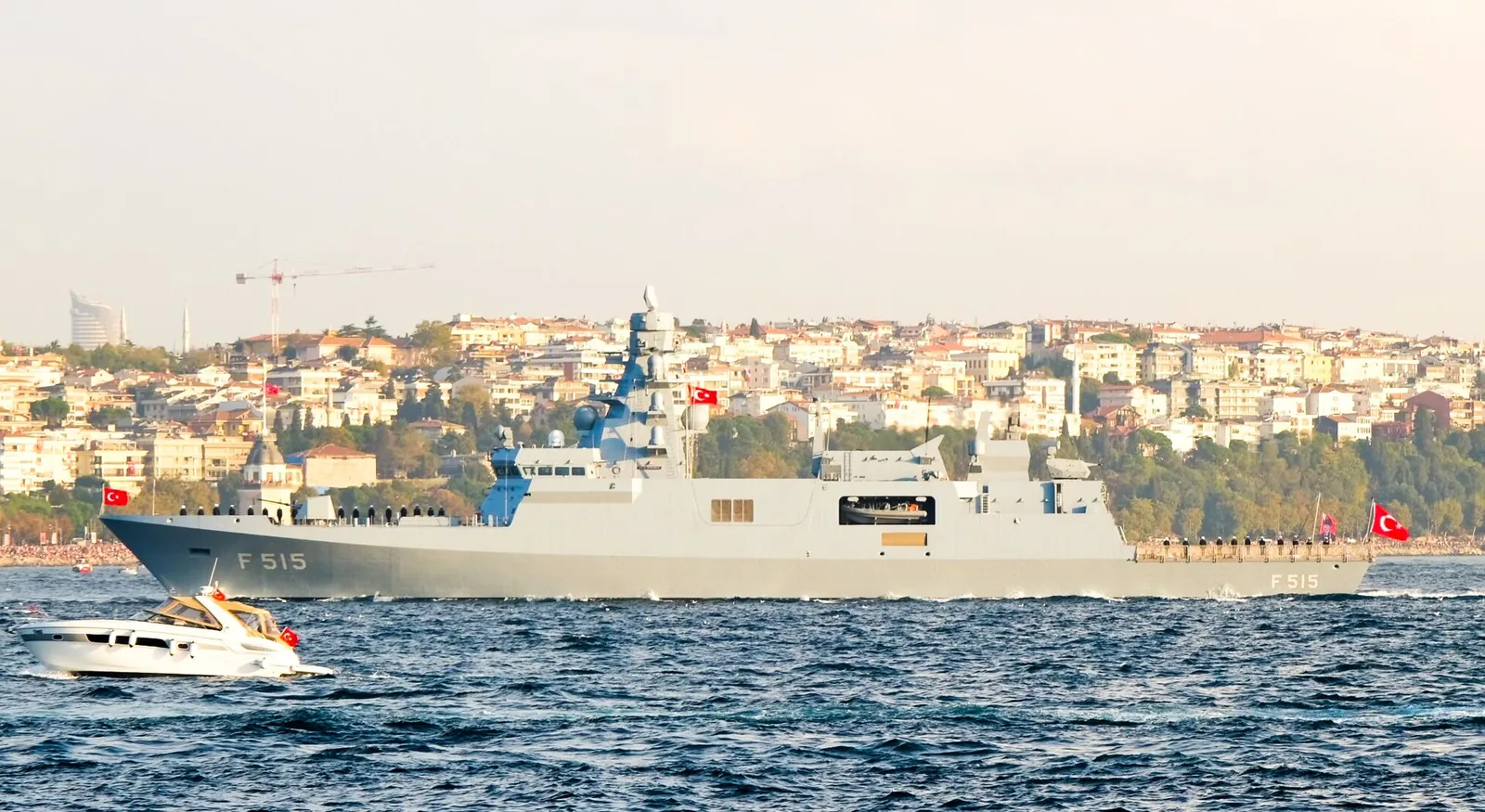
In the naval domain, the symbol of the period is the TCG Istanbul (F-515) frigate. The fifth ship of the MILGEM Project and the first ship of the Istif class, TCG Istanbul, joined the inventory of the Turkish Naval Forces and began duty on 19 January 2024. The ship’s localization rate was announced at approximately 80%.
Naval platforms
| Platform | Status | Date |
|---|---|---|
| TCG Istanbul (F-515) | Entered inventory | 19 Jan 2024 |
| MILGEM 6th-7th-8th ships | Launched | 2024 |
| TCG Izmir / TCG Izmit | Entry into service (forecast) | 2026 (planned) |
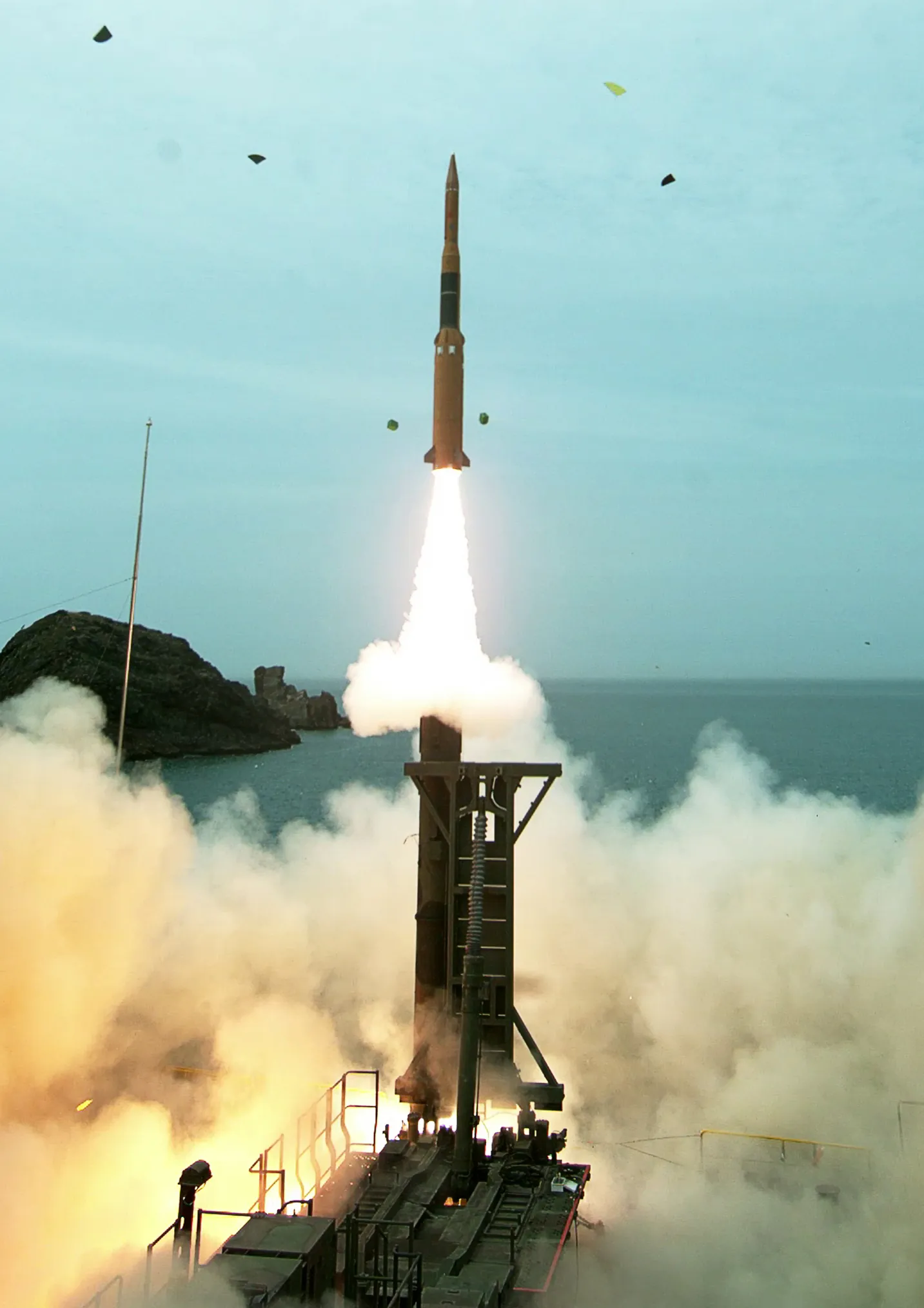
In the missile and air-defense domain, ROKETSAN delivered numerous national systems to the Turkish Armed Forces under serial production throughout the period. Systems reported in official statements as having entered inventory include the SIPER Long-Range Regional Air and Missile Defense System (Block 1), HISAR-A and HISAR-O air-defense missiles, the SUNGUR air-defense system, the ATMACA anti-ship missile, and the KARA ATMACA, CAKIR and SOM cruise missiles, along with the TAYFUN ballistic missile.
Air-defense/missile family (in inventory)
| System | Class | Status |
|---|---|---|
| SIPER Block 1 | Long-range air defense | In inventory; Block 2 (150 km) in commissioning process |
| HISAR-A / HISAR-O | Low / medium altitude | Serial delivery |
| ATMACA | Anti-ship missile | In inventory |
| TAYFUN | Ballistic missile | Among delivered systems |
TCG Istanbul and MILGEM continuity
TCG Istanbul is the first frigate of the Istif class, which follows the Ada-class corvettes, the first four ships of the MILGEM Project. The ship was laid down on 3 July 2017, launched on 23 January 2021, and entered service on 19 January 2024. The roughly 80% localization rate shows that a significant portion of the ship’s combat management system, radar, electronic warfare and weapon systems were sourced from the domestic supply chain. According to the SSB 2024 report, the sixth, seventh and eighth ships of the MILGEM Project were also launched during the year, preserving the continuity of serial production.
Another notable point in naval platforms is that weapon and sensor integration can be carried out entirely with domestic systems. The ATMACA anti-ship missile, the GOKDENIZ close-in air-defense system and various radar families form the main weapon-sensor layer of national frigates and corvettes. This means that beyond the domestic production of the platform hull, the subsystems that determine combat capability are also sourced domestically.
Layered air-defense architecture
In the air-defense domain, the post-2023 period is significant for establishing a layered national architecture covering low, medium and long altitudes in the inventory. SUNGUR and HISAR-A at low altitude, HISAR-O at medium altitude, and SIPER Block 1 at long range are the components of this architecture. ASELSAN’s KALKAN and ALP radar families and fire-control systems provide the target-detection and engagement layer for these missiles. Thus an integrated system emerges in which ROKETSAN’s missile products and ASELSAN’s sensor/fire-control products work together.
The numerical framework of the post-2023 period should be read less through individual platform delivery counts and more through system diversity and the transition to serial production. The most concrete officially confirmed annual aggregate figure is the delivery of 47 air-defense, radar and electronic-warfare systems cited in the SSB 2024 Activity Report.
2024 sector indicators (official)
| Indicator | Value |
|---|---|
| Defense and aerospace exports | $7.15 billion (approx. +29%) |
| Project portfolio | Over $100 billion |
| Localization rate | Above 80% |
| R&D budget | Approx. $3 billion |
| UAV exports (Baykar) | $1.8 billion; 90% of revenue from exports |
Supply chain and localization
A notable structural trend throughout the period is the expansion of the domestic supply chain in critical subsystems. The target of a domestic powertrain for ALTAY, the roughly 80% localization rate on the frigates, and the ROKETSAN-ASELSAN integration in air defense are indicators of this trend. ASELSAN provided the sensor/fire-control layer for the SIPER, HISAR and KORKUT systems through its KALKAN and ALP radar families. TEI’s TS1400 turboshaft engine completing its first flight on GOKBEY shows that localization is also advancing in the most challenging subsystems such as engines and powertrains.
It is also seen that localization shows a maturity that varies by platform type. In naval platforms, the hull, combat management system and weapon-sensor layer are largely domestic, while in land platforms the powertrain is still in a transition stage. In air platforms, the engine remains the most critical and longest-term localization item. This difference partly explains why delivery timelines vary by domain: full-capacity serial delivery for some platforms can be delayed until the localization of a critical subsystem such as the engine is complete.
Points to watch when reading delivery data
Three common mistakes should be avoided in the numerical assessment. The first is confusing production targets with delivered quantities; the hundreds-of-platforms production targets announced by TUSAS are plans spread over future years, not delivered inventory. The second is mistaking a first flight or first firing test for inventory entry. The third is putting export figures on the same footing as domestic inventory delivery. This analysis preserves all three distinctions and is based only on officially confirmed delivery and inventory-entry events.
Delivery maturity by domain
| Domain | 2023-2025 status | Notable delivery |
|---|---|---|
| Naval | Concrete inventory entry | TCG Istanbul (Jan 2024) |
| Air defense / missile | Serial delivery, layered architecture | SIPER, HISAR, ATMACA, TAYFUN |
| Land | Serial production + inventory entry | ALTAY-T1 (Oct 2025) |
| Air (helicopter) | First delivery | GOKBEY (Oct 2024) |
| Air (fighter/unmanned) | Test-development; delivery 2026+ | KAAN, HURJET, ANKA-3, KIZILELMA |
This table summarizes the period’s clearest finding: the maturity of national system delivery differs by domain. While serial delivery and inventory entry have actually taken place in the naval, land and air-defense domains, the 2023-2025 period remains a test-development stage for next-generation fighter and unmanned combat aircraft. This distinction is essential for avoiding the common public confusion between first flight and delivery.
Overall assessment: the post-2023 period represents a transition stage in which national systems developed over the previous decade actually began flowing into inventory. Concrete deliveries took place in the naval and air-defense domains, while large-scale deliveries in air platforms are seen to be planned for after 2026. Export indicators show that the same production capacity also converts into overseas revenue, meaning delivery capacity cannot be measured by domestic inventory alone.
Sıkça Sorulan Sorular
Which was the first national frigate to enter inventory after 2023?
TCG Istanbul (F-515), the first ship of the Istif class and the fifth ship of the MILGEM Project, joined the Turkish Naval Forces inventory on 19 January 2024. Its localization rate was announced at approximately 80%.
When was the ALTAY tank delivered and did it enter inventory?
According to the SSB 2024 Activity Report, the first two ALTAYs were handed over to the Turkish Armed Forces in 2024. Serial production began on 5 September 2025, and the serial ALTAY-T1 officially entered inventory on 28 October 2025.
Which institution received the GOKBEY helicopter?
According to TUSAS, GOKBEY’s first delivery was made to the Gendarmerie General Command on 29 October 2024.
Has the KAAN national fighter jet been delivered?
No. KAAN made its first flight on 21 February 2024; its inventory entry is planned for 2028. Developments in the 2023-2025 period are of a test and development nature.
How many air-defense systems were delivered according to the SSB 2024 report?
According to the SSB 2024 Activity Report, 47 air-defense, radar and electronic-warfare systems were delivered to the Turkish Armed Forces during the year.
Which ROKETSAN air-defense and missile systems have entered inventory?
Official statements list systems including SIPER Block 1, HISAR-A, HISAR-O, SUNGUR, ATMACA, KARA ATMACA, CAKIR, SOM and TAYFUN among the delivered items.
Is the SIPER air-defense system in inventory?
SIPER Block 1 is in inventory. Commissioning of SIPER Block 2, with a range of roughly 150 km, is planned for a later stage; its inventory timeline spans the 2025-2029 range.
Has the Bayraktar KIZILELMA been delivered to the Turkish Armed Forces?
According to the manufacturer, KIZILELMA has entered serial production and the first series aircraft have been prepared for delivery. The first delivery to the Turkish Armed Forces was stated to fall in the 2025-2026 range.
Which unmanned aerial vehicles were tested aboard TCG Anadolu?
The Bayraktar TB3 conducted take-off and landing trials from the deck of TCG Anadolu in 2024. KIZILELMA’s operation from the ship is also planned via this platform.
What were Turkey’s defense and aerospace exports in 2024?
According to SSB, 2024 defense and aerospace exports, including NATO and service exports, reached approximately $7.15 billion, about 11% above the $6.5 billion target.
What is the difference between first flight and inventory entry?
First flight is when a prototype takes to the air for the first time and marks the start of the test process. Inventory entry is when a serially produced platform is handed over to an operational user and begins duty. This analysis evaluates delivery data on the basis of inventory entry.
Which ships were launched under the MILGEM Project in 2024?
According to the SSB 2024 Activity Report, the sixth, seventh and eighth ships of the MILGEM Project were launched in 2024. TCG Izmir and TCG Izmit are expected to enter service in 2026.
Sonuç
Based on official sources, the post-2023 period marks a stage in which the shift from development to serial production and inventory entry became clear for the Turkish defense industry. TCG Istanbul in the naval domain, the serial ALTAY in the land domain, GOKBEY in the air domain, and the SIPER, HISAR, ATMACA and TAYFUN family in the missile/air-defense domain are the concrete, confirmed delivery outputs of this period.
By contrast, developments regarding platforms such as KAAN, HURJET, ANKA-3 and KIZILELMA in the 2023-2025 period are largely of a first-flight, testing and serial-production-preparation nature; their large-scale inventory deliveries are planned for 2026 and beyond. The sector’s $7.15 billion export figure and localization rate above 80% show that deliveries are not limited to domestic inventory alone, and that the same platforms also convert into export revenue.
Since total individual platform quantities are not public for some of the data, this analysis has focused on confirmed delivery and inventory events, deliberately excluding unconfirmed figures. The general trend of the period points toward national systems diversifying while flowing into operational inventory, and localization deepening in the supply chain.
The maturity gap between domains also shapes the coming period’s agenda. While a serial delivery regime has become established in the naval and air-defense domains, powertrain localization in land platforms and the inventory entry of next-generation fighter and unmanned combat aircraft in air platforms will be critical topics for 2026 and beyond. For this reason, the post-2023 period should be assessed not as a completion but as a threshold at which the inflow of numerous national systems into inventory has begun. When delivery data is read separately from first-flight and production-target news, the picture points to concrete, measurable progress.
Kaynaklar
- https://www.ssb.gov.tr/storage/img/2023-yili-faaliyet-raporu.pdf
- https://turksavunmasanayi.gov.tr/Uploads/faaliyetRaporlari/b98e9939124e87205a2aed07fb595bf4.pdf
- https://www.aa.com.tr/tr/ekonomi/savunma-sanayisi-2024te-7-1-milyar-dolarlik-ihracat-yapti/3441221
- https://baykartech.com/en/press/baykar-the-global-leader-in-ucav-exports-achieves-18-billion-in-exports-in-2024/
- https://en.wikipedia.org/wiki/Istanbul-class_frigate
- https://en.wikipedia.org/wiki/Altay_(tank)
- https://www.aa.com.tr/tr/gundem/altay-tankinin-ilk-teslimati-28-ekimde-yapilacak/3714603
- https://www.defenceturk.net/roketsandan-yeni-teslimatlar-2
- https://tskgv.org.tr/savunma-sanayii-gundem/milli-savunmanin-yeni-gucu-tcg-istanbul-firkateyni-gorevine-basladi
- https://www.trthaber.com/haber/savunma/roketsanin-yeni-uretim-tesislerinin-acilis-toreni-yapildi-940821.html