The World’s Most Expensive Missiles (2026): When the Missile Costs More Than the Target

Every row is labelled with the cost category it rests on.
Missile prices are rarely discussed alone in defence debates, because the real question is not what a missile costs but what it was spent to hit. A thirty-million-dollar interceptor stopping a ballistic missile is a reasonable investment. Spending that same class of interceptor to bring down a thirty-thousand-dollar powered glider is an entirely different calculation. This file ranks the most expensive missiles first, then opens up the most critical defence problem of recent years.
Methodology: which number is a missile’s price?
Missile costs carry the same labelling problem as the rest of this series, and on strategic missiles the programme-division trap reaches its most extreme form:
| Type of figure | What it covers | How reliable is it? |
|---|---|---|
| Budget unit cost | The missile alone; launcher and radar excluded | The cleanest basis for comparison; published in the US budget |
| Programme ÷ units | Total programme including R&D, infrastructure and silo modernisation | As with the Sentinel, it runs far above the price of the missile |
| System price | Missile + launcher + radar + fire control | In air defence, confusing this with a single missile makes the figure meaningless |
| Development-stage estimate | Systems not yet in series production | Expected to fall markedly at scale; should be read as a band |
Table one: the highest cost per missile
The list below ranks missiles currently in production or inventory by unit cost. What the top four share is that all serve either strategic deterrence or strategic defence.
| # | Missile | Role | Million USD | Cost category | Note |
|---|---|---|---|---|---|
| 1 | LGM-35A Sentinel | Intercontinental ballistic missile | 222,0 | Programme ÷ units | Programme total divided by missile count; silo modernisation and infrastructure included |
| 2 | GMD interceptor (GBI) | Strategic interceptor | 75,0 | Budget unit cost | Strategic interceptor against ICBMs; built in small numbers |
| 3 | Trident II D5 | Submarine-launched ballistic missile | 31,0 | Budget unit cost | Submarine-launched ballistic missile; in production for decades |
| 4 | SM-3 Block IIA | Exo-atmospheric interceptor | 28,0 | Budget unit cost | One of the few ship-based interceptors able to engage outside the atmosphere |
| 5 | AGM-183 ARRW | Hypersonic | 15,0 | In development | Hypersonic programme; in development, series price uncertain |
| 6 | THAAD interceptor | High-altitude interceptor | 12,5 | Budget unit cost | High-altitude ballistic missile defence; the battery price is far above this |
| 7 | SM-6 | Multirole | 4,3 | Budget unit cost | A multirole missile usable against aircraft, ships and ballistic targets |
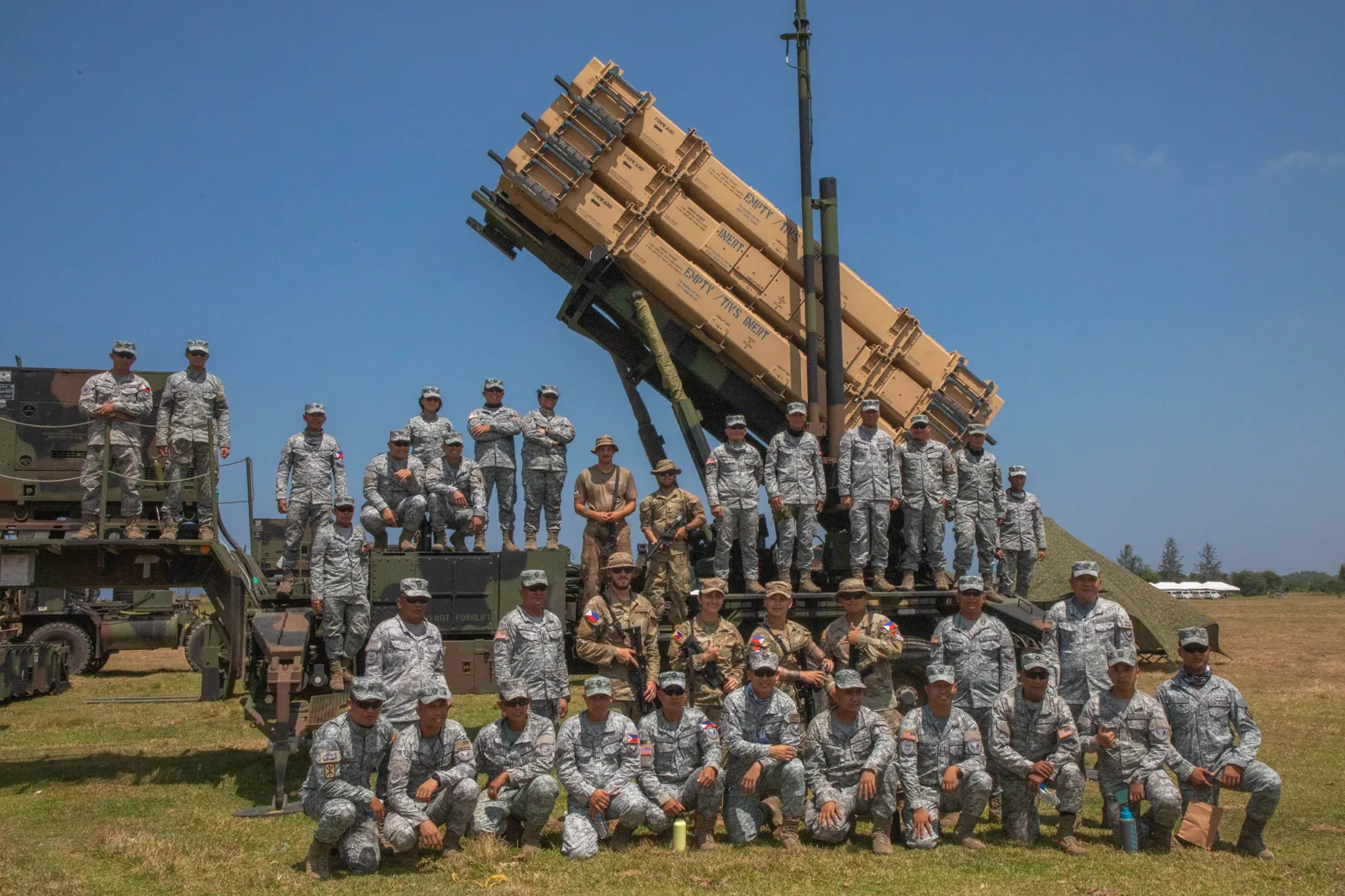
| 8 | PAC-3 MSE | Air defence interceptor | 4,0 | Budget unit cost | Air defence’s most widely used interceptor; at the centre of the asymmetry debate |
| 9 | AGM-158C LRASM | Anti-ship | 3,5 | Budget unit cost | Low-observable anti-ship missile; range and autonomy set the cost |
| 10 | Tomahawk Block V | Cruise missile | 1,9 | Budget unit cost | Decades of production scale drag the unit cost down |
The real problem: is the missile costlier than the target?
In air defence an interceptor’s success is not measured only by whether it hits. How many dollars of missile were spent on how many dollars of target counts too. The table below sets out the pairings that have emerged in recent fighting:
| Pairing | Interceptor (million USD) | Target (million USD) | Ratio | Note |
|---|---|---|---|---|
| PAC-3 MSE → one-way attack drone | 4,00 | 0,030 | ×133,3 | The defence works, the economics do not — an unsustainable equation |
| SM-6 → anti-ship drone | 4,30 | 0,050 | ×86,0 | Exactly the situation faced in ship defence in the Red Sea |
| Tamir → simple artillery rocket | 0,05 | 0,001 | ×50,0 | Fifty times costlier, though the value of what is protected changes the sum |
| THAAD → short-range ballistic missile | 12,50 | 1,000 | ×12,5 | A reasonable asymmetry; a ballistic missile is already an expensive target |
| 35 mm air defence gun → attack drone | 0,005 | 0,030 | ×0,2 | The equation inverts — this row is the direction of the solution |
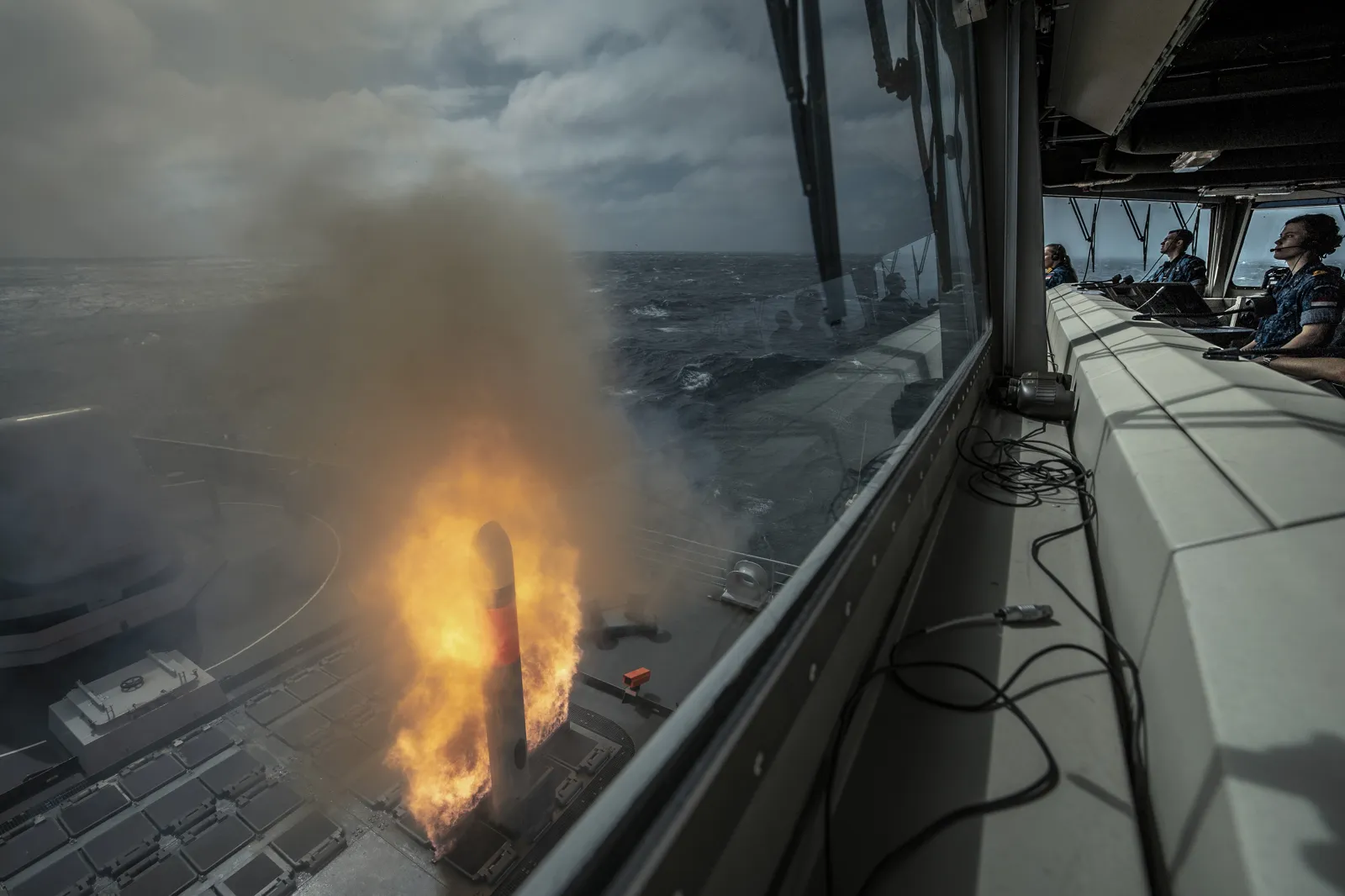
That equation pushed the defence industry into a new search. A cheap lower layer is being built to protect the expensive interceptors: 35 mm air defence guns, laser systems and a new generation of small interceptors that stay in the hundred-thousand-dollar band per round. The aim is not to spend a four-million-dollar missile on a thirty-thousand-dollar target — to invert the asymmetry.
Cost by role: one word, four separate worlds
“Missile” is a single word covering four economies that differ by hundreds of times. The chart below shows the typical unit cost band of each role:
| Role | Typical unit cost (million USD) | Examples | What drives the cost |
|---|---|---|---|
| Strategic (ICBM/SLBM) | 222,0 | Sentinel, Trident | Intercontinental range, multi-stage propulsion, decades of storage life |
| Interceptors | 28,0 | SM-3, THAAD, PAC-3 | Seeker head, target discrimination in seconds, extreme manoeuvre |
| Cruise missiles | 1,9 | Tomahawk, SOM | Long range and cruise guidance; production scale drags cost down |
| Tactical missiles | 0,2 | Javelin, guided rocket | Short range and single-use simplicity; built in large numbers |
The difference comes from the design brief. A strategic missile demands tens of thousands of kilometres of range, nuclear warhead safety and decades of storage life. A tactical missile settles for a few kilometres and single-use simplicity. The thousandfold gap between them is a direct reflection of the engineering gap.
Four things that drive missile cost
Range
Range is the single most decisive variable in missile cost. Every additional hundred kilometres means more fuel, a larger body and a stronger structure. Intercontinental range demands multi-stage propulsion and re-entry protection — which moves the cost onto an entirely different scale.
Guidance and seeker head
A missile’s brain can cost more than its body. The price gap between a radar-seeker interceptor and a simple laser-guided rocket comes mostly from that one component. On anti-ship missiles able to select targets autonomously, the seeker accounts for much of the cost.
Speed regime
Flying at hypersonic speeds requires heat-tolerant materials and guidance systems that work at those speeds. The high unit cost of programmes like ARRW comes from those two items, and none of these systems has yet reached series production scale.
Production volume
The Tomahawk is the cheapest missile on the list thanks to decades of production history. Strategic interceptors built in small numbers, by contrast, cannot draw on economies of scale — exactly as with tanks and warships.
Where does Türkiye sit in this table?
There is no publicly available unit cost for Turkish missiles, so none appears in the main table. But Türkiye’s position here is less about price ranking than about having developed products on both sides of the asymmetry problem above.
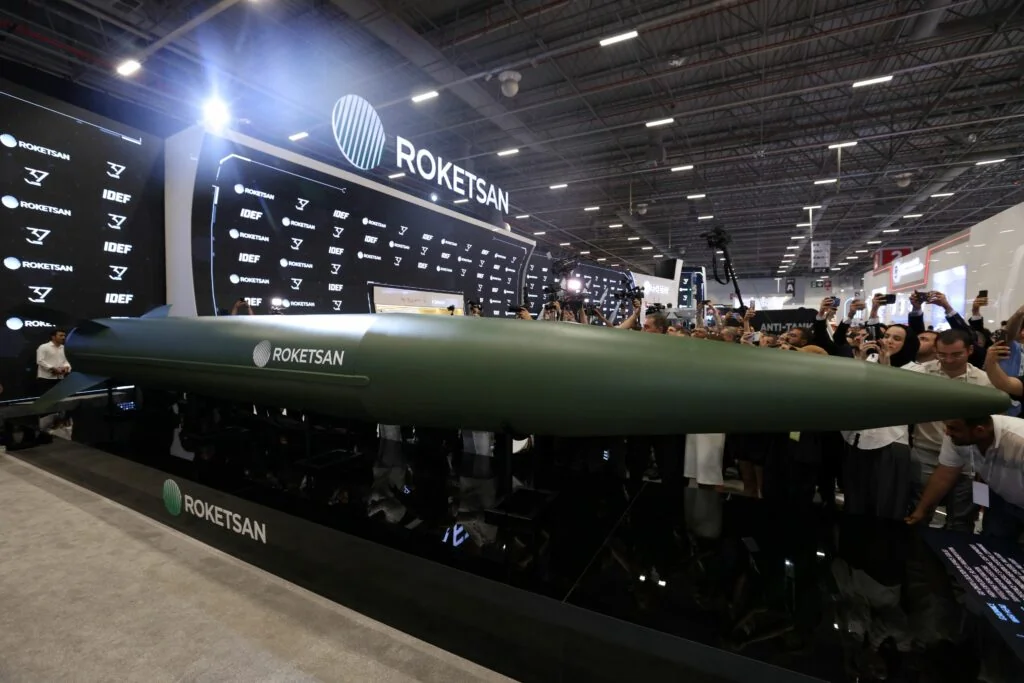
We have produced no estimates for any of them. When official figures are published this page will be updated and the systems added to the table.
What stands out about Türkiye here is that it builds both the expensive interceptor layer and the cheap gun-based layer with its own means. Systems like the 35 mm Korkut and the short-range Sungur aim to bring down an attack drone without expending a four-million-dollar interceptor — a direct answer to the cost asymmetry this file is about.
Frequently asked questions
What is the most expensive missile in the world?
Can a missile cost more than what it destroys?
What is the answer to that asymmetry?
Why are strategic missiles so expensive?
What do Turkish missiles cost?
Is a Patriot battery the same price as a Patriot missile?
Sources
- US Department of Defense budget justification documents (Missile Procurement)
- US Government Accountability Office (GAO) — annual assessments of defense acquisition programs
- US Congressional Research Service (CRS) — reports on missile and missile defence programmes
- US Missile Defense Agency (MDA) — budget and programme documents
- Presidency of Defence Industries (SSB) — statements on the Tayfun, SOM, Atmaca and Siper programmes
- Roketsan and TÜBİTAK SAGE official product documentation
- International Institute for Strategic Studies (IISS) — The Military Balance