The Best Turkish UAVs for Serbia: A Technical Fit Analysis in the Context of a Strong Domestic Industry

Serbia is a landlocked Balkan state surrounded by several neighbors, with a land border reaching roughly 2,300 kilometers. Unlike a state with a weak air component, Serbia has a combat-aircraft fleet, a layered air defense and, most importantly, a mature domestic unmanned aerial vehicle (UAV) industry. The Yugoimport SDPR-built Pegaz 011 is a tactical-MALE class platform; the Vrabac and similar mini UAVs cover part of the reconnaissance need. In addition, according to open sources, Serbia has procured a Chinese CH-92A class armed tactical UAV.
Using only publicly available technical data, this file evaluates how well Turkish UAVs fit the Serbian context technically — and does so honestly: in the tactical and mini classes where domestic and Chinese counterparts already exist, the added value of an external Turkish platform is relatively low; the genuinely meaningful technical fit lies in the high-end MALE/UCAV tier where the domestic industry still leaves a gap (AKINCI, ANKA-S, AKSUNGUR). The aim is not to claim any sale will occur, but to map requirement, domestic capability and open-source platform characteristics. Strengths and limits of each platform are presented in a balanced way. The figures are compiled from manufacturer brochures and open sources; they are unconfirmed estimates that vary with configuration, not exact operational performance. The content contains no political or geopolitical commentary.
High-End MALE and Unmanned Combat Aircraft (UCAV) Class
In the Serbian context, the highest technical fit for Turkish UAVs is in this class. Although the domestic Pegaz 011 and imported CH-92A provide a tactical-MALE level capability, the domestic industry still leaves a gap in top-tier functions such as long endurance, heavy payload, beyond-line-of-sight (BLOS) control via satellite communications (SATCOM) and air-to-air engagement. The platforms below can technically fill that gap.
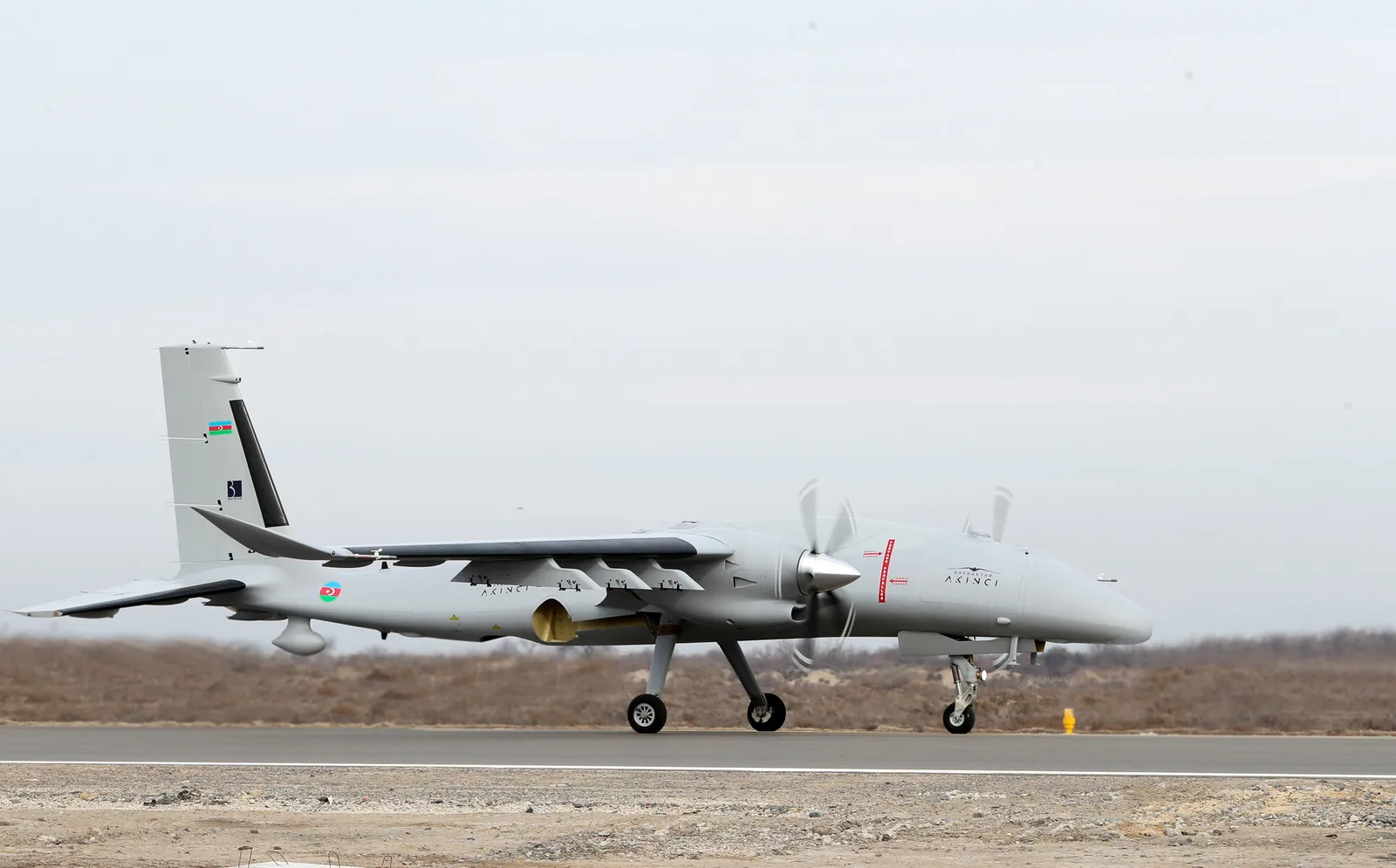
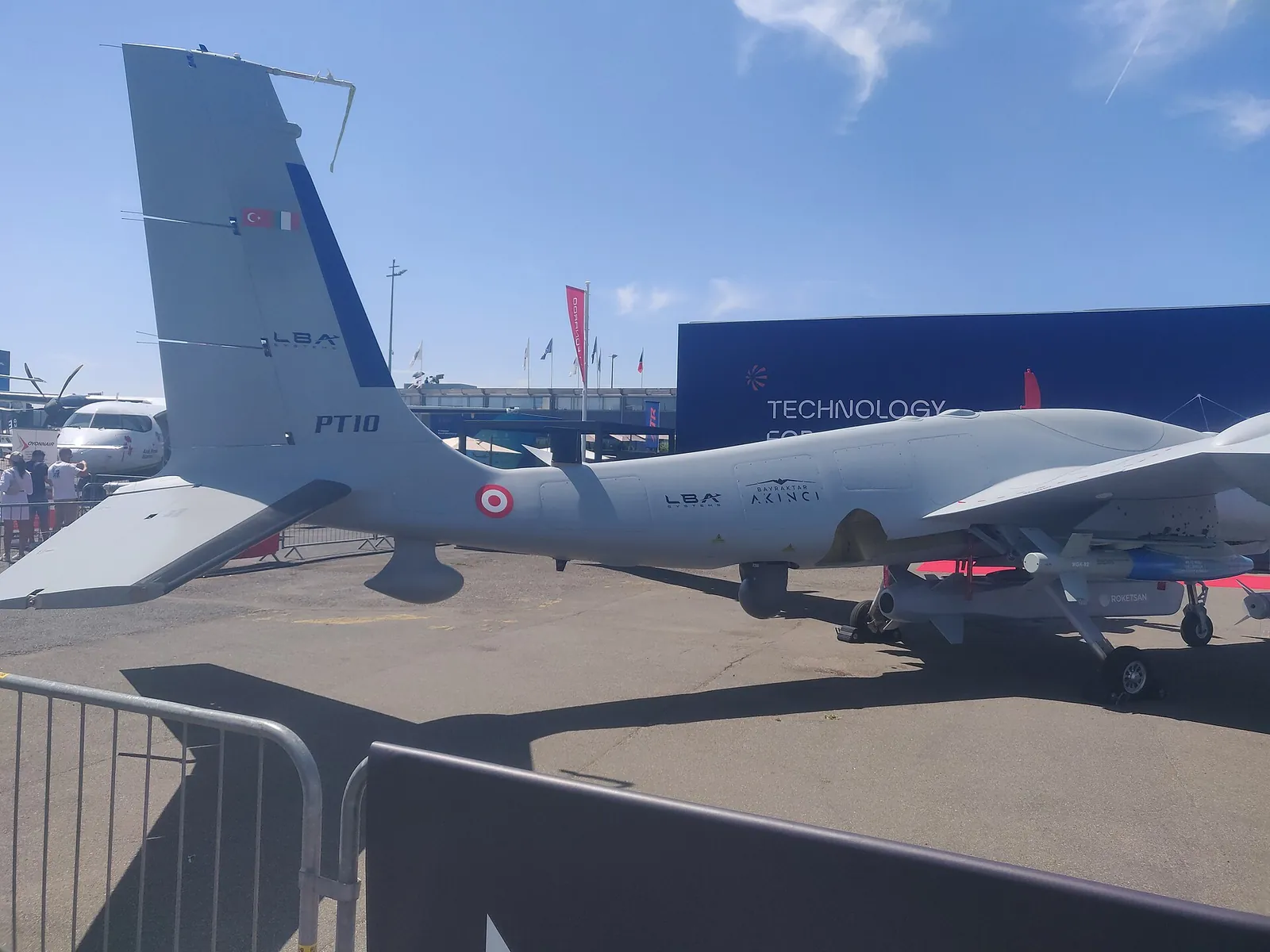
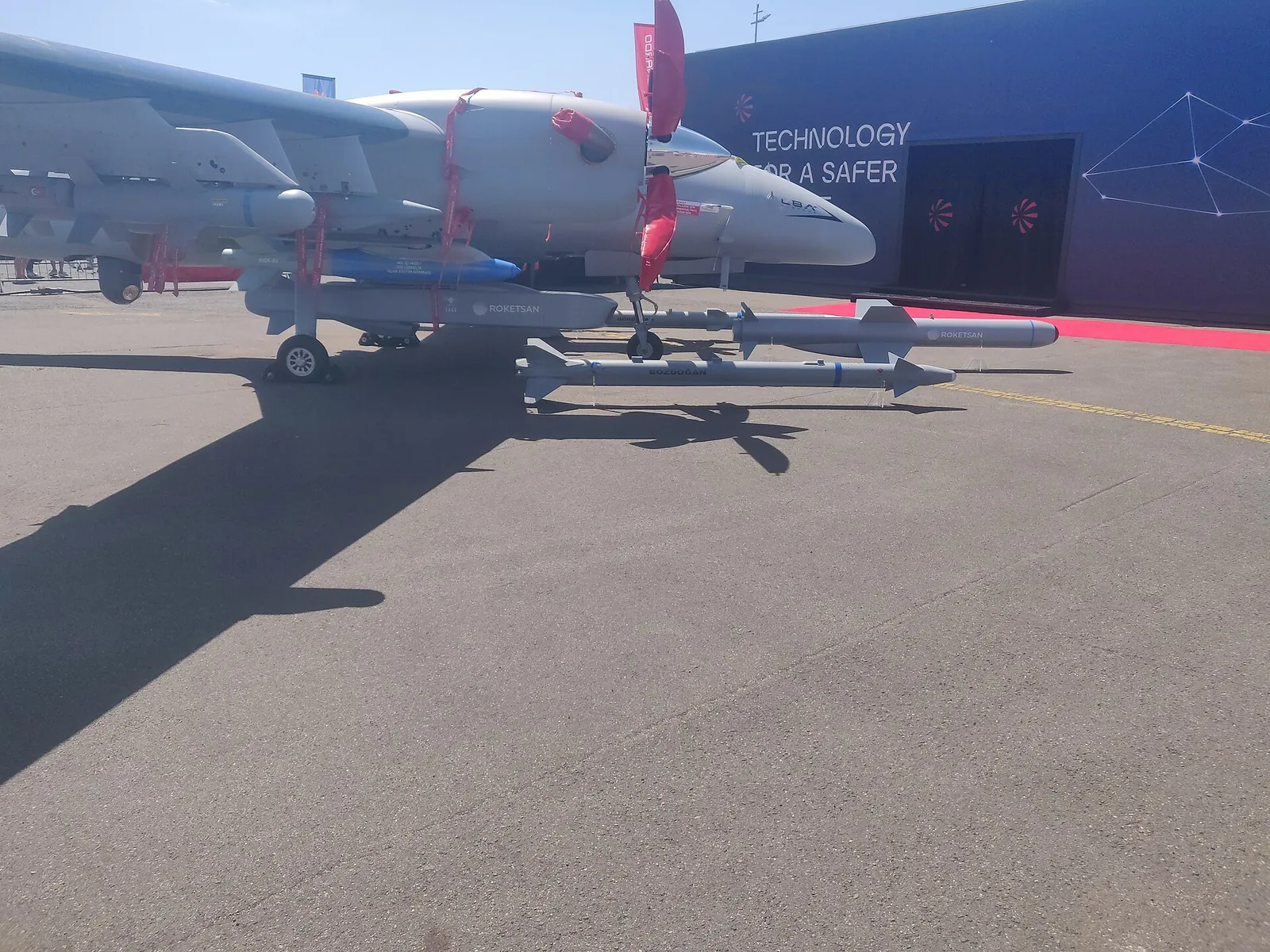
Bayraktar AKINCI
A twin-turboprop heavy-class strike UAV; open sources cite around 24 hours of endurance, a ceiling near 40,000 ft and payload up to roughly 1,350 kg. With SATCOM, air-to-air missile integration and a broad munitions range, it represents a capability tier beyond the reach of the Pegaz 011 and CH-92A. For Serbia its strength is closing a strategic gap the domestic industry does not fill. Limitation: high cost, infrastructure and training needs, and a neutral procurement policy may complicate integration with the existing mixed Russian/Chinese/Western inventory.
ANKA / ANKA-S
Turkish Aerospace (TAI) MALE UAV; roughly 24 hours of endurance, a 30,000 ft ceiling and BLOS control via SATCOM. The ANKA-S variant, with an encrypted satellite link, delivers persistent, wide coverage able to watch the entire border. AESA radar and synthetic-aperture radar (SAR/GMTI) options enable all-weather watch. For Serbia its strength is SATCOM-based persistent patrol exceeding the line-of-sight range of the domestic Pegaz. Limitation: higher operating and infrastructure cost.
AKSUNGUR
Baykar’s twin-engine heavy-payload UAV; open sources cite over 40 hours of endurance in a suitable configuration and roughly 750 kg of payload. It is designed for long-duration surveillance, signals intelligence (SIGINT) and multi-sensor carriage. Strength: uninterrupted long patrol and SIGINT capacity beyond the reach of domestic platforms. Limitation: low speed and a large infrastructure footprint.
Bayraktar Kızılelma (future potential)
An unmanned combat aircraft (UCAV) under development at Baykar; jet-powered, aiming for low observability and with an internal weapons bay. It remains in the test/development phase and has not entered serial service. Since Serbia’s domestic industry produces no counterpart in this class, it is theoretically the platform that could fill the largest gap; however, it does not answer the present need and is assessed only as a future potential capability. Limitation: immaturity, high cost and complex training/infrastructure expectations.
| Platform | Endurance* | Payload* | Fills domestic gap |
|---|---|---|---|
| Bayraktar AKINCI | ~24 h | ~1,350 kg | High (heavy strike, air-to-air) |
| ANKA / ANKA-S | ~24 h | ~250 kg | High (SATCOM persistent watch) |
| AKSUNGUR | 40+ h | ~750 kg | High (long patrol + SIGINT) |
| Bayraktar Kızılelma | In development | Not reported | Potential (UCAV, not yet serial) |
*Figures compiled from open sources and manufacturer brochures; unconfirmed indicative values that vary with configuration.
Tactical UAVs
The tactical class is the layer where the technical fit of Turkish UAVs for Serbia is most debatable, because Serbia already has two sources in this class: the domestic Yugoimport Pegaz 011 (tactical-MALE, weapons-capable) and the imported Chinese CH-92A (armed tactical UAV). Consequently, the technical value a Turkish platform would add in this layer is relatively low-to-medium, and the suitability score honestly reflects this.
Bayraktar TB2
Baykar’s tactical UAV; open sources cite about 27 hours of endurance, a 25,000+ ft ceiling and MAM-L/MAM-C class light munitions. Its low cost, short training and proven operational record are strengths. But in the Serbian context its limitation is decisive: most of the detect-and-strike capability it offers is already met by the domestic Pegaz 011 and the imported CH-92A. So, however technically competent, its marginal contribution is low.
Bayraktar TB3
A next-generation, folding-wing version of the TB2 developed for carrier-deck operations; a more powerful engine, increased payload and an indigenous AESA radar. Since Serbia is landlocked, the carrier capability is entirely irrelevant; increased range from a land base is an advantage but again overlaps with the Pegaz class. Result: technically modern, but its marginal fit for Serbia is limited because it overlaps the domestic tactical layer.
KARAYEL
Vestel’s tactical UAV; open sources cite about 20 hours of endurance, a 22,500 ft ceiling and roughly 70 kg of payload. It is an EO/IR-focused, economical, modest-infrastructure platform. Its strength is low cost; but the economical ISR profile it offers targets exactly the same niche as the Pegaz 011. Its technical fit for Serbia therefore remains low, as it would not be expected to substitute for domestic production.
| Platform | Class | Domestic/imported counterpart | Marginal contribution to Serbia |
|---|---|---|---|
| Bayraktar TB2 | Tactical MALE | Pegaz 011 / CH-92A | Low (high overlap) |
| Bayraktar TB3 | Next-gen tactical | Pegaz 011 | Low-medium |
| KARAYEL | Economical tactical | Pegaz 011 | Low (same niche) |
Note: Marginal contribution is the net technical benefit added on top of existing domestic/imported capability; it is distinct from the platform’s own technical competence.
Mini and Rotary-Wing UAVs
The mini class is the layer where the technical fit of Turkish UAVs is lowest in the Serbian context. Serbia’s domestic industry is relatively mature here: Vrabac and similar mini reconnaissance UAVs meet small-unit and border-post needs with domestic production. External mini-UAV procurement therefore appears technically low-priority.
Bayraktar Mini UAV
A backpack-portable, hand-launched fixed-wing mini UAV; open sources cite about 1 hour of endurance and day/night camera options. It is technically competent and economical; however, the small-unit reconnaissance capability it offers overlaps almost one-to-one with Vrabac-class domestic platforms. Its marginal technical contribution to Serbia is therefore low.
STM Togan (rotary-wing mini)
STM’s rotary-wing (multirotor) autonomous mini UAV; urban and enclosed-area reconnaissance, swarm capability and autonomous mission planning stand out. Vertical take-off and landing require no runway. The swarm and autonomy functions may offer a niche capability beyond the existing domestic mini fleet; in that respect it is the relatively most meaningful external contribution candidate within the mini class. Limitation: short endurance and limited range.
ROKETSAN / STM loitering munitions (ALPAGU-KARGU class)
A fixed/rotary-wing loitering-munition family; used against point targets with a detect-and-strike capability. Autonomous target tracking and low-cost neutralization provide flexibility. Since Serbia’s domestic industry is relatively less mature in this specific loitering-munition class, this sub-class may technically form the most notable gap within the mini layer. Limitation: very short range and single-use nature.
| Platform | Type | Domestic counterpart | Marginal contribution to Serbia |
|---|---|---|---|
| Bayraktar Mini UAV | Fixed-wing, hand-launch | Vrabac class | Low (one-to-one overlap) |
| STM Togan | Rotary-wing (multirotor) | Partial (swarm niche) | Low-medium |
| ROKETSAN/STM loitering munition | Loitering munition | Limited domestic equivalent | Medium (relative gap) |
Comparison and Ten-Criteria Suitability Scoring
The tables below compare Turkish UAVs against the Serbian context including the domestic industry and imported inventory. The scoring is an open-source technical assessment on a 1–10 scale, not a precise performance measurement. The critical point: in classes where a domestic (Pegaz 011, Vrabac) or imported (CH-92A) counterpart exists, the Overall suitability score is honestly lower; even where the platform’s own technical competence is high, if the marginal contribution is low the Overall score reflects that.
Class and marginal-contribution summary
| UAV | Class | Domestic/imported counterpart | Technical fit for Serbia |
|---|---|---|---|
| Bayraktar AKINCI | Heavy MALE/UCAV | None (gap) | High (fills the gap) |
| ANKA / ANKA-S | MALE (SATCOM) | Partial (Pegaz line-of-sight) | High (SATCOM gap) |
| AKSUNGUR | Heavy MALE | None (gap) | High (long patrol + SIGINT) |
| Bayraktar Kızılelma | UCAV | None (gap) | Potential (not yet mature) |
| Bayraktar TB3 | Next-gen tactical | Pegaz 011 | Low-medium (overlap) |
| Bayraktar TB2 | Tactical MALE | Pegaz 011 / CH-92A | Low (high overlap) |
| KARAYEL | Economical tactical | Pegaz 011 | Low (same niche) |
| Bayraktar Mini | Mini fixed-wing | Vrabac class | Low (one-to-one overlap) |
Turkish UAVs, domestic and foreign counterparts
| Turkish UAV | Serbian domestic/imported counterpart | Other foreign counterpart |
|---|---|---|
| Bayraktar TB2 | Pegaz 011 / CH-92A | General Atomics MQ-1 class |
| AKINCI / ANKA-S | No domestic counterpart | MQ-9 Reaper / CH-5 class |
| KARAYEL | Pegaz 011 | Elbit Hermes 450 class |
| Bayraktar Mini | Vrabac | Commercial/military mini class |
Ten-criteria suitability scoring
Criteria: Terrain, Climate, Mobility (deployment flexibility), Maintenance, Training, Integration (fit with a mixed inventory), Modularity, Versatility, Cost, Overall. Scores are an open-source technical assessment on a 1–10 scale. The Overall score is honestly lower in classes where a domestic/imported counterpart exists, because the marginal contribution is low.
| UAV | Terrain | Climate | Mobility | Maint. | Training | Integration | Modular | Versatility | Cost | Overall |
|---|---|---|---|---|---|---|---|---|---|---|
| Bayraktar AKINCI | 9 | 8 | 7 | 6 | 6 | 7 | 9 | 9 | 5 | 8.0 |
| ANKA / ANKA-S | 9 | 8 | 8 | 7 | 7 | 7 | 8 | 9 | 7 | 8.0 |
| AKSUNGUR | 8 | 8 | 7 | 6 | 6 | 7 | 8 | 9 | 6 | 7.8 |
| Bayraktar Kızılelma | 8 | 8 | 7 | 5 | 5 | 7 | 8 | 8 | 4 | 6.5 |
| Bayraktar TB3 | 9 | 8 | 8 | 8 | 7 | 7 | 8 | 8 | 7 | 6.2 |
| Bayraktar TB2 | 9 | 8 | 9 | 9 | 9 | 7 | 8 | 8 | 9 | 6.0 |
| KARAYEL | 8 | 8 | 8 | 8 | 8 | 7 | 7 | 7 | 8 | 5.8 |
| Bayraktar Mini | 8 | 7 | 9 | 9 | 9 | 6 | 6 | 6 | 9 | 5.0 |
As the table shows, platforms that score high on most technical criteria — such as the TB2 and Bayraktar Mini — are deliberately given a low Overall suitability score because Serbia already possesses domestic and imported capability in those classes. By contrast, AKINCI, ANKA-S and AKSUNGUR score high overall because they sit in the high-end tier where the domestic industry leaves a gap.
Fit for Serbia: Requirement, Domestic Capability and Gap
Serbia’s UAV equation is fundamentally different from that of states with weak UAVs. Four drivers are decisive: (1) a roughly 2,300 km land border and internal-security surveillance need; (2) an existing combat-aircraft fleet and layered air defense, so airspace awareness is not solely dependent on UAVs; (3) a mature domestic UAV industry (Pegaz 011, Vrabac) and the imported CH-92A, which largely fill the tactical/mini layer; and (4) military neutrality, which means external procurement must be weighed carefully for integration with the existing mixed Russian/Chinese/Western inventory and for supply balance. The landlocked geography renders maritime surveillance unnecessary.
Where Turkish UAVs gain technical meaning
Given this picture, the technical contribution of Turkish UAVs to Serbia remains low-to-medium in the tactical and mini classes, because those layers are already covered by domestic and imported systems. The genuine technical fit lies in the high-end MALE/UCAV tier the domestic industry does not yet produce:
- Heavy strike and depth (gap): AKINCI offers heavy payload, air-to-air engagement and strategic range beyond the reach of the domestic Pegaz and the CH-92A.
- SATCOM-based persistent surveillance (gap): ANKA-S provides uninterrupted encrypted-satellite coverage beyond line-of-sight-limited domestic platforms.
- Long patrol and SIGINT (gap): AKSUNGUR fills a niche the domestic fleet does not reach, with over 40 hours of endurance and signals-intelligence capacity.
- Loitering munitions (partial gap): the ROKETSAN/STM loitering-munition class may provide flexibility in a sub-tier where the domestic counterpart is relatively limited.
Balance of strengths and weaknesses (Serbian context)
| UAV | Strength | Weakness / limit |
|---|---|---|
| AKINCI | Heavy capability filling the domestic gap | High cost, integration with mixed inventory |
| ANKA-S | Uninterrupted wide coverage via SATCOM | High infrastructure cost |
| AKSUNGUR | Long patrol + SIGINT niche | Low speed, large footprint |
| TB2 / KARAYEL | Technically mature and economical | Overlap with Pegaz/CH-92A, low marginal contribution |
| Bayraktar Mini | Practical, one-soldier portable | One-to-one overlap with Vrabac |
| Kızılelma | Long-term potential for the UCAV gap | Not mature, no answer to today’s need |
In short, given Serbia’s strong domestic industry and existing imported capability, the technical fit of Turkish UAVs is honestly selective: low-to-medium in the tactical and mini layer, and markedly higher in the high-end MALE/UCAV tier. This assessment contains no forecast about any sale, agreement or political decision; it merely maps requirement, domestic capability and platform characteristics using open-source technical data.
Frequently Asked Questions
Which Turkish UAV fits Serbia best?
On an open-source technical assessment, the highest fit comes from platforms in the high-end tier the domestic industry leaves as a gap: AKINCI for heavy strike, ANKA-S for SATCOM-based persistent surveillance and AKSUNGUR for long patrol/SIGINT. The tactical and mini classes show lower fit, as they are already covered by Pegaz 011, Vrabac and the CH-92A.
Why do Turkish UAVs score low against Serbia’s domestic industry?
Serbia has mature domestic UAVs such as the Yugoimport-built Pegaz 011 and Vrabac, and has also procured the Chinese CH-92A. As a result, the net technical benefit (marginal contribution) a Turkish platform would add in the tactical and mini classes is low. Even where a platform’s own competence is high, the Overall suitability is honestly scored lower because of this overlap.
How does Serbia’s air component affect its UAV need?
Unlike states with a weak air component, Serbia has a combat-aircraft fleet and a layered air defense. Airspace awareness is therefore not solely dependent on UAVs; the UAV need is complementary and niche-oriented rather than foundational.
Isn’t the Bayraktar TB2 suitable for Serbia?
The TB2 is a technically mature and economical platform; however, most of the detect-and-strike capability it offers is already met by the domestic Pegaz 011 and the imported CH-92A. So, despite its high technical competence, its marginal contribution and therefore its overall fit for Serbia are low.
Why are AKINCI, ANKA-S and AKSUNGUR seen as more suitable?
These platforms offer high-end functions the domestic industry does not produce: AKINCI’s heavy payload and air-to-air engagement; ANKA-S’s encrypted SATCOM beyond-line-of-sight persistent surveillance; AKSUNGUR’s 40+ hours of endurance and SIGINT. Because they fill the domestic gap, their marginal technical contribution and overall fit are high.
Is this analysis a sales forecast?
No. The content is purely an open-source technical assessment and makes no claim about any sale, agreement or negotiation. Its aim is to technically map the requirement profile, domestic capability and platform characteristics.
How does Serbia’s military neutrality affect technical fit?
Military neutrality adds a technical consideration around integrating external procurement with the existing mixed Russian/Chinese/Western inventory and around supply balance. This can complicate the communications and maintenance compatibility of differently sourced systems; however, this file addresses only technical fit and does not touch political decision-making.
Why is the loitering-munition class relatively more meaningful for Serbia?
Although classic mini reconnaissance UAVs such as the Vrabac are produced domestically, a direct domestic counterpart to ROKETSAN/STM’s ALPAGU-KARGU class loitering munitions is relatively limited. This sub-tier, providing a fast response against point targets, may therefore form the most notable technical gap within the mini class.
Bottom Line
Viewed through open-source data, Serbia is a country that largely meets its UAV need through its own industry (Yugoimport Pegaz 011, Vrabac) and selective imports (China’s CH-92A). Assessed honestly, the technical fit of Turkish UAVs therefore remains relatively low-to-medium in the tactical and mini classes, because domestic and imported counterparts already exist in those layers and the marginal technical contribution of an external platform is limited.
By contrast, the genuine technical fit lies in the high-end tier the domestic industry does not yet fill: AKINCI’s heavy strike and air-to-air capability, ANKA-S’s SATCOM-based persistent surveillance and AKSUNGUR’s long patrol with SIGINT represent functions the Pegaz class cannot reach. Kızılelma, for the UCAV gap, is only a long-term, still-immature potential. This assessment contains no political or geopolitical commentary and no sales forecast; it maps requirement, domestic capability and platform fit using publicly available technical data only.
Related Analysis
Sources
- Baykar — official technical brochures for Bayraktar TB2, TB3, AKINCI, AKSUNGUR and Kızılelma
- Turkish Aerospace (TAI) — ANKA / ANKA-S technical fact sheets
- Vestel Defense — KARAYEL technical information; ROKETSAN/STM — ALPAGU, KARGU, Togan statements
- Yugoimport SDPR — official presentations of the Pegaz 011 and Vrabac mini UAV
- IISS The Military Balance — Serbia section (force structure and air component)
- Serbian Ministry of Defence — official information on the Serbian Armed Forces
- Open-source defense publications — reporting on Serbia’s CH-92A procurement and domestic UAV programs