
What is NASAMS? The Norwegian-American Surface-to-Air Missile System, Explained
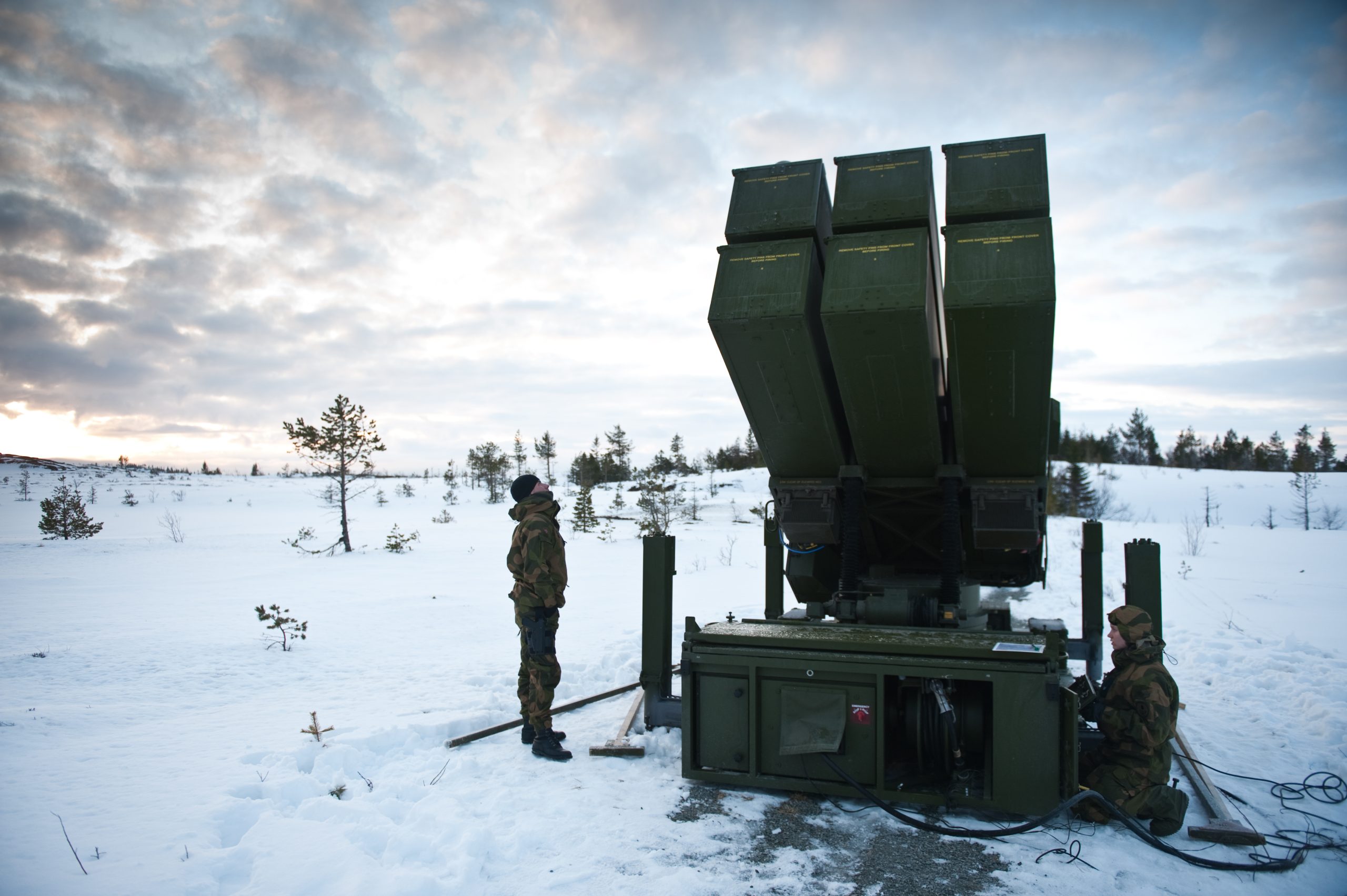
NASAMS — National Advanced Surface-to-Air Missile System — is a distributed, mid-range, multi-target air-defense system jointly developed by Norway’s Kongsberg Defence & Aerospace and the United States’ Raytheon (RTX). Designed in the 1990s as Norway’s replacement for the Improved HAWK SAM, NASAMS pioneered the use of the AIM-120 AMRAAM as a surface-launched missile — the first operational system to do so. The architecture’s distributed, networked nature has made it the air-defense system of choice for 14 nations and the platform that has defended both the U.S. White House and the U.S. Capitol against air attack since 2005.
Key facts at a glance
| Attribute | Value |
|---|---|
| Type | Mid-range distributed air-defense system |
| Origin | Norway + United States |
| Manufacturer | Kongsberg Defence & Aerospace (system); Raytheon (missile) |
| In service | 1998 (Norway); 2005 (U.S. NCR defense) |
| Engagement range | 25 km (AMRAAM); 40 km (AMRAAM-ER); 70+ km (planned MR variant) |
| Engagement altitude | up to 14 km |
| Missiles | AIM-120 AMRAAM (C-7, D, AMRAAM-ER); AIM-9X Block II; IRIS-T (Spain); AGM-114L Hellfire (proposed); future MR (planned) |
| Battery architecture | Fire Distribution Center + Multiple Launcher Units + Sentinel radar(s) |
| Launcher capacity | 6 ready missiles per launcher; typically 3–4 launchers per battery |
| Radar | AN/MPQ-64F1 Sentinel (X-band, mobile) |
| Reaction time | ~7 seconds |
| Operators | Norway, United States (Capitol/White House), Spain, Netherlands, Finland, Lithuania, Indonesia, Australia, Hungary, Oman, Qatar, Ukraine, Saudi Arabia, Romania |
| Battery cost | ~ USD 200–400 million per battery (configuration-dependent) |
Architecture: distributed, not centralized
NASAMS’ defining feature is its distributed sensor-to-shooter architecture. Unlike the Patriot battalion (single fire-control center, single radar, single launcher group), NASAMS allows up to 12 launchers, 8 radars and 3 fire-distribution centers to operate as a single integrated battery, separated by up to 25 km. Each component talks to the others via a redundant tactical data link. If a single radar is destroyed by SEAD, the others continue providing target track. This distributed architecture significantly increases NASAMS’ survivability against modern suppression of enemy air defense.
Variants
| Variant | Year | Key feature |
|---|---|---|
| NASAMS I | 1998 | Initial Norwegian fielding; AMRAAM as SAM |
| NASAMS II | 2007 | Improved radar integration; data-link upgrades |
| NASAMS 3 | 2019 | AIM-9X integration; AMRAAM-ER 40 km range; IRIS-T option; mobile MMR-3 |
| NASAMS MR (planned) | 2026+ | 70 km range missile (under development with Raytheon) |
The White House and U.S. Capitol
Since 2005, NASAMS batteries operated by U.S. Air National Guard units have defended the airspace over the National Capital Region — including the White House, the U.S. Capitol, the Pentagon and major federal buildings. Two batteries are typically maintained on rotation, with launchers positioned at undisclosed locations and Sentinel radars operating at fixed sites. This is the only known peacetime operational SAM deployment over a U.S. major city.
Combat record
- 2018–present — Yemen. Saudi Arabian and UAE forces have used NASAMS-derived configurations against Houthi cruise-missile and UAV attacks.
- 2022–present — Ukraine. The single largest combat use of NASAMS in history. Norway, the United States, the Netherlands, Spain and Canada have collectively provided 12+ NASAMS batteries to Ukraine. By late 2025, Ukrainian Air Force figures credited NASAMS-fired AMRAAMs with intercepting more than 1,500 Russian cruise missiles and Shahed-class drones protecting Kyiv, Odesa and Lviv. The combination of NASAMS with AMRAAM provided Ukraine’s most effective mid-tier air-defense capability throughout the 2022–2024 winter campaigns.
Operators
| Country | Status |
|---|---|
| Norway | Primary operator; NASAMS 3 baseline |
| United States | NCR Air Defense + foreign-supplied batteries to Ukraine |
| Spain | IRIS-T equipped batteries |
| Netherlands | Donated to Ukraine |
| Finland | NASAMS II |
| Lithuania | Two batteries (delivery 2020–2022) |
| Indonesia | 2 batteries |
| Australia | NASAMS 3 with EOR-2 sensor; first non-North American Sentinel-free operator |
| Hungary | 11 launchers (2022) |
| Oman | 2 batteries |
| Qatar | 10 batteries |
| Ukraine | 12+ batteries (combined Western donations) |
| Romania, Saudi Arabia | Selected; deliveries 2024–2026 |
NASAMS vs. its peers
| NASAMS 3 | IRIS-T SLM | SAMP/T NG | Patriot PAC-3 MSE | |
|---|---|---|---|---|
| Class | Mid-range SAM | Mid-range SAM | Long-range SAM + BMD | Long-range SAM + BMD |
| Max range | 40 km (AMRAAM-ER) | 40 km | 150 km | 120 km |
| Engagement altitude | 14 km | 20 km | 20 km | 25 km |
| Missile | AIM-120 AMRAAM | IRIS-T SLM | Aster 30 NT | PAC-3 MSE |
| Combat-proven against cruise missiles | Yes (Ukraine, heavy) | Yes (Ukraine) | Yes (Ukraine) | Yes (Saudi, Ukraine) |
Why NASAMS matters
NASAMS reset the architecture of mid-range air defense. Its distributed sensor-to-shooter model has been emulated by IRIS-T SLM, NSAMS-derived Singapore configurations, and the new U.S. Army Indirect Fires Protection Capability (IFPC). Its dominant role in defending Ukrainian cities from Russian cruise-missile and Shahed attacks has validated the design under the heaviest sustained air-defense workload of the 21st century. As production of AMRAAM expands to support the surge, Kongsberg and Raytheon are positioned to keep NASAMS at the top of the mid-tier SAM market through the 2030s.


