T929 ATAK-2: 10 Reasons Saudi Arabia Should Choose Turkey’s Attack Helicopter Over the Alternatives

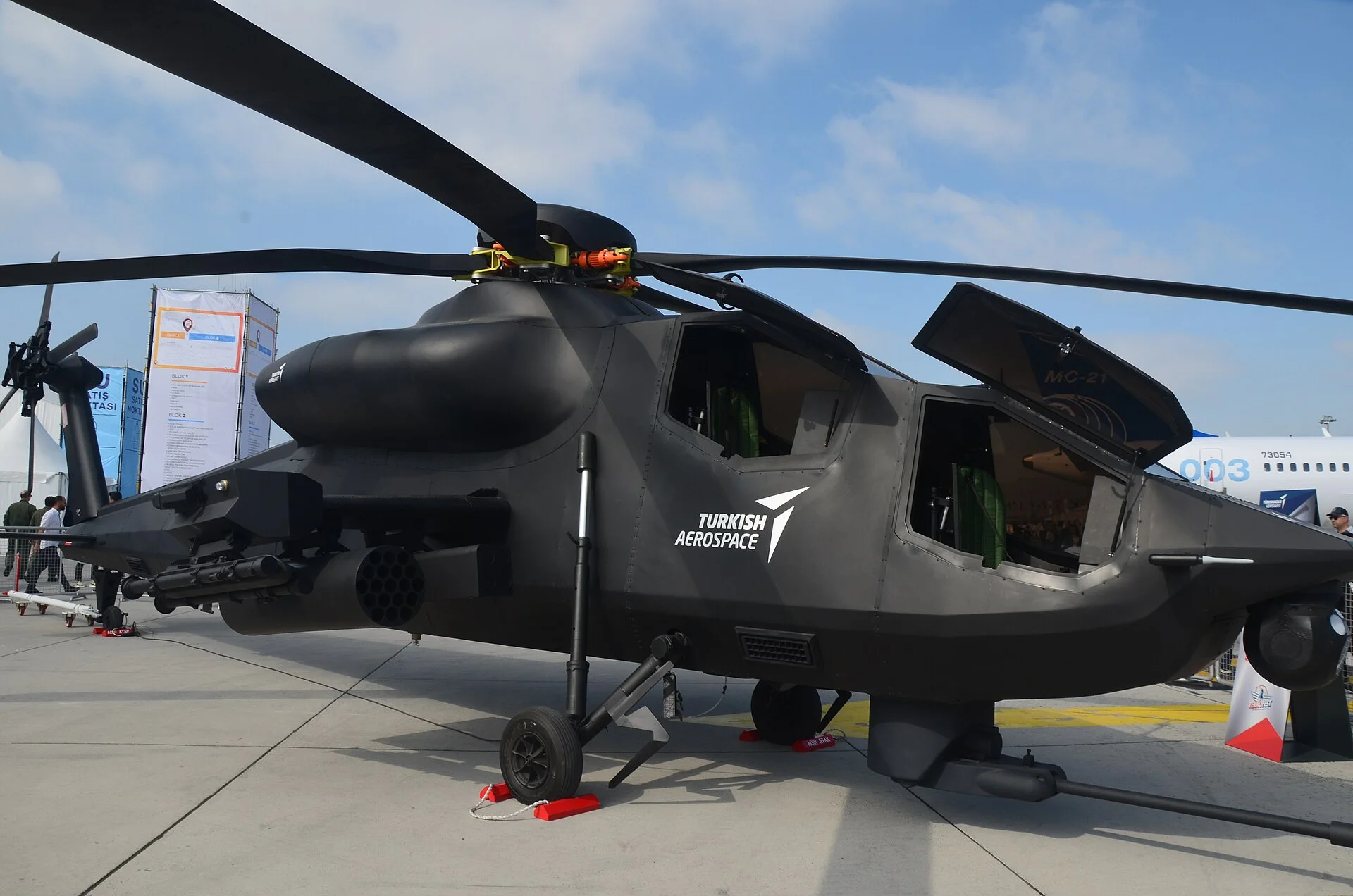
Image: Wikimedia Commons
Saudi Arabia ranks among the world’s largest defense buyers, yet procurement remains heavily tied to a single channel — the US Foreign Military Sales program. During the Yemen campaign, Washington’s periodic restrictions on helicopter munitions transfers and the suspension of F-35 negotiations put that dependence in sharp relief. Vision 2030, meanwhile, requires 50 percent of defense spending to flow through domestic industry by 2030. Those two pressures together make a case for evaluating Turkey’s heavy-class attack helicopter, T929 ATAK-2, as a serious alternative. A 10-point analysis built on open sources.
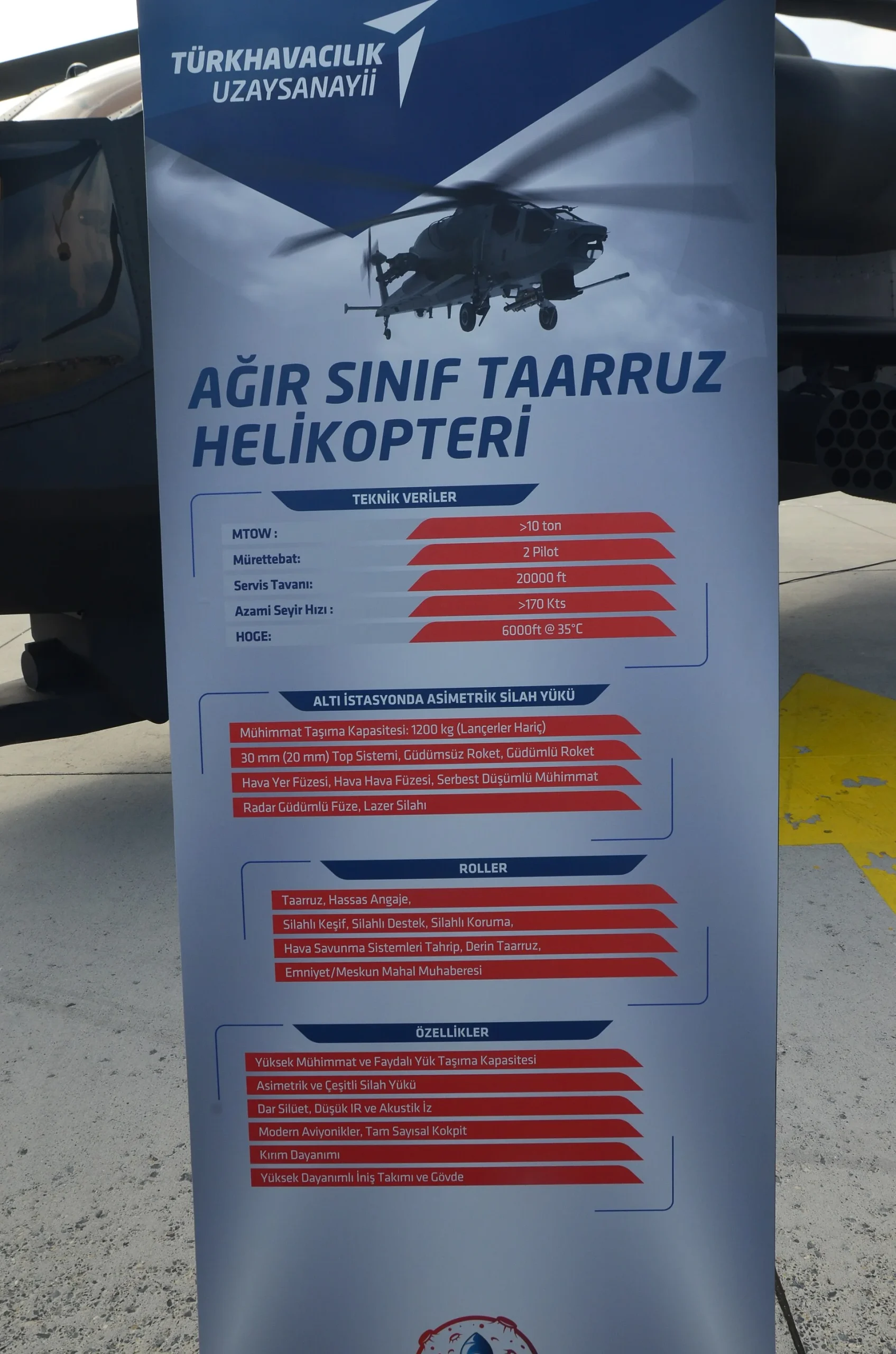
| Class / Role | Heavy attack helicopter; close air support, anti-tank, ISR |
| Engines | 2 × TEI-TS1400 turboshaft (1,400 shp each, domestically produced) |
| Weapons capacity | Approx. twice T129 ATAK; Cirit, L-UMTAS, MAM-L/C, 20 mm/30 mm cannon |
| Development status | Prototype / development phase |
| Operational predecessor | T129 ATAK — Turkish Army and Somali Air Force |
| Maker | Turkish Aerospace Industries (TUSAS) |
| Key differentiator | Full-domestic TEI turboshaft + unconditional export model |
Why Should Saudi Arabia Evaluate T929 ATAK-2? 10 Reasons
No ITAR: unconditional procurement, no congressional veto
AH-64E Apache exports are bound by ITAR, FMS procedures and congressional approval. Since 2018, the US has periodically restricted certain weapon and precision-munition transfers to Saudi Arabia over Yemen. Turkish platforms sit outside that mechanism: the sale is decided on bilateral terms, with no third-party veto in the chain.
SAMI co-production aligned with Vision 2030
Vision 2030 calls for 50 percent of defense spending to flow through domestic industry by 2030. TUSAS co-production frameworks with PZL Świdnik (Poland) and the Pakistan Aeronautical Complex set precedents that a similar SAMI-anchored model for Saudi Arabia is feasible.
Domestic TEI engine: propulsion sovereignty and maintenance independence
T929 ATAK-2’s TEI-TS1400 turboshaft is produced in Turkey. Systems that rely on foreign power plants face mandatory dependency on the supplier country for overhaul and critical spares; that link disappears with a domestic engine. Engine-production transfer aligns directly with Saudi Arabia’s aviation-industry development objectives.
Hot-and-high design profile for Saudi terrain
The TEI-TS1400 family was engineered for Turkey’s southeast — altitudes above 1,000 m and summer heat exceeding 40°C. Saudi Arabia’s Yemen border, Asir highlands and interior regions share that demanding thermal-altitude profile. Platforms tied to the GE T700 incur additional maintenance loads in such environments; the T929 was designed for them.
Proven ATAK family heritage
T929 ATAK-2’s direct predecessor, T129 ATAK, has seen operational use with the Turkish Armed Forces and was exported to the Somali Air Force. T929 is an evolution of that combat-proven lineage into the heavy class — not an untested concept, but the continuation of a mature program.
Broad domestic weapons ecosystem
Cirit 70 mm smart-guided rocket, L-UMTAS laser/IIR anti-tank missile, MAM-L/MAM-C smart munitions and HGK GPS guidance kit are integrated on the T929 platform. Saudi Arabia can diversify away from ITAR-dependent AGM-114 Hellfire dependency and draw on a multi-vendor munitions chain.
Structural buffer against Apache munitions cutoffs
Reports of the US halting precision-munition deliveries to Saudi Arabia during the Yemen campaign illustrate the operational risk of single-supplier dependence. An ITAR-independent platform provides a structural hedge against similar interruptions.
Modern avionics and C4ISR integration
T929 ATAK-2’s avionics suite includes FLIR, laser rangefinder/designator, a helmet-mounted cueing system (HMCS) and a secure datalink — elements compatible with Saudi Arabia’s existing C4ISR infrastructure and interoperability standards.
Twin-engine safety across Saudi Arabia’s vast geography
Saudi Arabia’s operating theatre — from the Riyadh hinterland to the Asir range, the Yemen border and the Gulf coast — demands long-range mission capability. Twin-engine T929 ATAK-2 provides a meaningful safety margin on extended over-land sorties compared to single-engine alternatives.
Early-buyer leverage: design input and technology transfer
As with the KAAN and UAV programmes, Turkey has historically granted early customers greater influence over design requirements, production-share decisions and technology-transfer scope. Saudi Arabia entering the T929 programme early would position SAMI as a manufacturing partner rather than a downstream buyer.
How It Compares to Rivals
| Attribute | T929 ATAK-2 (TUSAS) | AH-64E Apache (US) | AW149 (Leonardo/Italy) |
|---|---|---|---|
| Class | Heavy attack, twin-engine | Attack, twin-engine | Multi-role, twin-engine |
| Engine | 2× TEI-TS1400 (domestic, 1,400 shp) | 2× GE T700-701D (1,890 shp) | 2× P&W PT6C-67C (1,252 kW) |
| Weapons / munitions | Cirit / L-UMTAS / MAM (domestic) | AGM-114 Hellfire / Hydra 70 (ITAR) | AGM-114 Hellfire / Hydra 70 (ITAR) |
| Export terms | No ITAR, unconditional | ITAR + FMS + Congress approval | Relatively flexible, Italian approval |
| Engine sovereignty | Fully domestic (TEI) | US-sourced (GE) | Canadian-sourced (P&W) |
| Co-production flexibility | Open, SAMI-compatible | Restricted | Feasible |
Power and cost figures are open-source estimates and vary by configuration.
Gallery
Frequently Asked Questions
When will T929 ATAK-2 enter service?
Why is Saudi Arabia questioning its AH-64E dependence?
How does T929 ATAK-2 compare to AH-64E Apache?
Would Turkey agree to a co-production deal with SAMI?
Is T929 ATAK-2 suited to Yemen-type operations?
T929 ATAK-2 answers two of Saudi Arabia’s core procurement problems — single-supplier dependence and Vision 2030’s domestic-industry mandate — directly. Combining the T129 family’s operational heritage, a domestic TEI turboshaft and an ITAR-free export model, it represents a credible diversification option for Riyadh’s attack-helicopter fleet.
Sources
- T129 ATAK — Wikipedia
- TAI T929 ATAK-2 — Wikipedia
- TUSAS Official Product Pages
- Somalia acquires Turkish T129 ATAK helicopters — Defense News
- US restricts offensive weapons to Saudi Arabia and UAE — Reuters
- Saudi Arabian Military Industries (SAMI)
- Saudi Vision 2030 — Defense Localization Goal