What Is the Bayraktar TB2? Full Specs, Range and Mission Profile

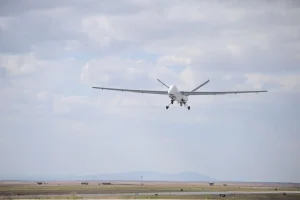
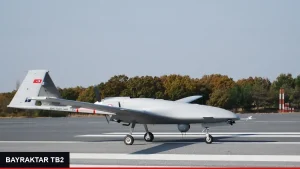
The Bayraktar TB2 is the medium-altitude, long-endurance armed drone that turned Türkiye into a top-tier unmanned aerial vehicle exporter — operated by more than 30 countries and credited with reshaping modern drone warfare. This guide breaks down what the TB2 is, its full technical specifications, operational range, weapons fit and the mission profiles that defined its global reputation.
TB2 at a Glance: A MALE-Class Armed Drone
The Bayraktar TB2 (Turkish: Tactical Block 2) is a medium-altitude, long-endurance (MALE) unmanned combat aerial vehicle developed by Türkiye-based Baykar. First flown in 2014 and inducted into the Turkish Armed Forces inventory the same year, the TB2 was designed as an affordable, locally produced alternative to U.S. and Israeli MALE platforms — a strategic choice that has since proven decisive on multiple battlefields.
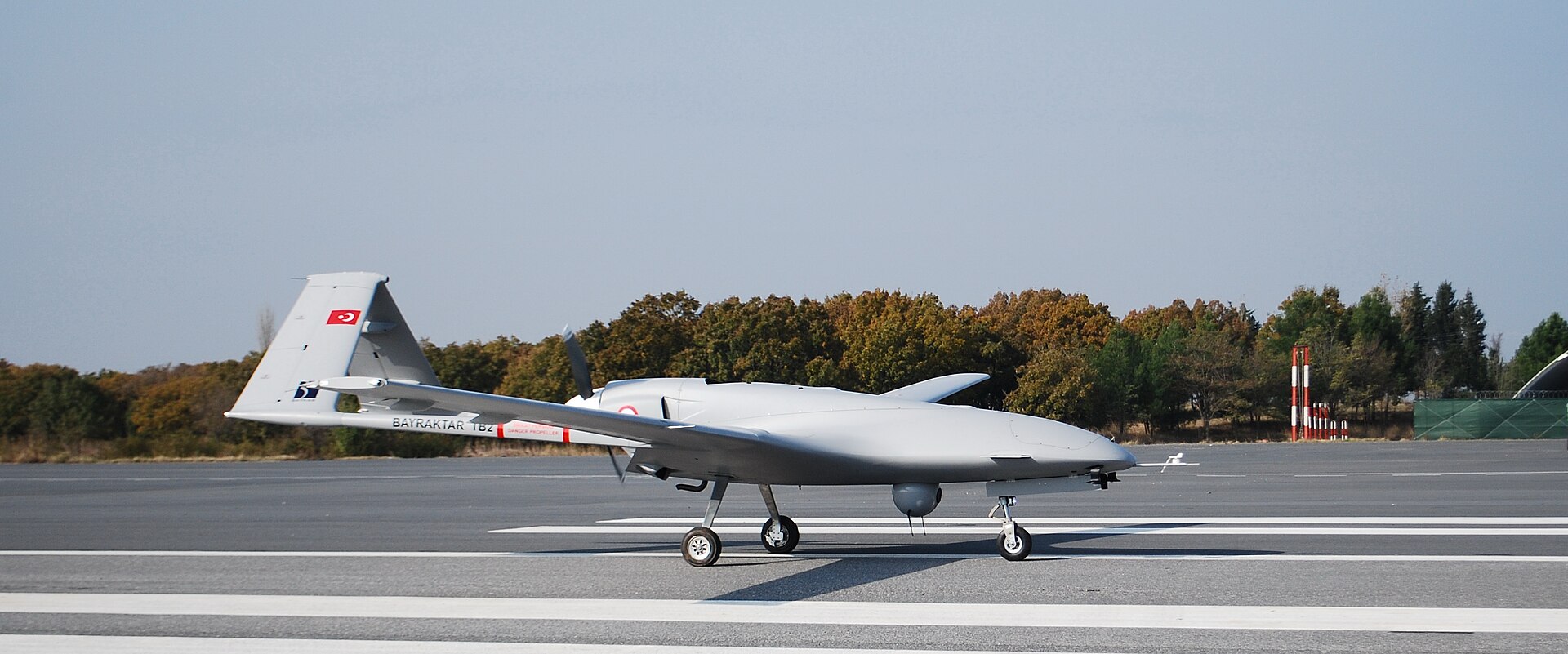
With a 12-meter wingspan, modular avionics and a tail-sitting twin-boom airframe, the TB2 is built around long-endurance surveillance and precision strike at low cost-per-hour. It uses an internal-combustion Rotax engine, NATO-standard data links and Baykar’s own avionics suite — a combination that keeps unit and operating costs far below comparable Western drones.
| Key Facts — Bayraktar TB2 |
|---|
| Class: Medium-altitude long-endurance (MALE) UCAV Manufacturer: Baykar (Türkiye) Maiden flight: August 2014; in service since 2014 Operators: Turkish Armed Forces + 30+ export customers Combat record: Confirmed strikes in Libya, Syria, Nagorno-Karabakh and Ukraine Global milestone: Surpassed 1,000,000 combined flight hours by December 2024 |
Bayraktar TB2 Technical Specifications
The TB2 is purpose-built for persistent ISR (intelligence, surveillance, reconnaissance) and precision strike against soft and lightly armoured targets. Its specifications reflect a deliberate trade-off — modest payload and subsonic speed in exchange for endurance, reliability and low cost.
| Specification | Value |
|---|---|
| Length | 6.5 m |
| Wingspan | 12 m |
| Height | 2.2 m |
| Maximum take-off weight (MTOW) | 700 kg |
| Useful payload | 150 kg |
| Powerplant | Rotax 912 (100 hp internal combustion) |
| Cruise speed | 70 knots (130 km/h) |
| Maximum speed | 120 knots (220 km/h) |
| Operational altitude | 16,000 ft (4,900 m) |
| Service ceiling | 22,000–27,000 ft |
| Endurance | 24 hours (typical 12+ hours with full payload) |
| Communications range | ~150 km line-of-sight |
| Hardpoints | 4 underwing |
Range, Endurance and How the TB2 Stays Airborne
Range is the metric where the TB2 quietly outclasses many of its Western rivals on a cost-per-hour basis. The aircraft is rated for up to 24 hours endurance in clean configuration and routinely flies 12–14 hour missions with a four-weapon weapons fit. Its line-of-sight data link extends roughly 150 km from the ground control station, and operators can extend coverage by daisy-chaining ground stations or, in newer configurations, by relaying through a satellite-equipped Akıncı or a TURKSAT data relay.
The triple-redundant flight control system enables fully autonomous taxi, take-off, cruise and landing — a critical feature for forward operating bases without skilled pilots on the ramp. The aircraft’s short field requirements (around 500 m of paved surface) and modular ground equipment make it deployable from austere airstrips, including converted civil runways used by export operators.
Sensors and Payload Suite
The TB2’s mission payload is built around a stabilised electro-optical / infrared (EO/IR) sensor turret with a laser designator and laser rangefinder. The standard turret is produced domestically by Aselsan (CATS) and provides full-motion video, target tracking and target illumination for laser-guided munitions. The platform is designed for sensor swaps, and several export customers operate alternative turrets (including foreign suppliers) where ITAR-controlled components allow.
EO/IR turret with laser designator (Aselsan CATS or equivalent)
Synthetic-aperture radar (SAR) — optional, on newer Block 2 builds
Encrypted line-of-sight data link (BVLOS via relay)
GPS/GLONASS-aided inertial navigation with anti-jam options
Triple-redundant flight control and engine monitoring
IFF transponder (NATO Mode 4 / Mode 5 capable on export builds)
Weapons: MAM Family and the “Smart Micro Munition” Concept
The TB2’s weapons fit is dominated by Roketsan’s MAM (Mini Akıllı Mühimmat — “Smart Micro Munition”) family — a clean-sheet, drone-optimised series of laser-guided bombs and missiles that prioritise low collateral damage and high single-shot probability of kill against vehicles, bunkers and personnel.
| Weapon | Type | Warhead | Notes |
|---|---|---|---|
| MAM-L | Laser-guided bomb | ~10 kg HE/thermobaric/tandem HEAT | Most-used round; effective vs vehicles and bunkers |
| MAM-C | Laser-guided bomb | ~6.5 kg | Lighter; multiple per hardpoint |
| MAM-T | Laser-guided bomb | ~22 kg | Longer stand-off range |
| Bozok | Laser-guided bomb | ~22 kg | Newer addition; multi-mode |
Mission Profile: ISR, Precision Strike and SEAD-Lite
A typical TB2 sortie blends two role sets that traditional manned platforms separate. The drone climbs to its operational altitude (around 16,000 ft), loiters along a programmed orbit while its EO/IR turret screens an area of interest, and engages opportunistic or pre-planned targets with MAM-class munitions on demand. The same aircraft can stream full-motion video back to a corps headquarters, designate targets for friendly artillery or aviation, and prosecute its own strikes — without rotating airframes.
In Libya and northern Syria the TB2 was used to suppress Pantsir-S1 short-range air defences in coordinated waves — a “drone SEAD” tactic that became a textbook study. In Nagorno-Karabakh (2020) and later in Ukraine, the same platform was used for armoured-column interdiction, artillery hunting and battle-damage assessment.
Cost and Operating Economics
Public price points for the TB2 vary by configuration and customer, but estimates from open-source defence reporting place the unit cost in the $5–6 million range per aircraft (a system of six aircraft, two ground stations and ground support equipment typically costs $40–70 million). The aircraft’s low-cost airframe, COTS engine and modest mission crew translate into operating costs a fraction of a Reaper-class drone — the single biggest reason mid-size air arms have chosen it.
Variants and Future Development
Baykar has progressively rolled out improved blocks of the TB2 (collectively branded Block 2) with upgraded engines, hardened data links and improved sensor turrets. Beyond the TB2, the company’s product line now includes the larger Akıncı HALE drone, the carrier-capable TB3 (deployed from TCG Anadolu) and the jet-powered Kızılelma unmanned combat aircraft — each addressing missions the TB2 cannot, while leaving the TB2 as the workhorse of the family.
Frequently Asked Questions
How long can the Bayraktar TB2 stay in the air?
Up to 24 hours in clean configuration; a typical armed sortie lasts 12 to 14 hours.
What is the TB2’s maximum range?
The line-of-sight data link works to about 150 km from the ground control station. Range is extended by chaining ground stations, satellite relays, or relay drones such as the Akıncı.
How much does a Bayraktar TB2 cost?
Open-source estimates place a single aircraft at roughly $5–6 million; a six-aircraft system with ground equipment typically costs $40–70 million depending on configuration.
How many countries operate the TB2?
More than 30 countries have signed export contracts for the TB2 as of 2025, making it one of the most widely exported armed drones in the world.
What weapons does the TB2 carry?
Primarily Roketsan’s MAM family of laser-guided micro-munitions — MAM-L, MAM-C, MAM-T and Bozok — across four underwing hardpoints.
Conclusion
The Bayraktar TB2 is not the most expensive or most exotic MALE drone in service today — and that is precisely the point. Its combination of long endurance, certified MAM munitions, NATO-standard data links and reasonable price has made it the default armed drone for dozens of mid-tier air arms. Whether the TB2 is described as a generational shift or as one product in a much wider Baykar family, its specifications and combat record have already secured it a place in modern airpower history.
Suggested Images (with alt text + sources)
Search the WordPress Media Library first for the keywords below. If no asset exists, use the suggested external source (royalty-free / official press).
| # | Suggested Image | Alt Text / Caption | Source |
|---|---|---|---|
| Image 1 | bayraktar-tb2-flight.jpg | Bayraktar TB2 in flight against clear sky | Search WP Media first (‘bayraktar tb2’); fallback: Wikimedia Commons — File:Bayraktar TB2 – Teknofest Istanbul 2018 (1).jpg |
| Image 2 | tb2-specs-diagram.png | Bayraktar TB2 dimensions and wingspan diagram | Search WP Media first (‘TB2 dimensions’); fallback: Baykar Tech press kit (baykartech.com/en/uav/bayraktar-tb2/) |
| Image 3 | mam-l-munition.jpg | Roketsan MAM-L laser-guided micro-munition on TB2 wing pylon | Search WP Media first (‘MAM-L’); fallback: Roketsan official media (roketsan.com.tr) |
| Image 4 | tb2-ground-station.jpg | Bayraktar TB2 ground control station and operator | Search WP Media first (‘TB2 ground station’); fallback: Wikimedia Commons |
Sources
Baykar Bayraktar TB2 — Wikipedia — https://en.wikipedia.org/wiki/Baykar_Bayraktar_TB2
Bayraktar TB2 product page — Baykar Tech — https://baykartech.com/en/uav/bayraktar-tb2/
Bayraktar TB2 reaches 1 million combined flight hours — Baykar (Dec 2024) — https://baykartech.com/en/press/turkiyes-first-indigenous-ucav-bayraktar-tb2-exceeds-1-million-flight-hours/
MAM family of guided munitions — Roketsan — https://www.roketsan.com.tr/
Bayraktar TB2 nedir? Özellikleri, menzili — Hava Haber — https://havahaber.com/bayraktar-tb2-nedir-bayraktar-tb2-sihanin-ozellikleri-neler/