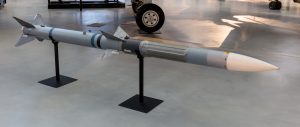
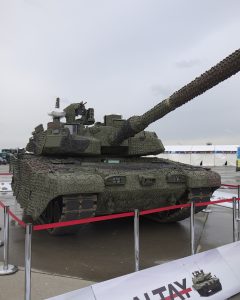
TÜBİTAK SAGE HGK, KGK and BOZOK: Turkey’s Indigenous Smart-Bomb Family, Explained

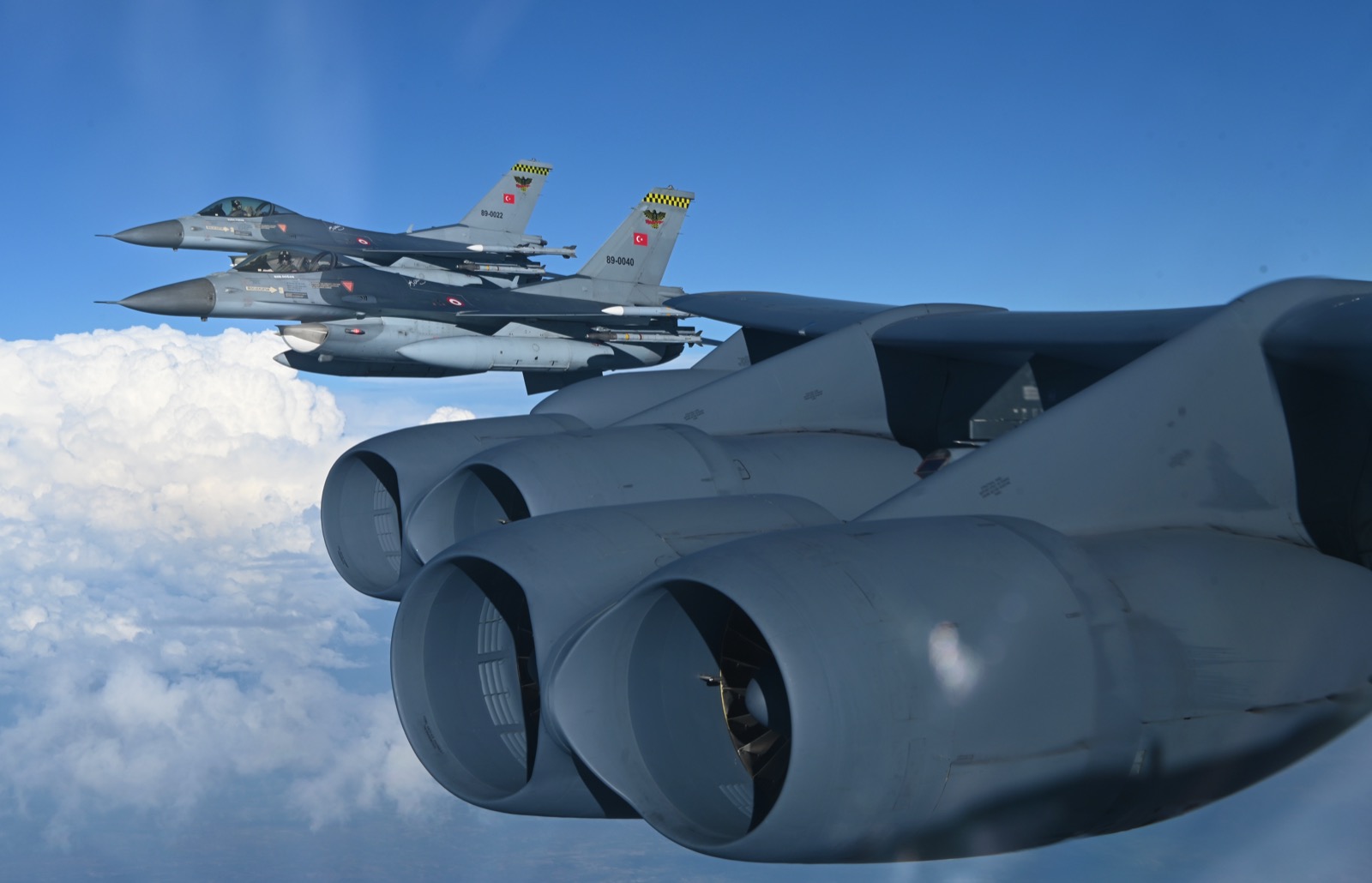
Image: Turkish Air Force F-16s — the primary launch platform for HGK, KGK and BOZOK smart-bomb kits. U.S. Air Force photo by Tech. Sgt. Jael Laborn, public domain.
For most of the 20th century, fighter aircraft dropped “dumb” bombs — free-falling lumps of explosive that obeyed gravity and not much else. The pilot would line the aircraft up above the target, release the bomb, and hope. The bomb did not always land where it was supposed to, civilians paid the cost, and the pilot had to fly dangerously close to find out. In the 1990s, the Americans changed that with JDAM (Joint Direct Attack Munition) — a tail kit and a nose kit that bolt onto an existing iron bomb and turn it into a precision weapon guided by GPS and inertial sensors.
For a decade and a half, Turkey bought those kits from the United States. Then the political weather changed: tensions over US weapons sales to Greece, Russian S-400 sanctions on Turkey, the eventual expulsion from the F-35 programme. The risk of depending on a single foreign supplier for smart-bomb kits was suddenly very visible. TÜBİTAK SAGE — the Defence Industries Research Institute — answered with three Turkish-built kits that filled the gap: HGK for big bombs, KGK for long-range strikes, and BOZOK for drones. Turkey joined the small group of countries — fewer than ten — that build their own smart-bomb family from scratch.
Today the Turkish Air Force flies an entirely domestic precision-strike chain: a Turkish F-16 pilot, a Turkish radar (MURAD), a Turkish guidance kit (HGK/KGK), bolted to a NATO-standard Mk-class bomb body. The American “we will not sell you this” lever has lost most of its leverage.
The SAGE Family at a Glance
HGK — Precision Guidance Kit
HGK (Hassas Güdüm Kiti, “Precision Guidance Kit”) is the Turkish equivalent of JDAM. It is a tail kit plus a nose kit that bolts onto a standard 500, 1,000 or 2,000-pound Mk-class iron bomb. As the bomb falls, internal GPS and inertial sensors continuously calculate where it is; small fins on the tail steer it onto the aim point. The result is the same regardless of the weather, of cloud, of night.
- HGK-82 — for the 500 lb (~230 kg) Mk-82 bomb. Small-target attack.
- HGK-83 — for the 1,000 lb (~460 kg) Mk-83. Roughly 28 km range from high release altitude.
- HGK-84 — for the 2,000 lb (~900 kg) Mk-84. Hard-target attack.
- LHGK-84 — HGK-84 plus a laser seeker. Drops the circular error probability under three metres for moving targets.
The HGK family is certified on the F-16 and F-4E/2020. Because it uses the NATO-standard MIL-STD 1760 interface, the same kit can in principle move between aircraft types with minimal integration work.
KGK — Winged Glide Kit
KGK (Kanatlı Güdüm Kiti, “Winged Guidance Kit”) is the next step beyond HGK. Instead of falling, the bomb glides. Pop-out wings deploy after release; the weapon becomes a small glider with a heavy payload, holding its altitude and travelling forward for the better part of a minute.
Released from high altitude, KGK reaches up to 110 km. From low altitude, it manages around 37 km. Accuracy is in the same single-digit-metre band as HGK. The strategic effect: a Turkish F-16 can drop KGK from outside the engagement range of every short and medium-range surface-to-air missile system on the other side. The pilot never has to enter the threat zone. That is the same “stand-off” capability that for years was a US-only club — and Turkey now builds its own.
BOZOK — Mini Smart Bomb for Drones
HGK and KGK were sized for fighter aircraft. The signature Turkish weapon is the drone — and the Bayraktar TB2 cannot carry a 500 lb bomb. SAGE filled that gap with BOZOK: a miniaturised smart bomb, roughly 16 kg and 80 cm long, that hangs cleanly under the wing of a TB2.
BOZOK uses inertial navigation in the cruise phase and locks onto its target in the final dive with a laser seeker. A ground party or a forward observer paints the target with a laser; BOZOK rides the reflected energy down. The range is more than 17 km. Two warhead options exist: anti-personnel high-explosive fragmentation, and a hybrid armour-piercing + fragmentation head. BOZOK and its cousins were among the precursors of the smart-munition family that delivered Bayraktar TB2’s combat record in Karabakh, Syria and Libya.
What These Kits Actually Do
The SAGE Family in One Table
| Spec | HGK | KGK | BOZOK |
|---|---|---|---|
| Base bomb | Mk-82/83/84 (230–900 kg) | Mk-82/83 (230–460 kg) | Dedicated mini bomb |
| Range | ~28 km (15 nmi) | ~110 km (60 nmi) | 17+ km |
| Accuracy (CEP) | <10 m (GPS) / <3 m (laser) | <10 m | Few metres (laser) |
| Guidance | GPS + inertial (+ laser on LHGK) | GPS + inertial | Inertial + laser seeker |
| Total weight | 230–900 kg (bomb-dependent) | 230–460 kg | 16 kg |
| Platforms | F-16, F-4E/2020 | F-16, F-4E/2020 | Bayraktar TB2, ANKA, AKINCI |
| US analogue | JDAM | JDAM-ER | Hellfire-class mini |
The Family Is Growing: GÖZDE, GÖKÇE, KUZGUN
SAGE has not stopped at three products. The next generation is already in the pipeline:
- GÖZDE — next-generation HGK with modern digital integration; positioned for KAAN.
- GÖKÇE — KGK’s successor with longer range and improved electronic-warfare resilience.
- KUZGUN — a modular family of guided drone munitions in multiple sizes and roles.
- KGK-82-SİHA — KGK adapted for large drones like AKINCI.
Why It Matters for Turkey
Between roughly 2010 and 2015, Turkey was rationed on precision-guided munitions. American sales were restricted, expensive, and politically conditional. When the HGK family entered service, Turkish F-16s started flying counter-terrorism, Syrian and Libyan missions with Turkish-built smart bombs. KGK added the stand-off element. BOZOK became one of the links in the Karabakh victory chain, hanging under Bayraktar TB2s.
The export angle compounds the strategic one. Every Bayraktar TB2 sold abroad — to more than thirty countries — can carry BOZOK. Every F-16 operator interested in a non-American smart-bomb kit has a Turkish option to evaluate. And the next generation — GÖZDE and GÖKÇE — is being designed for KAAN, building a fully indigenous strike chain from radar to bomb-release.
Summary
| Family | TÜBİTAK SAGE guidance kits — HGK + KGK + BOZOK |
|---|---|
| Builder | TÜBİTAK SAGE (Defence Industries Research Institute) |
| Class | Smart-bomb guidance kits (turn iron bombs into precision weapons) |
| Accuracy | Under 10 m (GPS); under 3 m (laser) |
| Range | 17 km (BOZOK) to 110 km (KGK) |
| US analogue | JDAM, JDAM-ER, Hellfire (mini) |
Sources: