Pentagon Sets December Laser Shoot-Off, With Production Orders on the Line

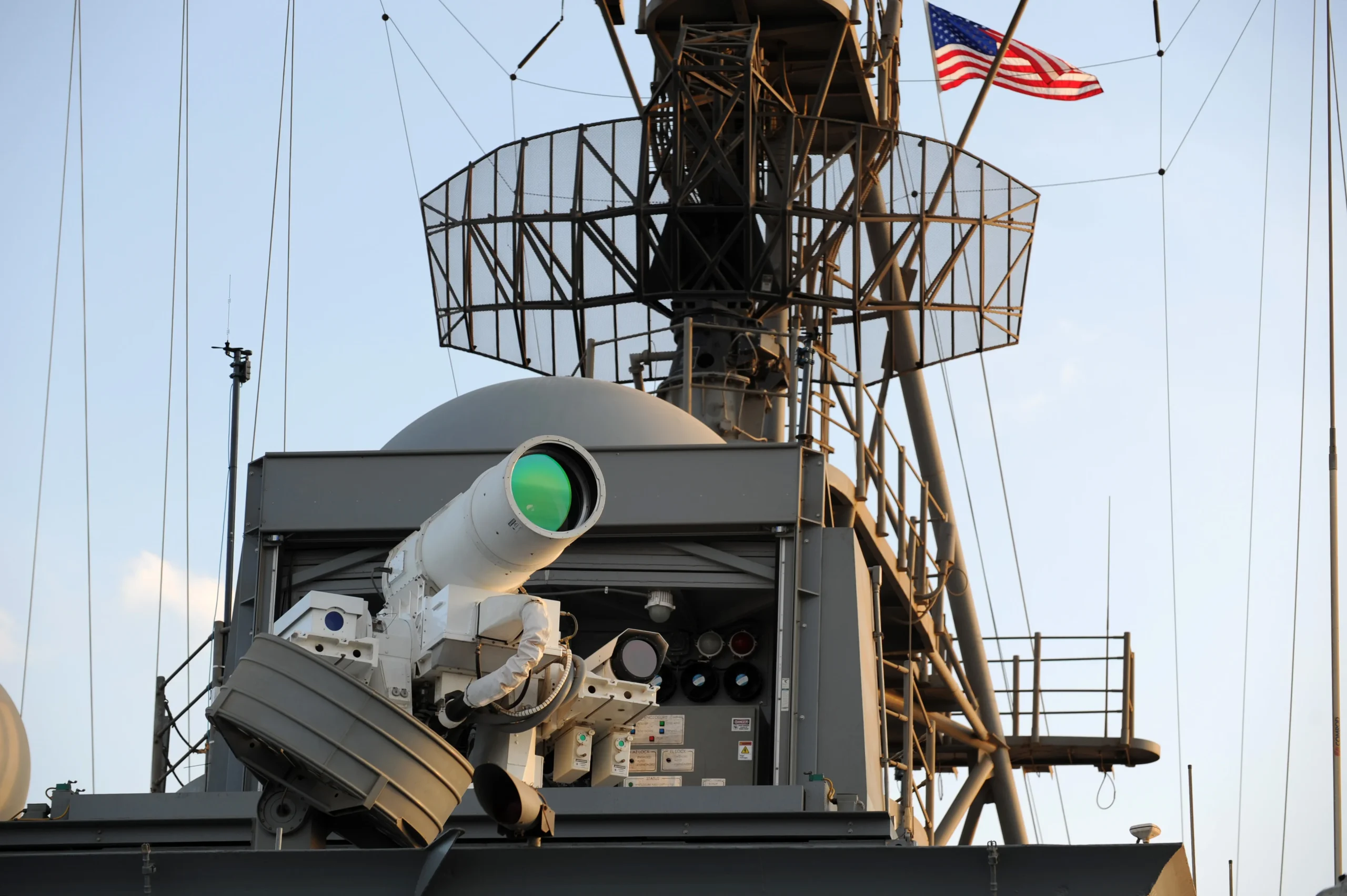
The Pentagon’s joint counter-drone task force, JIATF-401, will hold a live-fire “shoot-off” at Dugway Proving Ground in Utah this December. High-energy lasers and high-power microwave prototypes will engage real targets side by side. According to task force director Brig. Gen. Matt Ross, a company that performs well could walk away with a purchase order rather than a place in a multi-year evaluation queue — a shortcut from the test range to the production line.
At a Glance
- What: A live-fire comparison of directed energy weapons in the counter-drone role.
- When and where: December 2026, Dugway Proving Ground, Utah.
- Who: Joint Interagency Task Force 401, led by Brig. Gen. Matt Ross.
- The prize: A direct purchase order and support to stand up production lines.
- Backdrop: Five installations were picked in May for a 365-day directed energy pilot.
- Wider read: The debate has shifted from what these weapons can hit to what they actually cost to own.
The US Defense Department is trying to shorten one of its slowest processes. Breaking Defense reported on 24 August that Brig. Gen. Matt Ross, who directs the counter-drone task force JIATF-401, plans a directed energy shoot-off in December. The format is deliberately blunt: bring a prototype, fire it at real targets, and if it works, expect an order rather than a report.
Ross framed the goal as being able to start building “production lines to get these systems into the field” on the strength of a good demonstration. That sentence captures a shift running through US procurement over the past two years: the winner is increasingly the system that works in front of witnesses, not the one that scores best on paper.
Five Bases, 365 Days: The Groundwork Was Laid in May
The December event does not stand alone. In May, JIATF-401 named five military installations for a directed energy pilot programme designed to run 365 days — long enough to expose systems to weather, maintenance cycles and the ordinary rhythm of base operations rather than a single showcase shot.
The list itself is the message: Fort Huachuca in Arizona and Fort Bliss in Texas, Naval Base Kitsap in Washington state, Grand Forks Air Force Base in North Dakota and Whiteman Air Force Base in Missouri. Several of those sites house some of the most sensitive assets in the US inventory — Whiteman is home to the B-2 stealth bomber fleet, while Kitsap supports the ballistic missile submarine force. The point is hard to miss: unidentified drones over domestic installations have moved out of the law-enforcement column and into the air defence column.
Coordination is the other half of the problem. Alongside the Pentagon, JIATF-401 works with the FBI, the Department of Homeland Security and the Federal Aviation Administration, while DHS expands counter-drone training for state and local police. In the United States, the airspace around a military base overlaps with civil approach corridors and with the jurisdiction of a county sheriff.
The Real Argument Is About Accounting, Not Physics
Directed energy has been sold on the same line for a decade: an interceptor costs six figures, a laser shot costs a few dollars. Ross pushed back on that framing in a way that raises the level of the debate. A low cost per shot, he noted, says little about affordability if the system itself costs millions and is fired only occasionally.
The distinction matters. Air defence economics rest on two columns: the fixed cost of owning and sustaining the system, and the variable cost of each engagement. Missile-based systems carry a heavy variable cost and a lighter fixed one. Lasers invert that. Which means directed energy pays off precisely where the threat is dense and persistent — where the fixed cost is spread across a large number of engagements.
Put plainly: a laser fired three times a year is an expensive asset even at two dollars a shot. Building that calculation into the December scoring is how the Pentagon closes the gap between marketing language and engineering reality.
Laser or Microwave? Two Physics, Two Missions
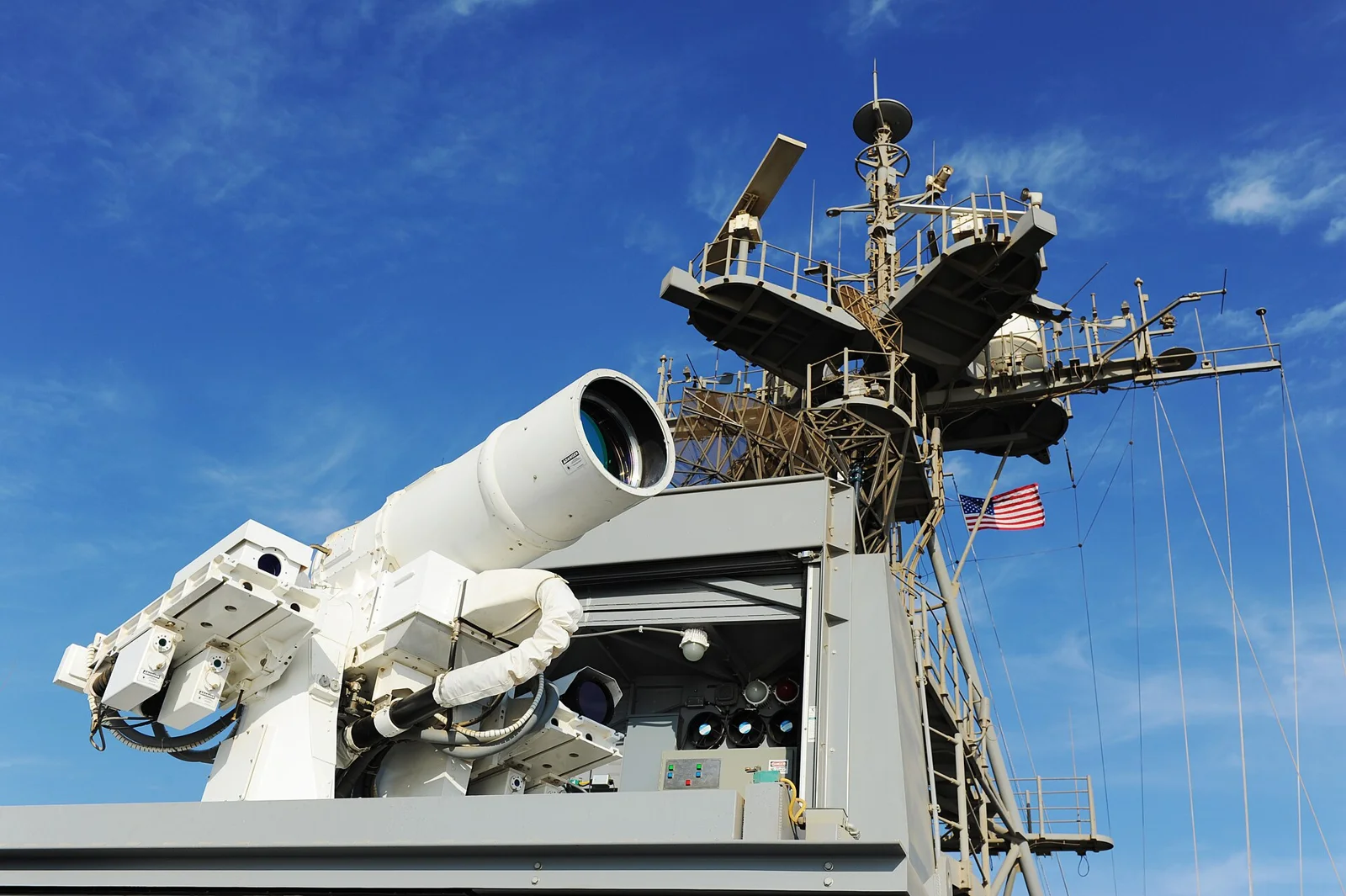
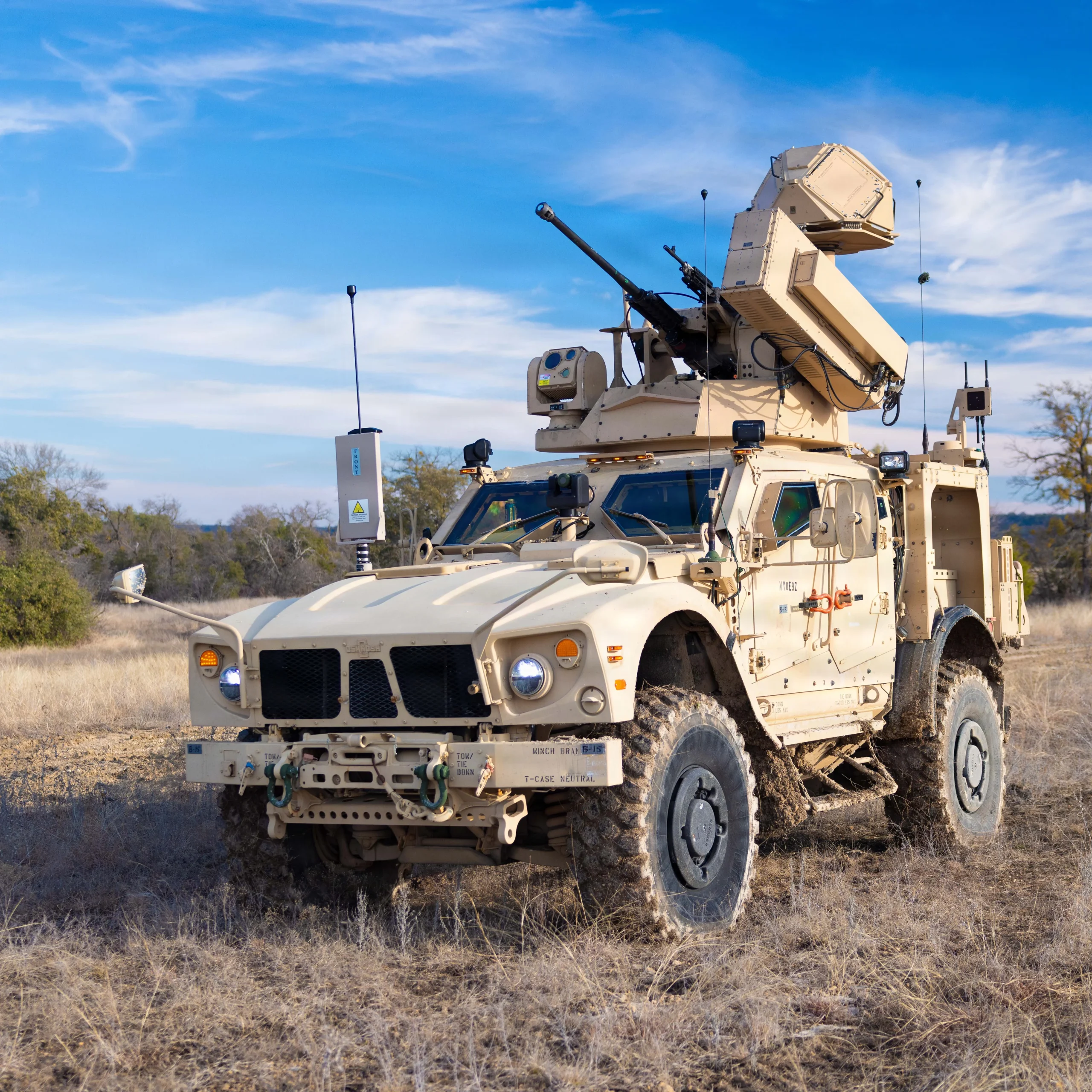
Two distinct technology families will compete, and treating them as interchangeable would be a mistake. A high-energy laser (HEL) concentrates light on a single point, heating the airframe until it fails structurally. It is precise and silent, but it needs a clear line of sight, and fog, dust, rain and turbulence degrade it sharply.
High-power microwave (HPM) works on an entirely different principle. It does not burn anything; it floods a wide cone with electromagnetic energy that disrupts flight controllers, receivers and sensors. That is why it can bring down several drones at once, and why it is the more credible answer to a swarm. The trade-off is indiscriminate coverage: microwave energy does not distinguish between a hostile quadcopter and friendly or civilian electronics inside the cone.
| Criterion | High-Energy Laser (HEL) | High-Power Microwave (HPM) |
|---|---|---|
| Kill mechanism | Thermal damage, structural failure | Electronic disruption |
| Targets engaged | One at a time | Multiple simultaneously (swarm) |
| Weather sensitivity | High (fog, dust, rain) | Low |
| Risk to friendly systems | Low (narrow beam) | High (wide, indiscriminate cone) |
| Targeting demand | Precise optical tracking | Coarse pointing sufficient |
| Main bottleneck | Power generation and cooling | Spectrum management and hardening |
The Binding Constraint Is Airspace, Not Range
The most instructive detail in the reporting is bureaucratic rather than technical. After an undisclosed laser test near El Paso, the FAA closed airspace in the area. The Pentagon has since built tighter coordination procedures with civil aviation authorities.
That episode explains the real limit on directed energy inside the United States. A laser beam that misses does not simply stop; its energy continues through the atmosphere. A microwave pulse concerns every piece of electronics inside its cone. If an airliner is on approach nearby, if a control tower is transmitting, if a cell site is operating, then permission to fire is no longer a purely military decision.
This is why stretching the pilot across 365 days makes sense. As Ross put it, the task is learning to use these systems on a base “in a way that doesn’t impede the critical functions of that base.” What has to mature is not only the hardware but the tactics, techniques and procedures around it. A weapon enters service not when crews learn to fire it, but when the rules for holding fire are written down.
Why the Shoot-Off Format Is Spreading
Shoot-offs are not new to the US military, but using one at this scale in the counter-drone mission is. In the conventional acquisition cycle, a system takes five to ten years to travel from requirement document to serial production: capability analysis, requests for information, solicitation, source selection, development contract, operational test. That chain was designed for an era when threats evolved slowly.
Drone warfare does not move at that pace. On the Ukrainian front, a countermeasure fielded today can be adapted around within weeks. Activity over bases in the Red Sea region, in Iraq and Syria, and more recently around installations inside the United States, forces defenders to decide on the same clock.
The shoot-off is an answer to that pressure: move the evaluation from paper to the range, pick a winner there, contract quickly. The risk is built into the format. A system that shines on one December afternoon may not hold up across a sustained deployment, and sustainment burden, spare parts and crew training do not show up in a single day of shooting. Running a 365-day pilot at five bases in parallel is how the Pentagon tries to cover that gap: the competition supplies speed, the pilot supplies truth.
The Winner Probably Will Not Be a Traditional Prime
JIATF-401 is explicitly courting innovative and commercially rooted companies. Large primes have worked directed energy for years, but the criteria that decide the counter-drone mission — unit cost, ease of installation, maintenance simplicity, production rate — sit closer to commercial manufacturing logic than to platform engineering.
The US Marine Corps’ move toward a commercially developed high-power microwave system was a recent example of the same trend. The logic holds on the laser side too. A system defending a fixed base does not need to be the system bolted to a warship: power and cooling can come from existing infrastructure, which removes the single hardest constraint on mobile platforms. That makes fixed-site defence the most sensible place for the first production order to land.
Where Türkiye Sits in This
Türkiye approaches this question from both sides of the counter. It operates one of the world’s most drone-heavy force structures, and it has spent years dealing with small commercial drones along its borders and around forward bases. The question the Pentagon hopes to answer in December is one Turkish forces already meet in the field.
ROKETSAN’s ALKA was an early mover in this space, combining a laser effector and electronic warfare in a single cabinet. ASELSAN’s mobile laser work and the İHTAR family approach the same problem in layers: detect and identify, suppress electronically, then defeat by soft or hard kill if required. The lowest rung of the Steel Dome (Çelik Kubbe) architecture is exactly this — an answer that does not spend a missile.
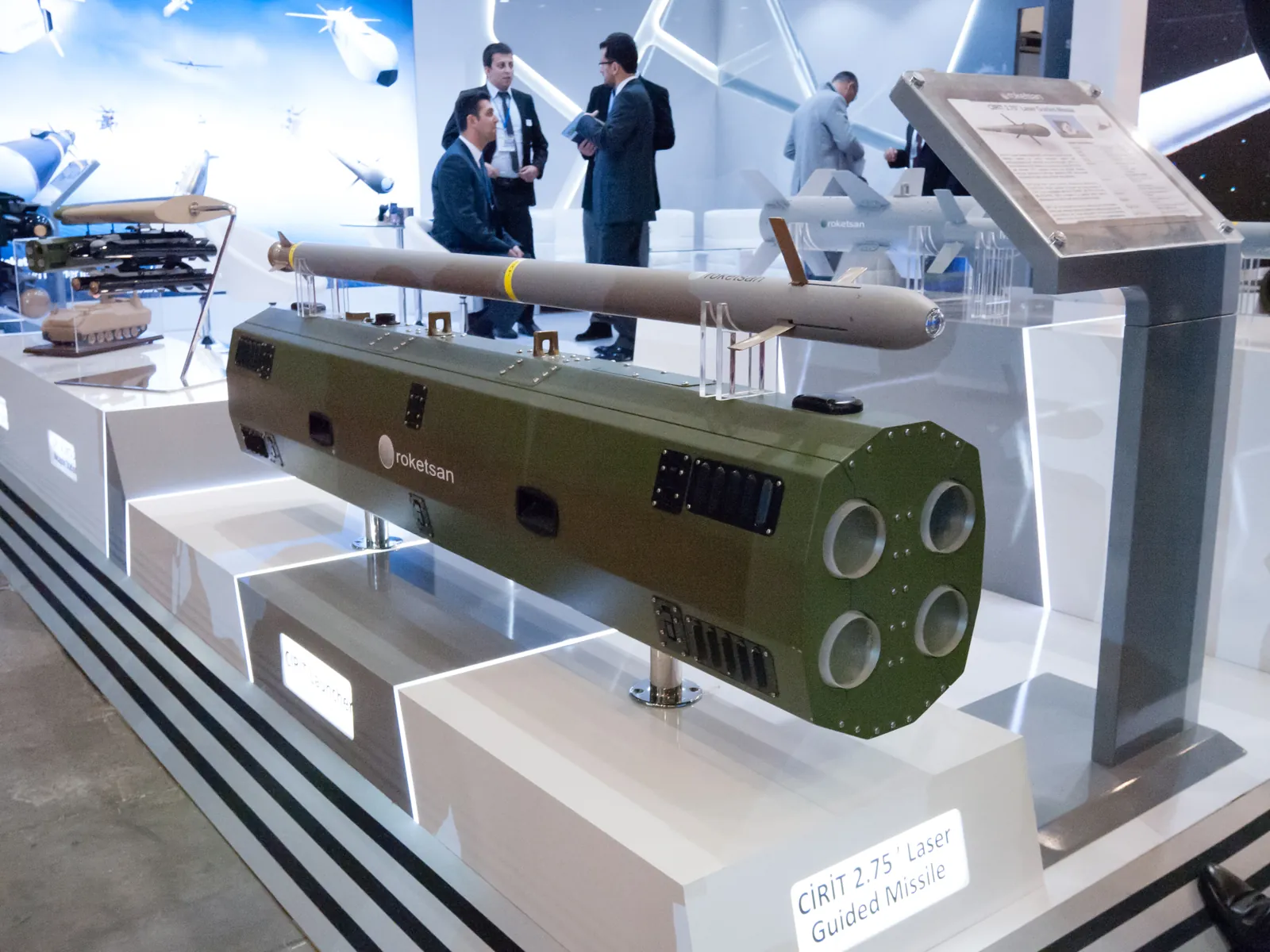
Ross’s cost warning applies in Ankara as well, and arguably cuts more sharply. A laser earns its keep through frequent use, and Türkiye’s border regions supply exactly that tempo. The same system that looks economically doubtful at a US base firing three times a year can amortise quickly where the threat is a daily occurrence. That is both an operational advantage and an export argument for Turkish industry, in markets from the Gulf to Africa that are now funding base and critical-infrastructure defence and want solutions with a service record behind them.
Sources
- Breaking Defense — “Pentagon counter-drone task force preps ‘shoot-off’ for directed energy prototypes” (Michael Marrow, 24 August 2026)
- DefenseScoop — “U.S. military to host directed energy ‘shoot-off’ amid governmentwide counter-drone push” (Brandi Vincent, 21 August 2026)
- DefenseScoop — “Pentagon counter-drone task force announces pilot program to get directed energy systems to 5 installations” (8 May 2026)
- US Army (army.mil) — JIATF-401 operational updates